724.jpg)
What Is HDPE Pipe?
HDPE pipe, also known as high density polyethylene pipe, is a flexible and durable piping solution manufactured from high-density polyethylene resin. It has become one of the most widely used plastic piping systems in modern infrastructure because of its excellent corrosion resistance, long service life, and reliable performance in demanding environments.
Unlike traditional metal pipes, HDPE pipes do not rust or corrode when exposed to water, chemicals, or underground conditions. Their lightweight structure and flexibility make installation easier while reducing transportation and maintenance costs.
Today, HDPE piping systems are widely used in municipal water supply, drainage networks, agricultural irrigation, natural gas distribution, mining operations, and industrial fluid transportation.
With continuous improvements in polyethylene technology, HDPE pipes have become a preferred alternative to traditional materials such as steel, cast iron, and concrete pipes.
Why Is HDPE Pipe Widely Used?
The increasing demand for HDPE pipe is mainly driven by its combination of strength, flexibility, and chemical resistance. Modern infrastructure projects require piping systems that can provide reliable operation for decades with minimal maintenance.
The main characteristics that make HDPE pipes suitable for various applications include:
High resistance to corrosion
Excellent flexibility
Strong impact resistance
Lightweight design
Long operational lifespan
Low maintenance requirements
Leak-resistant fusion joints
Resistance to chemicals and environmental stress
These advantages allow HDPE pipes to perform well in both above-ground and underground applications.
Main Applications of HDPE Pipe
1. Urban water supply – PE pipe head has the comprehensive advantages of safety, sanitation and convenient construction, and has become an ideal pipe for urban water supply.
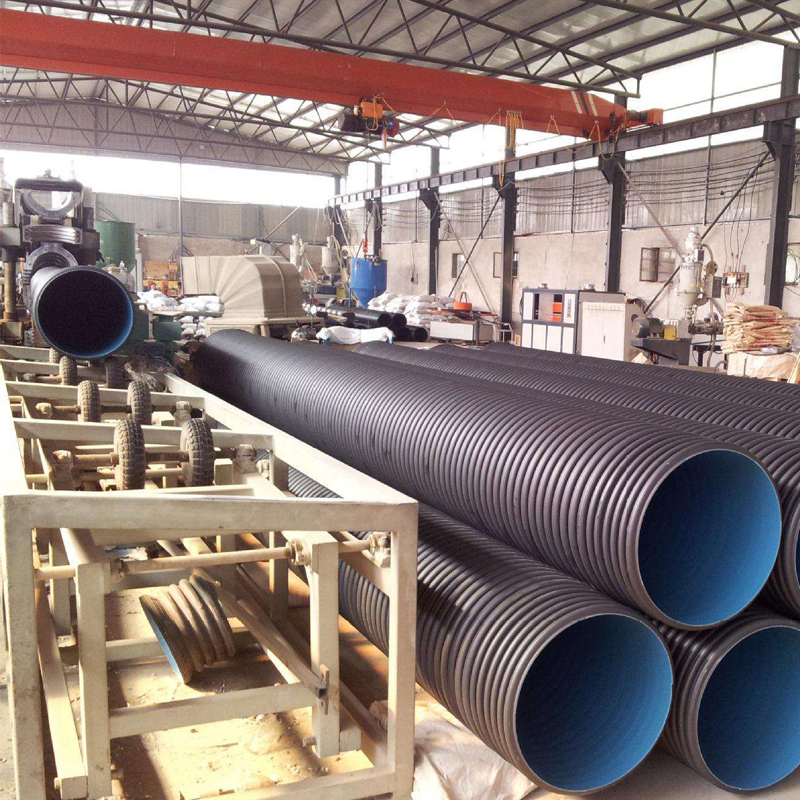
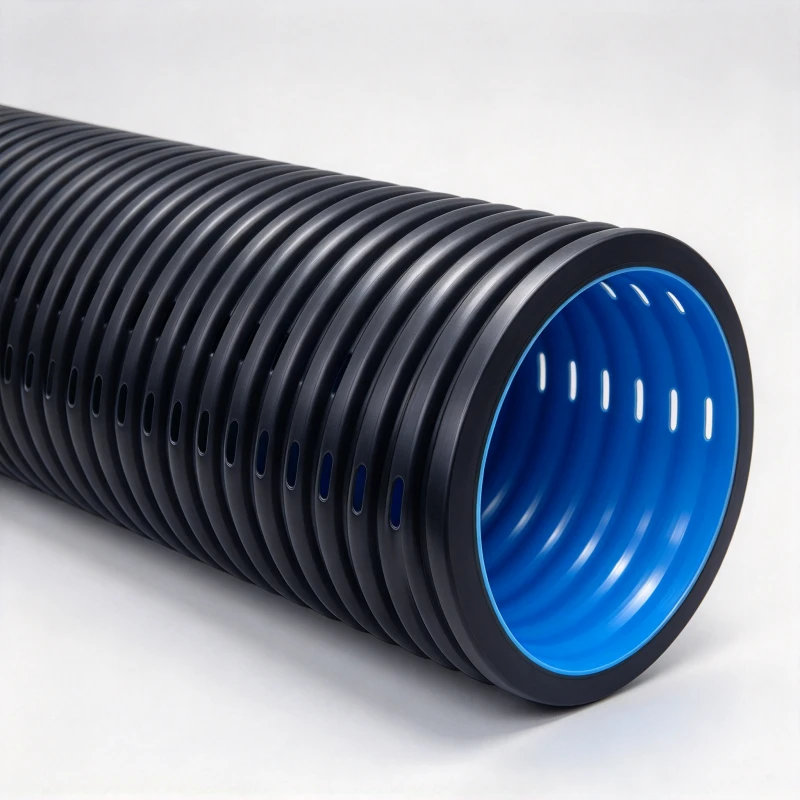
HDPE corrugated drain pipe
2, ore, mud transport - PE pipe has a unique wear resistance is four times that of steel pipe, can be widely used to transport mineral sand, power plant fly ash, river dredging mud.
3. Replacement of cement pipe, cast iron pipe and steel pipe – for the original pipe re-election of cement pipes and cast iron pipes in the city, the PE pipe can be directly inserted into the old pipe for replacement without large-scale excavation. Low, short construction time, especially suitable for pipeline re-election in the old city.
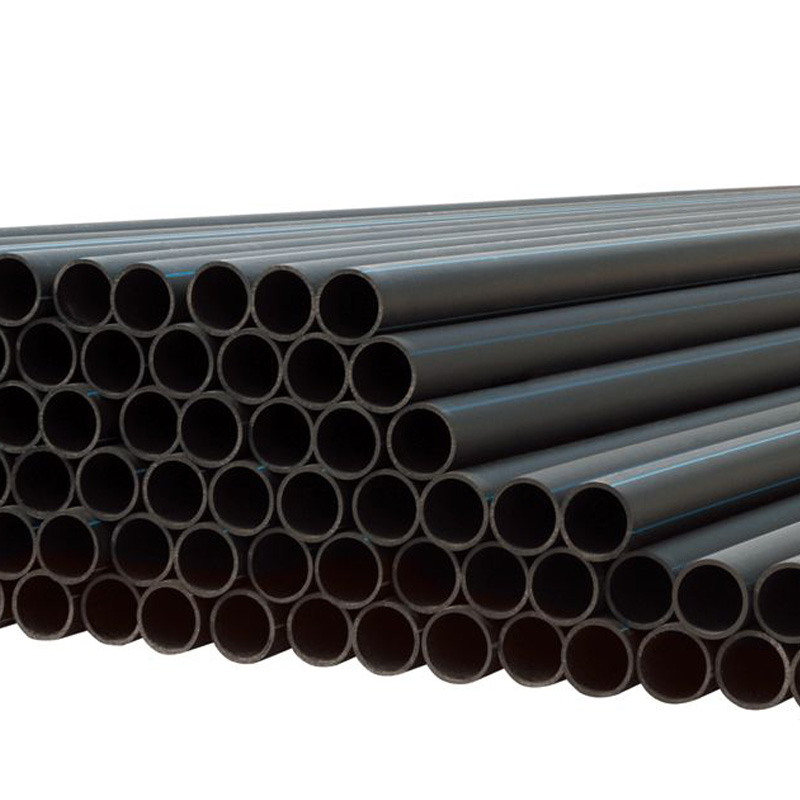
HDPE water pipe
4, landscaping pipe network - landscaping requires a large number of water pipelines, PE pipelines are low cost, it is worth promoting.
5, natural gas, gas transmission - PVC due to PE pipe connection reliability, stable performance, easy construction, corrosion resistance and other advantages, become the best choice for medium and low pressure gas transmission pipeline.
6. Power Threading Due to the superior resistance and insulation performance of PE pipe, and its own high pressure resistance and pulling force, it is often used in many power threading constructions.
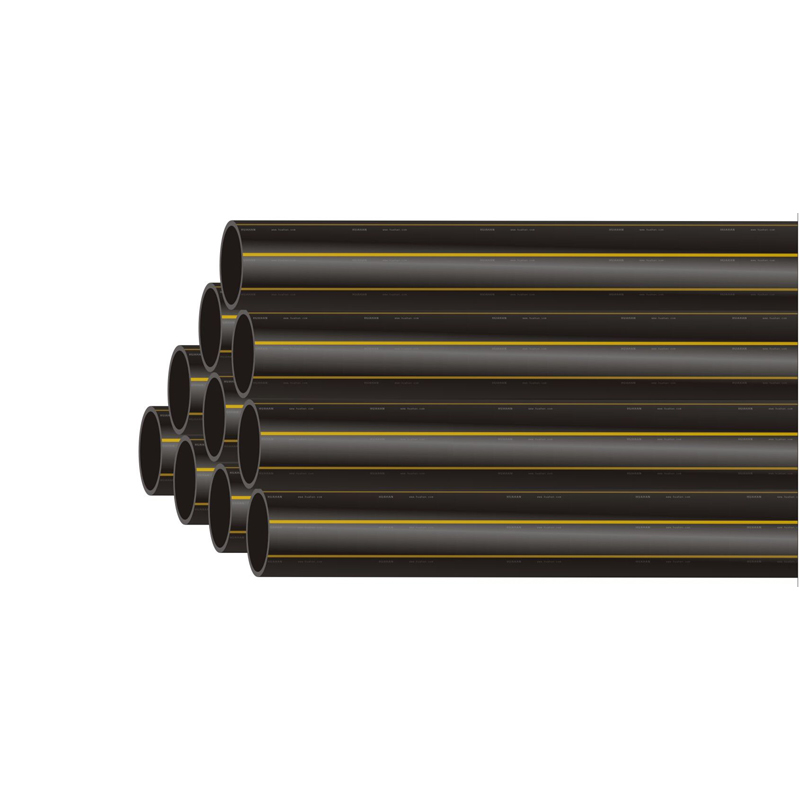
HDPE gas pipe
7. Food and Chemical Industry - PE pipes have unique corrosion resistance and can be used for the transportation or discharge of various acid and salt salts, resulting in long life, low cost and low maintenance cost.
8. Sewage treatment At present, many sewage treatment plants use PE pipes in addition to cement pipes and HDPE double-wall corrugated pipes. In actual construction, PE pipes have the same caliber flow rate as other pipes, and in complex environments such as turning In the construction of crossing, etc., its convenience is more prominent.
Key Advantages of HDPE Pipe
HDPE pipes have become a preferred choice for many infrastructure projects because they offer a balance of durability, performance, and cost efficiency. Compared with traditional piping materials, HDPE provides several technical advantages that improve long-term system reliability.
1. Excellent Corrosion Resistance
One of the biggest advantages of high density polyethylene pipe is its resistance to corrosion.
Metal pipes such as steel and cast iron can gradually deteriorate when exposed to moisture, chemicals, or aggressive soil conditions. This corrosion may cause leakage, reduced flow capacity, and expensive maintenance.
HDPE pipes do not rust and are highly resistant to many chemicals, making them suitable for underground pipelines and industrial applications.
This corrosion resistance helps extend the operating life of piping systems and reduces the need for protective coatings or frequent repairs.
2. High Flexibility and Impact Resistance
Unlike rigid materials, HDPE pipe has excellent flexibility. It can bend and adapt to changes in soil conditions, making it especially suitable for underground installations.
HDPE pipes can withstand:
Ground movement
Soil settlement
Temperature expansion and contraction
External impact
This flexibility reduces the risk of cracking and pipe failure, especially in areas with unstable soil conditions.
3. Long Service Life
A properly designed and installed HDPE piping system can provide decades of reliable service.
The long lifespan of HDPE pipe is mainly due to:
Resistance to corrosion
High chemical stability
Strong fatigue resistance
Low maintenance requirements
For large infrastructure projects, choosing a long-lasting pipe material can significantly reduce total lifecycle costs.
4. Leak-Free Pipe Connections
HDPE pipes are usually connected using heat fusion technologies, including:
Butt fusion
Electrofusion
Socket fusion
During fusion welding, pipe sections are heated and joined together to form a strong continuous connection.
Compared with mechanical joints, fusion connections reduce the number of potential leakage points and improve system reliability.
5. Lightweight and Easy Installation
HDPE pipe is significantly lighter than many traditional pipe materials.
This provides several installation benefits:
Lower transportation costs
Less heavy equipment required
Faster installation process
Reduced labor requirements
For large construction projects, these advantages can result in significant cost savings.
HDPE Pipe vs Other Pipe Materials
Selecting the right pipe material is important for project performance and long-term operating costs. The following comparison shows how HDPE compares with other commonly used piping materials.
HDPE Pipe vs Steel Pipe
| Comparison | HDPE Pipe | Steel Pipe |
|---|---|---|
| Corrosion resistance | Excellent | Requires protective coating |
| Weight | Lightweight | Heavy |
| Installation | Easy and flexible | Requires more equipment |
| Maintenance | Low | Higher maintenance requirements |
| Service life | Long-term performance | Depends on corrosion protection |
HDPE is often selected as an alternative to steel pipe in water, gas, and underground applications because it provides better corrosion resistance.
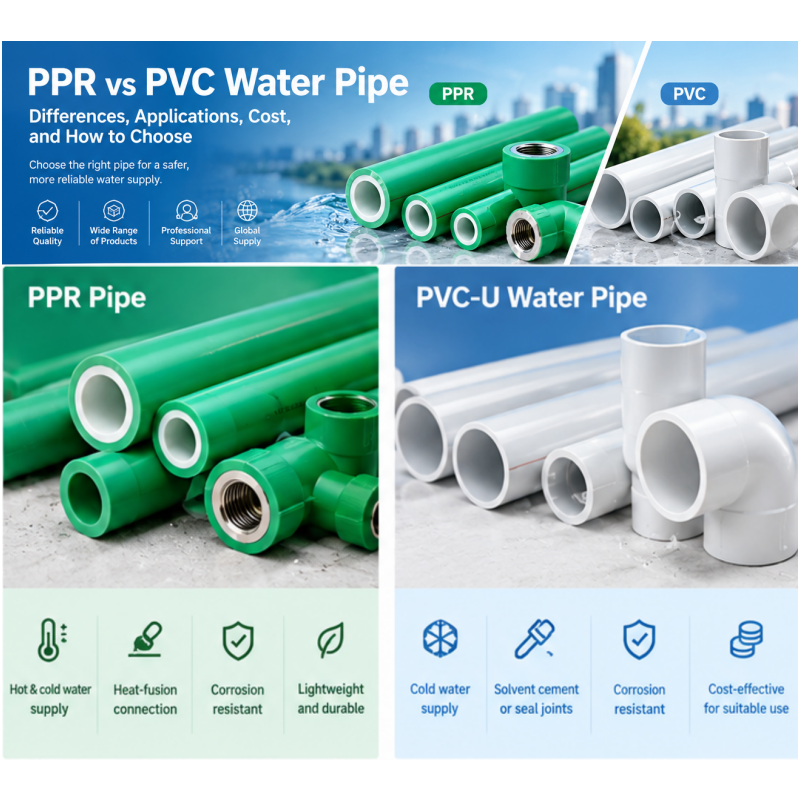
HDPE Pipe vs PVC Pipe
| Comparison | HDPE Pipe | PVC Pipe |
|---|---|---|
| Flexibility | High flexibility | More rigid |
| Impact resistance | Excellent | Lower impact resistance |
| Underground performance | Excellent | Suitable but less flexible |
| Joint reliability | Fusion welding creates strong joints | Usually uses solvent or mechanical joints |
| Applications | Water, gas, industrial, drainage | Water, drainage, construction |
PVC remains a popular choice for many applications, but HDPE offers better flexibility and impact resistance in challenging environments.
HDPE Pipe vs Concrete Pipe
| Comparison | HDPE Pipe | Concrete Pipe |
|---|---|---|
| Weight | Lightweight | Very heavy |
| Transportation | Easier | Requires heavy equipment |
| Corrosion resistance | Excellent | May be affected by chemicals |
| Installation speed | Faster | Slower |
| Flexibility | High | Rigid |
HDPE drainage pipes are often preferred for modern stormwater and wastewater projects because they are easier to install and adapt to ground conditions.
Comparison of Common HDPE Pipe Applications
HDPE pipes are suitable for different industries depending on design requirements.
| Application | Main Function | Key Benefits |
|---|---|---|
| Water supply | Drinking water transportation | Safe, durable, corrosion-resistant |
| Gas distribution | Natural gas transportation | Reliable and leak-resistant |
| Drainage systems | Wastewater and stormwater removal | Chemical resistance |
| Agriculture | Irrigation water delivery | Flexible installation |
| Mining | Slurry transportation | High wear resistance |
| Industry | Chemical and fluid transfer | Strong chemical stability |
HDPE Pipe Installation Methods
Proper installation plays an important role in achieving the maximum performance of an HDPE piping system.
Butt Fusion
Butt fusion is one of the most common connection methods for HDPE pipes.
The process involves heating the ends of two pipes and pressing them together to create a permanent joint.
Advantages include:
Strong connection strength
No additional fittings required
Reduced leakage risk
Suitable for large diameter pipes
Electrofusion
Electrofusion uses special fittings containing heating elements. When electrical current passes through the fitting, the polyethylene melts and forms a secure connection.
Electrofusion is commonly used for:
Gas pipelines
Repair projects
Limited-access areas
Factors to Consider When Choosing HDPE Pipe
Although HDPE pipe offers many advantages, selecting the correct pipe specification is important for project success.
Important factors include:
Pipe Diameter
The required diameter depends on:
Flow requirements
Pressure conditions
Application type
Larger diameter pipes are commonly used for municipal and industrial projects.
Pressure Rating
HDPE pipes are available in different pressure classes.
The correct pressure rating should be selected based on:
Operating pressure
Temperature
Safety requirements
Temperature Conditions
HDPE performs well in many environments, but extremely high temperatures may affect mechanical properties.
Project conditions should always be evaluated before selecting materials.
Environmental Benefits of HDPE Pipe
Sustainability has become an important consideration in modern construction projects.
HDPE pipes provide several environmental advantages:
Long service life reduces material replacement
Lower transportation energy due to lightweight design
Recyclable polyethylene material
Reduced leakage helps conserve water resources
Because of these advantages, HDPE piping systems support more sustainable infrastructure development.
Frequently Asked Questions About HDPE Pipe
What is HDPE pipe mainly used for?
HDPE pipe is mainly used for water supply, drainage, sewer systems, natural gas distribution, irrigation, and industrial fluid transportation.
Its durability and corrosion resistance make it suitable for both underground and above-ground applications.
How long does HDPE pipe last?
HDPE pipes are designed for long-term performance and can typically provide several decades of service when properly installed and operated.
Actual lifespan depends on factors such as pressure, temperature, installation quality, and environmental conditions.
Is HDPE pipe better than PVC pipe?
Both materials have advantages. HDPE generally provides better flexibility, impact resistance, and underground performance, while PVC may be selected for certain low-cost applications.
The best choice depends on project requirements.
Can HDPE pipe be used for drinking water?
Yes. HDPE water pipes are widely used for potable water systems because high-quality polyethylene materials are safe and resistant to corrosion.
How are HDPE pipes connected?
HDPE pipes are commonly connected through butt fusion, electrofusion, or socket fusion methods.
Fusion technology creates strong joints that reduce leakage risks.
Why Choose HDPE Pipe for Modern Piping Systems?
With increasing demands for reliable and cost-effective infrastructure, HDPE pipe has become an important solution for many industries.
Its combination of:
Durability
Flexibility
Corrosion resistance
Easy installation
Low maintenance
Long service life
makes it suitable for a wide range of applications, from municipal water networks to industrial transportation systems.
For projects requiring dependable performance and reduced lifecycle costs, high density polyethylene pipe provides a practical and efficient piping solution.
Conclusion
HDPE pipe is more than a replacement for traditional piping materials. It represents a modern approach to pipeline construction by combining advanced polyethylene technology with proven durability.
Whether used for water supply, drainage, gas distribution, irrigation, or industrial applications, HDPE piping systems provide reliable performance and long-term value.
As infrastructure requirements continue to evolve, HDPE pipes will remain an important choice for sustainable, efficient, and durable pipeline solutions.
Choose Reliable HDPE Pipe Solutions from Haili
When selecting an HDPE piping system, quality, reliability, and long-term performance are essential. At Haili, we provide high-quality HDPE pipes designed to meet the requirements of water supply, drainage, gas distribution, irrigation, and industrial applications.
Our HDPE pipes are manufactured using premium high-density polyethylene materials and advanced production technology to ensure excellent durability, corrosion resistance, and consistent performance in demanding environments.
Whether you are working on a municipal infrastructure project, agricultural irrigation system, industrial pipeline installation, or underground utility project, Haili can provide customized HDPE pipe solutions based on your application requirements.
Why Choose Haili HDPE Pipes?
High-quality HDPE raw materials for reliable performance
Advanced manufacturing processes with strict quality control
Wide range of pipe sizes and specifications available
Professional technical support for project requirements
Competitive pricing for global customers
Customized solutions for different industries
Partner with Haili for durable and cost-effective polyethylene piping solutions. Contact our team today to discuss your HDPE pipe requirements and receive professional product recommendations and quotations.
916.webp)
204.webp)
659.webp)
185.webp)
312.webp)
849.webp)
587.webp)
767.webp)