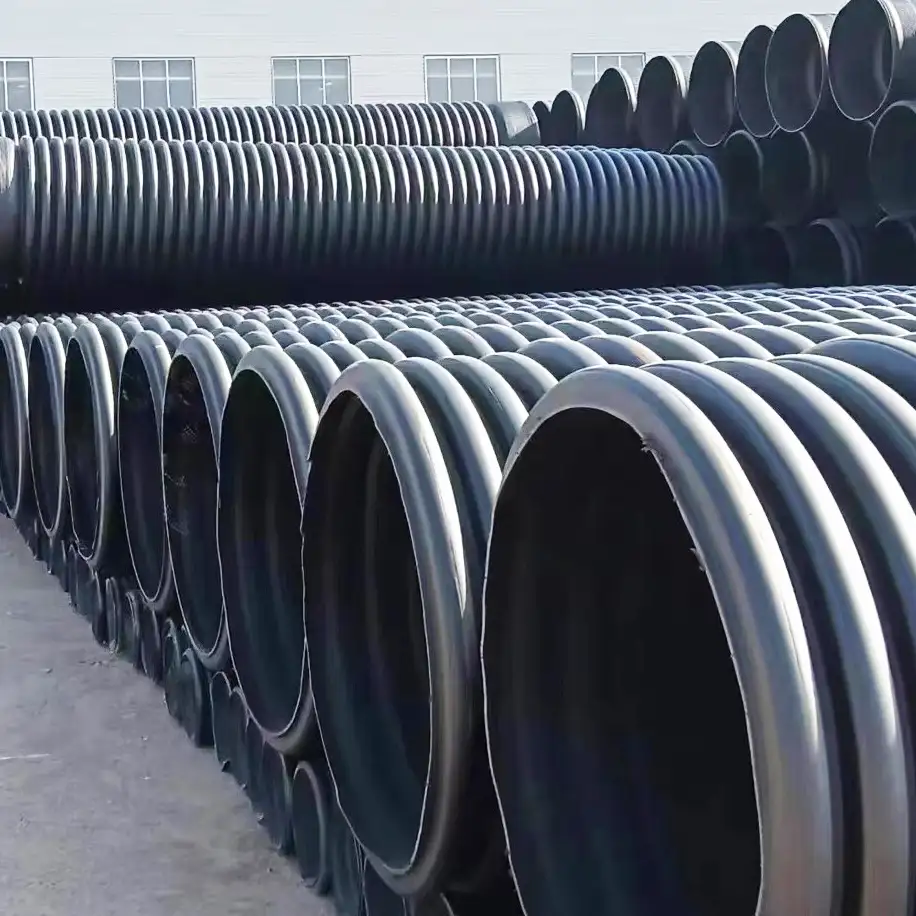
In modern infrastructure and utility systems, the choice of pipe material is critical to the efficiency, durability, and overall cost-effectiveness of a project. Among the various available options, double-wall corrugated high-density polyethylene (DWC HDPE) pipe is a popular choice for a wide range of applications due to its many advantages.
Understanding DWC HDPE Pipe
1. Structure and Composition
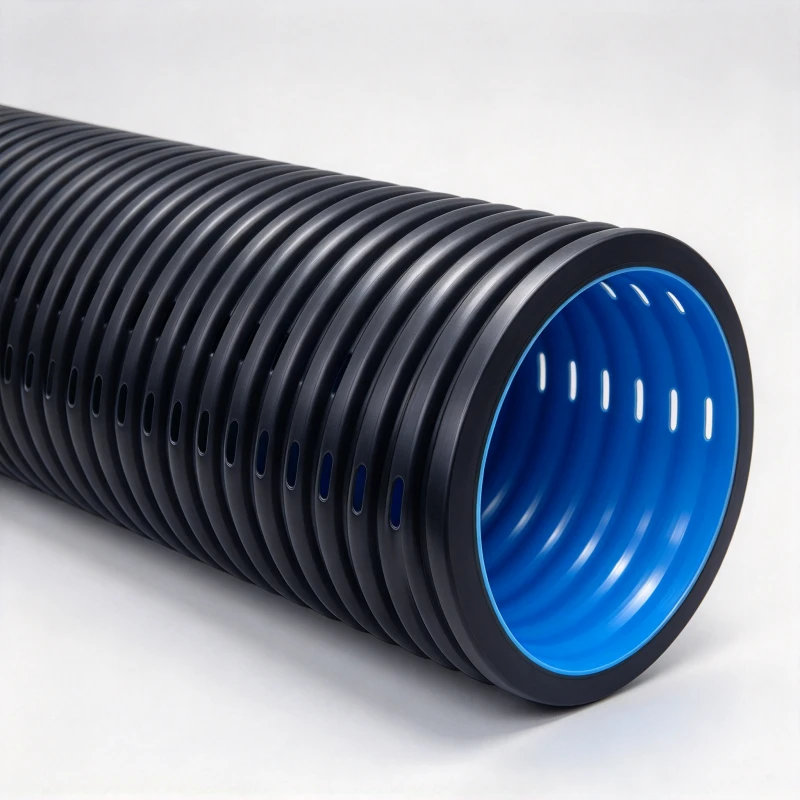
DWC HDPE pipe has a two-layer design:
Outer Layer: The outer layer is corrugated, providing high structural strength and rigidity. This corrugated design enables the pipe to withstand external loads and impacts, making it ideal for underground installations and high mechanical-stress environments.
Inner Layer: The inner layer is smooth, promoting efficient fluid flow. The smooth surface reduces friction, prevents clogging, and ensures a steady flow rate.
Both layers are made of high-density polyethylene (HDPE), which is known for its high tensile strength, flexibility, and resistance to chemical and environmental stress cracking.
2. Manufacturing Process
DWC HDPE pipes are manufactured using a co-extrusion process, where two layers of polyethylene are extruded and fused together simultaneously. This ensures a strong bond between the corrugated outer layer and the smooth inner layer, resulting in a durable and reliable pipe.
Key Benefits of DWC HDPE Pipes
1. Durability and Long Life
DWC HDPE pipes are extremely durable and can be used for decades without significant deterioration. They are resistant to corrosion, chemicals, and environmental stress cracking, making them ideal for a variety of harsh environments.
2. Structural Integrity
The corrugated outer layer provides superior strength, allowing the pipe to withstand heavy loads and external pressures. This makes DWC HDPE pipes ideal for underground installations, especially where soil loads and traffic loads are significant.
3. Flexibility and Impact Resistance
The inherent flexibility of HDPE enables DWC pipes to absorb shock and ground movement without cracking or breaking, which is particularly beneficial in earthquake-prone areas or areas with unstable soils.
4. Lightweight and easy to handle
Compared with traditional materials such as concrete or steel, DWC HDPE pipes are lightweight, easy to transport and install, and reduce labor costs and installation time.
5. Efficient flow characteristics
The smooth inner surface of DWC HDPE pipes minimizes friction, improves fluid flow efficiency, and reduces the risk of blockage, which is particularly important in drainage and sewer system applications.
6. Environmentally friendly
HDPE is a recyclable material, and the manufacturing process of DWC HDPE pipes has less impact on the environment than traditional pipe materials. This is in line with the growing trend of sustainable construction practices.
Applications of DWC HDPE pipes
1. Drainage and sewer systems
DWC HDPE pipes are widely used in municipal drainage and sewer systems. Its ability to withstand high loads and resist corrosion makes it ideal for sewage and stormwater transportation. The smooth inner surface ensures efficient flow and reduces the risk of blockage and backflow.
2. Underground cable protection
In telecommunications and power distribution, DWC HDPE pipes are used to protect underground cables. The corrugated outer layer provides mechanical protection, while the smooth inner layer facilitates cable pulling and installation.
3. Stormwater Management
In urban areas, effective stormwater management is essential to prevent flooding and water accumulation. DWC HDPE pipes are used in stormwater drainage systems to effectively drain rainwater away from roads, buildings, and other infrastructure.
4. Road and Railway Drainage
DWC HDPE pipes are used in road and railway drainage systems to manage water flow and prevent soil erosion. Its strength and durability enable it to withstand the heavy loads in these applications.
5. Agriculture and Irrigation Systems
In agriculture, DWC HDPE pipes are used in irrigation and drainage systems. Its resistance to chemicals and environmental stresses ensures reliable performance in a variety of agricultural conditions.
6. Industrial Applications
DWC HDPE pipes are used in a variety of industrial applications to transport chemicals, wastewater, and other fluids. Its resistance to chemicals and durability makes it suitable for demanding industrial environments.
Installation and Handling
1. Excavation and Bedding
The installation of the DWC HDPE pipe begins with the excavation of a trench. The trench should be wide enough to accommodate the pipe and provide space for bedding material. Bedding material is usually sand or fine gravel, ensuring a stable foundation for the pipe and preventing sharp objects from damaging the pipe.
2. Pipe Laying
The DWC HDPE pipe is laid in the trench and aligned to ensure a consistent slope to promote the proper flow of fluids. Care should be taken when handling the pipe to avoid damaging the corrugated outer layer.
3. Connection Methods
DWC HDPE pipe can be connected using a variety of methods, including:
Electrofusion connection: Using special fittings with built-in heating elements, the pipes are melted together to form a strong and watertight connection.
Butt welding: The two ends of the pipe are heated and pressed together to form a continuous and watertight connection.
Mechanical fittings: These fittings are used to connect pipes without welding. They are convenient and quick to install, making them ideal for field installation.
4. Backfilling
Once the pipe is laid and connected, the trench is backfilled with appropriate materials. Backfill material should be compacted in layers to ensure stability and support for the pipe. Care should be taken during the backfill process to avoid damaging the pipe.
5. Inspection and Testing
After installation, the system should be inspected and tested to ensure proper alignment, secure connections, and good flow efficiency. Any problems should be resolved before the system is placed in service.
With its high strength, durability, and flexibility, DWC HDPE pipe is a versatile solution for a variety of applications. Its advantages include corrosion resistance, efficient flow characteristics, and easy installation, making it a top choice in modern infrastructure projects. Whether used for drainage, sewer systems, cable protection, or industrial use, DWC HDPE pipe provides a reliable and cost-effective piping solution that meets the needs of today's construction and utility industries. As the emphasis on sustainable and durable materials increases, DWC HDPE pipe will play an increasingly important role in the construction of future infrastructure.
916.webp)
204.webp)
659.webp)
185.webp)
312.webp)
849.webp)
587.webp)
767.webp)