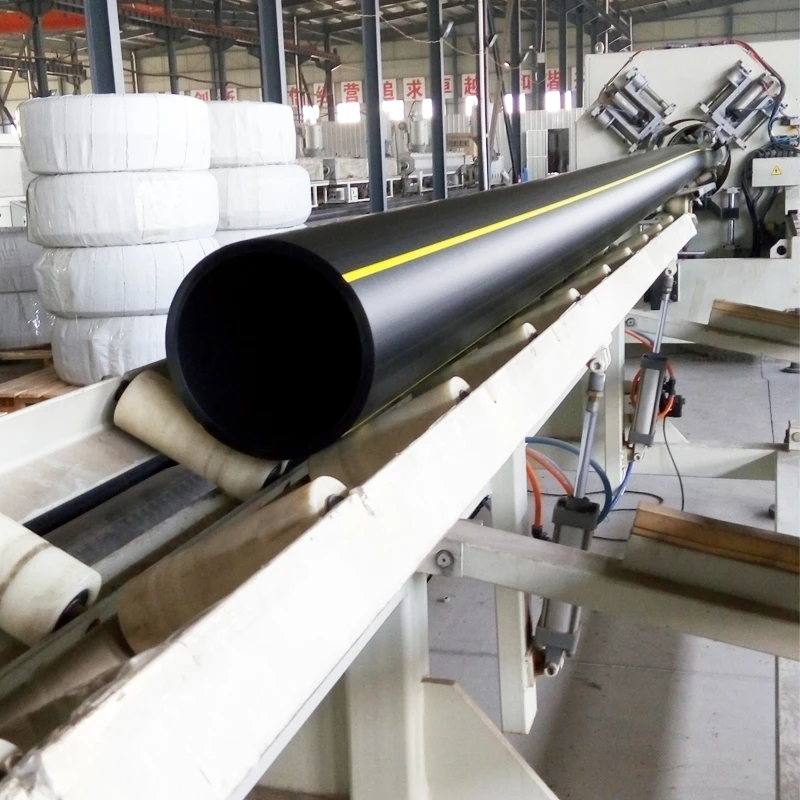
High-Density Polyethylene (HDPE) pipes have become the preferred choice for water supply systems worldwide, thanks to their exceptional durability, corrosion resistance, and flexibility. Among various sizes, the 110mm outer diameter (OD) HDPE pipe is widely used in municipal water distribution, residential water supply, irrigation, and light industrial applications. Its performance and safety are primarily determined by two core technical indicators: internal pressure-bearing capacity (pressure standards) and external loading capacity (ability to withstand soil, vehicle, and environmental pressures). Adhering to international and industry standards is crucial to ensuring the pipe's long-term reliability, preventing leaks, and maintaining the efficiency of water supply networks.
1. Basic Specifications and Material Characteristics of 110mm HDPE Pipes
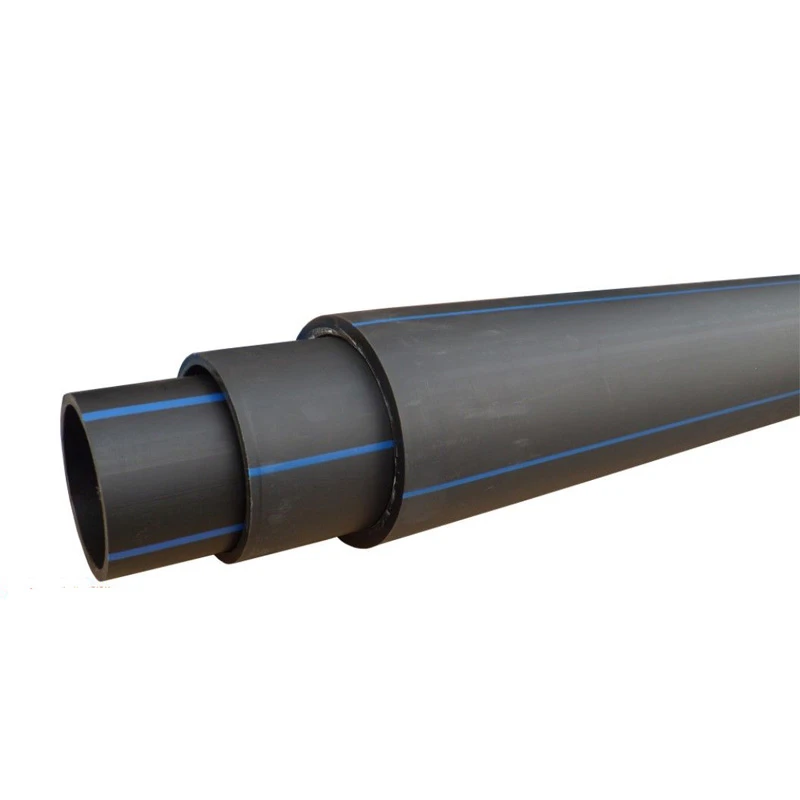
The 110mm HDPE pipe refers to a pipe with a nominal outer diameter of 110mm, with strict dimensional tolerances to ensure consistency in installation and connection with fittings. The material used for water supply applications is typically high-performance HDPE, most commonly PE100 grade. PE100 is a superior grade compared to lower grades like PE63 or PE80, offering greater strength, better resistance to slow crack growth, and longer service life—critical factors for underground water supply systems that require decades of reliable operation.
A key feature linking the pipe’s structure to its performance is the Standard Dimension Ratio (SDR), which is the ratio of the pipe’s outer diameter to its wall thickness. A lower SDR means a thicker wall, which directly translates to higher pressure resistance and stronger ability to withstand external loads. For 110mm HDPE water pipes, the most common SDR grades are tailored to different water supply scenarios, each corresponding to a specific pressure rating and wall thickness. These specifications are standardized to meet the diverse needs of low-pressure residential distribution, medium-pressure municipal mainlines, and irrigation systems.
Typically, 110mm PE100 HDPE pipes for water supply come in the following standard configurations (designed for a 50-year service life at normal operating temperatures): SDR26 (nominal pressure 0.6 MPa, wall thickness 4.2mm), SDR21 (0.8 MPa, 5.2mm), SDR17 (1.0 MPa, 6.5mm), SDR13.6 (1.25 MPa, 8.1mm), and SDR11 (1.6 MPa, 10.0mm). These parameters ensure that the pipe can be selected based on the specific pressure requirements of the project, from low-pressure residential use to medium-high pressure main pipelines.

2. Pressure Standards and Internal Pressure-Bearing Capacity
Internal pressure-bearing capacity is the most critical safety indicator for HDPE water pipes, as it determines the maximum water pressure the pipe can withstand continuously without leakage, deformation, or failure. This capacity is strictly regulated by international standards to ensure the safety of potable water transmission and minimize water loss, which is essential for efficient water supply systems.
The nominal pressure (PN) of 110mm HDPE pipes ranges from 0.6 MPa to 1.6 MPa, with each rating corresponding to a specific SDR grade and wall thickness. PN0.6 MPa pipes are ideal for low-pressure applications, such as residential water distribution where water pressure is relatively low. PN1.0 to 1.25 MPa pipes are suitable for medium-pressure municipal water mainlines, which need to transport water over longer distances. PN1.6 MPa pipes are used for high-pressure applications, such as supplying water to high-rise buildings or industrial facilities that require higher water pressure.
Before leaving the factory, all 110mm HDPE water pipes must undergo mandatory pressure tests to verify their pressure-bearing capacity. The short-term hydrostatic test requires the pipe to withstand 1.5 times its nominal pressure for one hour without any leakage or permanent deformation. Additionally, long-term tests ensure that the pipe maintains its pressure-bearing capacity over its entire 50-year service life. These tests are critical to eliminating defective products and ensuring the reliability of the water supply network.
Temperature also has a slight impact on the pipe’s pressure-bearing capacity. The nominal pressure is defined at a standard temperature of 20℃; at higher temperatures (above 25℃), the pipe’s pressure resistance decreases slightly, so the working pressure should be adjusted accordingly. However, HDPE pipes maintain good flexibility and pressure resistance at lower temperatures (above 0℃), making them suitable for use in temperate and cold regions without the risk of brittle fracture.
3. External Loading Capacity and Structural Stability
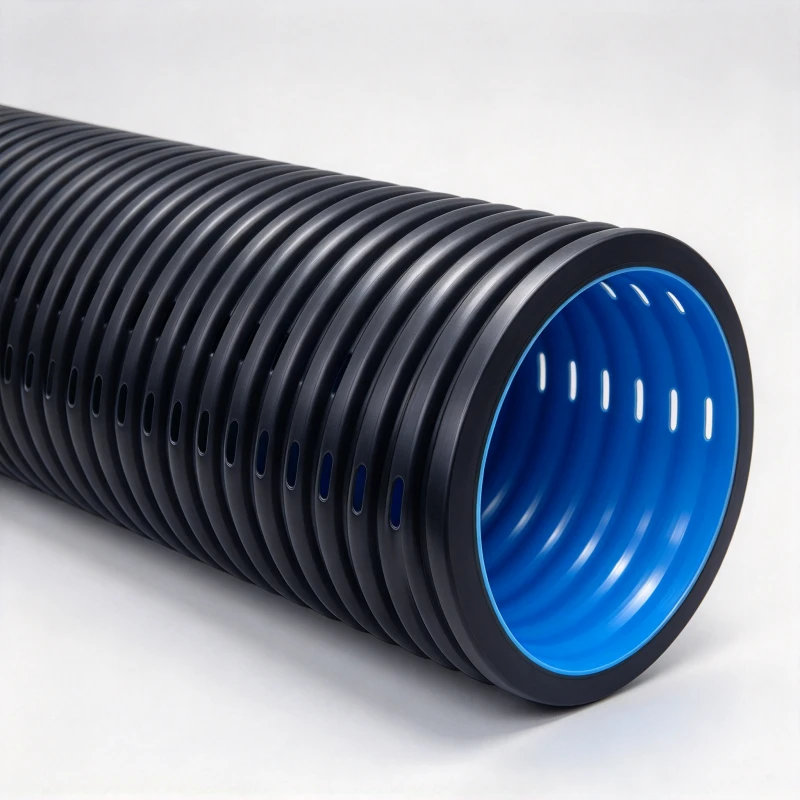
Most 110mm HDPE water pipes are installed underground, where they are subjected to various external loads, including the weight of soil (dead load), pressure from passing vehicles (live load), compaction during construction, and seasonal ground movements such as frost heave in cold regions. The pipe’s ability to withstand these loads is measured by its ring stiffness, which reflects its resistance to radial deformation and compression.
Ring stiffness is a key indicator of the pipe’s structural stability, measured in kilonewtons per square meter (kN/m²). For solid-wall 110mm PE100 HDPE pipes, the ring stiffness increases with a lower SDR grade (thicker wall). For example, SDR17 (PN1.0 MPa) pipes have a minimum ring stiffness of 8 kN/m², SDR13.6 (PN1.25 MPa) pipes have 10 kN/m², and SDR11 (PN1.6 MPa) pipes have 12 kN/m². Higher ring stiffness means the pipe is more resistant to compression, deflection, and damage from external forces.
When installed correctly, 110mm HDPE water pipes can safely withstand the weight of soil and heavy vehicles. For instance, when buried at least 1.2 meters below the road surface, the soil acts as a buffer, distributing the vehicle load evenly around the pipe. The inherent flexibility of HDPE also helps absorb minor ground settlement or frost heave, preventing cracks that often occur in rigid pipes like steel or concrete. This flexibility is a major advantage in areas with unstable soil or seasonal temperature changes.
In regions with seasonal frozen soil, 110mm HDPE pipes perform exceptionally well. Unlike rigid pipes, which can crack due to soil expansion and contraction during freezing and thawing, HDPE’s flexibility allows it to adapt to these movements without damage. This makes it a reliable choice for water supply systems in cold climates, where ground movement is a common challenge.
4. Compliance with International Standards
The pressure standards and loading capacity of 110mm HDPE pipes are regulated by international standards to ensure uniformity, safety, and quality across different manufacturers and regions. The most widely recognized standards include ISO 4427 (for HDPE pipes used in water supply), ISO 9969 (for testing ring stiffness), and EN 12201 (the European standard for plastic pipes for water supply).
These standards cover all aspects of the pipe’s performance, including material quality, dimensional accuracy, pressure-bearing capacity, ring stiffness, and resistance to corrosion and environmental factors. For example, ISO 4427 specifies strict requirements for HDPE resin used in water pipes, ensuring that the material is non-toxic and suitable for potable water transmission. Compliance with these standards is mandatory for manufacturers, and unqualified products are prohibited from being used in water supply projects.
5. Practical Applications and Conclusion
110mm HDPE pipes are widely used in municipal water distribution, residential water supply, irrigation, and light industrial applications due to their excellent pressure-bearing capacity, external loading resistance, and durability. Their lightweight design makes them easy to transport and install, reducing construction costs and time compared to rigid pipes. Unlike metal or concrete pipes, HDPE pipes are inherently corrosion-resistant, eliminating the need for expensive anti-corrosion coatings and reducing long-term maintenance costs.
The pressure standards and loading capacity of 110mm HDPE pipes are carefully tailored to meet the diverse needs of water supply systems. From low-pressure residential networks to medium-high pressure mainlines, these pipes provide a safe, reliable, and cost-effective solution. Their compliance with international standards ensures that they meet the highest safety and quality requirements, making them an indispensable component of modern water supply infrastructure.
In summary, 110mm HDPE pipes combine strong internal pressure-bearing capacity and excellent external loading resistance, supported by strict quality control and international standards. Their versatility, durability, and safety make them the preferred choice for water supply projects worldwide, contributing to efficient, reliable, and sustainable water transmission systems. Whether for urban or rural applications, these pipes deliver consistent performance that meets the demands of modern water supply networks.
916.webp)
204.webp)
659.webp)
185.webp)
312.webp)
849.webp)
587.webp)
767.webp)