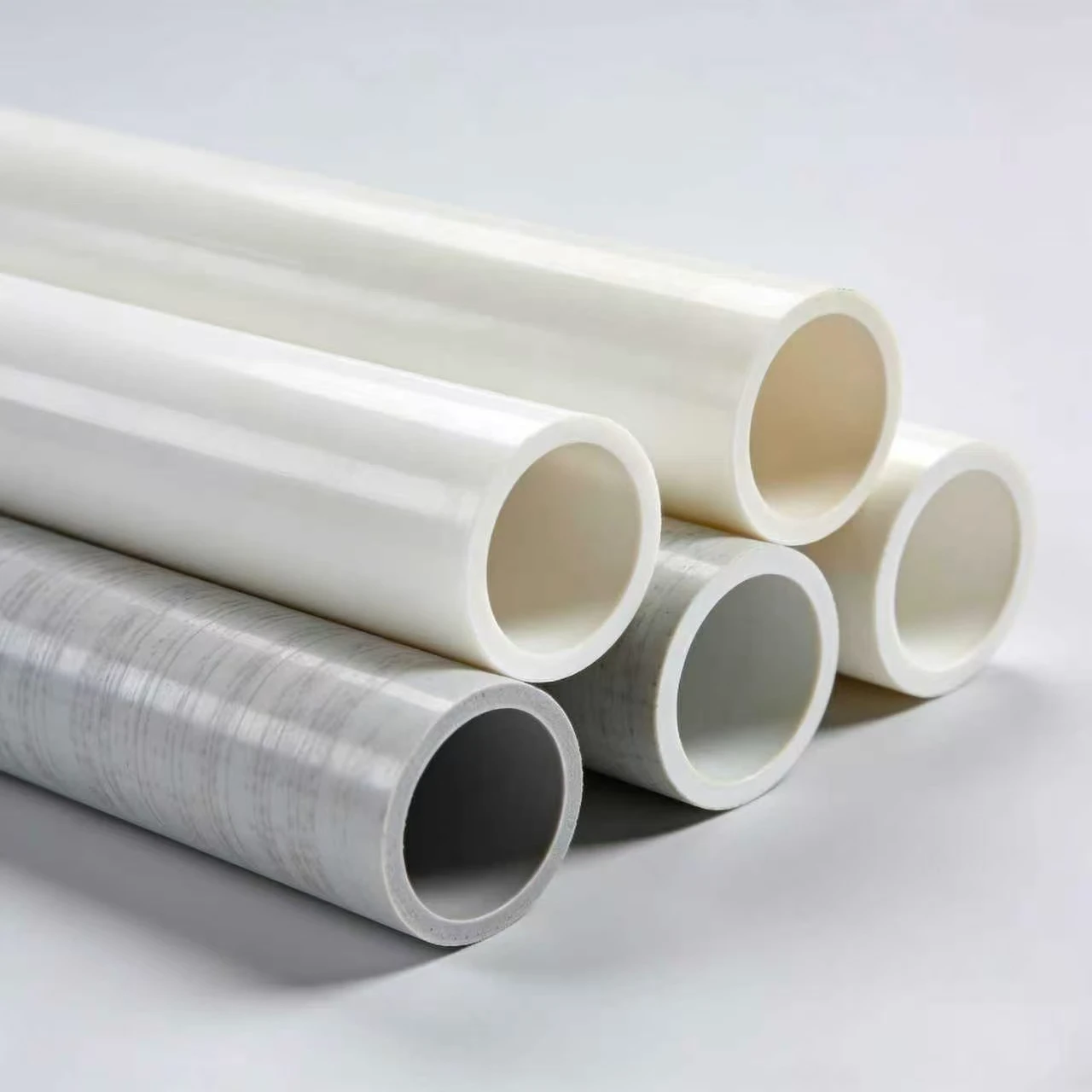
Negative pressure in pipes is a common but potentially hazardous issue that can occur in both liquid and gas transportation systems. It not only affects the normal operation of the pipeline system but may also lead to serious failures such as pipe collapse, flange leakage, and valve damage. This article comprehensively analyzes the causes of negative pressure in different types of pipelines (liquid, gas, and general systems), explains the core principles, and provides practical prevention strategies, helping engineers, maintenance personnel, and relevant practitioners understand and avoid the risks associated with negative pressure.
Liquid Transportation Pipes
Liquid transportation pipes include water supply, drainage, and chemical process systems. The main causes of negative pressure are as follows:
1. Excessive Pump Suction
Oversized Pump or Excessively High Head: If the pump is oversized or operates at an excessively high speed, its suction capacity may exceed the liquid supply capacity of the upstream system, resulting in negative pressure at the pump inlet.
Inlet Blockage or Insufficient Valve Opening: When there is partial blockage on the suction side, such as a clogged filter or insufficient valve opening, the flow of liquid entering the pump is restricted. However, the pump continues to suck liquid, leading to a rapid drop in pressure and even the formation of a vacuum.
2. Water Column Separation (Transient Vacuum and Water Hammer)
When the pump shuts down suddenly, the liquid in the pipeline continues to flow due to inertia, forming a low-pressure zone in the pipeline, usually near the pump outlet or at the highest point of the system.
If the pressure drops below the saturated vapor pressure of the liquid at that temperature, the liquid will vaporize and form vapor cavities, a phenomenon known as water column separation. When the fluid flows back and these vapor cavities collapse suddenly, an extremely high pressure impact is generated, forming a severe water hammer, which may cause:
Pipe rupture
Flange leakage
Damage to valves and instruments
This is one of the most destructive failure mechanisms related to negative pressure in liquid pipelines.
3. Emptying and Venting Operations
Air Inability to Enter During High-Point Drainage: When emptying or draining high-position pipelines, if the air valve is clogged, undersized, or unable to admit air, negative pressure will be generated at the high point.
Siphon Interruption: In a siphon system, if the inlet is exposed to air, the siphon effect will be destroyed, and negative pressure may be generated locally, depending on the specific structure of the system.
4. Liquid Thermal Contraction
In pipeline systems transporting high-temperature liquids (such as hot water or heat transfer oil), risks may arise if the system is isolated and no expansion or vacuum relief devices are installed.
When the liquid cools, its volume contracts. If the system cannot admit air or supplement liquid, the internal pressure will drop significantly, forming negative pressure and possibly causing pipe collapse.
Gas Transportation Pipes
Gas transportation pipes include ventilation systems, HVAC systems, and pneumatic conveying systems. The main causes of negative pressure are as follows:
1. Suction Generated by Fans
Fans themselves generate negative pressure at the inlet to suck in gas during operation. Problems may occur when the fan capacity exceeds the system's air intake capacity, such as:
Clogged filters or shutters
Pipe collapse or local deformation
Excessively high system resistance
In such cases, the negative pressure may far exceed the design range.
2. Unbalanced System Resistance
Mismatch Between Supply and Exhaust Air Volumes: In a closed space, if the exhaust air volume is greater than the supply air volume, the entire space and its connected pipelines will be in a negative pressure state. Although negative pressure is intentionally designed in some application scenarios (such as laboratories), it may become excessive if not properly controlled.
Branch Pipe Closure: When some of the multiple branch pipes are closed and the fan continues to operate, the negative pressure and air velocity in the remaining open branch pipes may increase abnormally.
3. Thermal Effects in Gas Pipes
For example, high-temperature gases such as flue gas will gradually cool during long-distance transportation. The decrease in gas temperature leads to volume contraction. If the system is closed and no air is supplemented, the internal pressure will drop, possibly generating negative pressure.
Common Causes Applicable to All Pipeline Systems
1. Elevation Changes and High Points
When the pipeline passes through a high point (the highest point of the terrain or pipeline), the high-speed flowing fluid downstream may produce a "dragging" effect, thereby forming negative pressure at the high point. It is usually necessary to install air valves or vacuum breakers at high points to avoid this situation.
2. Blockage or Excessive Throttling
Any form of blockage, such as:
Debris blockage
Sediment accumulation
Freezing
Incorrect valve closure
will cause a pressure drop in the direction of flow and may generate negative pressure upstream of the restriction point.
3. Design Defects
Insufficient Exhaust and Vacuum Protection: Air release valves and vacuum breakers can be regarded as the "respiratory system" of the pipeline system. If they are improperly selected, installed in the wrong position, or poorly maintained, they cannot admit air in a timely manner under transient conditions, which may lead to the generation of negative pressure.
Unreasonable Pipe Diameter Design: An excessively small pipe diameter will lead to high flow velocity. According to Bernoulli's principle, an increase in flow velocity will reduce static pressure, thereby increasing the risk of local negative pressure formation.
4. Operational Errors
Common operational causes include:
Incorrect valve operation sequence
Sudden start or stop of the pump
Rapid commissioning of the system without full water filling and air venting
These operations will cause severe transient pressure fluctuations and may generate negative pressure instantly.
Core Principles and Prevention Strategies
The fundamental reason for the generation of negative pressure in pipes is simple: the volume of fluid flowing out or being pumped is greater than the volume entering or being supplemented.
To prevent the generation of negative pressure, the following aspects should be focused on during design and operation:
Reasonable Equipment Selection: Match the capacity of pumps and fans with system characteristics.
Ensure System "Breathing Capacity": Correctly arrange and maintain air valves and vacuum breakers.
Control Transient Processes: Adopt soft start, soft stop, frequency conversion drive, and water hammer prevention devices.
Keep Pipes Unobstructed: Conduct regular inspections and cleanings to avoid blockages.

916.webp)
204.webp)
659.webp)
185.webp)
312.webp)
849.webp)
587.webp)
767.webp)