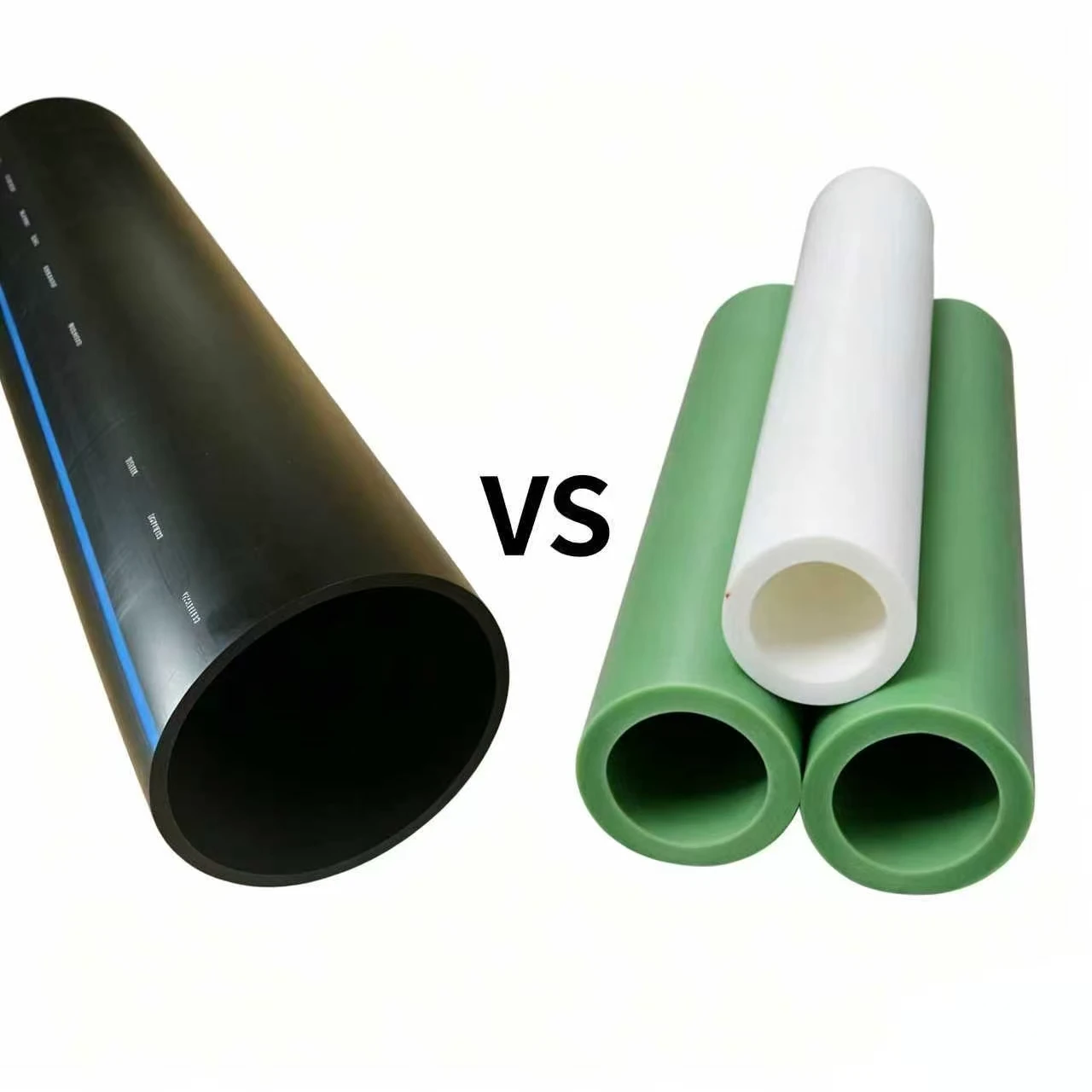
However, choosing between PPR and HDPE pipes is not always straightforward. Each material has unique characteristics that make it suitable for specific environments and applications. This article provides a comprehensive comparison of PPR vs HDPE pipes, helping you determine which solution is best for your project.
What Are PPR and HDPE Pipes?
PPR Pipe
PPR pipe is made from polypropylene random copolymer, a thermoplastic material known for its high temperature resistance and chemical stability. It is widely used in hot and cold water supply systems, HVAC installations, and indoor plumbing.
HDPE Pipe
HDPE pipe is manufactured from high-density polyethylene, a flexible and durable thermoplastic polymer. It is commonly used in municipal water supply, gas distribution, irrigation, and underground pipeline systems due to its toughness and adaptability.
Key Differences Between PPR and HDPE Pipes
1. Material Composition and Structure
The fundamental difference lies in the raw materials:
PPR: Polypropylene-based, rigid and stable
HDPE: Polyethylene-based, flexible and impact-resistant
PPR pipes are more rigid and dimensionally stable, while HDPE pipes are highly flexible and better suited for dynamic environments such as shifting soil or seismic zones.
2. Temperature Resistance
Temperature performance is one of the most critical factors when choosing between PPR and HDPE pipes.
PPR Pipes: Can withstand temperatures up to 95°C, making them ideal for hot water systems and heating applications
HDPE Pipes: Typically operate up to 60°C, making them more suitable for cold or moderate temperature applications
Conclusion:
If your system involves hot water or high temperatures, PPR is the better choice.
3. Flexibility and Mechanical Strength
HDPE Pipes:
Excellent flexibility
High impact resistance
Can absorb ground movement
PPR Pipes:
Higher rigidity
Better dimensional stability
Less deformation under pressure
HDPE pipes perform exceptionally well in underground installations and uneven terrains, while PPR pipes are more suitable for stable indoor environments.
4. Installation and Connection Methods
Installation methods differ significantly:
Connected using socket fusion welding
Requires precise temperature control
Common in building plumbing systems
Multiple connection methods:
Butt fusion
Electrofusion
Mechanical fittings
Suitable for large-scale and outdoor projects
Conclusion:
HDPE offers more flexibility in installation, especially for large infrastructure projects.
5. Pressure Resistance and Durability
Both materials offer excellent durability but perform differently under pressure:
PPR: Strong under stable pressure conditions, ideal for building systems
HDPE: Performs better under dynamic loads and external stress
HDPE pipes are widely used in municipal and industrial applications because they can withstand environmental stress, including soil movement and external pressure.
6. Chemical Resistance
Both PPR and HDPE pipes have strong chemical resistance:
PPR: Better for high-temperature chemical fluids
HDPE: Excellent resistance to most chemicals and corrosion
Unlike metal pipes, both materials do not rust or scale, ensuring long-term water quality and system efficiency.
7. Application Areas
PPR Pipe Applications:
Hot and cold water supply systems
Residential plumbing
HVAC systems
Indoor industrial pipelines
HDPE Pipe Applications:
Municipal water supply
Gas distribution systems
Irrigation systems
Mining and industrial pipelines
Underground drainage
Key Insight:
PPR is mainly used indoors, while HDPE dominates outdoor and underground applications.
8. Climate Adaptability
Environmental conditions play a major role in pipe selection.
Cold climates:
HDPE performs better due to its flexibility and resistance to cracking
Hot climates:
PPR is more stable in high-temperature indoor systems
Outdoor exposure:
HDPE has excellent UV resistance and performs well under sunlight
9. Cost Comparison
PPR Pipes:
Higher initial cost
Lower maintenance
HDPE Pipes:
Lower upfront cost
Slightly higher installation control requirements
For large-scale projects, HDPE is often more cost-effective.
10. Service Life
Both materials offer long service life:
PPR: 50+ years
HDPE: 50–100 years depending on conditions
PPR vs HDPE: Quick Comparison Table
| Feature | PPR Pipe | HDPE Pipe |
| Material | Polypropylene | Polyethylene |
| Temperature Resistance | Up to 95°C | Up to 60°C |
| Flexibility | Low | High |
| Installation | Socket fusion | Multiple methods |
| Applications | Indoor plumbing | Outdoor & underground |
| Cost | Higher | Lower |
| Lifespan | 50+ years | 50–100 years |
Which Pipe Should You Choose?
The decision between PPR and HDPE pipes depends on your project requirements:
Choose PPR Pipe if:
You need high-temperature resistance
The system is indoors
You require stable pressure performance
It is a building plumbing or HVAC project
Choose HDPE Pipe if:
The pipeline is underground or outdoors
Flexibility is required
The project involves long-distance transportation
You need resistance to environmental stress
Both PPR and HDPE pipes are excellent materials, but they serve different purposes. PPR pipes are ideal for indoor hot water systems and stable environments, while HDPE pipes excel in outdoor, underground, and large-scale infrastructure applications.
Understanding the strengths and limitations of each material allows engineers, contractors, and buyers to make informed decisions that improve system efficiency, reduce costs, and ensure long-term reliability.
Ultimately, there is no absolute “better” option—only the right material for the right application.
916.webp)
204.webp)
659.webp)
185.webp)
312.webp)
849.webp)
587.webp)
767.webp)