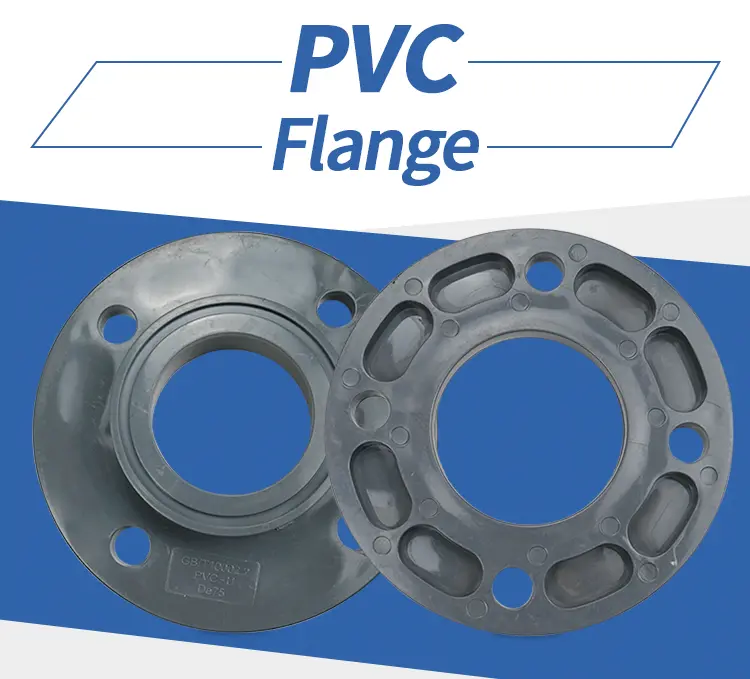
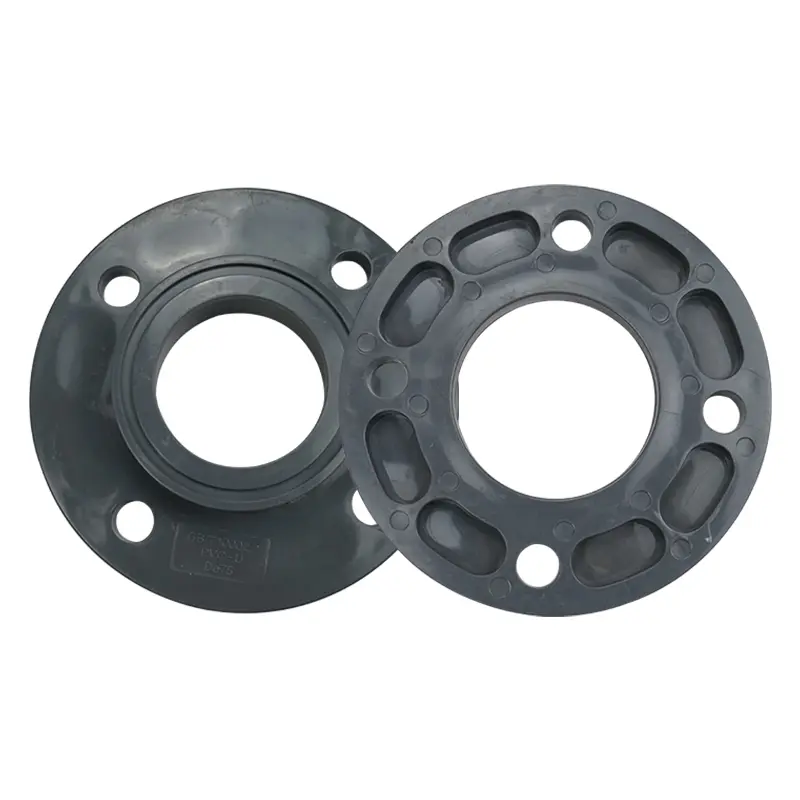
a detachable and secure connection between pipelines, valves, pumps, tanks, and other equipment.
Unlike solvent-welded joints that create permanent connections, PVC flange fittings use bolts, nuts, and sealing gaskets to form a pressure-tight joint that can be easily disassembled for inspection, maintenance, or equipment replacement. This makes PVC flanges an essential component in systems requiring frequent servicing or future expansion.
This comprehensive guide explains everything you need to know about PVC flange pipe fittings, including their types, specifications, manufacturing process, working principle, installation methods, applications, advantages, and comparisons with alternative flange systems.
What Are PVC Flange Pipe Fittings?
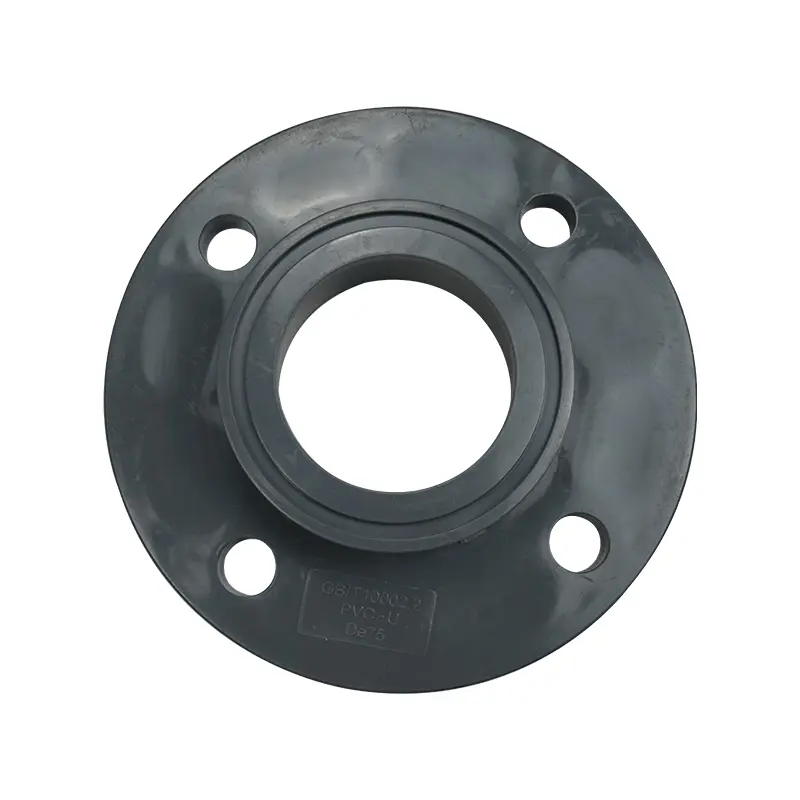
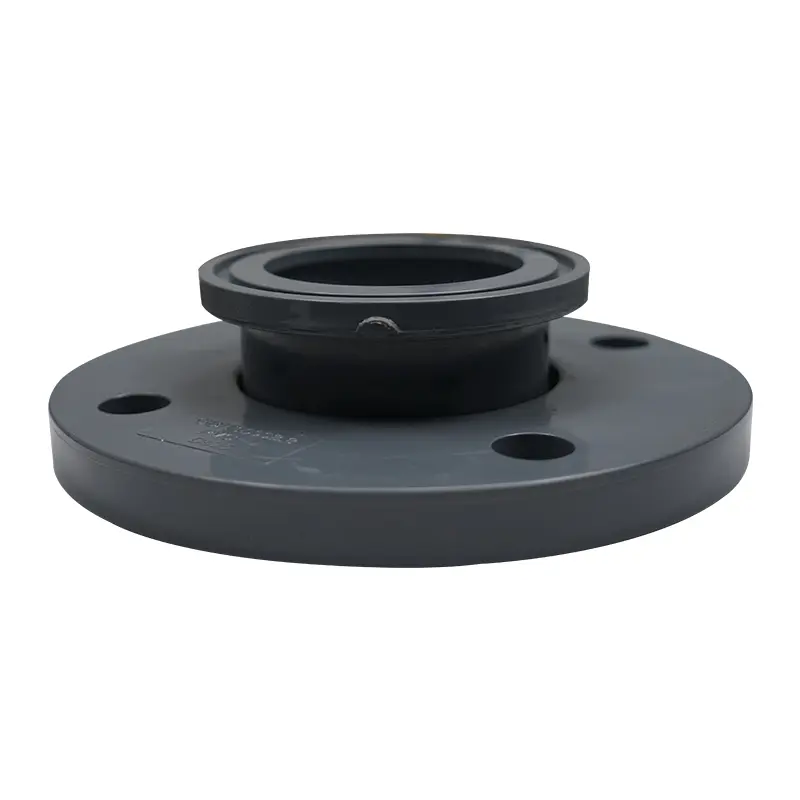
A PVC flange pipe fitting is a circular connector designed to join two sections of piping or connect a pipe to mechanical equipment through a bolted connection.
A typical PVC flange assembly consists of:
PVC flange adapter
Backing ring (optional)
Rubber gasket or O-ring
Bolts and nuts
Mating flange or equipment flange
The flange provides a flat sealing surface that compresses a gasket when tightened, creating a leak-resistant connection capable of handling pressure and fluid flow.
Unlike threaded fittings, PVC flanges are suitable for larger pipe diameters and higher-flow applications.
Main Types of PVC Flange Pipe Fittings
Different piping systems require different flange configurations.
Slip-On PVC Flange
The pipe slides into the flange socket and is bonded with PVC solvent cement.
Advantages include:
Easy installation
Low cost
Reliable sealing
Blind PVC Flange
A blind flange seals the end of a pipeline.
Typical applications include:
Future pipeline expansion
Maintenance isolation
Pressure testing
Equipment shutdown
Socket Flange
The pipe fits inside the flange socket before being bonded.
Ideal for medium-diameter piping systems.
Loose Backing Flange
Often paired with HDPE or PVC stub ends.
Benefits include:
Easy bolt alignment
Simplified installation
Lower stress on piping
Threaded PVC Flange
Uses female threads for connection without solvent cement.
Suitable for:
Temporary installations
Low-pressure systems
Maintenance access
Standard Sizes
PVC flange fittings are available in numerous sizes.
Common nominal diameters include:
| Pipe Size | Outside Diameter |
|---|---|
| 20 mm | 20 mm |
| 25 mm | 25 mm |
| 32 mm | 32 mm |
| 40 mm | 40 mm |
| 50 mm | 50 mm |
| 63 mm | 63 mm |
| 75 mm | 75 mm |
| 90 mm | 90 mm |
| 110 mm | 110 mm |
| 160 mm | 160 mm |
| 200 mm | 200 mm |
| 250 mm | 250 mm |
| 315 mm | 315 mm |
Larger industrial sizes are also available depending on project requirements.
Pressure Ratings
PVC flange fittings are commonly manufactured for:
PN6
PN10
PN12.5
PN16
The pressure rating depends on:
Pipe wall thickness
Flange design
Operating temperature
Gasket quality
Material Composition
High-quality PVC flanges are manufactured using:
Unplasticized PVC (uPVC)
PVC-U
PVC-C (CPVC for high-temperature applications)
Premium products may include:
UV stabilizers
Impact modifiers
Lead-free formulations
Food-grade compounds for potable water systems
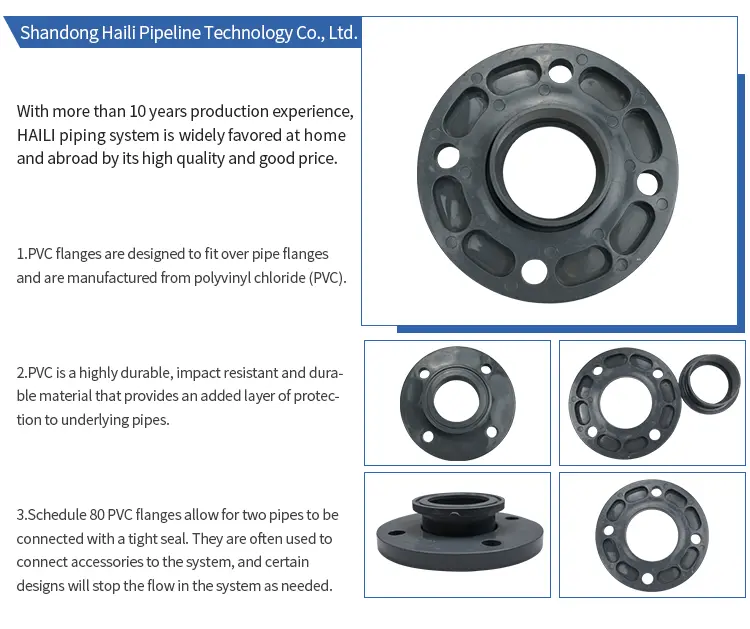
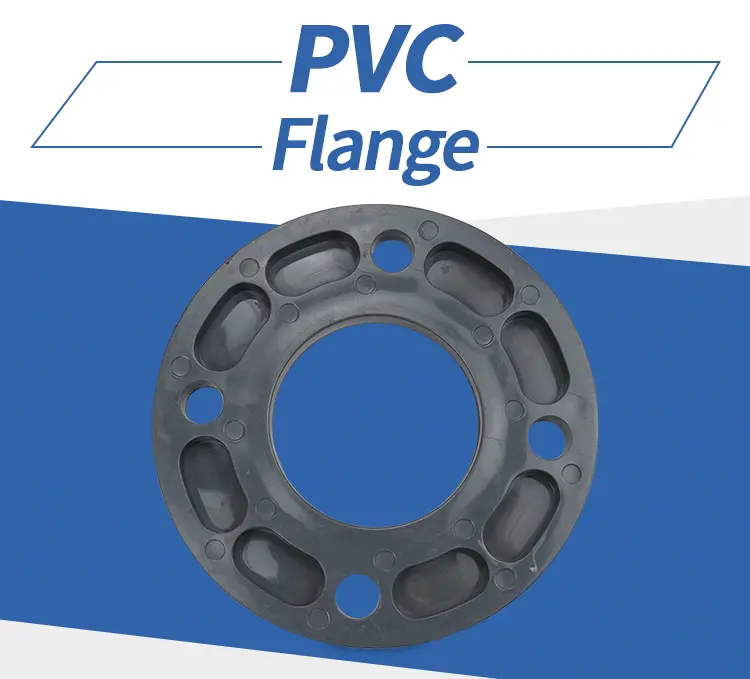
PVC Flange connection
Flange connection is to fix two pipes, pipe fittings or equipment on a flange plate, then add a flange gasket between the two flange plates, and finally tighten the two flange plates with bolts. A detachable joint which is tightly combined.
The advantage of PVC flange fittings
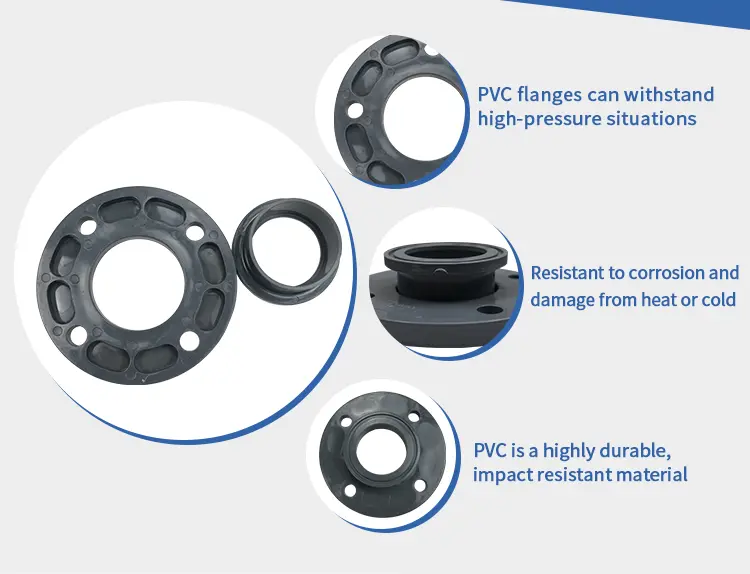
Flange connection has good strength and tightness, and is suitable for a wide range of sizes. It can be used in equipment and pipelines, so it is the most common application.
The shortcoming of PVC flange fittings
However, when the flange is connected, it cannot be assembled and disassembled quickly, and the manufacturing cost is high.
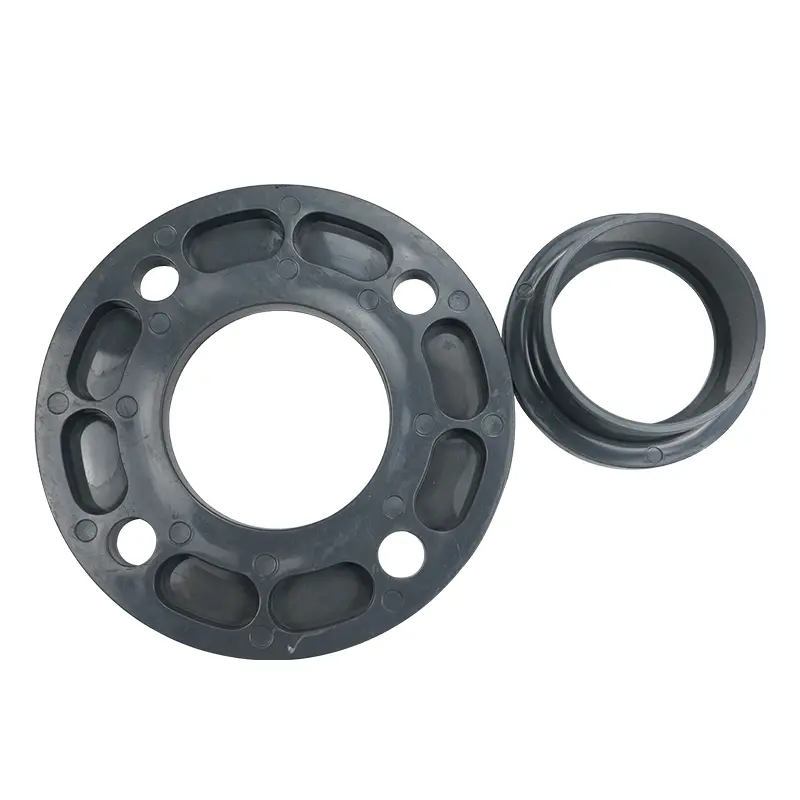
Lap Joint flange of PVC
The Lap Joint flange is the movable flange piece, which is generally matched with the water supply and drainage fittings (the most common on the expansion joint). The equipment is bolted.

Manufacturing Process
PVC flange fittings are typically produced using precision injection molding.
Step 1: Raw Material Preparation
PVC resin is blended with stabilizers, lubricants, pigments, and processing additives.
Step 2: Injection Molding
Molten PVC is injected into precision molds under high pressure to ensure dimensional accuracy.
Step 3: Cooling
Controlled cooling prevents deformation and ensures uniform wall thickness.
Step 4: Finishing
Excess flash is removed, and bolt holes are machined or inspected for alignment.
Step 5: Quality Inspection
Manufacturers verify:
Flange dimensions
Flatness
Bolt hole spacing
Surface finish
Pressure performance
Working Principle of PVC Flange Pipe Fittings
PVC flange fittings create a detachable mechanical seal through controlled compression.
Step 1: Pipe Connection
The PVC pipe is solvent-welded or threaded into the flange adapter.
Step 2: Gasket Placement
A rubber gasket or elastomeric seal is positioned between the two flange faces.
Step 3: Bolt Installation
Bolts are inserted through matching flange holes.
Step 4: Uniform Tightening
Bolts are tightened in a crisscross sequence to distribute pressure evenly.
Step 5: Leak-Free Seal
The compressed gasket fills minor surface irregularities, preventing fluid leakage while allowing the joint to be dismantled whenever necessary.
Advantages of PVC Flange Pipe Fittings
Corrosion Resistance
PVC is resistant to rust, scaling, and electrochemical corrosion.
Lightweight
PVC flanges weigh significantly less than metal alternatives, reducing transportation and installation costs.
Easy Maintenance
Bolted connections can be disassembled without cutting the pipeline.
Chemical Resistance
Suitable for transporting:
Potable water
Wastewater
Fertilizers
Acids
Alkalis
Saltwater
Industrial chemicals
Smooth Internal Surface
Low friction reduces pressure loss and minimizes sediment accumulation.
Long Service Life
Quality PVC flange systems typically provide over 50 years of reliable operation under recommended conditions.
Common Applications
PVC flange pipe fittings are widely used across many industries.
Municipal Water Supply
Connecting pipelines to pumps, valves, and water treatment equipment.
Irrigation Systems
Facilitating maintenance and expansion of agricultural irrigation networks.
Swimming Pools
Connecting filtration equipment, pumps, and circulation systems.
Chemical Processing
Transporting corrosive liquids safely in industrial facilities.
Wastewater Treatment Plants
Providing detachable connections for tanks, pumps, and process equipment.
Aquaculture
Managing water circulation in fish farms and hatcheries.
Industrial Manufacturing
Connecting process piping to machinery and storage vessels.
Installation Best Practices
To ensure long-term performance:
Verify flange compatibility and pressure rating.
Clean flange faces thoroughly.
Position the gasket correctly without twisting.
Align bolt holes before inserting bolts.
Tighten bolts gradually in a star or crisscross pattern.
Avoid over-tightening, which may deform the flange or gasket.
Perform a pressure test before placing the system into service.
Proper installation helps maintain sealing performance and extends service life.
PVC Flange Pipe Fittings vs HDPE Flanges
| Feature | PVC Flange | HDPE Flange |
| Installation | Solvent Cement | Butt or Electrofusion |
| Weight | Lightweight | Lightweight |
| Flexibility | Moderate | Excellent |
| Pressure Resistance | High | High |
| Maintenance | Easy | Easy |
Winner: PVC is often preferred for rigid piping systems, while HDPE is better suited to applications requiring flexibility and resistance to ground movement.
PVC Flange vs CPVC Flange
| Feature | PVC | CPVC |
| Maximum Temperature | Lower | Higher |
| Chemical Resistance | Excellent | Excellent |
| Cost | Lower | Higher |
| Cold Water Systems | Excellent | Excellent |
| Hot Water Systems | Limited | Excellent |
Winner: PVC is the economical choice for cold-water and drainage applications, while CPVC is recommended for hot-water service.
PVC Flange vs Steel Flange
| Feature | PVC | Steel |
| Corrosion Resistance | Excellent | Requires Coating |
| Weight | Light | Heavy |
| Installation Cost | Lower | Higher |
| Maintenance | Minimal | Higher |
| Chemical Resistance | Excellent | Varies |
Winner: PVC offers lower installation costs and superior corrosion resistance for non-metallic piping systems.
PVC Flange vs Stainless Steel Flange
| Feature | PVC | Stainless Steel |
| Initial Cost | Lower | Higher |
| Corrosion Resistance | Excellent | Excellent |
| High Temperature | Limited | Excellent |
| Weight | Light | Heavy |
| Food Processing | Suitable | Excellent |
Winner: PVC is more cost-effective for water and chemical handling, while stainless steel is preferred for high-temperature, sanitary, or high-pressure industrial environments.
How to Choose the Right PVC Flange
Before purchasing, evaluate:
Pipe diameter
Pressure rating (PN class)
Operating temperature
Fluid type
Chemical compatibility
Flange standard (DIN, ANSI, JIS, BS)
Gasket material
Bolt material
Installation environment
Selecting the correct flange improves system reliability and minimizes maintenance costs.
Future Trends in PVC Flange Technology
Demand for PVC flange fittings continues to grow as infrastructure projects expand worldwide. Emerging trends include:
Lead-free and environmentally friendly PVC compounds
Improved UV-resistant formulations for outdoor installations
Precision injection molding for tighter tolerances
Higher-performance gasket materials
Smart water management systems with modular flange connections
Increased use in desalination, water reuse, and industrial automation projects
These innovations are helping PVC flange systems deliver longer service life, greater sustainability, and lower lifecycle costs.
Conclusion
PVC flange pipe fittings provide a reliable, economical, and maintenance-friendly solution for connecting pipelines to valves, pumps, tanks, and industrial equipment. Their detachable bolted design allows for easy inspection, repair, and future expansion while maintaining excellent sealing performance through properly compressed gaskets.
Compared with HDPE, CPVC, steel, and stainless steel flange systems, PVC flanges offer outstanding corrosion resistance, lightweight handling, low installation costs, and broad chemical compatibility. Whether used in municipal water supply, irrigation, wastewater treatment, swimming pools, aquaculture, or industrial processing, PVC flange pipe fittings remain one of the most practical and cost-effective connection solutions for modern piping systems.
916.webp)
204.webp)
659.webp)
185.webp)