Modern piping systems require connection methods that are not only leak-proof but also easy to install, maintain, and disassemble. In water treatment plants, chemical processing facilities, irrigation systems, industrial pipelines, swimming pools, and municipal infrastructure, PVC Lap Joint Flange Pipe Fittings have become a preferred solution because they combine the corrosion resistance of PVC with the flexibility of a rotating flange connection.
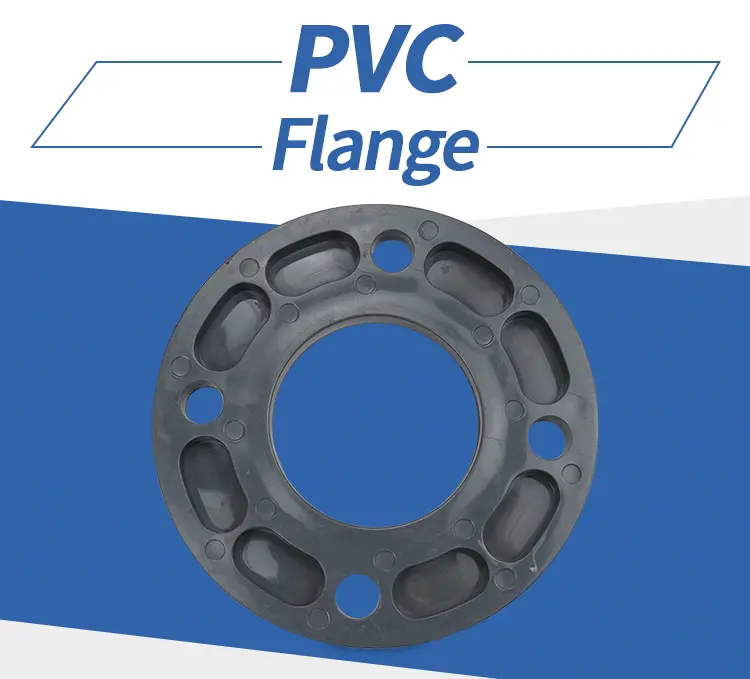
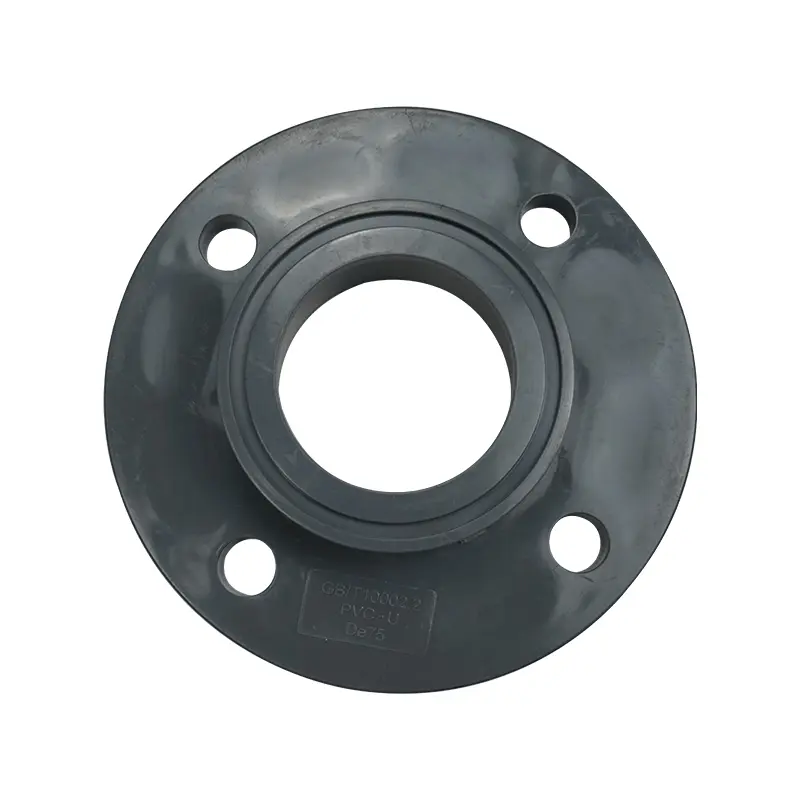
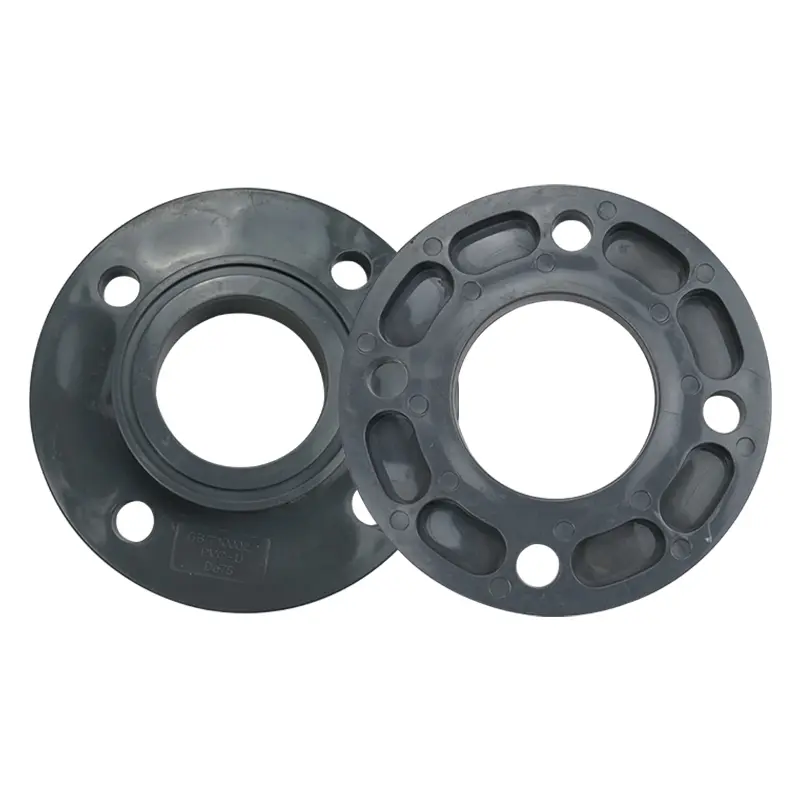
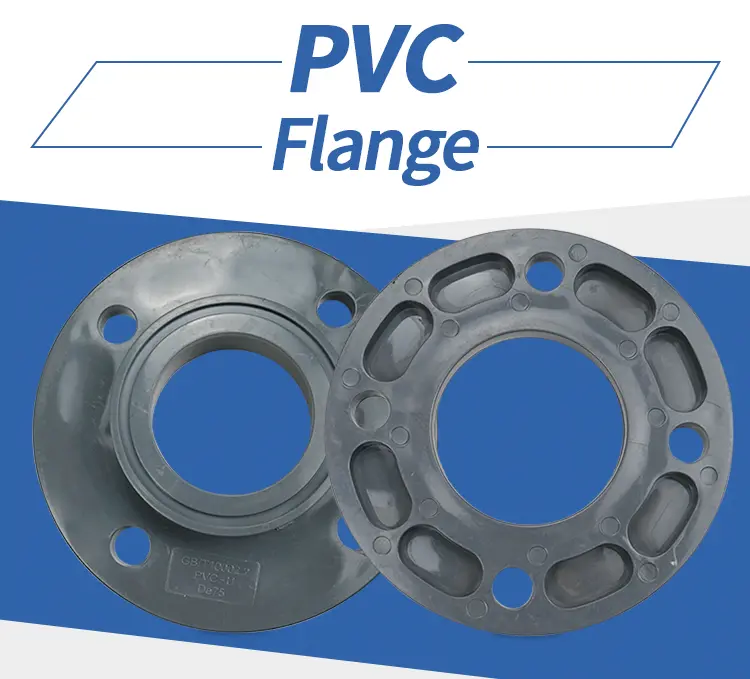
Unlike fixed flanges that are permanently molded onto the fitting, a lap joint flange consists of two separate components: a PVC stub end (also called a flange adapter) and a loose backing flange. This design allows the backing flange to rotate freely, making bolt-hole alignment much easier during installation. It also simplifies maintenance because equipment such as valves, pumps, and tanks can be removed without cutting the pipeline.
This comprehensive guide explains everything you need to know about PVC lap joint flange pipe fittings, including their structure, working principle, specifications, manufacturing process, installation methods, applications, advantages, and comparisons with alternative flange systems.
What Are PVC Lap Joint Flange Pipe Fittings?
A PVC lap joint flange fitting is a detachable flange connection consisting of two primary components:
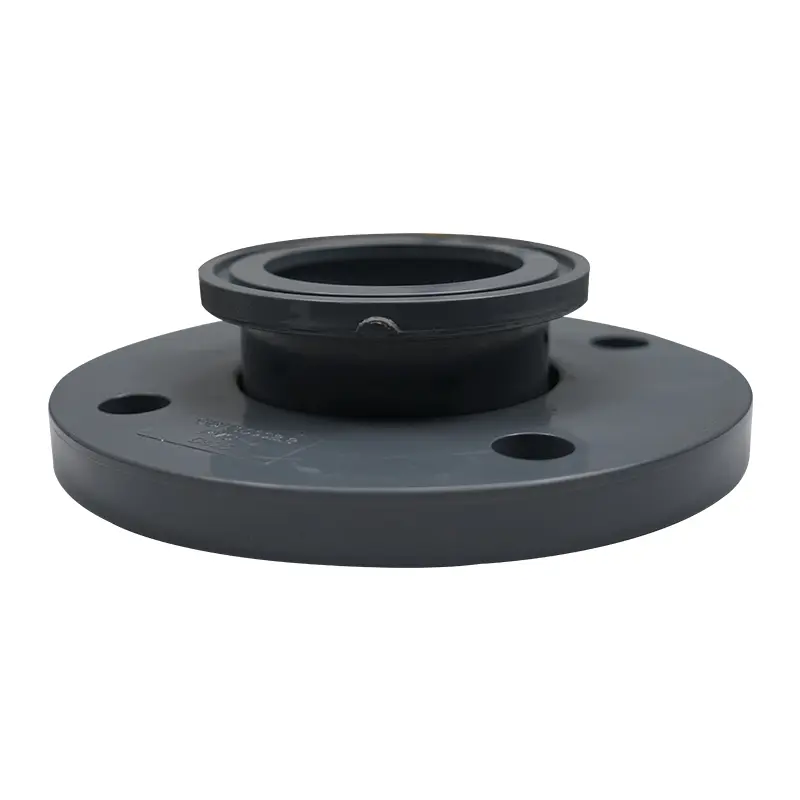
PVC stub end (flange adapter)
Loose backing flange (plastic, galvanized steel, or stainless steel)
The stub end is permanently bonded to the PVC pipe using solvent cement, while the backing flange remains loose and rotates around the pipe. When bolted to another flange with a gasket between the sealing faces, the assembly creates a reliable pressure-tight connection.
Unlike one-piece molded flanges, the backing ring does not contact the conveyed fluid. Only the PVC stub end and gasket are exposed to the process media, making lap joint flanges ideal for corrosive applications.
Main Components
PVC Stub End
The stub end provides the sealing surface and is permanently connected to the pipe.
Features include:
Flat sealing face
Socket or spigot connection
High dimensional accuracy
Excellent chemical resistance
Loose Backing Flange
The backing flange slides freely over the pipe and rotates for easy bolt alignment.
Materials include:
PVC
PP (Polypropylene)
Galvanized steel
Carbon steel
Stainless steel
Gasket
The gasket forms the leak-proof seal between mating flanges.
Common materials include:
EPDM
NBR
Viton
PTFE
Bolts and Nuts
Fasteners compress the flange assembly to create uniform sealing pressure.
Available Sizes
PVC lap joint flange fittings are manufactured in a wide range of diameters.
Typical sizes include:
| Pipe Size | Common Applications |
|---|---|
| 20 mm | Laboratory piping |
| 25 mm | Residential water systems |
| 32 mm | Irrigation |
| 40 mm | Chemical dosing |
| 50 mm | Pool circulation |
| 63 mm | Water treatment |
| 75 mm | Agriculture |
| 90 mm | Industrial water |
| 110 mm | Municipal supply |
| 160 mm | Wastewater |
| 200 mm | Industrial processing |
| 250 mm | Pump stations |
| 315 mm | Large infrastructure |
Custom sizes are available for specialized engineering projects.
Pressure Ratings
Most PVC lap joint flange systems are available in:
PN6
PN10
PN16
The pressure capability depends on:
Pipe wall thickness
Stub end design
Flange material
Gasket quality
Operating temperature
Manufacturing Process
Step 1: Raw Material Preparation
High-quality PVC resin is blended with:
Stabilizers
Lubricants
UV inhibitors
Impact modifiers
Step 2: Injection Molding
The stub end is precision molded to ensure accurate dimensions and smooth sealing surfaces.
Step 3: Backing Flange Manufacturing
Backing flanges are produced using injection molding or metal machining, depending on the selected material.
Step 4: Cooling and Finishing
Components are cooled, trimmed, and inspected.
Step 5: Quality Control
Manufacturers verify:
Socket dimensions
Bolt hole alignment
Flatness
Pressure resistance
Surface finish
Working Principle
The PVC lap joint flange works by combining a permanent pipe connection with a detachable mechanical joint.
Step 1: Stub End Installation
The PVC stub end is solvent welded onto the pipe.
Step 2: Backing Flange Placement
The loose backing flange slides over the pipe and rests behind the flange shoulder.
Step 3: Gasket Positioning
A gasket is placed between the mating flange faces.
Step 4: Bolt Alignment
Because the backing flange rotates freely, installers can easily align bolt holes with pumps, valves, or adjacent piping.
Step 5: Bolt Tightening
Bolts are tightened in a crisscross pattern to apply even pressure across the gasket, creating a reliable leak-resistant seal.
Since the backing flange does not carry process fluid, corrosion risks are minimized even when metal backing rings are used in corrosive environments.
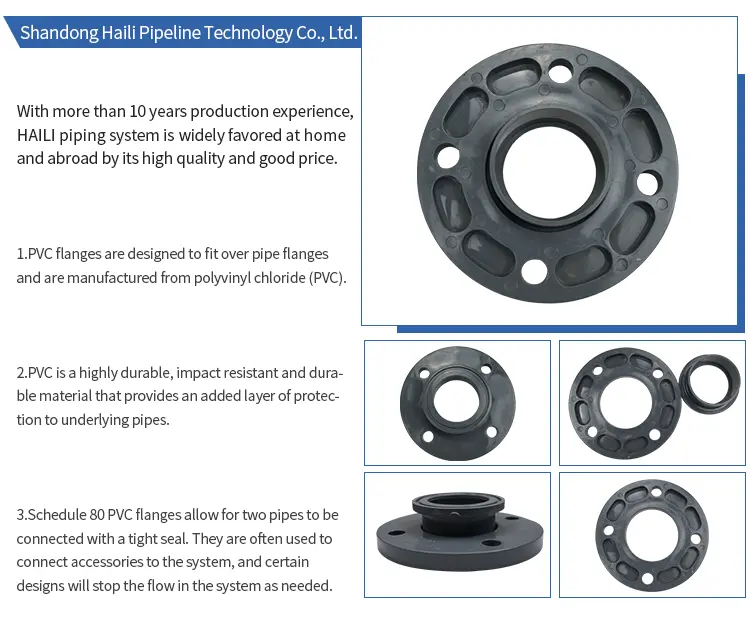
The advantage of PVC lap joint flange
1. Cost saving. When the pipe material is special and expensive, the cost of welding flanges of the same material is high.
2. It is inconvenient for welding or processing or requires high strength. Such as PVC plastic pipes, glass steel pipes, and the like.
3. Easy to construct. For example, it is not easy to align the flange bolt holes during connection or to prevent the flange bolt holes from changing in the future when the equipment is replaced, etc.
The shortcoming of PVC lap joint flange
1. Low pressure.
2. The strength of the welding ring is low (especially when the thickness is below 3mm)
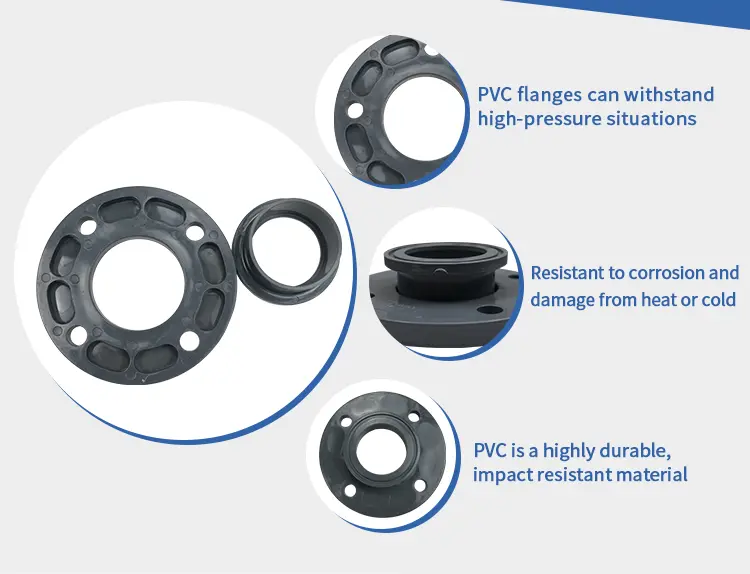
Flange classification
According to chemical industry standards: Integral flange (IF), threaded flange (Th), plate flat welding flange (PL), butt welding flange with a diameter (WN), flat welding flange with a neck (SO), Socket welding flange (SW), lap joint flange (PJ/SE), flat welding ring loose flange (PJ/RJ), lining flange cover (BL (S)), flange cover (BL).
According to petrochemical industry standards: threaded flange (PT), butt welding flange (WN), flat welding flange (SO), socket welding flange (SW), loose flange (LJ), flange cover (not shown).
According to the mechanical industry standard: integral flange, butt welding flange, plate flat welding flange, butt welding ring plate loose flange, flat welding ring plate flexible flange, flanging ring plate loose flange, Flange cover.
Flat welding steel flange: suitable for carbon steel pipe connection with nominal pressure not exceeding 2.5MPa. The sealing surface of a flat welding flange can be made into three types: smooth, concave, and convex, and tongue and groove. The largest amount of application. It is mostly used when the medium conditions are relatively mild, such as low-pressure unpurified compressed air and low-pressure circulating water. Its advantage is that the price is relatively cheap;
Butt fusion welding steel flange: It is used for butt welding of flange and pipe. It has reasonable structure, high strength, and rigidity, can withstand high temperature and high pressure, repeated bending and temperature fluctuation, and has reliable sealing performance. The butt welding flange with a nominal pressure of 0.25~2.5MPa adopts a concave-convex sealing surface;
Socket flange: commonly used in pipelines with PN≤10.0MPa and DN≤40;
lap joint flange: lap joint flange is commonly known as loose flange, divided welding ring looper flange, flanging looper flange, and butt welding looper flange. It is often used when the medium temperature and pressure are not high and the medium is more corrosive. When the medium is more corrosive, the part of the flange contacting the medium (flanging short joint) is made of high-grade corrosion-resistant materials such as stainless steel, and the outside is clamped by flange rings of low-grade materials such as carbon steel. to achieve sealing;
Integral flange: The flange is often integrated with equipment, pipes, fittings, valves, etc. This type is commonly used in equipment and valves. Sealing surface form: flat surface (FF), convex surface (RF), convex surface (M), concave surface (F), concave and convex surface (MF), tenon surface (T) groove surface (G), tenon groove surface (TG), ring Connection plane (RJ).
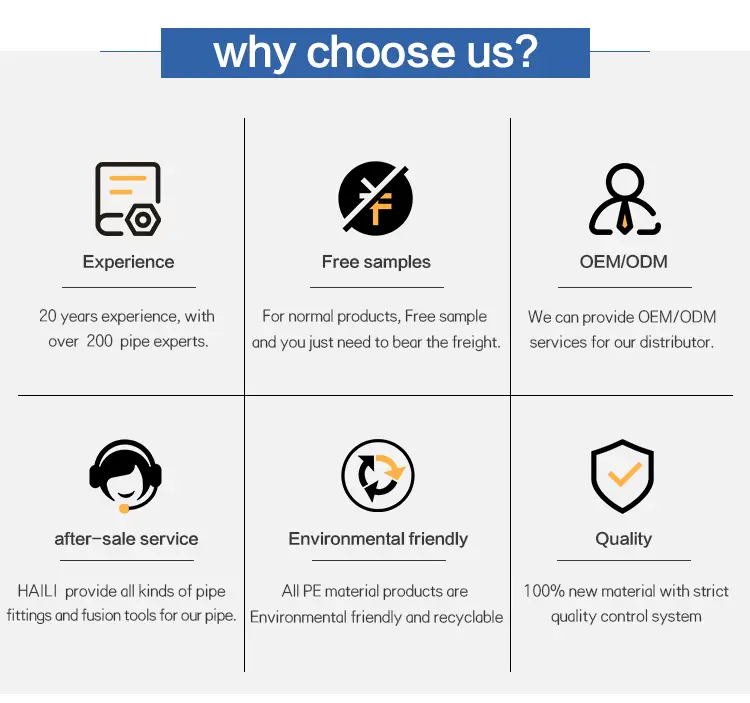
Advantages of PVC Lap Joint Flanges
Easy Bolt Alignment
The rotating backing flange eliminates installation difficulties caused by fixed bolt patterns.
Simple Maintenance
Equipment can be removed without cutting the pipeline.
Excellent Corrosion Resistance
Only PVC and the gasket contact the conveyed fluid.
Lower Installation Time
The rotatable flange reduces alignment adjustments during assembly.
Lightweight Design
PVC significantly reduces handling and transportation costs.
Long Service Life
Quality PVC systems commonly provide over 50 years of service under recommended operating conditions.
Cost-Effective
Lower material and labor costs compared with metal piping systems.
Typical Applications
PVC lap joint flanges are widely used in:
Water Treatment Plants
Connecting filters, pumps, valves, and storage tanks.
Swimming Pool Systems
Joining circulation pumps, filters, and chlorination equipment.
Chemical Processing
Handling acids, alkalis, and other corrosive fluids.
Irrigation Networks
Connecting pumps, manifolds, and control valves.
Aquaculture
Supporting water circulation and filtration systems.
Industrial Manufacturing
Connecting process piping to machinery and reactors.
Municipal Infrastructure
Facilitating maintenance of water distribution and wastewater systems.
Installation Guidelines
Proper installation ensures long-term sealing performance.
Inspect all components for damage.
Clean sealing surfaces thoroughly.
Verify gasket compatibility with the process fluid.
Slide the backing flange onto the pipe before bonding the stub end.
Solvent weld the stub end according to manufacturer recommendations.
Position the gasket evenly.
Align bolt holes using the rotating backing flange.
Tighten bolts gradually in a star pattern.
Perform hydrostatic testing before operation.
Avoid excessive bolt torque, which may damage the PVC flange or deform the gasket.
PVC Lap Joint Flange vs Slip-On PVC Flange
| Feature | Lap Joint Flange | Slip-On Flange |
| Rotating Flange | Yes | No |
| Bolt Alignment | Excellent | Moderate |
| Installation Speed | Faster | Standard |
| Maintenance | Easier | Moderate |
| Equipment Replacement | Convenient | Less Flexible |
Winner: Lap joint flanges are preferred where maintenance and alignment are important.
PVC Lap Joint Flange vs Fixed PVC Flange
| Feature | Lap Joint | Fixed Flange |
| Backing Ring Rotation | Yes | No |
| Installation Flexibility | Excellent | Limited |
| Alignment Accuracy | High | Moderate |
| Replacement Efficiency | Excellent | Moderate |
Winner: Lap joint flanges offer greater installation flexibility.
PVC Lap Joint Flange vs HDPE Lap Joint Flange
| Feature | PVC | HDPE |
| Connection Method | Solvent Cement | Butt Fusion |
| Rigidity | Higher | More Flexible |
| Installation Equipment | Simple | Specialized Fusion Equipment |
| Cost | Lower | Slightly Higher |
Winner: PVC is generally more economical for rigid piping systems, while HDPE is advantageous in buried pipelines and areas with ground movement.
PVC Lap Joint Flange vs Steel Flange
| Feature | PVC | Steel |
| Corrosion Resistance | Excellent | Requires Coating |
| Weight | Lightweight | Heavy |
| Installation Cost | Lower | Higher |
| Chemical Resistance | Excellent | Moderate |
| Maintenance | Low | Higher |
Winner: PVC is ideal for corrosive and water-based applications, while steel is preferred for very high-pressure or high-temperature services.
PVC Lap Joint Flange vs Stainless Steel Flange
| Feature | PVC | Stainless Steel |
| Cost | Lower | Higher |
| Corrosion Resistance | Excellent | Excellent |
| Maximum Temperature | Lower | Higher |
| Weight | Light | Heavy |
| Chemical Compatibility | Excellent | Excellent |
Winner: PVC provides a lower-cost solution for ambient-temperature fluid handling, while stainless steel excels in sanitary, food-grade, and high-temperature applications.
How to Select the Right PVC Lap Joint Flange
When choosing a lap joint flange, consider:
Pipe diameter
Pressure rating (PN class)
Flange standard (DIN, ANSI, JIS, BS)
Fluid type
Operating temperature
Gasket material
Backing flange material
Installation environment
Future maintenance requirements
Proper selection improves sealing reliability, simplifies maintenance, and reduces total lifecycle costs.
Future Trends
As industries focus on efficiency and sustainability, PVC lap joint flange technology continues to evolve. Current developments include:
Lead-free PVC formulations
Reinforced backing flange designs
UV-resistant compounds for outdoor installations
Improved gasket materials with extended service life
Precision-molded sealing surfaces
Modular piping systems that simplify maintenance and future expansion
These innovations are increasing the popularity of PVC lap joint flanges in water infrastructure, industrial processing, agriculture, and chemical applications worldwide.
Conclusion
PVC lap joint flange pipe fittings offer an efficient, reliable, and maintenance-friendly solution for connecting PVC pipelines to pumps, valves, tanks, and process equipment. Their two-piece design—consisting of a solvent-welded stub end and a freely rotating backing flange—greatly simplifies bolt alignment, reduces installation time, and allows easy equipment removal without cutting the pipeline.
Compared with fixed PVC flanges, slip-on flanges, HDPE flange systems, and metal flanges, PVC lap joint flanges provide outstanding corrosion resistance, lightweight handling, low installation costs, and excellent adaptability. Whether used in water treatment, irrigation, swimming pools, aquaculture, wastewater management, or industrial fluid handling, they remain one of the most practical and cost-effective flange connection solutions for modern piping systems.
916.webp)
204.webp)
659.webp)
185.webp)