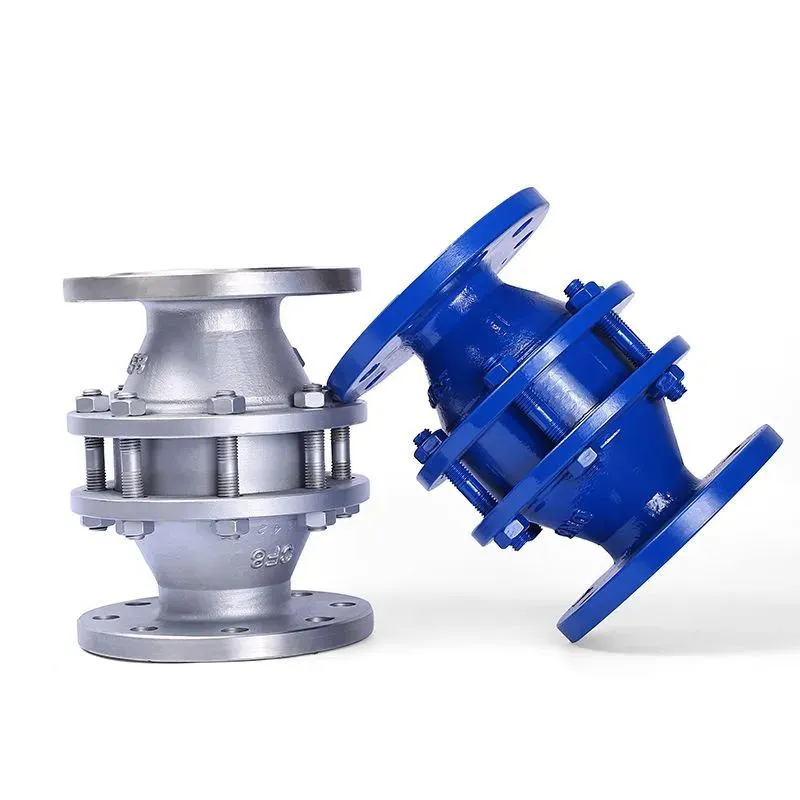
Ⅰ. What is a pipeline flame arrester?
Pipeline flame arrester, also known as fire arrester, is designed and manufactured based on the principle that flames are extinguished due to heat loss when passing through the narrow pores of a heat conductor. It is mainly composed of a solid material (fire arrester element) that can pass gas and has many small channels or gaps. Pipeline flame arresters are suitable for a variety of scenarios such as combustible gas pipelines, such as gasoline, kerosene, light diesel, benzene, toluene, crude oil and other oil storage or flare systems, gas purification and ventilation systems, gas analysis systems, coal mine gas emission systems, heating furnace fuel gas pipelines, and can also be used in acetylene, oxygen, nitrogen, and natural gas pipelines. This valve can be used in conjunction with a breathing valve or alone. This type of valve should generally be installed horizontally or vertically in the pipeline according to the working conditions. Pipeline flame arresters are generally divided into two categories: one is the flame arrester used for large hydrogen pipelines, which adopts flange connection and is named according to the inner diameter of the pipeline. There are several specifications such as DN15, DN20, DN25, DN40, DN50, DN80, DN100, DN150, DN200, and DN250; the second is the flame arrester for hydrogen cylinders, which generally have three types. The first is connected to the hydrogen cylinder (one end is threaded M161.5, and the other end is Φ8 or Φ10 leather joint); the second is with threads (M161.5) at both ends; the third is with leather joints at both ends (Φ8 or Φ10).
Pipeline flame arresters have reasonable structure, light weight, corrosion resistance. Easy maintenance and convenient installation. The fire barrier layer is made of stainless steel, which is corrosion-resistant and easy to clean. The valve body material is aluminum alloy, cast steel, and stainless steel. The working pressure is 0.6 6.4MPA, the working temperature is -20℃ 550℃, the valve diameter is from DN15 to DN500, the connection method is flange, and the applicable media include oil, gas, natural gas, fuel gas, etc. The main performances of the pipeline flame arrester are: qualified explosion resistance performance, and each of the 13 consecutive explosion resistance performance tests can prevent fire; qualified burning resistance performance, no tempering phenomenon in the burning resistance test for 1 hour; qualified shell water pressure test. This product has a reasonable structure, light weight and corrosion resistance. Easy to repair and install. The flame arrester core is made of stainless steel, which is corrosion-resistant and easy to clean.
The installation instructions of the pipeline flame arrester are as follows:
1. Remove all flange protective covers and discard all packaging materials.
2. Check the matching flange gasket on the valve seat surface, which must be clean, flat, scratch-free, corrosion-resistant, and tool marks.
3. Check the gasket to ensure that the material is suitable for the application.
4. Lubricate all studs and nuts with appropriate thread lubricant. If the fastener is high temperature or stainless steel, use anti-grasp compounds such as molybdenum disulfide.
5. Gasket inside the bolt ring.
6. When setting the flame arrester housing flange to the pipeline flange, pay attention to the lifting handle and top nut position of the flame arrester element to facilitate the removal of the flame arrester element in the future. In order to ensure that the performance of the flame arrester reaches the purpose of use, before installing the flame arrester, you must carefully read the instructions provided by the manufacturer and carefully check whether the label is consistent with the requirements of the installed pipeline. The flow direction mark on the flame arrester must be consistent with the flow direction of the medium. It should be checked every six months to check whether the flame arrester layer has defects such as blockage, deformation or corrosion. The blocked fire barrier layer should be cleaned to ensure that each hole is unobstructed, and the deformed or corroded fire barrier layer should be replaced. When cleaning the flame arrester core, high-pressure steam, non-corrosive solvents or compressed air should be used for blowing, and sharp hardware should not be used for brushing.
Ⅱ. The role of pipeline flame arresters
1. Prevent external flames from entering equipment and pipelines containing flammable and explosive gases or prevent flames from spreading between equipment and pipelines. Pipeline flame arresters are mainly composed of solid materials that can pass gas and have many small channels or gaps. Their function is to prevent external flames from entering equipment and pipelines containing flammable and explosive gases, and to prevent flames from spreading between equipment and pipelines. For example, pipeline flame arresters play an important protective role in the storage and filling or torch systems of gasoline, kerosene, light diesel and other oil products, gas purification and ventilation systems, gas analysis systems, coal mine gas emission systems, heating furnace fuel gas pipelines, and acetylene, oxygen, nitrogen, and natural gas pipeline supplies.
2. Used in pipelines that transport flammable gases to prevent the flame from spreading to the entire pipeline network. When flammable gases are transported on pipelines, once they are accidentally ignited, the gas flame may quickly spread to the entire pipeline network, causing serious consequences. Pipeline flame arresters are installed on pipelines that transport flammable gases, which can effectively prevent the spread of flames and ensure the safety of the pipeline network.
3. Can be used on pipelines with ignition equipment to prevent flashback accidents. Flashback accidents often occur on pipelines with ignition equipment, which may cause explosions and other dangerous situations. The application of pipeline flame arresters can effectively prevent the occurrence of flashback accidents and provide safety protection for production and life.
Ⅲ. Classification of pipeline flame arresters
Pipeline flame arresters are generally divided into two categories: one is a flame arrester for large hydrogen pipelines, which is connected by flanges. Its specifications are named after the inner diameter of the pipeline, and there are several specifications such as DN15, DN20, DN25, DN40, DN50, DN80, DN100, DN150, DN200, and DN250. This type of flame arrester is mainly suitable for large hydrogen pipelines and plays an important role in the transportation and storage of hydrogen. The second type is a flame arrester for hydrogen cylinders, which has three different types of connectors. The first type is connected to hydrogen cylinders (one end is threaded M161.5, and the other end is Φ8 or Φ10 leather connector); the second type is threaded at both ends (M161.5); the third type is leather connectors at both ends (Φ8 or Φ10). These three types of flame arresters provide a guarantee for the safe use of hydrogen cylinders and can effectively prevent dangerous situations that may occur during the use of hydrogen cylinders.
IV. Working principle of pipeline flame arresters
1. Heat transfer effect The pipeline flame arrester is composed of many small channels or pores. When the flame enters, many small flame flows are formed. Since the heat transfer area of these channels or pores is large, the flame exchanges heat through the channel wall and the temperature drops rapidly. The test conducted showed that when the thermal conductivity of the flame arrester material is increased by 460 times, its extinguishing diameter only changes by 2.6%. This shows that the material problem is secondary, and the heat transfer effect is a reason for extinguishing the flame, but not the main reason. For flame arresters used as explosion-proof, the choice of material is not too important, but the mechanical strength and corrosion resistance should be considered when selecting the material. For example, in some specific industrial environments, pipeline flame arresters need to withstand certain pressures and erosion by corrosive media, so it is crucial to choose the right material.
2. Wall effect According to the combustion and explosion chain reaction theory, the combustion and explosion phenomenon is not the result of direct action between molecules, but the molecules are split into very active and short-lived free radicals under the stimulation of external energy (heat energy, radiation energy, electrical energy, chemical reaction energy, etc.). Chemical reactions are carried out by these free radicals. Free radicals react with another molecule to generate new free radicals in addition to products. The condition for the spontaneous combustion of flammable mixed gas is that the number of newly generated free radicals is equal to or greater than the number of disappeared free radicals. As the size of the flame arrester channel decreases, the collision probability between free radicals and reactive molecules decreases, while the collision probability between free radicals and channel walls increases, which reduces the free radical reaction. When the channel size is reduced to a certain value, this wall effect creates a condition where the flame cannot continue, and the flame is blocked. It can be seen that the wall effect is the main mechanism for flame arresters to block flames. People can design flame arresters of various structural forms based on this principle to meet the needs of different industrial scenarios.
Ⅴ. How to choose a pipeline flame arrester
When choosing a pipeline flame arrester, you need to consider multiple factors to ensure that it can play an effective role and ensure the safety of the pipeline system.
1. The safety flame arrester should have a greater flame propagation speed than the flame propagation speed that can be achieved at the installation location. This is the primary condition for selecting a flame arrester. Only when the safety flame arrester speed is greater than the flame propagation speed can the flame be stopped in time when a fire occurs. For example, in some flammable gas pipeline systems, if the flame propagation speed is fast, it is necessary to select a flame arrester with a higher safety flame arrester speed to ensure that the flame can be quickly and effectively stopped when a fire occurs.
2. Choose a suitable flame arrester according to different usage scenarios and media types, such as deflagration or detonation. Different types of flame arresters are suitable for different combustion conditions. Deflagration type flame arresters are used to prevent the spread of subsonic flames and are suitable for some relatively slow combustion scenarios; while detonation type flame arresters are used to prevent the spread of sonic and supersonic flames and are suitable for scenarios where violent explosions may occur.
In actual selection, it is necessary to determine whether to choose an anti-deflagration type or an anti-detonation type flame arrester based on factors such as the type of medium transported in the pipeline system, pressure, temperature, and possible combustion conditions. For example, for a pipeline system that transports flammable and explosive gases, if there is a possibility of detonation, an anti-detonation type flame arrester should be selected.
3. Consider parameters such as the connection method, ventilation volume, maximum allowable pressure drop, and shell/fire arrester core material of the flame arrester. The connection method should be selected according to the specifications and installation requirements of the pipeline. Generally speaking, when the nominal diameter is less than DN50, threaded connection should be used, and when the nominal diameter is greater than or equal to DN50, flange connection should be used. The ventilation volume must meet the normal operation requirements of the pipeline system, and the presence of the flame arrester cannot affect the flow of gas. The maximum allowable pressure drop needs to take into account the pressure requirements of the pipeline system to ensure that the flame arrester will not have an excessive impact on the pressure of the pipeline system during operation. The material of the shell and the flame arrester core should be selected according to the corrosiveness of the medium transported in the pipeline system, the operating temperature and pressure, etc. For example, in some highly corrosive environments, corrosion-resistant materials such as stainless steel should be selected. At the same time, the mechanical strength of the material should also be considered to ensure that the flame arrester can withstand certain pressure and impact during use.

916.webp)
204.webp)
659.webp)
185.webp)
312.webp)
849.webp)
587.webp)
767.webp)