638.webp)
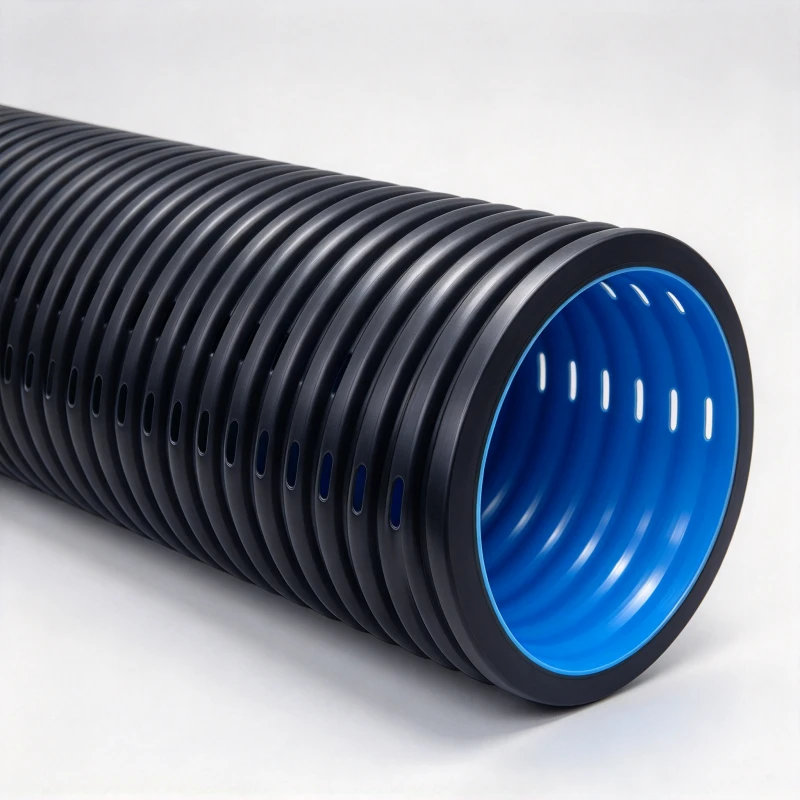
High-Density Polyethylene (HDPE) pipes have become a preferred solution in modern pipeline systems, widely used in water supply, gas distribution, irrigation, and industrial applications. Their rapid adoption is largely due to their durability, flexibility, and resistance to corrosion, which address many of the limitations found in traditional piping materials such as steel and concrete.
However, despite their growing popularity, HDPE pipes are not universally suitable for every application. Like any engineering material, they come with both strengths and limitations that must be carefully evaluated during project planning and design.
1. Key Advantages of HDPE Pipes
One of the most important advantages of HDPE pipes is their excellent resistance to corrosion. Unlike metal pipes, HDPE does not rust or degrade when exposed to moisture, chemicals, or soil conditions. This makes it particularly suitable for underground installations and aggressive environments where long-term durability is critical.
Another major benefit is the long service life. Under proper operating conditions, HDPE pipes can last more than 50 years, maintaining stable performance over time. This reduces the need for frequent maintenance and replacement, making them a cost-effective solution in the long run.
Flexibility is another defining feature of HDPE pipes. Compared to rigid materials such as PVC or ductile iron, HDPE can withstand ground movement, making it ideal for areas with unstable soil or seismic activity. This flexibility also allows for trenchless installation methods such as horizontal directional drilling, which minimizes disruption during construction.
In addition, HDPE pipes offer a leak-free jointing system. Through heat fusion techniques, joints become as strong as the pipe itself, eliminating the common leakage issues associated with traditional mechanical connections. This significantly improves system reliability, especially in long-distance pipelines.
HDPE pipes are also lightweight, which simplifies transportation and installation. Lower weight reduces labor requirements and speeds up construction, particularly in remote or large-scale projects. Combined with their smooth internal surface, which reduces flow resistance and energy consumption, HDPE pipes deliver both operational and economic advantages.
2. Limitations and Challenges of HDPE Pipes
Despite their many benefits, HDPE pipes have several limitations that must be considered.
One of the primary concerns is their relatively low temperature resistance. HDPE pipes are typically designed for operating temperatures up to around 40–60°C. At higher temperatures, the material begins to soften, which reduces its pressure-bearing capacity. This limits their use in high-temperature industrial systems.
Another limitation is their sensitivity to ultraviolet (UV) exposure. Although HDPE pipes are often produced with carbon black to improve UV resistance, long-term exposure to direct sunlight can still lead to material degradation. For outdoor storage or above-ground installations, protective measures are necessary.
HDPE pipes also have lower stiffness compared to metal pipes. While flexibility is an advantage in many cases, it means that proper installation practices—such as adequate bedding and backfilling—are essential to prevent deformation under external loads, especially in large-diameter applications.
Thermal expansion is another factor to consider. HDPE has a higher coefficient of expansion than traditional materials, meaning it expands and contracts more with temperature changes. Without proper design allowances, this can lead to stress or movement within the pipeline system.
Finally, installation requires specialized equipment and skilled operators. Heat fusion welding must be performed correctly to ensure joint integrity. Poor workmanship can compromise the entire system, making quality control during installation critically important.
3. Performance Comparison with Traditional Pipe Materials
When compared to traditional materials, the advantages and disadvantages of HDPE pipes become more apparent.
Compared to steel pipes, HDPE offers superior corrosion resistance and requires less maintenance, but it lacks the same level of rigidity and high-temperature performance. Against PVC pipes, HDPE provides better flexibility and impact resistance, making it more suitable for dynamic environments. Compared to ductile iron pipes, HDPE is lighter and easier to install, though it requires more attention to installation conditions due to its flexibility.
In many modern applications, especially in water supply and gas distribution, HDPE—particularly higher-grade materials such as PE100—has become the preferred alternative because it offers a better balance between performance, durability, and cost.
4. Practical Considerations for Material Selection
Choosing whether to use HDPE pipes depends on a combination of technical and economic factors.
For low to medium temperature systems with moderate to high pressure requirements, HDPE pipes are often an excellent choice. They are especially advantageous in underground installations, long-distance pipelines, and environments where corrosion resistance is critical.
However, for applications involving high temperatures or extremely high mechanical loads, alternative materials may be more suitable. Engineers must also consider installation conditions, including soil characteristics and construction methods, to ensure optimal performance.
From a long-term perspective, HDPE pipes often provide significant lifecycle cost savings due to reduced maintenance, longer service life, and improved system reliability. This makes them particularly attractive for infrastructure projects where durability and efficiency are key priorities.
HDPE pipes offer a compelling combination of durability, flexibility, corrosion resistance, and long service life, making them a leading choice in modern pipeline engineering. Their advantages are especially evident in underground and large-scale infrastructure applications.
At the same time, their limitations—such as temperature sensitivity, UV exposure, and installation requirements—must not be overlooked. A clear understanding of both strengths and weaknesses is essential for selecting the right material for each specific project.
By carefully evaluating project conditions and performance requirements, engineers and buyers can fully leverage the benefits of HDPE pipes while minimizing potential risks.
916.webp)
204.webp)
659.webp)
185.webp)
312.webp)
849.webp)
587.webp)
767.webp)