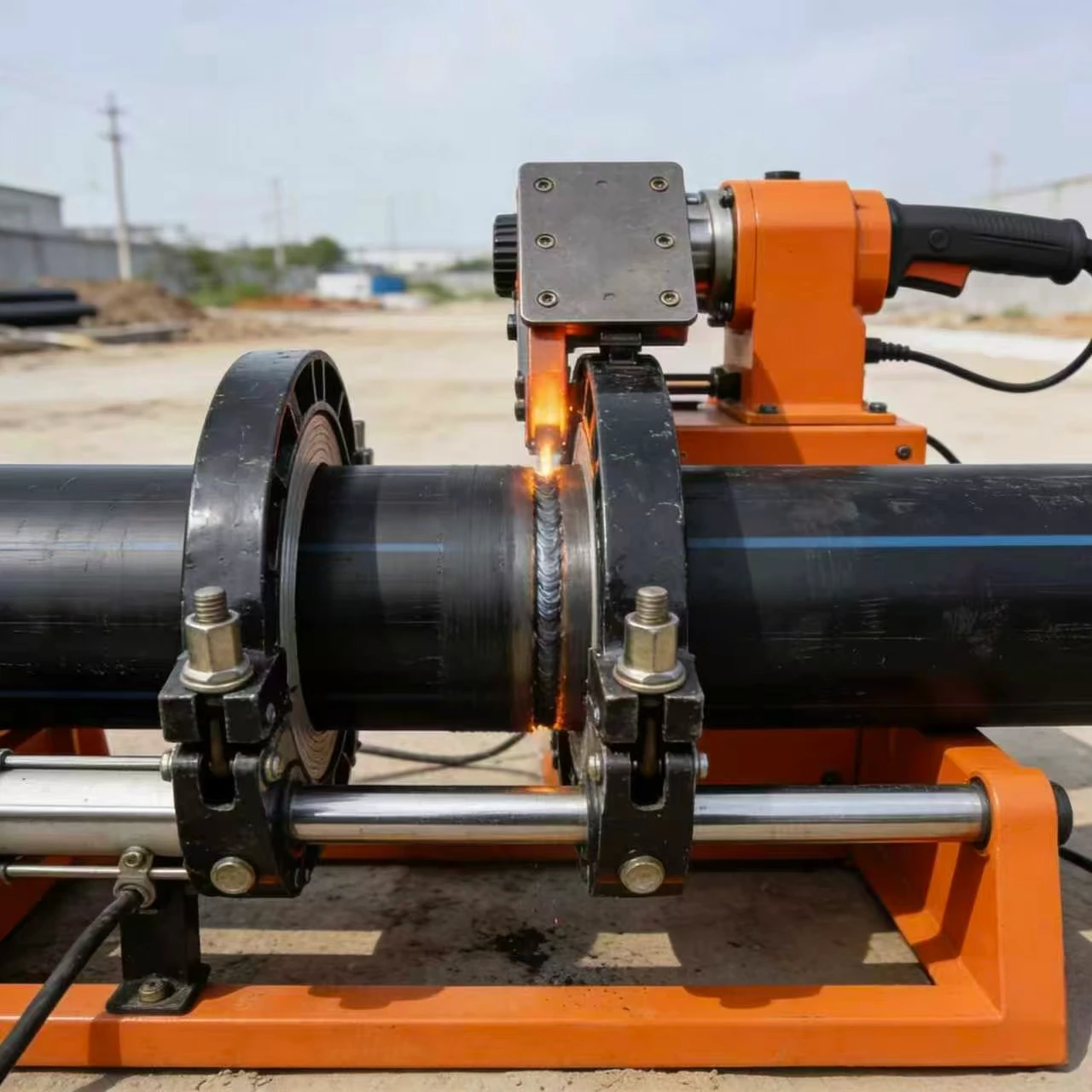
HDPE pipe heat fusion welding is widely used in water supply, drainage, and gas transmission systems due to its excellent joint strength, leak-free performance, and high pressure resistance. Compared with traditional connection methods, heat fusion creates a homogeneous joint, making the pipeline system more reliable and durable.
However, to ensure long-term performance and system safety, proper operation during the heat fusion process is essential. Below are the key steps and precautions for achieving high-quality HDPE pipe connections.
1. Surface Preparation Before Welding
Before starting the heat fusion process, it is critical to ensure that both the pipe and fittings are clean and properly prepared.
Remove all dirt, dust, oil, and moisture from the pipe surface
Ensure the pipe ends are cut straight and smooth
Use proper tools to scrape or trim oxidized layers if necessary
Any contamination on the surface can directly affect the welding quality, potentially leading to weak joints or leakage. Proper preparation is the foundation of a reliable HDPE pipe fusion connection.
2. Accurate Control of Temperature and Heating Time
Temperature and heating time are the most critical factors in the heat fusion process.
Excessive temperature or prolonged heating may cause over-melting, deformation, or material degradation
Insufficient temperature or short heating time may result in poor fusion and weak joints
It is recommended to follow standardized parameters based on pipe diameter, wall thickness (SDR), and equipment specifications. Using a calibrated heating plate ensures consistent results during HDPE pipe welding.
3. Proper Alignment and Uniform Pressure
During the joining process, the pipe and fittings must be aligned accurately and pressed together evenly.
Ensure both ends are perfectly aligned to avoid misalignment
Apply uniform and controlled pressure during fusion
Avoid excessive force, which may squeeze out too much molten material
Uneven pressure or misalignment can lead to defects such as cracks, weak bonding, or leakage at the joint. A well-aligned connection ensures structural integrity and long-term performance.
4. Cooling and Setting Time
After the fusion process is completed, the joint must be allowed to cool naturally.
Do not move or disturb the joint during cooling
Maintain proper holding time according to standards
Avoid external stress before full solidification
Proper cooling ensures that the joint reaches its maximum strength. Premature movement can compromise the integrity of the HDPE pipe joint.
5. Common Mistakes to Avoid
In practical applications, some common errors can significantly affect connection quality:
Welding on dirty or wet surfaces
Incorrect heating temperature settings
Insufficient or excessive fusion pressure
Ignoring cooling time requirements
Avoiding these mistakes is essential for ensuring a safe and durable pipeline system.
6. Benefits of Proper HDPE Heat Fusion Connection
When performed correctly, heat fusion offers significant advantages:
100% leak-free joints
High resistance to pressure and impact
Long service life (often over 20 years)
Reduced maintenance and repair costs
This makes HDPE pipe heat fusion the preferred connection method for critical infrastructure and agricultural irrigation systems.
HDPE pipe heat fusion welding is a reliable and efficient connection method, but its performance depends heavily on correct operation. From surface preparation to temperature control, alignment, and cooling, every step plays a vital role in ensuring joint quality.
By following proper procedures and using the right equipment, you can significantly improve the safety, durability, and lifespan of your HDPE pipeline system.
Call to Action
If you are looking for high-quality HDPE pipes and fittings or need technical support for your project, feel free to contact us. We provide reliable products, professional guidance, and competitive solutions tailored to your needs.
916.webp)
204.webp)
659.webp)
185.webp)
312.webp)
849.webp)
587.webp)
767.webp)