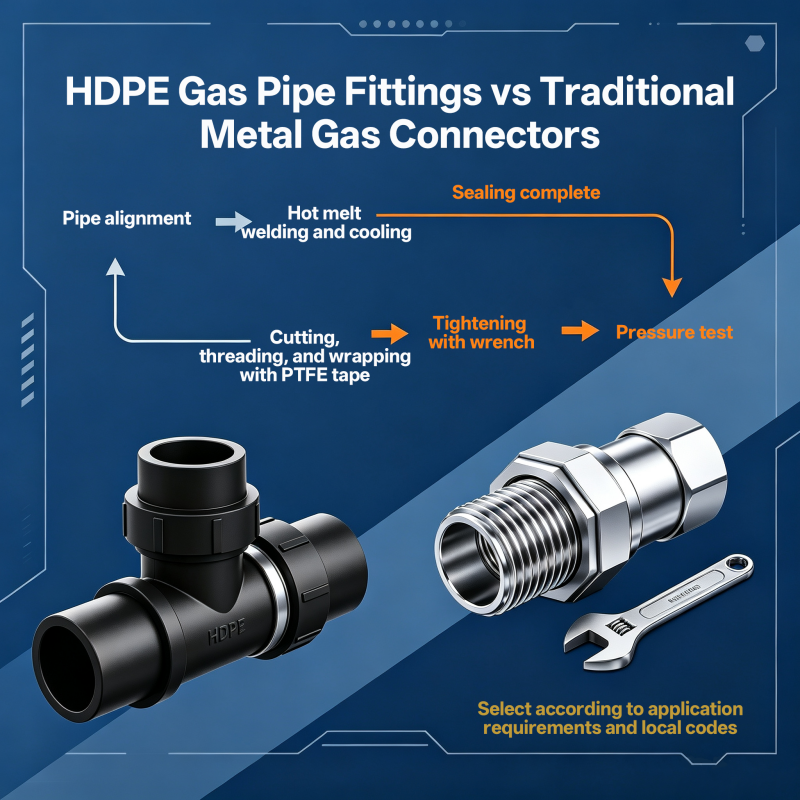
Natural gas distribution systems have evolved rapidly over the past few decades. As governments, contractors, utilities, and industrial users demand safer, more durable, and cost-effective pipeline solutions, the debate between HDPE gas pipe fittings and traditional metal gas connectors has become increasingly important.
While steel and other metal connectors have served the gas industry for generations, High-Density Polyethylene (HDPE) pipe fittings are transforming modern gas infrastructure with superior corrosion resistance, flexibility, lower maintenance costs, and extended service life.
This comprehensive guide compares HDPE gas pipe fittings and traditional metal gas connectors from every practical angle—including material properties, installation, durability, maintenance, environmental impact, total lifecycle costs, and industry applications—helping engineers, distributors, contractors, and project owners make informed purchasing decisions.
Understanding HDPE Gas Pipe Fittings
HDPE gas pipe fittings are connection components manufactured from high-density polyethylene resin specifically designed for natural gas transportation systems.
These fittings include:
Couplers
Flanges
Unlike threaded or welded metal connectors, HDPE fittings create a homogeneous pipeline system through heat fusion technology, producing joints that are often as strong as—or stronger than—the pipe itself.
This leak-free joining technology is one of the major reasons HDPE systems are becoming the preferred choice worldwide.
What Are Traditional Metal Gas Connectors?
Traditional gas connectors are commonly manufactured from:
Carbon steel
Galvanized steel
Stainless steel
Brass
Cast iron (older systems)
Metal connectors are connected using:
Threaded joints
Welded joints
Flanged connections
Compression fittings
These systems have been widely used for decades because of their mechanical strength and long history in gas infrastructure.
However, aging infrastructure has exposed many limitations, particularly corrosion, leakage at threaded joints, and high maintenance requirements.
HDPE vs Metal Gas Connectors: Quick Comparison
| Feature | HDPE Gas Pipe Fittings | Traditional Metal Gas Connectors |
|---|---|---|
| Corrosion Resistance | Excellent | Poor to Moderate |
| Weight | Very Light | Heavy |
| Installation | Fusion Welding | Threading/Welding |
| Leak Risk | Extremely Low | Moderate |
| Flexibility | Excellent | Very Limited |
| Earthquake Resistance | Outstanding | Moderate |
| Service Life | 50+ Years | 20–40 Years |
| Maintenance | Minimal | Frequent |
| Internal Corrosion | None | Possible |
| Chemical Resistance | Excellent | Limited |
| Cost of Installation | Lower | Higher |
| Lifecycle Cost | Very Low | Higher |
| Environmental Performance | Excellent | Moderate |
Material Composition Differences
One of the biggest differences lies in the material itself.
HDPE
HDPE is a thermoplastic polymer characterized by:
High molecular density
Excellent impact resistance
High flexibility
Low friction coefficient
Outstanding chemical stability
Its molecular structure prevents rust and electrochemical corrosion.
Metal
Steel connectors provide:
High tensile strength
Excellent rigidity
High temperature tolerance
However, steel is vulnerable to:
Rust
Oxidation
Soil corrosion
Stray current corrosion
Chemical attack
These weaknesses become increasingly expensive over decades of operation.
Installation Efficiency
Installation costs account for a significant portion of any pipeline project.
HDPE Installation Advantages
HDPE fittings are installed using:
Butt fusion
Electrofusion
Socket fusion
These techniques create permanent fused joints without additional sealing materials.
Benefits include:
Faster installation
Fewer fittings required
Lightweight transportation
Smaller installation crews
Reduced equipment costs
Metal Installation Challenges
Metal systems often require:
Welding
Thread cutting
Bolting
Protective coatings
Corrosion prevention
These processes demand skilled labor, longer installation times, and more inspection procedures.
Corrosion Resistance
Corrosion remains one of the leading causes of gas pipeline failures.
HDPE Advantages
HDPE is naturally resistant to:
Moisture
Underground chemicals
Acidic soil
Alkaline soil
Saltwater
Electrochemical reactions
No additional coating is required.
Metal Challenges
Metal connectors frequently require:
Anti-corrosion coatings
Cathodic protection
Regular inspections
Repainting
Replacement of corroded components
Maintenance costs accumulate significantly over time.
Leak Prevention
Gas leakage is a critical safety concern.
HDPE fusion joints eliminate common leakage points because the fitting and pipe become one continuous piece after fusion.
Metal connectors, however, rely on mechanical sealing methods.
Potential leakage sources include:
Thread wear
Gasket aging
Weld defects
Bolt loosening
Thermal expansion
For modern gas distribution networks, reducing joint failures directly improves public safety.
Flexibility and Ground Movement
Underground pipelines experience:
Soil settlement
Earthquakes
Road traffic vibration
Temperature changes
HDPE's flexibility allows pipelines to absorb these movements without cracking.
Metal pipelines are much more rigid.
In areas prone to seismic activity or unstable soil conditions, HDPE systems generally offer better long-term reliability.
Pressure Performance
A common misconception is that metal connectors always outperform HDPE.
In reality, modern PE100 and PE100-RC materials support high-pressure gas distribution systems while maintaining excellent safety margins.
Metal connectors still dominate extremely high-pressure industrial applications, but for municipal natural gas distribution, HDPE provides more than adequate pressure performance.
Service Life Comparison
Expected lifespan is one of the most important purchasing factors.
| Factor | HDPE | Metal |
|---|---|---|
| Average Service Life | 50–100 Years | 20–40 Years |
| Rust Risk | None | High |
| Internal Scaling | None | Possible |
| Maintenance Frequency | Low | High |
| Replacement Rate | Very Low | Moderate |
Many HDPE gas systems installed decades ago continue operating without significant degradation.
Maintenance Requirements
Maintenance directly affects operating costs.
HDPE
Routine maintenance is minimal because HDPE does not:
Rust
Scale
Corrode
Crack easily
Utilities typically focus on periodic inspections rather than component replacement.
Metal
Metal systems often require:
Corrosion inspections
Protective coating renewal
Joint replacement
Leak testing
Welding repairs
The maintenance burden grows as pipelines age.
Cost Comparison
Initial purchase price tells only part of the story.
| Cost Category | HDPE | Metal |
|---|---|---|
| Material Cost | Competitive | Higher |
| Transportation | Low | High |
| Installation | Low | High |
| Labor | Lower | Higher |
| Maintenance | Very Low | High |
| Lifecycle Cost | Lowest | Higher |
Although certain metal fittings may appear less expensive initially, total ownership costs generally favor HDPE over the entire service life.
Environmental Impact
Sustainability has become a major purchasing consideration.
HDPE offers several environmental benefits:
Lower transportation emissions due to lighter weight
Reduced excavation requirements
Lower maintenance-related emissions
Recyclable material
Longer replacement intervals
Metal production requires significantly more energy and often generates higher carbon emissions during manufacturing.
Applications
HDPE gas fittings are widely used in:
Municipal natural gas networks
Residential gas distribution
Commercial developments
Industrial gas transportation
Underground utility infrastructure
Urban expansion projects
Metal connectors remain common in:
Above-ground installations
High-temperature systems
Power plants
Heavy industrial facilities
Legacy infrastructure
Safety Performance
Safety remains the top priority in gas transportation.
HDPE contributes to safer systems through:
Fusion joints that reduce leakage
Excellent crack resistance
Corrosion-free performance
High impact strength
Superior flexibility
Metal connectors continue to perform well under proper maintenance but require more frequent inspections to maintain comparable safety standards.
Common Misconceptions About HDPE Gas Pipe Fittings
Myth 1: Metal Is Always Stronger
While steel has higher tensile strength, HDPE's flexibility often makes it more resistant to real-world underground stresses.
Myth 2: HDPE Cannot Handle High Pressure
Modern PE100 and PE100-RC materials are specifically engineered for demanding gas distribution applications and meet international pressure requirements.
Myth 3: HDPE Has a Short Lifespan
Properly installed HDPE systems are widely recognized for service lives exceeding 50 years, with many designed for up to 100 years under suitable operating conditions.
Competitive Analysis: HDPE vs Traditional Metal Solutions
When comparing suppliers and pipeline technologies, buyers typically evaluate four critical dimensions: performance, lifecycle cost, installation efficiency, and long-term reliability.
| Evaluation Criteria | HDPE Gas Pipe Fittings | Traditional Metal Connectors |
|---|---|---|
| Corrosion Protection | Excellent | Requires coatings |
| Leak Prevention | Fusion joint system | Mechanical joints |
| Installation Speed | Fast | Slower |
| Maintenance Cost | Low | High |
| Earthquake Performance | Excellent | Moderate |
| Weight | Lightweight | Heavy |
| Transportation Cost | Low | High |
| Expected Lifecycle | 50–100 Years | 20–40 Years |
| Total Cost of Ownership | Lower | Higher |
| Sustainability | Excellent | Moderate |
Many global utility companies are replacing aging steel distribution networks with HDPE because the long-term operational savings outweigh the initial investment.
For distributors and contractors, HDPE systems also reduce inventory complexity, simplify installation, and minimize after-sales maintenance, making them increasingly competitive in both developed and emerging markets.
How to Choose the Right Gas Pipe Fittings
When selecting a gas piping system, consider the following factors:
Project Environment
Underground installations, corrosive soils, or coastal environments generally favor HDPE due to its exceptional corrosion resistance.Pressure Requirements
Match the pipe material and pressure rating to the specific operating conditions and applicable standards.Installation Timeline
Projects with tight schedules often benefit from HDPE's lightweight design and faster fusion joining process.Lifecycle Budget
Evaluate not only the purchase price but also transportation, labor, maintenance, and replacement costs over the system's expected service life.Regulatory Compliance
Ensure all products meet local and international standards for gas distribution applications.
Why Choose Haili for HDPE Gas Pipe Solutions?
Shandong Haili Pipeline Technology Co., Ltd. has been dedicated to advancing high-quality pipeline systems since its establishment in 2013. Covering an area of 10,000 square meters with a total investment of USD 65 million, Haili operates more than 24 advanced plastic pipe production lines capable of manufacturing a comprehensive range of HDPE pipes and pipe fittings.
Beyond manufacturing, Haili provides integrated solutions that include pipe material research and development, underground pipeline network design, and technical support for infrastructure projects.
The company's product portfolio includes:
PE water pipes
PE gas pipes
PE mining pipes
PE sprinkler and irrigation pipes
MPP electrical conduit pipes
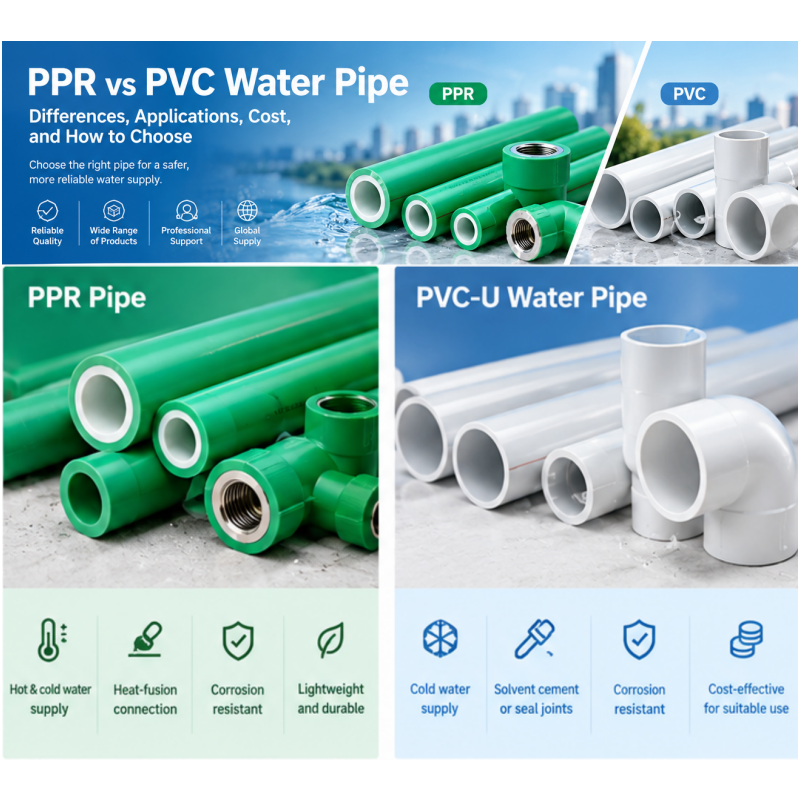
PVC-U water supply pipes
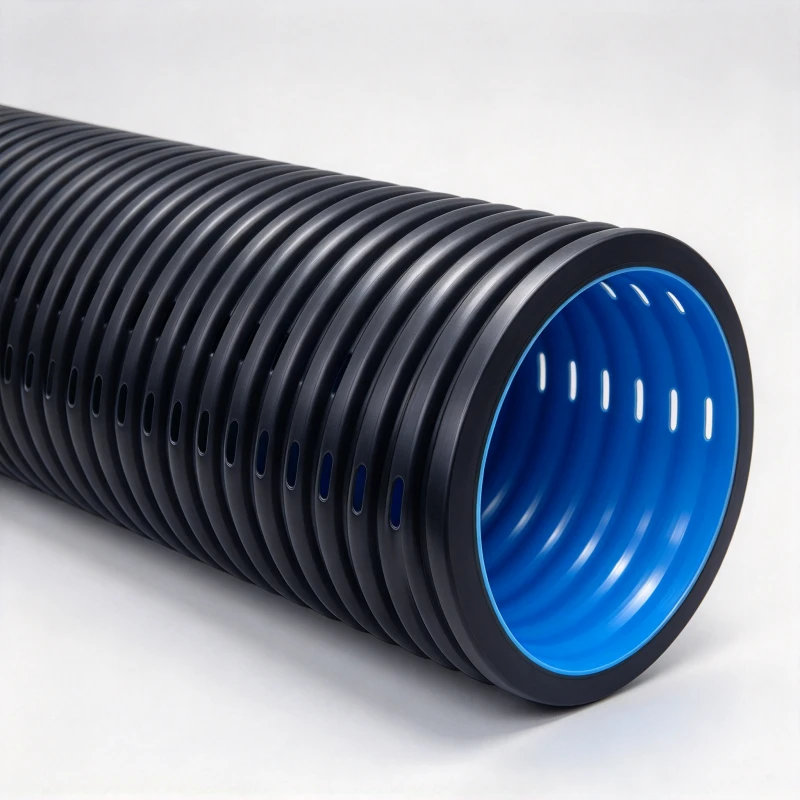
PE steel-reinforced drainage pipes
Glass fibre reinforced SMC molded plastic inspection chambers
Domestic septic tanks
These products are widely applied in rainwater harvesting, sewage systems, potable water supply, water reuse, natural gas transmission, and industrial fluid transportation.
As a national high-tech enterprise, Haili combines research, manufacturing, sales, and customer service under one roof. The company maintains a highly experienced R&D team consisting of international experts, senior engineers, graduate researchers, and technical professionals. Its national-level CNAS laboratory has secured more than 32 patents, demonstrating a strong commitment to technological innovation and product quality.
By focusing on premium raw materials, advanced manufacturing processes, responsive customer service, and continuous innovation, Haili has established itself as a trusted supplier for urban infrastructure projects worldwide.
Frequently Asked Questions
Are HDPE gas pipe fittings suitable for natural gas?
Yes. HDPE gas pipe fittings are specifically designed for natural gas distribution systems and are widely used by utilities around the world.
How long do HDPE gas pipe fittings last?
Properly designed and installed HDPE gas pipeline systems typically provide a service life of more than 50 years and may reach up to 100 years under favorable operating conditions.
Can HDPE replace steel gas pipelines?
In many underground municipal and residential gas distribution applications, HDPE has successfully replaced traditional steel pipelines due to its corrosion resistance, flexibility, and lower lifecycle costs.
Are HDPE fittings environmentally friendly?
Yes. HDPE is recyclable, requires less energy to transport because of its lightweight construction, and reduces maintenance-related environmental impacts throughout its service life.
Which option offers the best value?
For most underground natural gas distribution projects, HDPE gas pipe fittings deliver the best balance of safety, durability, installation efficiency, and long-term cost savings. Metal connectors remain suitable for specific above-ground, high-temperature, or heavy industrial applications where their unique mechanical properties are required.
Conclusion
The comparison between HDPE gas pipe fittings and traditional metal gas connectors clearly demonstrates how pipeline technology has evolved to meet the demands of modern infrastructure. While metal connectors continue to serve important roles in specialized industrial environments, HDPE has become the preferred solution for many underground gas distribution networks due to its corrosion resistance, fusion-welded leak-free joints, flexibility, lightweight design, long service life, and lower total cost of ownership.
As cities expand and utility providers prioritize safety, sustainability, and operational efficiency, the adoption of HDPE pipeline systems is expected to continue growing worldwide. Selecting a reliable manufacturing partner is equally important. With advanced production capabilities, strong research and development expertise, certified quality systems, and a comprehensive portfolio of pipeline products, Shandong Haili Pipeline Technology Co., Ltd. is well positioned to support distributors, contractors, and infrastructure developers with dependable HDPE gas pipe solutions tailored to modern gas transportation needs.
Contact our team today to discuss your project requirements, request a product catalog, or receive a customized quotation. We look forward to helping you build safer and more durable gas distribution systems.
916.webp)
204.webp)
659.webp)
185.webp)
312.webp)
849.webp)
587.webp)
767.webp)