Introduction
Yes, HDPE pipe can be used above ground when it is properly designed, manufactured with UV-resistant materials, and installed with suitable support systems. Due to its excellent corrosion resistance, flexibility, impact strength, and long service life, HDPE pipe has become a reliable solution for many outdoor applications, including water supply, irrigation, mining, industrial fluid transportation, and temporary pipeline systems.
Many engineers, contractors, and buyers often ask whether HDPE pipe can withstand direct sunlight, temperature changes, and outdoor conditions for many years. The answer is yes — but proper material selection and installation are essential.
High-quality black HDPE pipes containing carbon black provide excellent protection against ultraviolet (UV) radiation. When correctly installed, HDPE pipelines can deliver reliable performance for 50 years or more, even in challenging outdoor environments.
This guide explains whether HDPE pipe is suitable for above-ground installation, its advantages and limitations, key installation considerations, and how it compares with other common piping materials.
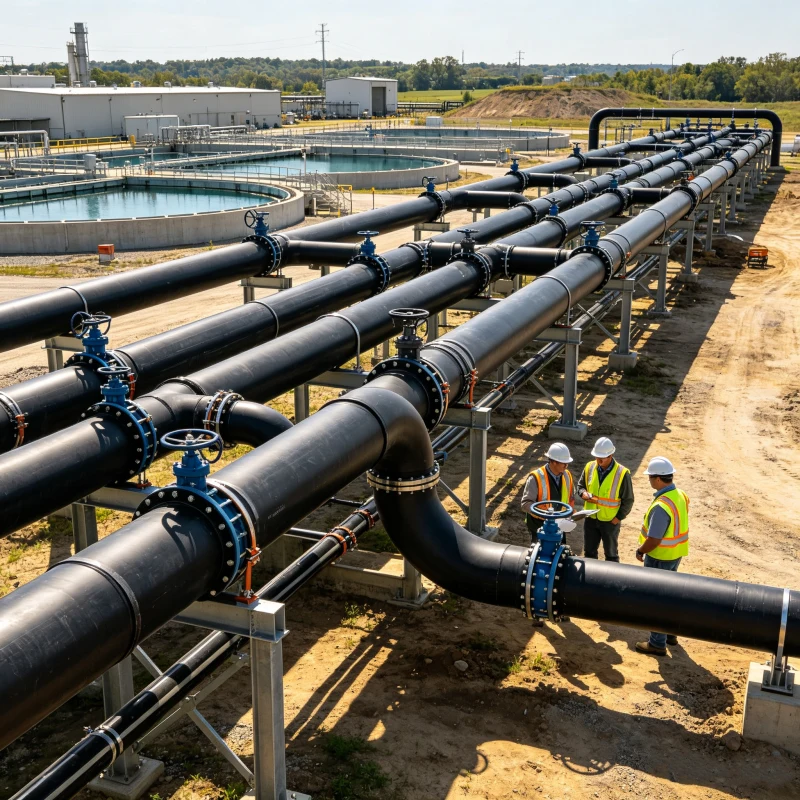
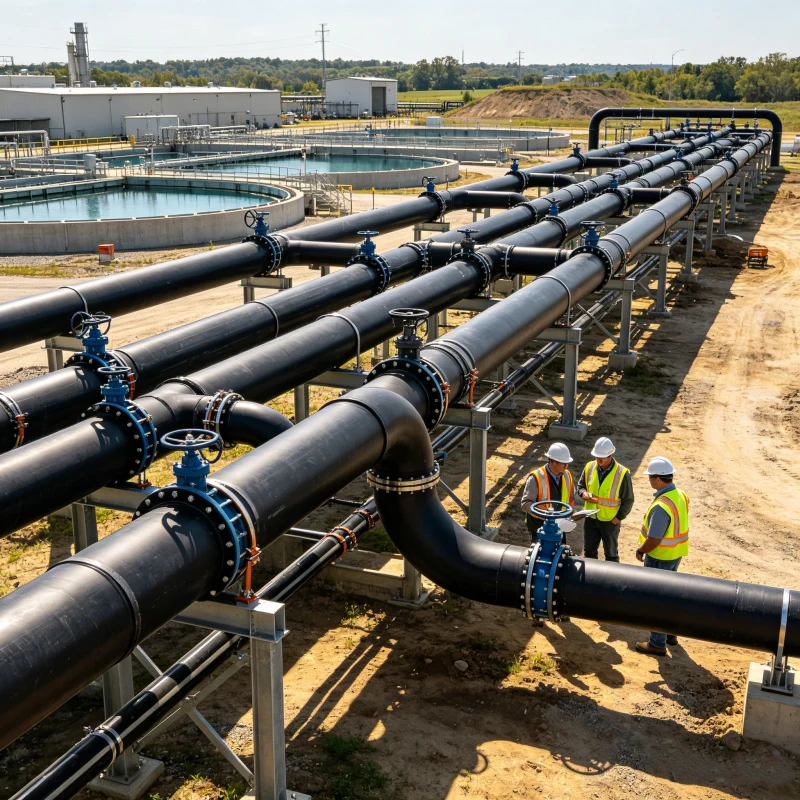
Above-ground HDPE pipe installation with proper pipe supports and fittings for outdoor water and industrial pipeline applications.
Key Takeaways: Above-Ground HDPE Pipe at a Glance
| Question | Answer |
|---|---|
| Can HDPE pipe be used above ground? | Yes, HDPE pipe is suitable for permanent and temporary outdoor installations. |
| Does sunlight damage HDPE pipe? | Black HDPE pipe with carbon black has excellent UV resistance. |
| How long can above-ground HDPE pipe last? | Typically 50–100 years under proper conditions. |
| What is the biggest installation concern? | Thermal expansion and proper pipe support. |
| Where is above-ground HDPE commonly used? | Water supply, agriculture, mining, industrial, and construction projects. |
| Is HDPE better than steel outdoors? | In many applications, HDPE offers better corrosion resistance and lower maintenance costs. |
What Is HDPE Pipe?
HDPE stands for High-Density Polyethylene, a thermoplastic material widely used in modern pipeline systems. It is manufactured through an extrusion process where polyethylene resin is melted and formed into pipes with different diameters, pressure ratings, and wall thicknesses.
Unlike traditional metal pipes, HDPE does not rust or corrode. Its unique molecular structure provides a combination of strength, flexibility, and chemical resistance that makes it suitable for demanding environments.
HDPE pipes are commonly manufactured according to international standards such as:
ISO 4427 for polyethylene water supply systems
EN 12201 for pressure piping systems
ASTM standards for polyethylene pipe applications
AWWA standards for municipal water systems
Modern HDPE pipes are available in different grades, including:
PE80
PE100
PE100-RC
PE4710
Among these, PE100 and PE4710 materials are widely used for high-performance pressure applications because of their excellent long-term strength and resistance to slow crack growth.
Main Characteristics of HDPE Pipe
| Property | Description |
|---|---|
| Material | High-Density Polyethylene |
| Corrosion Resistance | Excellent |
| Chemical Resistance | Excellent |
| Flexibility | Very High |
| Impact Resistance | Excellent |
| Weight | Lightweight compared with metal pipes |
| Joint Method | Butt fusion, electrofusion, mechanical connection |
| Expected Service Life | 50–100 years |
| Outdoor Performance | Excellent with proper UV protection |
One of the biggest advantages of HDPE is its ability to handle movement and stress without cracking. Unlike rigid materials such as concrete or cast iron, HDPE can bend and absorb external forces, making it suitable for environments where ground movement, vibration, or temperature changes occur.
Can HDPE Pipe Be Used Above Ground?
Yes, HDPE pipe is widely used for above-ground applications around the world.
Although many people associate HDPE primarily with underground pipelines, its performance characteristics make it equally suitable for outdoor exposed installations.
Common above-ground HDPE applications include:
| Industry | Above-Ground HDPE Applications |
|---|---|
| Agriculture | Irrigation pipelines, sprinkler systems, water transfer |
| Mining | Slurry transportation, dewatering pipelines |
| Construction | Temporary water supply systems |
| Municipal Projects | Emergency water bypass systems |
| Industrial Facilities | Process water, cooling water, chemical transportation |
| Marine Projects | Floating pipelines and dredging systems |
| Environmental Projects | Water reuse and treatment systems |
The reason HDPE performs well above ground is its combination of durability and flexibility.
For example, a steel pipe exposed outdoors may eventually experience corrosion, requiring protective coatings and maintenance. HDPE does not have this problem because polyethylene is naturally resistant to corrosion.
Why HDPE Is Suitable for Above-Ground Applications
Several important material advantages allow HDPE pipe to perform effectively in outdoor environments.
1. Excellent Corrosion Resistance
Corrosion is one of the biggest challenges for traditional metal pipelines.
Steel, ductile iron, and other metallic pipes can deteriorate when exposed to:
Moisture
Saltwater
Chemicals
Industrial environments
Soil contaminants
HDPE behaves differently because it is a non-metallic material. It does not rust, scale, or require corrosion protection coatings.
This makes HDPE especially valuable in coastal areas, mining sites, wastewater facilities, and industrial applications where corrosion risk is high.
2. Superior Flexibility
Flexibility is one of HDPE’s most important advantages for above-ground installation.
Outdoor pipelines naturally experience:
Temperature changes
Ground movement
Equipment vibration
Pressure fluctuations
Rigid pipes may crack or require additional expansion joints to handle these stresses.
HDPE can absorb movement because of its flexible structure.
Benefits include:
Reduced risk of cracking
Fewer fittings required
Easier installation around obstacles
Better resistance to vibration
This flexibility is particularly useful for temporary pipelines and large industrial projects.
3. High Impact Resistance
Above-ground pipes may face accidental damage from:
Construction equipment
Transportation activities
Falling objects
Extreme weather conditions
HDPE has excellent impact resistance and remains tough even in cold temperatures.
This reduces the possibility of sudden failure and makes HDPE a preferred option for demanding environments such as mining and construction sites.
4. Lightweight and Easy Installation
Compared with steel, ductile iron, and concrete pipes, HDPE is significantly lighter.
This provides practical advantages:
Lower transportation costs
Easier handling
Faster installation
Reduced labor requirements
Less heavy equipment needed
For remote projects, lightweight HDPE pipe can greatly simplify logistics.
5. Leak-Free Fusion Connections
Another major advantage of HDPE systems is the ability to create strong fusion joints.
During butt fusion or electrofusion, the pipe ends are heated and joined together, creating a continuous pipeline system.
Compared with traditional mechanical joints, fusion connections provide:
Reduced leakage risk
Higher system reliability
Improved long-term performance
This is especially important for water supply, industrial pipelines, and environmentally sensitive projects.
Advantages and Limitations of Above-Ground HDPE Pipe
Although HDPE is an excellent choice for many outdoor applications, understanding both advantages and limitations is important.
| Advantages | Limitations |
|---|---|
| Excellent corrosion resistance | Higher thermal expansion than metal pipes |
| Long service life | Requires proper support design |
| Lightweight | Not suitable for extremely high temperatures |
| Flexible and impact resistant | Colored pipes may require additional UV protection |
| Low maintenance | Requires correct fusion installation |
| Chemical resistance | Pressure rating decreases at elevated temperatures |
A professional pipeline design should consider operating pressure, temperature, pipe diameter, environmental conditions, and installation methods before selecting HDPE.
Why Quality Manufacturing Matters
The performance of above-ground HDPE pipe depends not only on the material itself but also on manufacturing quality.
Important factors include:
High-quality polyethylene resin
Precise extrusion technology
Strict dimensional control
Proper UV stabilization
Quality testing procedures
Manufacturers with strong research and development capabilities can provide more reliable pipeline solutions for demanding applications.
Shandong Haili Pipeline Technology Co., Ltd. has specialized in plastic pipeline manufacturing since 2013. The company operates more than 24 plastic pipe production lines and provides a wide range of HDPE pipes and fittings for water supply, gas transportation, mining, irrigation, drainage, and industrial applications. With a national-level CNAS laboratory, more than 32 patents, and a professional R&D team, Haili focuses on developing high-quality, energy-efficient, and environmentally responsible pipeline products for global infrastructure projects.
Can HDPE Pipe Stay in Direct Sunlight?
One of the most common questions about above-ground HDPE pipe is whether it can be exposed to direct sunlight for long periods.
Yes, black HDPE pipe can remain exposed to sunlight for many years because it is typically manufactured with carbon black and UV stabilizers that protect the material from ultraviolet radiation.
However, sunlight resistance depends on the pipe formulation. HDPE pipes designed for outdoor applications must contain appropriate UV protection. Pipes without sufficient stabilization may experience gradual surface degradation after long-term exposure.
For permanent outdoor installations, engineers should always confirm that the HDPE pipe is specifically designed for above-ground use.
How UV Radiation Affects HDPE Pipe
Ultraviolet radiation can damage many plastic materials over time by breaking down polymer chains. This process is known as photo-oxidation.
Without proper protection, UV exposure may cause:
Surface discoloration
Loss of flexibility
Reduced impact strength
Increased brittleness
Lower long-term performance
However, properly manufactured HDPE pipes are designed to resist these effects.
The most common protection method is adding carbon black into the polyethylene material.
Why Carbon Black Makes HDPE Pipe UV Resistant
Most black HDPE pipes contain approximately 2–3% carbon black, which provides excellent protection against sunlight.
Carbon black works by absorbing ultraviolet radiation before it can damage the polyethylene molecular structure.
This technology has been widely used in outdoor polyethylene products for decades because it provides reliable long-term weather resistance.
Benefits of Carbon Black in HDPE Pipe
| Function | Benefit |
|---|---|
| UV absorption | Protects polymer chains from sunlight damage |
| Weather resistance | Improves outdoor durability |
| Material stability | Maintains mechanical properties |
| Long service life | Extends pipe performance |
| Color stability | Reduces surface degradation |
This is why black HDPE pipe is the preferred choice for exposed outdoor pipelines.
Can Colored HDPE Pipe Be Used Outdoors?
HDPE pipes are also available in different colors, including:
Blue
Yellow
Green
Orange
White
Colors are often used to identify different pipeline systems.
For example:
| Pipe Color | Common Application |
|---|---|
| Black | General water supply and industrial applications |
| Blue | Potable water systems |
| Yellow | Natural gas pipelines |
| Orange | Electrical conduit |
| Green | Recycled water or irrigation |
However, colored HDPE pipes require careful material selection for outdoor exposure.
Unlike black HDPE pipe, which naturally benefits from carbon black protection, other colors may require additional UV stabilizers to achieve similar outdoor performance.
For permanent above-ground applications, always confirm UV resistance with the pipe manufacturer.
How Long Does Above-Ground HDPE Pipe Last?
A properly designed and installed HDPE pipeline can provide a service life of 50 to 100 years.
The actual lifespan depends on several factors:
Material grade
UV protection
Operating pressure
Temperature conditions
Installation quality
Chemical exposure
Maintenance practices
High-quality PE100 and PE4710 materials are specifically engineered for long-term pressure performance.
Factors Affecting HDPE Pipe Lifespan
| Factor | Impact on Service Life |
|---|---|
| UV stabilization | Very important |
| Resin quality | Very important |
| Correct installation | Critical |
| Operating temperature | Important |
| Pressure conditions | Important |
| Chemical compatibility | Important |
| Regular inspection | Helpful |
The pipe itself is rarely the weakest point in a properly designed HDPE system. Installation quality, fittings, supports, and operating conditions usually have a greater influence on long-term performance.
HDPE Pipe Temperature Performance
Temperature is another important consideration for above-ground pipelines.
Unlike underground pipes, exposed pipelines experience larger temperature changes because they directly absorb heat from sunlight and lose heat during cold weather.
HDPE performs well in a wide temperature range.
| Condition | Typical Temperature Range |
|---|---|
| Minimum operating temperature | Around -40°C (-40°F) |
| Normal continuous service | Up to approximately 60°C (140°F) |
| Higher temperature applications | Require engineering evaluation |
HDPE remains flexible at low temperatures, which is one reason it performs well in cold climates.
However, as temperature increases, the pressure rating of HDPE pipe must be adjusted.
Engineers should apply appropriate temperature correction factors when designing systems operating in hot environments.
Does Hot Weather Damage HDPE Pipe?
Normal outdoor heat does not damage properly manufactured HDPE pipe.
In fact, HDPE is commonly used in hot regions for:
Agricultural irrigation
Mining water systems
Municipal pipelines
Industrial applications
However, continuous exposure to very high temperatures can affect:
Pressure capacity
Long-term strength
Material performance
For applications involving hot fluids or extreme temperatures, the pipe specification should be carefully reviewed.
Thermal Expansion and Contraction of Above-Ground HDPE Pipe
One important difference between buried and above-ground HDPE pipe is thermal movement.
HDPE expands when heated and contracts when cooled.
Compared with metal pipes, HDPE has a higher coefficient of thermal expansion.
This means outdoor installations must be designed to accommodate movement.
Why Thermal Expansion Matters
Temperature changes can cause:
Pipe movement
Stress on fittings
Pressure on supports
Misalignment if poorly installed
This does not mean HDPE is unsuitable for outdoor use. Instead, engineers must design the system to allow controlled movement.
How to Manage HDPE Pipe Expansion
Several installation techniques help manage thermal expansion:
1. Allow Natural Movement
HDPE should not always be rigidly fixed.
Allowing controlled movement reduces stress within the pipeline.
2. Use Proper Supports
Supports should:
Maintain alignment
Prevent excessive sagging
Allow thermal movement
Avoid damaging the pipe surface
3. Install Expansion Loops When Needed
For long exposed pipelines, expansion loops or flexible routing may be used.
These designs allow the pipe to absorb temperature changes without excessive stress.
Above-Ground HDPE Pipe Support Requirements
Proper support is one of the most important factors in outdoor HDPE installation.
Although HDPE is strong and flexible, unsupported sections may sag over time.
Support spacing depends on:
Pipe diameter
SDR rating
Wall thickness
Operating temperature
Fluid weight
Installation conditions
General HDPE Support Guidelines
| Pipe Diameter | Typical Support Spacing |
|---|---|
| Small diameter pipes | Approximately 1–1.5 meters |
| Medium diameter pipes | Approximately 1.5–2 meters |
| Large diameter pipes | Approximately 2–3 meters |
These values are general guidelines only. Actual spacing should follow engineering calculations and manufacturer recommendations.
HDPE Above-Ground Installation Best Practices
To achieve maximum service life, installers should follow several important practices.
1. Select the Correct Pipe Grade
Choose the appropriate:
PE100
PE4710
SDR rating
Pressure class
based on the project requirements.
2. Use Proper Fusion Techniques
HDPE fusion joints should be completed by trained technicians using suitable equipment.
Poor fusion practices may lead to:
Weak joints
Leakage
Reduced system reliability
3. Protect Against Mechanical Damage
Although HDPE is highly impact-resistant, exposed pipelines should still be protected from:
Heavy machinery
Vehicle traffic
Sharp objects
4. Design for Temperature Movement
Never install long exposed HDPE pipelines without considering expansion and contraction.
Proper design prevents unnecessary stress and improves reliability.
HDPE vs PVC vs Steel for Above-Ground Applications
Choosing the right pipe material depends on project conditions, budget, and performance requirements.
| Property | HDPE | PVC | Steel | Ductile Iron |
|---|---|---|---|---|
| Corrosion resistance | Excellent | Excellent | Poor | Moderate |
| UV resistance | Excellent (black HDPE) | Moderate | Excellent | Excellent |
| Flexibility | Excellent | Low | Low | Very Low |
| Impact resistance | Excellent | Moderate | Excellent | Excellent |
| Weight | Lightweight | Lightweight | Heavy | Very Heavy |
| Chemical resistance | Excellent | Good | Limited | Moderate |
| Installation speed | Fast | Fast | Slow | Slow |
| Maintenance requirement | Very Low | Low | High | Medium |
| Joint reliability | Excellent with fusion | Moderate | Moderate | Moderate |
| Expected lifespan | 50–100 years | 40–70 years | Variable | 50–100 years |
Why HDPE Often Outperforms Traditional Materials
For many above-ground applications, HDPE provides a better balance between:
Durability
Installation efficiency
Maintenance cost
Corrosion resistance
Long-term reliability
While steel may offer excellent mechanical strength, it requires corrosion protection. PVC may have lower cost, but it is more rigid and less impact-resistant. HDPE provides a flexible and durable solution for demanding outdoor environments.
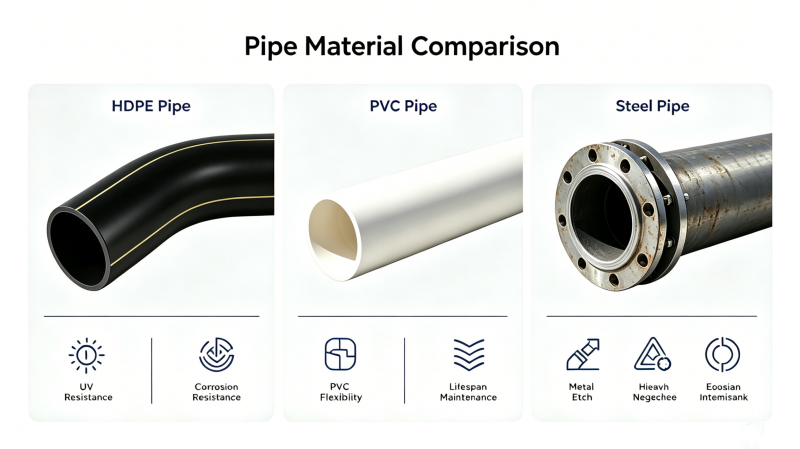
Comparison of HDPE, PVC, and steel pipes for above-ground applications based on flexibility, corrosion resistance, and durability.
Common Above-Ground HDPE Pipe Applications
Because of its durability, flexibility, and corrosion resistance, HDPE pipe is used in many industries where reliable outdoor pipeline performance is required.
Below are some of the most common above-ground HDPE applications.
1. Agricultural Irrigation Systems
Agriculture is one of the largest application areas for above-ground HDPE pipe.
Farmers and irrigation contractors use HDPE pipelines for:
Sprinkler irrigation
Drip irrigation systems
Water transfer
Pump discharge pipelines
Agricultural water storage systems
Compared with traditional metal pipes, HDPE provides several advantages for farming environments:
Resistant to fertilizers and chemicals
Easy to relocate
Lightweight for installation
Low maintenance
Long service life
For large farms, HDPE allows efficient water distribution while reducing leakage and repair costs.
2. Mining Applications
Mining operations often require pipelines that can withstand harsh environments.
Above-ground HDPE pipelines are commonly used for:
Slurry transportation
Mine dewatering
Process water supply
Tailings management
Chemical transportation
Mining environments can be extremely demanding because pipes may face:
Abrasive materials
Extreme weather
Chemical exposure
Heavy equipment activity
HDPE is widely selected because of its excellent abrasion resistance and impact strength.
3. Municipal and Water Supply Projects
Municipalities use above-ground HDPE pipe for both permanent and temporary applications.
Examples include:
Emergency water supply
Temporary bypass pipelines
Water treatment facilities
Pump stations
Pipeline rehabilitation projects
During infrastructure upgrades or emergency repairs, HDPE can often be installed quickly, reducing service interruptions.
4. Industrial Fluid Transportation
Many industrial facilities rely on HDPE pipelines for transporting fluids such as:
Cooling water
Process water
Wastewater
Chemical solutions
Recycled water
The chemical resistance of HDPE makes it suitable for industries where corrosion could create serious maintenance problems.
Common industries include:
Manufacturing
Chemical processing
Food processing
Power generation
Environmental treatment
5. Construction and Temporary Pipeline Systems
Construction projects frequently require temporary water supply systems.
HDPE is ideal because it can be:
Transported easily
Installed quickly
Removed and reused
Connected with reliable fusion joints
This makes HDPE popular for:
Construction sites
Infrastructure projects
Temporary water networks
Emergency response systems
Common Mistakes When Installing HDPE Pipe Above Ground
Although HDPE is a highly durable material, incorrect installation can reduce system performance.
Below are some common mistakes to avoid.
1. Ignoring Thermal Expansion
One of the most common mistakes is installing long exposed HDPE pipelines without considering temperature movement.
Because HDPE expands and contracts more than metal pipes, the system must allow controlled movement.
Failure to consider thermal expansion may result in:
Excessive stress
Pipe movement
Damaged connections
Support problems
2. Using Insufficient Pipe Supports
HDPE pipe is flexible, but it still requires proper support.
Insufficient support may cause:
Pipe sagging
Uneven stress distribution
Poor alignment
Support design should consider:
Pipe diameter
Fluid weight
Operating temperature
Installation environment
3. Choosing the Wrong Pipe Specification
Not every HDPE pipe is suitable for every application.
Before installation, engineers should confirm:
Pressure rating
SDR classification
Material grade
Temperature conditions
Chemical compatibility
Using an unsuitable pipe specification may shorten service life.
4. Poor Fusion Installation
HDPE fusion creates extremely reliable joints, but only when performed correctly.
Common fusion problems include:
Incorrect heating temperature
Improper alignment
Contaminated pipe surfaces
Insufficient cooling time
Professional installation and quality equipment are essential for long-term reliability.
5. Assuming All HDPE Pipes Have the Same UV Resistance
Black HDPE pipes generally provide excellent UV resistance because of carbon black protection.
However, colored HDPE pipes may require additional UV stabilization.
Always confirm outdoor suitability with the manufacturer.
Maintenance Guide for Above-Ground HDPE Pipe
One of the major advantages of HDPE is its low maintenance requirement.
Unlike steel pipelines, HDPE does not require regular painting or corrosion protection.
However, periodic inspection is recommended.
Recommended Inspection Checklist
| Inspection Item | Purpose |
|---|---|
| Pipe surface condition | Check for external damage |
| Supports and brackets | Ensure proper alignment |
| Fusion joints | Confirm connection integrity |
| Valves and fittings | Identify possible leakage |
| Expansion movement | Ensure thermal flexibility |
Regular inspections help identify minor issues before they become major problems.
Why Choose Haili HDPE Pipe Solutions?
Selecting the right manufacturer is an important part of ensuring long-term pipeline performance.
A reliable HDPE pipe supplier should provide:
High-quality raw materials
Advanced production technology
Strict quality control
Engineering support
Customized solutions
Shandong Haili Pipeline Technology Co., Ltd. is a professional pipeline manufacturer specializing in plastic pipe systems and infrastructure solutions.
Established in 2013, Haili covers an area of 10,000 square meters with a total investment of 65 million dollars. The company operates more than 24 plastic pipe production lines and provides a wide range of pipeline products, including:
PE water pipes
PE gas pipes
PE mining pipes
PE irrigation pipes
MPP electrical conduit pipes
PVC-U water supply pipes
PE steel-reinforced drainage pipes
Plastic inspection chambers
Septic tanks
Haili focuses on providing high-quality, energy-saving, and environmentally friendly pipeline solutions for global infrastructure projects.
With a professional R&D team consisting of international experts, senior engineers, and technical specialists, Haili continues to develop advanced pipeline technologies. The company's R&D center has been recognized as a national-level CNAS laboratory and holds more than 32 patents.
Through continuous innovation, strict manufacturing standards, and customer-focused service, Haili supports customers in industries including:
Urban water infrastructure
Wastewater management
Natural gas transportation
Mining operations
Irrigation systems
Industrial fluid transportation
Frequently Asked Questions About Above-Ground HDPE Pipe
1. Can HDPE pipe be used above ground?
Yes. HDPE pipe is widely used above ground for water supply, irrigation, mining, industrial, and temporary pipeline applications. Proper UV protection, support, and installation design are required.
2. Can HDPE pipe be exposed to sunlight?
Yes. Black HDPE pipe containing carbon black can withstand long-term sunlight exposure. Properly manufactured outdoor HDPE pipe can provide decades of reliable service.
3. Does UV light damage HDPE pipe?
Unprotected polyethylene can degrade under UV exposure. However, HDPE pipes manufactured with carbon black and UV stabilizers have excellent resistance to sunlight.
4. How long does above-ground HDPE pipe last?
A properly designed HDPE pipeline can typically last 50–100 years depending on material quality, operating conditions, installation, and maintenance.
5. Does HDPE pipe expand in hot weather?
Yes. HDPE expands when heated and contracts when cooled. Above-ground installations should include proper support and allow controlled thermal movement.
6. Is HDPE better than PVC for outdoor applications?
In many applications, HDPE provides better flexibility, impact resistance, and durability. PVC may be suitable for some projects, but HDPE performs better where movement and mechanical stress are concerns.
7. Can HDPE pipe freeze?
HDPE performs well in cold temperatures because it remains flexible. However, freezing fluids inside the pipe can still create pressure and should be prevented.
8. Can HDPE pipe be painted?
Yes, but painting is usually unnecessary for black HDPE pipe. If painting is required, special surface preparation and compatible coatings should be used.
9. What is the best HDPE pipe for outdoor use?
Black PE100 or PE4710 HDPE pipe with proper UV stabilization is commonly recommended for permanent outdoor applications.
10. Does above-ground HDPE require maintenance?
HDPE requires very little maintenance compared with metal pipes. Regular inspections of supports, joints, and external conditions are recommended.
Conclusion
HDPE pipe can absolutely be used above ground and has become a preferred solution for many outdoor pipeline applications worldwide.
Its combination of:
Excellent UV resistance
Corrosion protection
High impact strength
Flexibility
Long service life
Low maintenance requirements
makes it suitable for industries ranging from agriculture and mining to municipal infrastructure and industrial processing.
However, successful above-ground HDPE installation depends on choosing the correct pipe grade, allowing for thermal expansion, providing proper support, and working with an experienced manufacturer.
For companies looking for reliable HDPE pipeline solutions, selecting a manufacturer with advanced technology, strong quality control, and professional engineering support is essential.
916.webp)
204.webp)
659.webp)
185.webp)
312.webp)
849.webp)
587.webp)
767.webp)