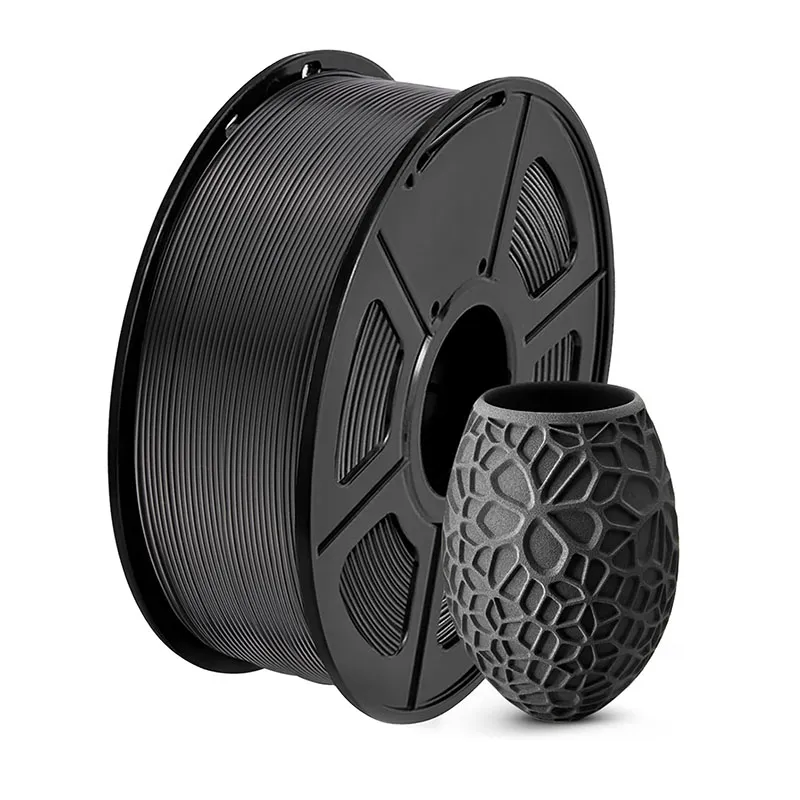
1. Overview of the application of 3D printing in the pipeline industry
3D printing (also known as additive manufacturing) manufactures objects by adding materials layer by layer. Compared with traditional subtractive manufacturing methods (such as milling, turning, etc.), it reduces material waste and provides higher design freedom. In the pipeline industry, 3D printing technology can be used to manufacture various pipeline accessories and components, especially for customized needs such as polyethylene pipes, pipe joints, flanges and valves.
Traditional pipeline manufacturing usually relies on molds, casting or cutting processes, which require long production cycles and have limitations in personalized customization. With 3D printing, manufacturers can produce directly according to customer needs through digital design, reducing processes and intermediate links and improving production efficiency.
2. 3D printing improves production efficiency
In the traditional pipeline manufacturing process, the production cycle is often affected by process complexity and equipment limitations, especially when producing special specifications and customized parts, which requires additional time and cost. The introduction of 3D printing technology has completely changed this situation.
Shorten the production cycle: 3D printing can print pipeline components directly from computer models without traditional mold making and complex processing steps. This process greatly shortens the time from design to manufacturing, and can produce high-precision pipeline components in a short time.
Reduce manual intervention: Traditional pipeline component manufacturing usually requires multiple processes, including cutting, welding, assembly, etc., while 3D printing reduces this process, greatly reduces manual intervention, and improves the degree of automation.
Flexible production mode: Through digital design files, 3D printing can realize pipeline accessories of almost any shape, and the production process is more flexible, especially suitable for small batch and multi-variety production, avoiding the redundancy and waste of traditional mass production.
3. Reduce costs
Another major advantage of 3D printing technology is that it can effectively reduce production costs. In the traditional pipeline manufacturing process, many materials will be wasted during the processing process, while 3D printing uses materials accurately by printing layer by layer, with almost no waste.
Reduce material waste: Traditional manufacturing methods (such as casting or cutting) will produce a lot of waste, while the materials used in 3D printing are precisely controlled in the required area, reducing waste and reducing the consumption of raw materials.
Reduce inventory and transportation costs: 3D printing can not only achieve on-site production, but also real-time production according to demand, avoiding a large amount of inventory and transportation costs in traditional manufacturing.
Customized production, reducing inventory pressure: For special customized pipeline components, traditional manufacturing methods usually require advance production and a large backlog of inventory, while 3D printing can be produced at any time according to actual needs, avoiding inventory backlogs and unnecessary capital occupation.
4. Realize personalized customization of pipelines
A significant advantage is that 3D printing technology can achieve personalized customization of pipeline components. In some special projects, standard sizes and shapes of pipe fittings cannot meet the needs. At this time, 3D printing can be tailored according to the specific requirements of the engineering design.
Complex geometric structures: Through 3D printing, designers can create complex geometric structures that are difficult to complete with traditional manufacturing methods. For example, designing precision connectors suitable for specific pipeline systems or customized pipeline components that adapt to harsh environments greatly improves the reliability and performance of pipeline systems.
Customized joints and valves: In some special application scenarios, the size and shape of pipe joints, flanges, and valves may need to be specially customized. 3D printing can quickly produce these customized parts to meet the special needs of different pipeline systems.
5. Application Cases
3D Printing Application of Polyethylene Pipe Joints
For example, in some gas and water pipeline systems, the use of traditional joints and accessories sometimes cannot adapt to complex installation environments or design requirements. Through 3D printing technology, fully customized polyethylene (PE) pipe joints can be provided for these pipeline systems, which not only meet the installation requirements of the pipeline, but also improve the sealing and pressure resistance of the system.
Customized production of flanges and valves
In some special environments, pipeline flanges and valves need to withstand extreme pressure, temperature or corrosion, and traditional manufacturing methods may be difficult to meet such high requirements. Using 3D printing, flanges and valves that meet these conditions can be accurately manufactured to ensure their long-term and stable operation.
With the continuous development of 3D printing technology, its application potential in the pipeline industry will become greater and greater. In the future, 3D printing will not only further improve production efficiency and reduce costs, but may also completely change the traditional mode of pipeline manufacturing, making pipeline manufacturing more flexible, personalized and environmentally friendly.
3D printing technology has brought revolutionary changes to the pipeline industry. It provides a more efficient and flexible solution for pipeline fittings manufacturing by improving production efficiency, reducing costs, and achieving personalized customization. With the advancement of technology and the deepening of application, 3D printing will become an indispensable part of the pipeline industry, providing more intelligent, environmentally friendly and efficient support for the construction of future pipeline systems.
In the future, we may see more products such as polyethylene pipes and pipe joints produced using 3D printing technology, which will not only promote the development of the pipeline industry, but also drive the entire manufacturing industry towards a more digital and customized direction.
916.webp)
204.webp)
659.webp)
185.webp)
312.webp)
849.webp)
587.webp)
767.webp)