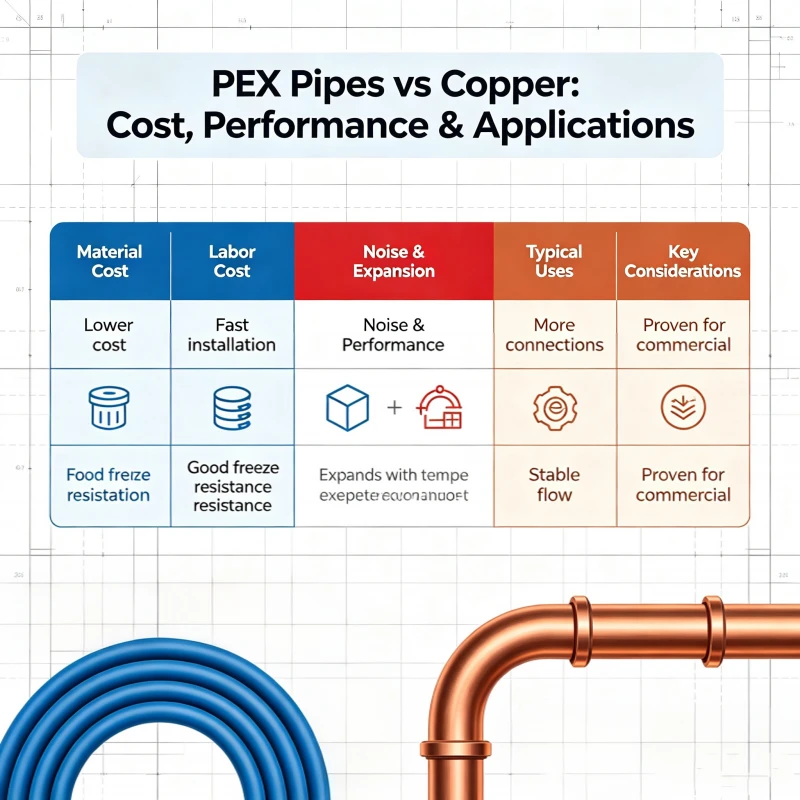
When selecting a piping material for a water supply or plumbing project, PEX pipes and copper pipes are two commonly considered options. Both can provide reliable performance when properly selected and installed, but they differ significantly in cost, installation, flexibility, corrosion resistance, temperature performance, and application requirements.
So, which is better: PEX pipes or copper?
There is no universal answer. PEX is often attractive for modern residential and commercial plumbing because it is flexible, lightweight, corrosion-resistant, and relatively easy to install. Copper, meanwhile, remains a proven choice where high-temperature resistance, rigidity, UV exposure, or traditional plumbing practices are important.
This guide compares PEX pipes vs copper in detail, covering cost, performance, durability, installation, applications, and purchasing considerations. It also explains what buyers should look for when choosing a reliable PEX pipe manufacturer.
PEX Pipes vs Copper: Quick Comparison
The following table provides a quick overview of the key differences between PEX and copper pipes.
| Factor | PEX Pipe | Copper Pipe |
|---|---|---|
| Material | Cross-linked polyethylene | Copper |
| Flexibility | Highly flexible | Rigid |
| Installation | Generally fast and easy | More labor-intensive |
| Material Cost | Generally lower | Generally higher |
| Corrosion Resistance | Excellent against many common forms of corrosion | Can be affected by certain water conditions |
| Temperature Resistance | Good within product-rated limits | Excellent |
| Pressure Performance | Depends on product specification and temperature | Generally strong |
| Freeze Tolerance | Flexible and more forgiving in some freezing conditions | Rigid and more susceptible to freeze-related damage |
| UV Resistance | Limited | Excellent |
| Weight | Lightweight | Relatively heavy |
| Plumbing Noise | Generally quieter | Can transmit more sound |
| Maintenance | Generally low | Generally low, but corrosion can be a concern |
| Common Applications | Water supply, plumbing, residential and commercial systems | Water supply, plumbing, heating and exposed applications |
The best choice depends on the project's operating temperature, pressure, installation environment, water conditions, local plumbing codes, budget, and performance requirements.
What Is PEX Pipe?
PEX stands for cross-linked polyethylene. PEX pipe is a flexible polymer piping product widely used in water distribution, plumbing, heating, and other fluid-handling applications.
Unlike rigid metal pipe, PEX can bend around many obstacles, which can simplify pipe routing and reduce the number of fittings required in certain system designs.
PEX products can be manufactured using different processes, resulting in commonly recognized classifications such as PEX-A, PEX-B, and PEX-C. These types have different characteristics and may be associated with different installation methods.
Advantages of PEX Pipe
PEX has become increasingly popular in plumbing applications because of several practical advantages:
Flexible and easy to route
Lightweight and easy to handle
Resistant to many forms of corrosion
Often requires fewer fittings
Generally fast to install
Can reduce labor requirements in suitable applications
Generally quieter than rigid metal piping
More tolerant of freezing conditions than rigid copper in some situations
Available in a wide range of sizes and configurations
Limitations of PEX Pipe
PEX is not suitable for every application.
Important considerations include:
Limited resistance to prolonged UV exposure
A defined maximum temperature rating
Compatibility with specific fittings and connection systems
Potential sensitivity to certain chemicals or installation environments
Requirements imposed by local plumbing codes and project specifications
For this reason, PEX should always be selected according to the manufacturer's specifications and the requirements of the intended application.
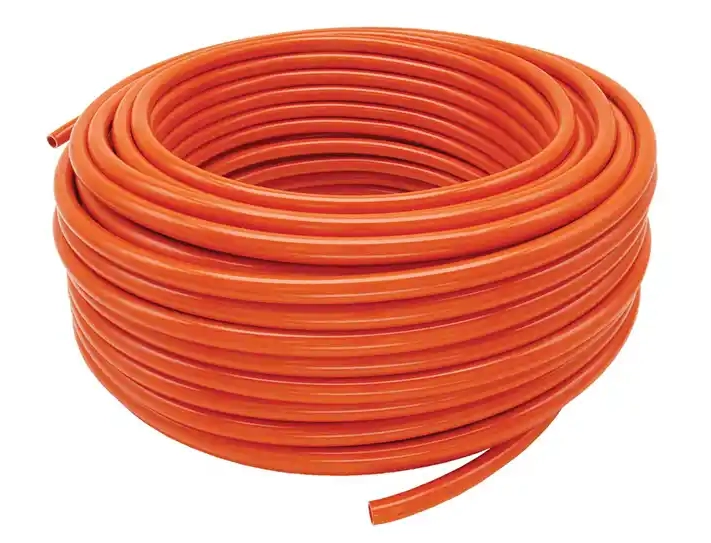
PEX Pipe
What Is Copper Pipe?
Copper pipe is a rigid metal piping material that has been used in plumbing systems for many decades. It is widely recognized for its strength, durability, temperature resistance, and long history of use.
Copper pipes are available in different types and wall thicknesses depending on the application and applicable standards. Common plumbing applications include domestic water supply, heating systems, and exposed piping installations.
Advantages of Copper Pipe
Copper offers several important advantages:
Excellent high-temperature performance
High mechanical strength
Excellent UV resistance
Long history of use in plumbing
Suitable for many exposed installations
Rigid structure
Can provide a long service life when properly installed
Limitations of Copper Pipe
Copper also has disadvantages compared with PEX:
Usually more expensive than PEX
More difficult to transport and handle
Rigid and less flexible
Installation can require more labor
Soldering requires appropriate equipment and skills
Certain water chemistries can contribute to corrosion
Metal piping can transmit water-flow and water-hammer noise
PEX Pipes vs Copper: 10 Key Differences
Understanding the differences between PEX and copper is more useful than simply comparing their material prices. The total cost and performance of a piping system depend on installation, operating conditions, maintenance, and the specific project.
1. Cost
PEX generally has a cost advantage over copper for many plumbing projects.
The price of a complete piping system includes much more than the pipe itself. Buyers and contractors should consider:
Pipe material cost
Fittings
Installation labor
Special tools
Transportation
Maintenance
Replacement costs
Project duration
PEX is lightweight and flexible, which can make installation faster and reduce the number of connections required in certain layouts.
Copper typically has a higher material cost, while cutting, bending, joining, and installing rigid copper pipe may require more labor.
However, actual project costs vary significantly depending on location, pipe size, labor rates, system design, and market conditions.
For many cost-conscious residential and commercial projects, PEX can provide a lower overall installation cost.
2. Installation
Installation is one of the biggest differences between PEX and copper.
PEX can be bent around many obstacles, allowing installers to route long sections of pipe through walls, floors, and other building spaces. Fewer joints may be required depending on the system design.
Copper is rigid. Installers generally need to measure, cut, bend where applicable, and join individual sections.
PEX also supports several connection methods, depending on the pipe and fitting system, including crimp, clamp, press, and expansion connections.
For projects where installation speed and flexibility are priorities, PEX generally has an advantage.
3. Flexibility
PEX is substantially more flexible than copper.
This flexibility is particularly valuable in renovation projects or buildings with complex layouts. PEX can often be routed around structural elements without using as many elbows and other directional fittings.
Copper, by contrast, maintains a rigid structure and requires more planning when routing around obstacles.
Flexibility can also simplify transportation and handling because PEX is lightweight compared with copper.
Winner for flexibility: PEX.
4. Corrosion Resistance
PEX has excellent resistance to many common forms of corrosion because it is a polymer material rather than a metal.
Copper does not rust in the same way as steel, but it can still be affected by certain water chemistries and environmental conditions. Corrosion can eventually contribute to leaks or pinhole failures in some systems.
This makes water chemistry an important consideration when selecting copper piping.
PEX avoids many of the corrosion mechanisms associated with metallic piping, although its chemical compatibility and operating environment still need to be considered.
For applications where corrosion resistance is a major concern, PEX can be an attractive option.
5. Temperature Resistance
Copper has a significant advantage when high-temperature performance is required.
Copper can withstand very high temperatures and has long been used in hot-water and heating applications.
PEX can also be used for hot-water applications when the specific product is rated for the required temperature and pressure. However, PEX has defined operating limits that must not be exceeded.
Therefore, buyers should always check the manufacturer's temperature and pressure ratings before selecting a PEX product.
For demanding high-temperature applications, copper may be preferable. For properly rated residential hot-water systems, PEX can be a practical alternative.
6. Pressure Performance
Pressure performance depends on much more than the basic pipe material.
For PEX, allowable pressure is influenced by factors such as:
Pipe size
Temperature
Product specification
Applicable standards
Installation conditions
Copper performance also depends on pipe type, wall thickness, diameter, temperature, and system design.
When purchasing PEX pipe for a project, buyers should not compare materials only by nominal size. They should verify the pressure rating and temperature rating of the specific product.
There is no universal winner for pressure performance; product specifications and system design matter.
7. Durability and Service Life
Both PEX and copper can provide long service when properly selected, installed, and operated within their design limits.
Copper has a long track record in plumbing applications and can remain functional for decades under suitable conditions.
Modern PEX systems can also provide a long service life when protected from inappropriate UV exposure, excessive temperatures, incompatible chemicals, and mechanical damage.
The actual lifespan of either material depends on:
Operating temperature
Pressure
Water chemistry
Installation quality
Environmental conditions
UV exposure
Mechanical stress
Product quality
Instead of asking simply “Does PEX last longer than copper?”, it is more useful to ask whether the selected material is appropriate for the intended service conditions.
8. Freezing Conditions
Neither PEX nor copper should be considered freeze-proof.
When water freezes inside a pipe, it expands and creates pressure. Because copper is rigid, it has limited ability to accommodate this expansion.
PEX is flexible and can expand to some degree, which can make it more tolerant of freezing conditions than rigid piping in certain situations.
However, repeated or severe freezing can still damage PEX systems, especially fittings and connections.
Proper insulation and freeze protection remain essential regardless of the pipe material.
PEX generally has an advantage in freeze tolerance, but neither material should be intentionally exposed to freezing conditions.
9. UV Resistance
Copper has a clear advantage when pipes are exposed to sunlight.
Copper is not subject to the same UV degradation concerns as many plastic piping products.
PEX should generally be protected from prolonged direct sunlight unless the specific product has been designed and rated for such exposure.
Therefore, installation environment is an important consideration.
For exposed outdoor or high-UV environments, copper may be the more suitable material unless a PEX product specifically approved for the application is used.
10. Maintenance and Repairs
Both materials can provide relatively low-maintenance plumbing systems when properly designed and installed.
PEX repairs can be straightforward because damaged sections can be replaced using compatible fittings and connection methods.
Copper can also be repaired effectively, but the required method may involve soldering, press fittings, or other specialized techniques.
For large projects, maintenance requirements should be evaluated together with accessibility, available tools, local labor skills, and replacement procedures.
PEX can offer an advantage where simple installation and repair are important considerations.
PEX vs Copper for Different Applications
Material selection should always start with the application.
A pipe that performs well in one environment may not be the best choice in another.
PEX vs Copper for Potable Water
Both PEX and copper can be used for potable water systems when the specific products meet applicable requirements and are installed according to relevant codes and standards.
PEX is attractive for potable water distribution because it is lightweight, flexible, and resistant to many forms of corrosion.
Copper remains widely used where a rigid piping system and metal construction are preferred.
For potable water projects, buyers should pay close attention to product certifications, material quality, dimensions, pressure ratings, and applicable local requirements.
PEX vs Copper for Residential Plumbing
PEX is often a practical choice for modern residential plumbing.
Its flexibility can simplify installation, especially when pipes must be routed through walls, floors, and other confined spaces.
PEX can also reduce the number of joints in some layouts, potentially reducing installation time and labor.
Copper remains a proven option for residential plumbing and may be preferred for certain exposed or high-temperature applications.
PEX vs Copper for Commercial Plumbing
Commercial projects require a more detailed evaluation.
Factors may include:
Building size
Water demand
Pressure
Temperature
Installation conditions
Local codes
Project specifications
Maintenance requirements
Total installed cost
PEX can be attractive for suitable commercial applications because of its lightweight construction and installation efficiency.
However, the appropriate material should always be selected according to the engineering requirements of the specific project.
PEX vs Copper for Hot Water
Copper generally offers greater high-temperature capability.
PEX can still be used for hot-water distribution when the selected product is specifically rated for the intended temperature and pressure.
For hot-water systems, always verify the manufacturer's ratings rather than assuming that all PEX products have the same performance.
PEX vs Copper for Cold Water
PEX is often an attractive option for cold-water supply systems because of its flexibility, corrosion resistance, and ease of installation.
Copper can also provide excellent performance for cold-water applications, especially where rigid piping or exposed installation is preferred.
PEX vs Copper for Plumbing Renovation
PEX can be particularly useful for renovation projects.
Existing buildings may contain complicated layouts, narrow access points, and structural obstacles. The flexibility of PEX can make routing easier than rigid copper in many situations.
Whether existing copper should be completely replaced or partially transitioned to PEX depends on the condition of the existing system, local codes, project requirements, and the plumber's installation approach.
PEX vs Copper: Pros and Cons
A simple summary can help buyers make an initial decision.
PEX Pipe Pros
Flexible
Lightweight
Generally easy to install
Corrosion-resistant
Often lower installation cost
Generally quieter
More tolerant of freezing than rigid copper in some situations
PEX Pipe Cons
Limited UV resistance
Defined temperature limitations
Requires compatible fittings and installation methods
Not suitable for every chemical or environmental condition
Local codes may restrict certain applications
Copper Pipe Pros
Excellent temperature resistance
Strong and rigid
Excellent UV resistance
Long history in plumbing
Suitable for many exposed applications
Can provide a long service life
Copper Pipe Cons
Higher material cost in many markets
More labor-intensive installation
Rigid
Heavier than PEX
Can be affected by certain water chemistries
May transmit more plumbing noise
Is PEX Better Than Copper?
For many modern residential and commercial plumbing projects, PEX can be the more practical choice, particularly when flexibility, installation efficiency, corrosion resistance, and project cost are important.
However, PEX is not automatically better than copper in every application.
Copper may be the better choice when a project requires:
High-temperature performance
Excellent UV resistance
Rigid exposed piping
High mechanical strength
Traditional metal piping
PEX may be the better choice when a project prioritizes:
Flexible pipe routing
Fast installation
Lower installation complexity
Corrosion resistance
Lightweight materials
Potentially lower total installation costs
The right choice should be based on the actual project requirements rather than simply choosing the material with the lower pipe price.
When Should You Choose PEX?
PEX can be a strong option when the project requires a flexible and efficient plumbing system.
Consider PEX when:
The plumbing layout contains many obstacles
Installation speed is important
Labor costs need to be controlled
Corrosion resistance is important
The system is primarily inside a building
Reduced plumbing noise is desirable
The product's temperature and pressure ratings meet the application requirements
For larger projects, the decision should also consider pipe sizes, fittings, installation methods, applicable standards, and long-term operating conditions.
When Should You Choose Copper?
Copper can be a strong choice when the project requires a rigid metal piping system or greater temperature and UV resistance.
Consider copper when:
High temperatures are involved
Pipes will be exposed to sunlight
A rigid piping structure is preferred
The project specifications call for copper
Mechanical strength is an important consideration
Local requirements or established installation practices favor copper
Copper's higher material and installation cost may be justified when these characteristics are important to the project.
Can You Replace Copper Pipes With PEX?
In many plumbing projects, existing copper piping can be replaced with PEX or connected to a new PEX system.
However, replacement is not simply a matter of exchanging one pipe for another.
Before replacing copper with PEX, consider:
Local plumbing codes
Existing pipe condition
Pipe diameter
Water pressure
Hot-water temperature
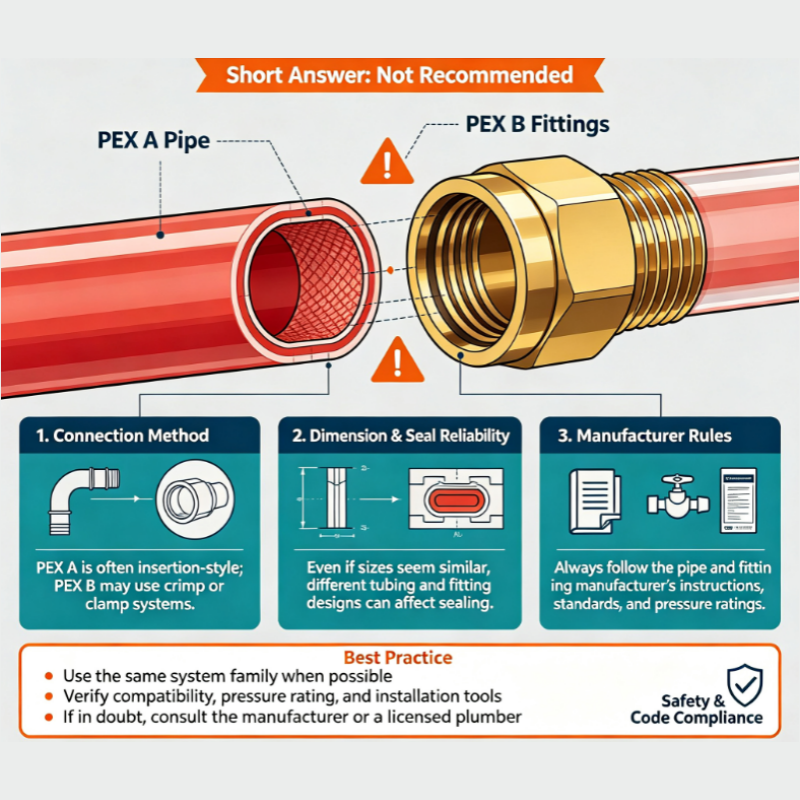
Connection methods
Transition fittings
Accessibility
Existing system design
Product certifications
The correct transition method should be selected based on the specific pipe and fitting system and installed according to applicable requirements.
For larger commercial or infrastructure projects, a qualified engineer or plumbing professional should evaluate the entire system before material changes are made.
How to Choose a PEX Pipe Manufacturer
For contractors, distributors, wholesalers, engineering companies, and project buyers, choosing the right PEX pipe manufacturer can be just as important as choosing PEX itself.
A reliable supplier should be evaluated on more than price.
1. Raw Material Quality
Consistent raw material quality is essential for producing reliable PEX pipe.
Buyers should understand the material specifications used by the manufacturer and confirm that the raw materials are suitable for the intended application.
2. Product Standards and Certifications
The required standards and certifications depend on the target market and application.
Before placing an order, buyers should confirm that the manufacturer's products meet the standards required in the destination country or project.
3. Quality Control
A reliable manufacturer should have systematic quality-control procedures covering raw materials, production, dimensions, mechanical properties, and finished products.
Quality consistency is particularly important for distributors and large project orders.
4. Production Capacity
Production capacity matters when purchasing PEX pipe in bulk.
A manufacturer with sufficient production lines and manufacturing resources can provide greater support for:
Large-volume orders
Repeated orders
Multiple specifications
Project schedules
Stable supply
5. R&D Capability
Pipeline products need to meet different application requirements and market standards.
A manufacturer with an established R&D team can provide better technical support when customers need specific product specifications, application recommendations, or product development.
6. Product Range
A manufacturer offering multiple piping products can provide advantages for projects that require more than one type of pipe.
For example, a supplier may be able to provide PEX alongside other plastic piping products, fittings, water pipes, drainage pipes, irrigation pipes, or electrical conduit systems.
This can simplify sourcing and supplier management for larger projects.
7. Technical Support
A good pipe supplier should be able to provide more than products.
Technical support may include:
Product selection
Pipe specifications
Application guidance
Installation recommendations
Fitting compatibility
Project-specific support
For engineering and infrastructure projects, technical capability can be an important part of supplier selection.
Why Choose Haili for PEX Pipe?
Shandong Haili Pipeline Technology Co., Ltd. was established in 2013 and has developed into a pipeline manufacturer integrating R&D, manufacturing, sales, and service.
Haili has more than 24 plastic pipe production lines and provides a broad portfolio of plastic piping products and related solutions.
The company's product range includes:
PEX pipe
PE water pipe
PE gas pipe
PE mine pipe
PE sprinkler and irrigation pipe
MPP electrical conduit
PVC-U water supply pipe
PE steel-reinforced drainage pipe
Pipe fittings
Glass fibre reinforced SMC moulded plastic inspection chambers
Domestic septic tanks
This broad product portfolio allows Haili to support customers with different pipeline requirements rather than focusing on a single pipe category.
Haili also places strong emphasis on research and development. The company has a technical R&D team that includes international experts, senior engineers, master's graduates, and other technical professionals.
Its R&D center has been named a national-level CNAS laboratory, and the company has developed more than 32 patents.
For distributors, contractors, engineering companies, and other project buyers, these capabilities provide a foundation for long-term cooperation, product development, and technical support.
Haili's focus is on pipeline products used in areas including water supply, water reuse, drainage, irrigation, natural gas transportation, mining, and other infrastructure applications.
If you are sourcing PEX pipe for a residential, commercial, plumbing, or other project, the appropriate product should be selected according to your required specifications, application conditions, applicable standards, and local regulations.
Frequently Asked Questions
Is PEX cheaper than copper?
PEX is generally less expensive than copper for many residential and commercial plumbing projects, particularly when installation labor and fittings are included. However, actual costs depend on pipe size, local material prices, labor rates, system design, and installation methods.
Does PEX last longer than copper?
Neither material has a universally guaranteed longer service life. Both PEX and copper can provide decades of service when correctly selected, installed, and operated within their design limits. Temperature, pressure, water chemistry, UV exposure, installation quality, and other conditions all affect service life.
Is PEX suitable for hot water?
Yes, properly rated PEX can be used for hot-water applications. However, PEX products have specific temperature and pressure limits, so buyers should always check the manufacturer's specifications before selecting a product for a hot-water system.
Is PEX safe for drinking water?
PEX can be used for potable water systems when the specific product is approved for potable-water applications and installed according to applicable standards and local plumbing codes.
Can PEX replace copper?
PEX can replace copper in many plumbing applications, but the suitability of replacement depends on the existing system, local regulations, operating conditions, pipe specifications, and connection requirements.
Which is better for residential plumbing, PEX or copper?
PEX is often a practical choice for residential plumbing because it is flexible, lightweight, corrosion-resistant, and relatively easy to install. Copper may be preferable where high-temperature resistance, UV exposure, rigidity, or traditional metal piping is important.
Which is better for hot water, PEX or copper?
Copper generally offers higher temperature resistance. However, properly rated PEX can also perform well in residential hot-water systems. The correct choice depends on the required operating temperature, pressure, product specifications, and applicable codes.
What should I consider when buying PEX pipe?
Consider the pipe's material specification, size, pressure rating, temperature rating, applicable standards, certifications, fitting compatibility, manufacturer quality, production capacity, and suitability for the intended application.
Final Verdict: PEX Pipes vs Copper
The comparison between PEX pipes and copper pipes does not have a single winner.
PEX is often the practical choice for modern plumbing projects where flexibility, corrosion resistance, lightweight construction, installation efficiency, and overall project cost are important.
Copper remains a strong option where high-temperature performance, UV resistance, rigidity, mechanical strength, and established metal-piping practices are priorities.
For contractors, distributors, engineering companies, and project buyers, the best material is ultimately the one that matches the project's actual operating conditions and technical requirements.
If PEX is the preferred solution, selecting a capable manufacturer is the next step. Buyers should evaluate not only product price but also raw material quality, production capacity, quality control, technical expertise, product range, certifications, and long-term supplier support.
With its established manufacturing capabilities, R&D resources, broad pipeline product portfolio, and experience in the plastic pipe industry, Shandong Haili Pipeline Technology Co., Ltd. provides PEX and other pipeline solutions for customers with diverse water supply, drainage, irrigation, industrial, and infrastructure requirements. Feel free to contact us.

916.webp)
204.webp)
659.webp)
185.webp)
312.webp)
849.webp)
587.webp)
767.webp)