Choosing the right plastic pipe can have a significant impact on the performance, installation efficiency, and long-term cost of a plumbing system. Two commonly considered options are PPR pipe and PEX pipe.
But which one is better: PPR or PEX?
The answer depends on the application, operating conditions, installation method, project requirements, and local standards.
PPR is a rigid polypropylene piping system commonly used for hot and cold water distribution. PEX is a flexible cross-linked polyethylene piping system that is valued for its flexibility and installation convenience.
For contractors, engineers, distributors, and project buyers, the most important question is not simply which material is "better," but which piping system is better suited to the specific project.
As a manufacturer of PPR pipes and a wide range of plastic piping systems, Shandong Haili Pipeline Technology Co., Ltd. provides this guide to help buyers compare PPR and PEX before making a purchasing decision.
PPR Pipe vs PEX: What Is the Difference?
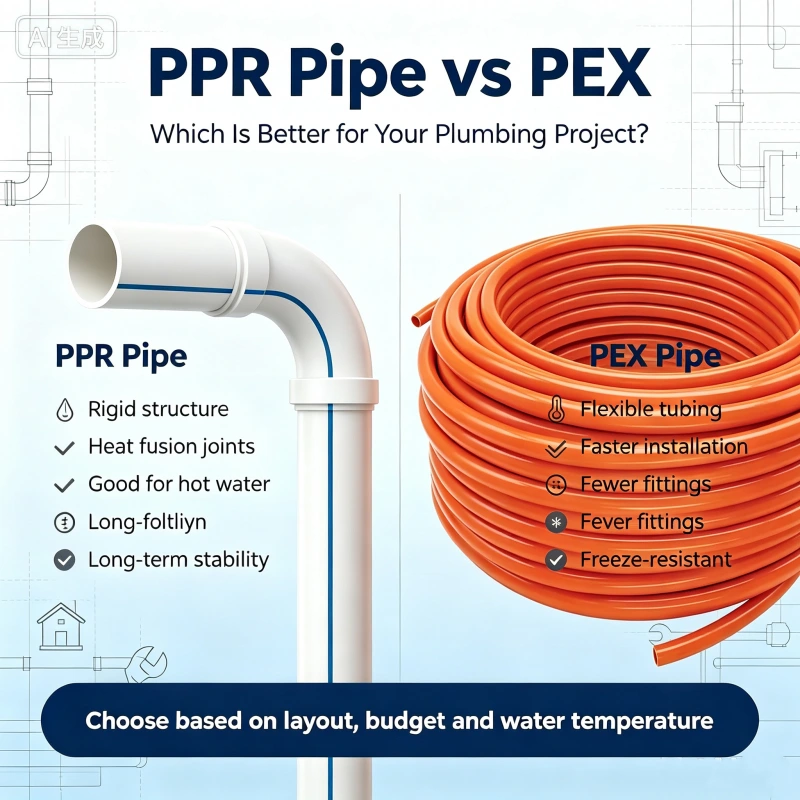
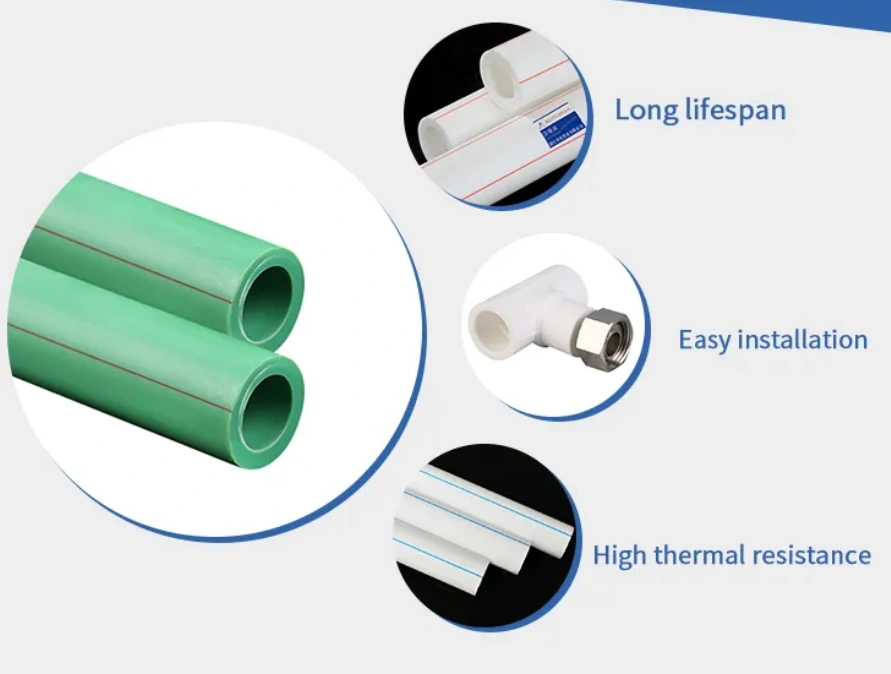
PPR stands for Polypropylene Random Copolymer. PPR pipes are rigid plastic pipes commonly used for hot and cold water supply systems. They are typically connected using heat fusion, which creates a fused connection between the pipe and fitting.
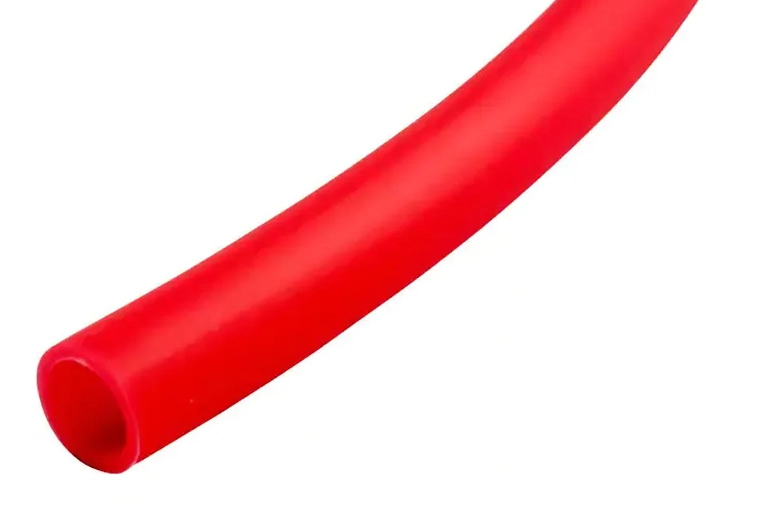
PEX stands for Cross-Linked Polyethylene. PEX pipes are flexible and can be bent around corners and obstacles, which can simplify installation in certain residential and commercial applications.
The main differences are:
PPR is rigid; PEX is flexible.
PPR typically uses heat-fusion connections; PEX uses compatible mechanical or expansion connection systems.
PPR is well suited to fixed piping layouts.
PEX can be advantageous for complex routing and fast installation.
Both can be used for hot and cold water applications when the specific product is appropriately rated.
Therefore, the best choice depends on what the project needs rather than on the material name alone.
PPR Pipe
PPR vs PEX: Side-by-Side Comparison
| Factor | PPR Pipe | PEX Pipe |
|---|---|---|
| Full name | Polypropylene Random Copolymer | Cross-Linked Polyethylene |
| Pipe structure | Rigid | Flexible |
| Connection method | Heat fusion | Crimp, clamp, press, expansion, depending on system |
| Installation flexibility | Moderate | High |
| Complex routing | Requires more fittings in many layouts | Easier to route |
| Hot water applications | Suitable when correctly specified | Suitable when correctly specified |
| Corrosion resistance | Excellent | Excellent |
| Internal scaling | Generally low | Generally low |
| Fitting requirements | More fittings may be needed around bends | Can reduce fittings in some layouts |
| Installation equipment | Fusion equipment | Depends on connection system |
| Typical application | Fixed water distribution | Flexible plumbing systems |
| Project suitability | Residential, commercial and infrastructure applications | Residential and selected commercial applications |
The specifications and performance of individual products can vary. Project buyers should always check the manufacturer's technical documentation and applicable local standards.
PPR vs PEX: Durability and Service Life
Durability is an important consideration when selecting a piping system.
PPR has a rigid structure and offers strong resistance to corrosion and many chemicals commonly encountered in water distribution systems. When installed correctly, heat-fused joints create an integrated connection between the pipe and fitting.
PEX is also resistant to corrosion and provides flexibility that can be beneficial where pipes may experience movement or where installation requires bending around obstacles.
However, the actual service life of either system depends on:
Operating temperature
Operating pressure
Water quality
Installation conditions
UV exposure
Product quality
Connection quality
Applicable standards
For this reason, buyers should compare the rated performance of the actual products rather than relying only on general claims about PPR or PEX.
PEX Pipe
PPR vs PEX: Temperature and Pressure Performance
Temperature and pressure are particularly important for hot water systems.
PPR pipes are widely used in hot and cold water distribution systems. The appropriate PPR product should be selected according to the expected operating temperature and pressure.
PEX is also used for hot and cold water applications. However, temperature and pressure performance depends on the specific PEX product, standard, and application.
When comparing PPR and PEX, buyers should check:
Maximum operating temperature
Pressure rating
Temperature-pressure relationship
Applicable product standard
Expected service conditions
Local plumbing regulations
For engineering and infrastructure projects, material selection should always be based on the actual operating conditions.
PPR vs PEX: Installation and Connection Methods
Installation is one of the most significant differences between PPR and PEX.
How Is PPR Pipe Installed?
PPR pipe is generally connected using a heat-fusion process.
The pipe and fitting are heated to the required fusion temperature and then joined together. After cooling, the connection forms a continuous fused joint.
This method provides several advantages:
Strong pipe-to-fitting connection
No threaded joints
No solvent cement
Good leak resistance when properly installed
Consistent connection quality with correct installation procedures
The main consideration is that installers need appropriate fusion equipment and training.
Because PPR is rigid, additional fittings may also be required when the piping system contains many bends or changes in direction.
How Is PEX Pipe Installed?
PEX is flexible and can often be bent around corners, reducing the need for elbows in some installations.
This flexibility can provide:
Faster routing
Fewer fittings in certain layouts
Easier installation in confined spaces
Reduced cutting and joining
Greater flexibility during remodeling
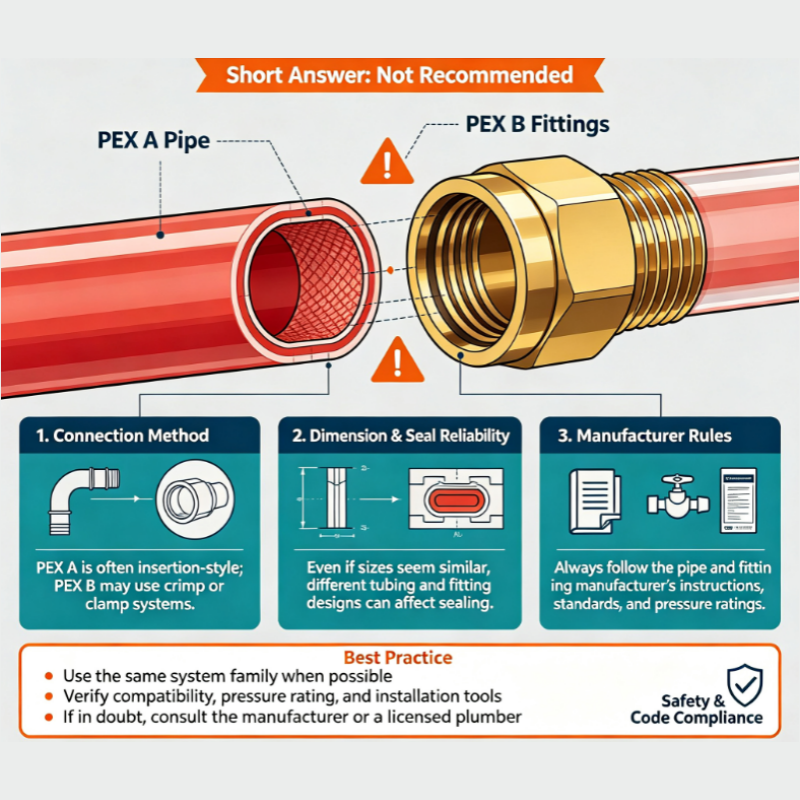
The exact connection method depends on the PEX system and fittings being used.
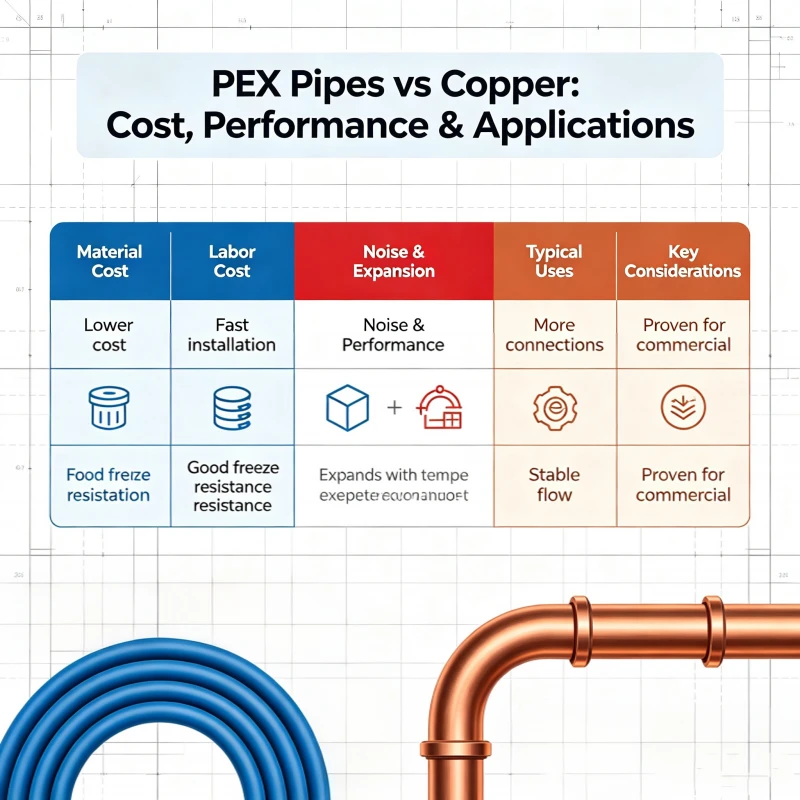
PPR vs PEX: Which Is More Cost-Effective?
A common mistake is to compare PPR and PEX based only on the price per meter.
The actual project cost can include:
Pipe + Fittings + Tools + Labor + Installation Time + Maintenance
PEX may reduce installation time in some projects because its flexibility allows long runs and easier routing.
PPR may require more installation work because pipes must be measured, cut, aligned, and heat-fused. However, local labor rates, pipe prices, fitting prices, and project conditions can significantly change the final cost.
For wholesale buyers, the best approach is to compare the total installed cost, rather than simply asking which pipe has the lower unit price.
PPR vs PEX for Hot Water Systems
Both PPR and PEX can be used for hot water systems when the selected product is appropriately rated for the required temperature and pressure.
PPR can be a suitable choice for fixed hot water distribution systems where a rigid pipe structure and heat-fused connections are preferred.
PEX may be advantageous where flexibility and installation speed are more important.
Before purchasing pipe for a hot water project, buyers should confirm:
Operating temperature
Operating pressure
Pipe pressure rating
Applicable standards
Certification requirements
Fitting compatibility
Installation requirements
The actual technical specification of the product should always take priority over a general material comparison.
PPR vs PEX for Residential Plumbing
Both PPR and PEX can be used in residential plumbing systems.
PEX is often attractive for residential construction and remodeling because the flexible pipe can simplify routing through walls, floors, and other confined spaces.
PPR can be attractive when the project requires a rigid piping system with heat-fused connections.
The choice may depend on:
Building design
Installation method
Contractor experience
Material availability
Project budget
Local regulations
Required pipe sizes and pressure ratings
PPR vs PEX for Commercial and Infrastructure Projects
For commercial and infrastructure projects, pipe selection requires more than comparing material characteristics.
Project buyers may need to consider:
Pipe diameter
Pressure requirements
Temperature
Water quality
Installation conditions
Expected service life
Applicable standards
Fitting availability
Technical support
Production capacity
Delivery requirements
PPR can be considered for fixed water distribution systems where rigid piping and fused joints are preferred.
For complex projects, the piping system should be selected based on engineering requirements rather than choosing a material solely because it is cheaper or easier to install.
When Should You Choose PPR Pipe?
PPR may be the right choice when your project requires:
A rigid plastic piping system
Heat-fused pipe connections
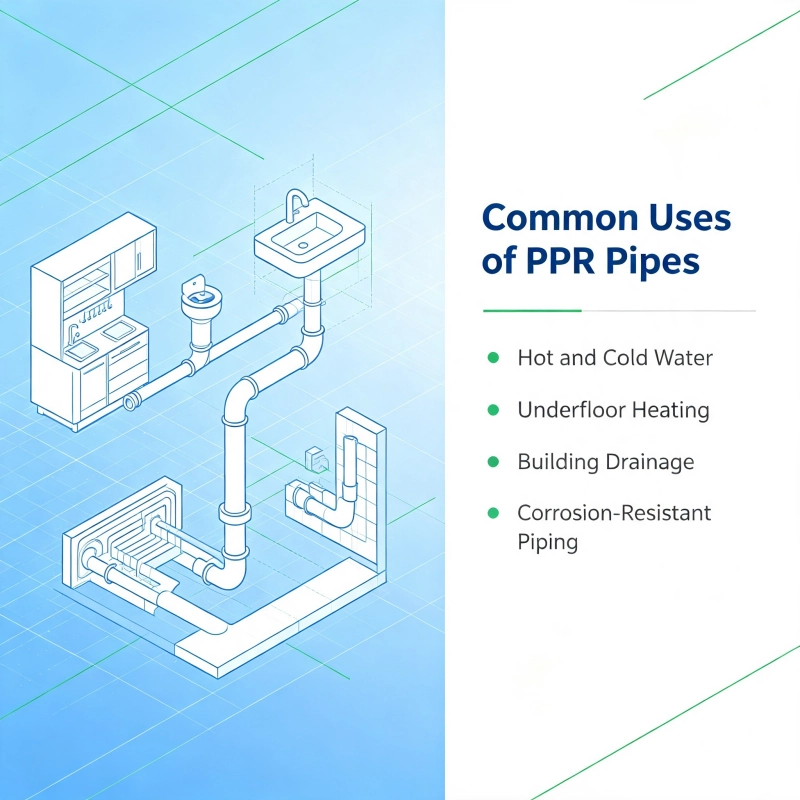
Hot and cold water distribution
Corrosion-resistant piping
Long-term fixed installations
Compatible PPR fittings
A complete PPR piping system from one supplier
For buyers working on residential buildings, commercial construction, water supply systems, and other fixed piping applications, PPR can provide a practical alternative to flexible PEX systems.
The final decision should always be based on the required specifications and applicable standards.
How to Choose a PPR Pipe Manufacturer
Choosing the right manufacturer is just as important as choosing the right pipe material.
For international buyers, contractors, distributors, and engineering companies, consider the following factors when evaluating a PPR pipe supplier.
1. Manufacturing Capability
A reliable supplier should have sufficient production capacity to support both standard orders and large projects.
Ask about:
Production lines
Factory capacity
Pipe size range
Fitting production
Quality control
Lead times
2. Raw Material Quality
The quality and consistency of raw materials directly affect the performance of plastic pipes.
Ask the manufacturer about:
Raw material selection
Material traceability
Material testing
Production controls
3. Product Standards and Testing
For international projects, confirm whether the manufacturer can provide the standards, testing documents, certifications, and technical documentation required by the target market.
4. Pipe and Fitting Compatibility
Buying pipe and fittings from a supplier capable of providing a complete system can simplify procurement and reduce compatibility concerns.
5. Technical Support
For large projects, a manufacturer should ideally provide technical assistance rather than simply selling products.
Engineering support can include:
Product selection
Pipe sizing
Technical documentation
Installation guidance
Pipeline system design
Project-specific recommendations
6. Customization and OEM Capability
Distributors and project buyers may require:
Custom packaging
Private labeling
Customized product specifications
Project-specific documentation
OEM services
A manufacturer with established R&D and production capabilities can be better positioned to support these requirements.
PPR Pipe Manufacturer for International Projects
Shandong Haili Pipeline Technology Co., Ltd. was established in 2013 and operates a 10,000-square-meter production facility.
Haili has more than 24 plastic pipe production lines and provides a wide range of plastic piping products and related technical services.
Our product portfolio includes:
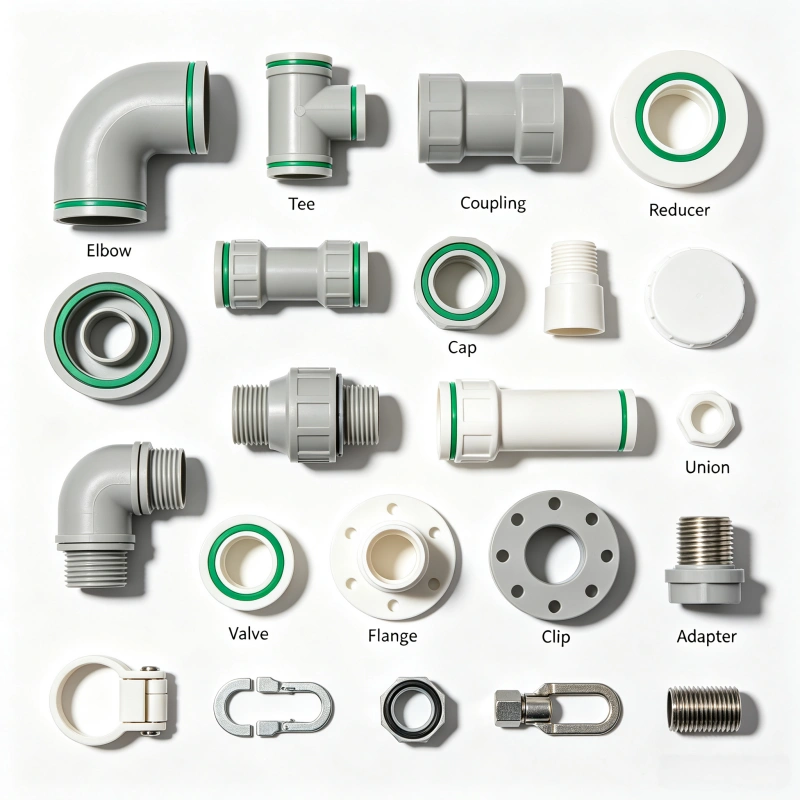
PPR pipes and fittings
PPR Pipe Systems
PE sprinkler and irrigation pipes
MPP electrical conduit pipes
PVC-U water supply pipes
PE steel-reinforced drainage pipes
Glass fibre reinforced SMC inspection chambers
Domestic septic tanks
Pipe fittings and related pipeline products
In addition to manufacturing, Haili provides services including pipe material R&D, underground pipeline network design, product development, and technical support.
The company has developed into a high-tech enterprise integrating R&D, manufacturing, sales, and service. Haili's R&D team includes international experts, senior engineers, and technical professionals, while its R&D center has been recognized as a national-level CNAS laboratory.
With more than 32 patents, Haili continues to focus on product innovation, manufacturing quality, and pipeline solutions for infrastructure and fluid transportation applications.
For buyers evaluating PPR pipe suppliers, these capabilities can be important when the project requires more than a standard pipe product and involves technical support, product customization, or long-term supply.
PPR Pipe vs PEX: Which One Should You Choose?
There is no universal winner between PPR and PEX.
PPR may be a better fit when you need a rigid piping system, heat-fused joints, and a fixed hot or cold water distribution system.
PEX may be a better fit when flexibility, easy routing, and fast installation are the primary priorities.
For a project buyer, the best decision should consider:
Application
Temperature
Pressure
Pipe size
Installation method
Fittings
Applicable standards
Total installed cost
Supplier capability
Technical support
If PPR meets your project's technical requirements, the next step is to select a manufacturer that can provide consistent product quality, compatible fittings, technical documentation, and reliable supply.
Request a PPR Pipe Quote from Haili
Looking for a PPR and PEX pipe manufacturer or supplier for your next project?
Shandong Haili Pipeline Technology Co., Ltd. provides PPR pipes and fittings as part of a broader plastic piping product portfolio.
Send us your requirements, including:
Pipe application
Required pipe diameter
Pressure rating
Quantity
Applicable standard
Destination country
Project requirements
Our technical and sales team can help evaluate the appropriate PPR piping solution for your project.
Contact Haili to discuss your PPR or PEX pipe requirements and request a quotation.
Frequently Asked Questions
Is PPR better than PEX?
Neither material is universally better. PPR is rigid and commonly joined by heat fusion, while PEX is flexible and can simplify installation. The right choice depends on the project requirements.
Is PPR cheaper than PEX?
The answer depends on pipe prices, fittings, labor, installation time, and local market conditions. Buyers should compare total installed cost rather than pipe price alone.
Can PPR be used for hot water?
Yes. PPR products designed and rated for hot water applications can be used for hot water distribution. The product's temperature and pressure ratings should be checked before selection.
Is PEX more flexible than PPR?
Yes. PEX is flexible, while PPR is a rigid pipe. This makes PEX advantageous for installations with complex routing or limited space.
Which is better for a large plumbing project, PPR or PEX?
It depends on the project design, operating conditions, installation method, local standards, and procurement requirements. PPR can be suitable for fixed water distribution systems, while PEX can offer advantages where flexibility and installation speed are important.
How do I choose a PPR pipe supplier?
Consider manufacturing capacity, raw material quality, product standards, testing, pipe and fitting compatibility, technical support, customization capabilities, and delivery capacity.
Can Haili supply PPR pipes and fittings?
Yes. Haili's product portfolio includes PPR pipes and pipe fittings, along with a broad range of PE, PVC-U, MPP, drainage, irrigation, and other plastic pipeline products.
Can Haili provide technical support for pipeline projects?
Yes. Haili provides services including pipe material research and development, underground pipeline network design, product development, and technical support in addition to pipe manufacturing.
916.webp)
204.webp)
659.webp)
185.webp)
312.webp)
849.webp)
587.webp)
767.webp)