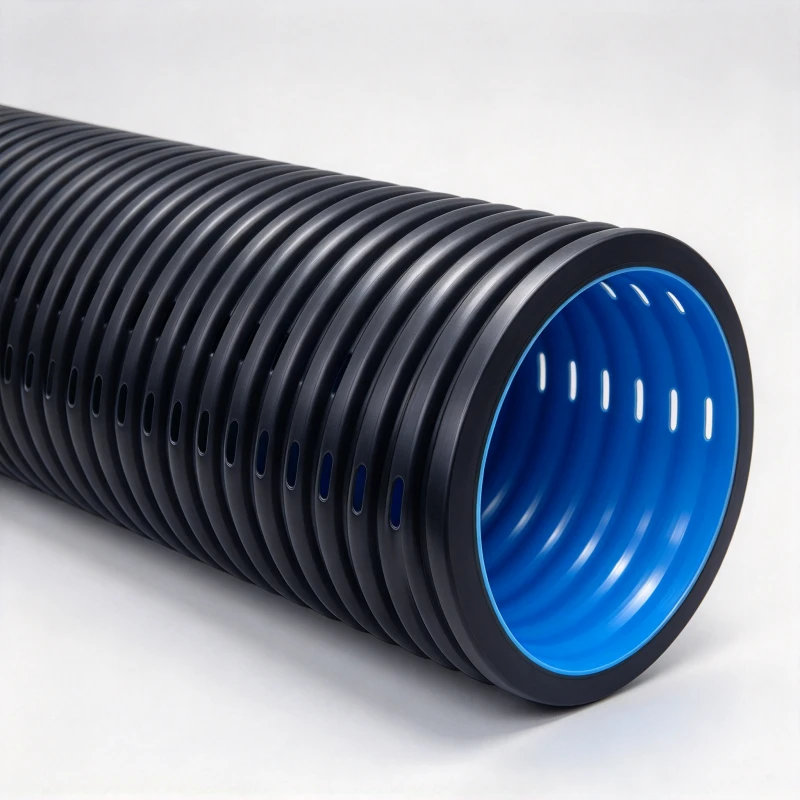
Excess groundwater can create serious challenges for building foundations, retaining walls, roads, agricultural land, and landscaped areas. Without an effective drainage system, water may accumulate in the soil, increase hydrostatic pressure, weaken subgrades, and contribute to moisture-related problems. Choosing the right drainage pipe is therefore essential for maintaining the performance and reliability of underground drainage systems.
An HDPE perforated corrugated drainage pipe for subsoil drainage is designed to collect excess water from surrounding soil through strategically positioned openings and convey it to a suitable drainage outlet. Manufactured from high-density polyethylene (HDPE), this type of pipe combines the practical advantages of plastic piping with a corrugated structure suited to various buried drainage applications.
However, selecting a suitable drainage pipe involves more than choosing a material or diameter. Pipe structure, perforation design, soil conditions, filter materials, burial depth, external loads, and outlet capacity all influence the performance of the complete drainage system.
In this guide, we explain how HDPE perforated corrugated drainage pipes work, their major applications, the factors to consider when selecting the right product, and the best practices for installation. We also discuss how to evaluate a reliable drainage pipe manufacturer for construction and infrastructure projects.
1. What Is an HDPE Perforated Corrugated Drainage Pipe?
An HDPE perforated corrugated drainage pipe is an underground drainage pipe manufactured from high-density polyethylene and provided with openings that allow water to enter from the surrounding soil or filter material.
Unlike a conventional solid-wall pipe designed primarily to transport water within a closed pipeline, a perforated drainage pipe is intended to collect groundwater along its installed length. Once water enters through the perforations, it flows through the pipe toward a designated discharge point.
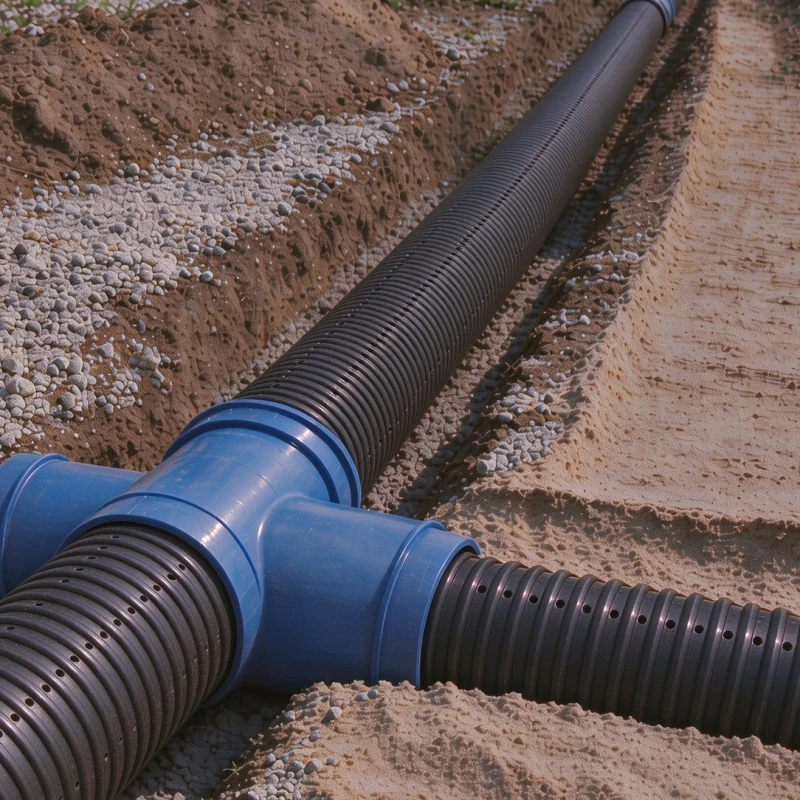
The pipe is commonly installed as part of a subsoil drainage system, French drain, foundation drainage arrangement, agricultural drainage network, or infrastructure drainage project.
How Does a Perforated Drainage Pipe Work?
A typical subsoil drainage system works through three main processes:
Water collection: Excess water moves through the surrounding soil or drainage aggregate and enters the pipe through its perforations.
Water conveyance: The collected water flows along the pipe toward an outlet, collector pipe, sump, or other suitable drainage facility.
Water discharge: The drainage network directs the collected water away from the protected area or toward an approved discharge destination.
The effectiveness of the system depends on the interaction between the pipe, surrounding soil, filter materials, hydraulic gradient, and outlet arrangement. A perforated pipe alone cannot guarantee effective drainage if the surrounding filter or downstream discharge system is poorly designed.
What Is the Purpose of the Corrugated Structure?
Corrugated drainage pipes have a profiled wall that forms a series of ridges and grooves. This geometry can provide structural performance while allowing practical handling and installation.
Depending on the product design, corrugated HDPE drainage pipes may feature a single-wall or double-wall construction. Single-wall pipes have a corrugated inner and outer surface, while double-wall pipes typically combine a corrugated exterior with a smoother interior.
The appropriate structure depends on the project's load requirements, hydraulic needs, installation conditions, and applicable specifications. Buyers should verify the actual pipe construction and performance documentation rather than assuming that all corrugated drainage pipes have equivalent characteristics.
2. Why Choose HDPE Corrugated Pipe for Subsoil Drainage?
HDPE is widely used in underground piping applications because of its material properties and adaptability to different infrastructure requirements. When properly specified and installed, HDPE perforated corrugated drainage pipes can offer several practical advantages.
Corrosion and Chemical Resistance
HDPE is resistant to many substances commonly encountered in soil and groundwater. Unlike some metallic materials, it does not rust, making it suitable for many underground drainage environments.
Nevertheless, chemical compatibility should be evaluated when the surrounding soil or groundwater contains unusual contaminants or aggressive industrial substances.
Flexibility and Practical Handling
HDPE pipes are generally lightweight compared with many traditional rigid piping materials of comparable dimensions. This can simplify transportation, handling, and positioning during installation.
Depending on the pipe design and supply format, flexibility may also help accommodate changes in alignment. However, allowable bending, deformation, and installation limits should always follow the manufacturer's specifications.
Structural Performance in Buried Applications
The corrugated profile can contribute to the structural performance of the pipe. For buried installations, however, overall performance depends on more than the pipe material or wall geometry.
Pipe stiffness, burial depth, soil conditions, traffic loads, bedding, side support, and backfill compaction all influence how a drainage pipe performs underground.
For projects involving roads, railways, heavy equipment, or substantial cover depths, engineers should verify the relevant structural requirements before specifying a product.
Potential for Long-Term Service
HDPE's resistance to corrosion and many soil-related environmental factors can support long-term service in suitable applications.
Actual service life depends on product quality, material formulation, installation practices, loading conditions, environmental exposure, and maintenance. Avoid relying on a generic lifespan claim when evaluating a product for a specific project.
Adaptability to Different Drainage Projects
HDPE drainage systems can be designed for various civil engineering, building, agricultural, and landscaping applications. Available diameters, perforation patterns, pipe structures, and connection options depend on the manufacturer's product range.
Before placing an order, buyers should confirm that the proposed pipe meets the project's technical requirements and is compatible with the intended drainage system.
3. Common Applications of HDPE Perforated Drainage Pipes
Perforated corrugated HDPE drainage pipes are used in many situations where excess groundwater needs to be collected and removed from the surrounding soil.
Foundation and Basement Drainage
Water accumulation around foundations and below-grade structures can increase hydrostatic pressure and contribute to water ingress.
Perforated drainage pipes may be installed around foundation perimeters to collect groundwater from a properly designed drainage layer. The collected water is then conveyed to an appropriate outlet or drainage facility.
System design should consider foundation depth, waterproofing, soil permeability, groundwater levels, filter materials, and the consequences of outlet blockage.
Retaining Wall Drainage
Retaining walls can experience increased water pressure when water accumulates behind the structure. A drainage system can help reduce this pressure by collecting and removing water from the retained soil.
A perforated HDPE drainage pipe may be installed near the base of the wall within a suitable drainage aggregate layer. The system may also incorporate a drainage composite, filter fabric, or dedicated weep arrangements, depending on the design.
The drainage system should be coordinated with the wall's structural design and waterproofing requirements.
Road and Railway Subgrade Drainage
Excess moisture in road and railway subgrades can adversely affect the performance of pavement and track-supporting layers.
Subsoil drainage systems can help control groundwater and remove water from designated areas beneath or alongside transportation infrastructure.
Pipe selection must account for the expected external loads, cover depth, surrounding materials, drainage capacity, and applicable transportation authority requirements.
Agricultural Land Drainage
Poorly drained agricultural soils can become waterlogged, limiting field access and affecting root-zone conditions.
Perforated drainage pipes may be installed as part of a subsurface agricultural drainage network to collect excess water and convey it to a suitable outlet.
The layout, spacing, depth, and diameter of the drains depend on soil permeability, crop requirements, groundwater conditions, field topography, and the intended drainage objective.
Sports Fields, Golf Courses, and Landscape Drainage
Sports fields, golf courses, parks, and landscaped areas often require drainage systems to prevent persistent water accumulation and maintain usable ground conditions.
Perforated HDPE drainage pipes can be incorporated into gravel drainage layers or other engineered drainage arrangements. The system should be designed around the soil profile, surface drainage strategy, expected rainfall, and required recovery time after wet weather.
4. Perforated vs. Non-Perforated HDPE Drainage Pipes
One of the most important decisions in drainage system design is whether to use a perforated pipe or a solid, non-perforated pipe.
Although both types can transport water, they serve different functions.
| Feature | Perforated HDPE Drainage Pipe | Non-Perforated HDPE Pipe |
|---|---|---|
| Primary function | Collects water from surrounding soil and conveys it downstream | Transports water within a closed pipe |
| Pipe openings | Has designed perforations | No water-collection perforations |
| Typical applications | Subsoil drainage, French drains, agricultural drainage | Drainage conveyance, collector connections, suitable discharge lines |
| Installation environment | Usually surrounded by a designed filter or drainage layer | Depends on the conveyance system and installation requirements |
| Main design considerations | Infiltration, filtration, soil compatibility, and hydraulic capacity | Flow capacity, connections, and structural requirements |
When Should You Choose a Perforated Pipe?
A perforated pipe is generally appropriate when the objective is to collect excess water from the surrounding ground.
Examples include foundation drainage, agricultural drainage, and subsurface collection systems.
When Is a Non-Perforated Pipe More Appropriate?
A solid pipe is generally more appropriate when water must be transported from a collection point to an outlet without allowing additional groundwater to enter along the conveyance route.
For example, a drainage system may use a perforated section to collect water and connect it to a non-perforated section that carries the collected flow to the discharge point.
The transition between the two sections should be properly connected and designed to prevent unwanted leakage or water entry.
5. Single-Wall vs. Double-Wall Corrugated Drainage Pipes
Corrugated drainage pipes are available in different structural configurations. Understanding these differences helps buyers match the product to project requirements.
Single-Wall Corrugated Pipe
A single-wall corrugated pipe has a corrugated profile on both its inner and outer surfaces.
Depending on its specifications, it may offer practical handling characteristics and flexibility for suitable drainage applications. However, the corrugated interior can affect hydraulic performance and cleaning compared with a smooth-bore pipe of otherwise comparable dimensions.
Double-Wall Corrugated Pipe
A double-wall corrugated pipe typically features a corrugated exterior and a smoother interior surface.
The outer profile can provide structural characteristics suited to buried applications, while the smoother inner wall can facilitate water conveyance and may make cleaning easier than in a comparable corrugated-bore pipe.
Actual performance depends on the pipe's design, dimensions, stiffness classification, and installation conditions.
How to Select the Right Configuration
Before selecting a single-wall or double-wall product, consider:
Required pipe diameter and hydraulic capacity.
Expected burial depth and external loading.
Soil type and installation method.
Whether a smoother internal surface is beneficial.
Connection compatibility and available fittings.
Applicable standards and project specifications.
Do not assume that double-wall construction automatically makes a product suitable for every heavy-duty application. The specified structural performance must be verified using relevant product documentation and design requirements.
6. How to Choose the Right HDPE Subsoil Drainage Pipe
Correct pipe selection is essential for effective water collection, structural reliability, and long-term drainage performance. The following factors should be evaluated before specifying or purchasing an HDPE perforated corrugated drainage pipe.
Pipe Diameter and Drainage Capacity
Pipe diameter influences the flow capacity of the drainage system, but it should not be selected in isolation.
Engineers should consider the expected groundwater inflow, contributing area, soil permeability, pipe gradient, network layout, and downstream discharge conditions.
The internal diameter is particularly relevant to hydraulic calculations. For corrugated pipes, the nominal diameter and actual internal diameter may differ, so the manufacturer's dimensional data should be checked.
Perforation Pattern and Open Area
Perforations allow groundwater to enter the pipe. Their diameter, distribution, orientation, and total open area can influence water-entry performance and the movement of soil particles toward the openings.
The appropriate perforation design depends on the surrounding soil, filter arrangement, anticipated inflow, and product configuration.
Buyers should request the manufacturer's perforation specifications rather than assuming that all products sold as perforated drainage pipes have identical openings.
Ring Stiffness and Burial Conditions
Ring stiffness is an important consideration for many buried thermoplastic pipes. It helps describe resistance to deformation under specified test conditions.
However, ring stiffness alone does not determine whether a pipe is suitable for a particular installation. Burial depth, traffic loads, bedding, backfill material, compaction, groundwater conditions, and installation quality must also be considered.
For infrastructure projects, confirm the required stiffness class, testing standard, and design criteria with the project engineer.
Soil Conditions and Filter Selection
Soil characteristics strongly influence drainage performance.
Coarse soils, fine sands, silts, and clay-rich soils behave differently in terms of water movement and particle migration. The filter system must allow water to enter while controlling the movement of soil particles that could clog the drainage aggregate or pipe openings.
Depending on the site conditions, the drainage system may use graded aggregate, geotextile, a drainage composite, or a combination of materials.
Filter selection should be based on soil gradation, geotextile filtration properties, permeability, and the risk of clogging. A filter sock or fabric should not be selected solely because it is available or commonly used on other projects.
Pipe Slope and Outlet Design
A drainage pipe needs a suitable hydraulic path to move collected water toward its destination.
The required slope depends on the design flow, pipe dimensions, hydraulic conditions, and project constraints. Excessively shallow gradients may contribute to sediment accumulation in some systems, while an inappropriate layout can create unwanted low points or prevent effective drainage.
The outlet must also be protected against blockage, erosion, backflow, or other site-specific risks.
Standards and Project Specifications
Different countries and projects may apply different product standards, installation requirements, and testing procedures.
Before ordering, confirm:
Applicable product and material standards.
Required pipe dimensions and stiffness classification.
Perforation and filtration requirements.
Structural design and installation criteria.
Inspection, testing, and documentation requirements.
A supplier should be able to identify the relevant product specifications and provide applicable documentation for the product being offered.
7. How to Install Perforated Corrugated Drainage Pipe
Proper installation is as important as pipe selection. Even a well-manufactured drainage pipe can perform poorly if the trench, filter materials, connections, or outlet are incorrectly designed.
The following steps provide a general overview. Project drawings, local requirements, site conditions, and the manufacturer's installation instructions take precedence.
Step 1: Prepare the Trench
Excavate the trench to the required alignment, depth, and width.
The dimensions should accommodate the pipe, bedding, surrounding drainage aggregate, and any specified filter materials. Check for unsuitable soil, unstable trench conditions, and potential conflicts with existing utilities.
Groundwater control and trench safety should be addressed before installation.
Step 2: Install the Bedding and Filter Layer
Prepare a stable bedding layer using the specified material.
Where a granular drainage envelope is required, use aggregate with suitable grading and cleanliness. If geotextile is specified, install it in the intended position and maintain sufficient overlap or enclosure to prevent uncontrolled soil migration.
The filtration arrangement should follow the engineering design rather than a universal rule for all soil types.
Step 3: Position and Connect the Pipe
Place the pipe at the specified alignment and gradient.
Follow the manufacturer's guidance for perforation orientation, pipe joining, couplers, and fittings. Ensure that the connections are secure and that the pipe is not damaged during handling or placement.
Where multiple pipe sections connect to a collector or outlet line, verify that the complete network provides a continuous drainage path.
Step 4: Complete the Drainage Envelope and Backfill
Place the specified drainage aggregate around the pipe without displacing or damaging it.
Install the remaining filter materials and backfill in accordance with the project design. Compaction should provide the required support while avoiding excessive loads or deformation.
For flexible buried pipes, the quality of the surrounding soil support is particularly important to structural performance.
Step 5: Verify the Outlet and Drainage Path
Before completing the installation, check the outlet connection, flow path, and accessibility of any inspection or maintenance points.
The discharge arrangement should comply with applicable site and environmental requirements. Where practical, verify that the system can convey water to the intended destination without obstruction.
8. Common Subsoil Drainage Problems and How to Prevent Them
Drainage problems are often associated with system design, filtration, installation, or maintenance rather than the pipe material alone.
Pipe Clogging and Soil Infiltration
Fine soil particles may migrate into the drainage aggregate or pipe through an unsuitable filter arrangement.
Prevention: Evaluate the soil gradation and filter properties before installation. Use compatible aggregate and geotextile where required, and avoid materials that may restrict water entry or clog under site conditions.
Pipe Deformation Under External Loads
A buried pipe may deform excessively if the selected product is unsuitable for the loading conditions or if bedding and backfill are poorly installed.
Prevention: Verify the required structural performance, installation depth, and expected loads. Follow the specified bedding and compaction procedures.
Insufficient Gradient or Poor Outlet Design
Water may accumulate if the drainage path is interrupted, the outlet is obstructed, or the hydraulic layout is unsuitable.
Prevention: Design the pipe gradient and outlet together with the overall drainage network. Provide appropriate inspection access where needed and keep discharge points protected from blockage.
Incorrect Filter Material Selection
A filter that is too restrictive may impede water entry, while an unsuitable filter may allow excessive soil migration.
Prevention: Select filtration materials based on the site's soil conditions, water flow, and the relevant design criteria. Avoid treating one geotextile type or aggregate grading as universally suitable.
Inadequate Inspection and Maintenance
Sediment, root intrusion, damaged outlets, or other obstructions may reduce system performance over time.
Prevention: Provide accessible maintenance points where appropriate, inspect critical outlets periodically, and investigate persistent wet areas or unexpected water accumulation.
9. How to Evaluate an HDPE Drainage Pipe Manufacturer
Selecting a suitable manufacturer is an important step in procurement, especially for infrastructure projects that require consistent product specifications, dependable delivery, and technical documentation.
Beyond price, buyers should evaluate the manufacturer's production capabilities, quality management, technical support, and ability to meet project-specific requirements.
Manufacturing Capability and Production Management
Review the manufacturer's production facilities, relevant equipment, product range, and manufacturing processes.
For large projects, confirm whether the supplier can manufacture the required pipe configuration and quantities within the planned delivery schedule. Overall factory capacity should not be confused with the capacity available for a specific product.
Quality Control and Technical Documentation
Request relevant dimensional specifications, test reports, quality documentation, and evidence of compliance with the applicable standards.
The documents should relate to the actual product being supplied. Laboratory accreditation, company certifications, and individual product approvals are not interchangeable, so buyers should verify the scope of each claim.
Product Range and Pipe Fittings
A supplier with a suitable range of pipe products and compatible fittings may simplify procurement and coordination.
However, the buyer should confirm the availability and compatibility of the specific perforated drainage pipe, couplers, connectors, and related components required for the project.
Engineering Support and Project Coordination
Technical assistance can be valuable when selecting pipe dimensions, confirming installation requirements, or coordinating different components of a drainage network.
Ask whether the manufacturer can review project specifications, clarify product parameters, provide technical drawings, and support documentation requirements. Any engineering or design service should be clearly defined according to the project's scope.
10. Why Consider Shandong Haili Pipeline Technology Co., Ltd?
Shandong Haili Pipeline Technology Co., Ltd is a Chinese plastic pipe manufacturer established in 2013. The company operates across a 10,000-square-meter site and has a reported total investment of USD 65 million.
Haili has more than 24 plastic pipe production lines and provides a broad range of pipe products and fittings for infrastructure, water supply, drainage, irrigation, gas transportation, mining, and industrial fluid applications.
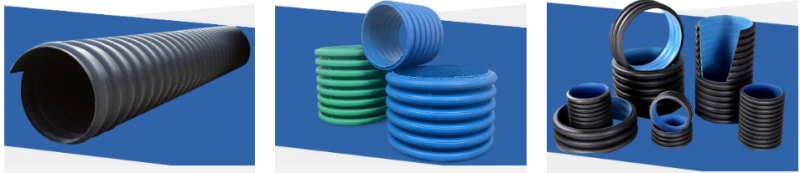
Its product portfolio includes PE water pipes, PE gas pipes, PE mine pipes, PE sprinkler and irrigation pipes, MPP electrical conduit pipes, PVC-U water supply pipes, PE steel-reinforced drainage pipes, PPR pipes, PEX pipes, pipe fittings, glass-fiber-reinforced SMC inspection chambers, and domestic septic tanks.
Research and Development Capabilities
Haili focuses on product development, manufacturing, sales, and service. The company reports having a technical research and development team comprising international experts, senior engineers, and university graduates, together with more than 32 patents.
Its R&D center is reported to have CNAS laboratory recognition. Buyers evaluating a particular drainage pipe should confirm the laboratory's accreditation scope and the availability of relevant test methods and reports for the product under consideration.
A Broad Infrastructure Product Portfolio
Haili's experience across different plastic piping categories provides a foundation for serving customers with varied infrastructure requirements.
For buyers sourcing underground piping systems, the company can discuss relevant product options, fittings, and technical requirements according to the actual product range available for the project.
If you are sourcing HDPE perforated corrugated drainage pipes for a subsoil drainage project, provide your required diameter, pipe configuration, perforation specifications, installation conditions, applicable standards, and expected quantity. These details help establish whether a suitable product is available and what additional technical information is required.
11. Frequently Asked Questions About HDPE Perforated Corrugated Drainage Pipes
What Is an HDPE Perforated Corrugated Drainage Pipe Used For?
It is used to collect excess water from surrounding soil and convey it to a suitable outlet. Typical applications include foundation drainage, retaining wall drainage, agricultural land drainage, road subgrades, and landscape drainage.
Should a Perforated Drainage Pipe Be Wrapped in Geotextile?
Not every installation requires the same filtration arrangement. Geotextile can help control soil migration into the drainage aggregate or pipe, but its suitability depends on soil gradation, permeability, and clogging risk.
In some projects, graded aggregate or other engineered filter arrangements may be more appropriate. Follow the project design and site-specific filtration requirements.
How Deep Should a Subsoil Drainage Pipe Be Installed?
There is no single installation depth suitable for every project. The required depth depends on the groundwater level, the area being drained, soil conditions, foundation or subgrade requirements, pipe stiffness, and expected external loads.
The depth and alignment should be determined by the drainage design and verified against the manufacturer's installation requirements.
What Diameter of Drainage Pipe Do I Need?
The appropriate diameter depends on the expected water inflow, contributing area, pipe gradient, network layout, and downstream capacity.
Engineers should evaluate the hydraulic requirements rather than selecting a diameter based only on common practice. The pipe's actual internal dimensions should also be considered.
What Is the Difference Between a Perforated Pipe and a French Drain?
A perforated pipe is a component that collects and conveys water. A French drain is a broader drainage arrangement that typically includes a trench, drainage aggregate, and a perforated pipe, with a filter layer where required.
The design of a French drain depends on the soil, water source, drainage objective, and discharge conditions.
Can HDPE Perforated Drainage Pipes Be Used Under Roads?
They may be suitable for certain road drainage applications, provided the selected product meets the project's structural, hydraulic, and installation requirements.
Pipe stiffness, cover depth, traffic loads, bedding, backfill, and applicable road authority specifications must be checked before use.
What Information Should I Provide When Requesting a Drainage Pipe Quote?
To help a manufacturer evaluate your requirements, provide the following information where available:
Required pipe diameter and configuration.
Perforation pattern or drainage specification.
Required pipe stiffness and applicable standards.
Project application and installation conditions.
Estimated quantity and delivery destination.
Required fittings, technical documents, and delivery schedule.
Drawings, project specifications, or a bill of quantities can help clarify the requirements and reduce the risk of selecting an unsuitable product.
Conclusion
HDPE perforated corrugated drainage pipes can play an important role in subsoil drainage by collecting excess groundwater and conveying it away from foundations, retaining walls, agricultural land, roads, and landscaped areas.
Successful drainage depends on selecting a suitable pipe structure, diameter, perforation design, and structural specification while also considering soil conditions, filter materials, installation quality, and outlet capacity. The pipe must be evaluated as part of a complete drainage system rather than as an isolated product.
When sourcing drainage pipes for an infrastructure or construction project, buyers should look beyond price and evaluate product documentation, manufacturing capability, quality control, technical support, and compatibility with project requirements.
Shandong Haili Pipeline Technology Co., Ltd brings experience in plastic pipe manufacturing, research and development, and infrastructure piping products. For projects requiring underground drainage solutions, contacting the company with clear technical specifications is a practical starting point for discussing product suitability, available configurations, and procurement requirements.
916.webp)
204.webp)
659.webp)
185.webp)
312.webp)
849.webp)
587.webp)
767.webp)