332.webp)
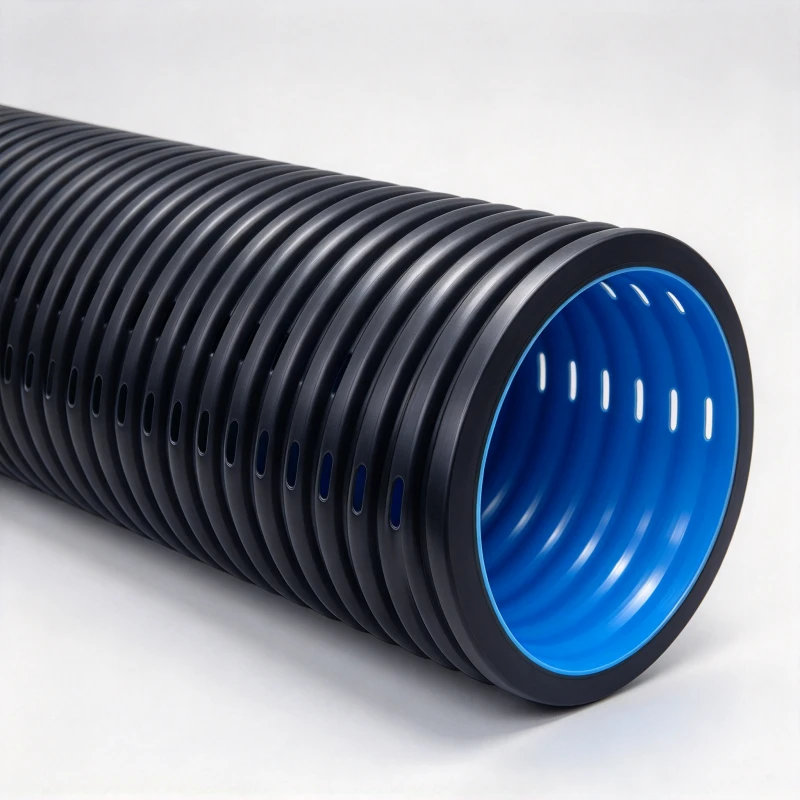
HDPE (PE) pipes are widely used in buried water supply systems due to their flexibility, corrosion resistance, and long service life. However, a common question among engineers, contractors, and buyers is whether ring stiffness (SN) should be considered when selecting PE water pipes.
In many cases, confusion arises between pressure rating (PN) and ring stiffness, leading to incorrect product selection or over-specification. This article provides a clear and practical explanation based on real engineering principles, helping you make the right decision for your project.
Understanding Ring Stiffness and Pressure Rating
To answer this question, it is essential to understand the difference between ring stiffness and pressure rating.
Ring stiffness (SN) refers to a pipe’s ability to resist external loads, such as soil pressure, traffic loads, and installation conditions. It is mainly used as a design parameter for gravity pipelines like sewer and drainage systems, where pipes are not under internal pressure.
Pressure rating (PN), on the other hand, indicates the pipe’s ability to withstand internal pressure, which is the key requirement for water supply systems. For PE pipes, pressure rating is closely related to SDR (Standard Dimension Ratio), which determines the pipe wall thickness.
In practical terms, PE water pipes are primarily designed based on internal pressure performance, not ring stiffness.
Do Buried PE Water Pipes Need Ring Stiffness?
This is the core question, and the answer depends on how the pipe works in real conditions.
In most water supply applications, PE pipes operate as pressurized systems. The internal pressure helps maintain the pipe shape, and the pipe works together with the surrounding soil to resist external loads. Therefore, ring stiffness is not typically specified for PE water pipes.
However, this does not mean external loads can be ignored. In certain conditions, the pipe may be subjected to significant external forces, such as:
Deep burial installations
Heavy traffic loads (roads or highways)
Poor or unstable soil conditions
Large diameter pipelines
In these cases, the deformation of the pipe becomes an important consideration. Instead of using SN as a design parameter, engineers evaluate the pipe’s performance through deflection control and soil-pipe interaction.
HDPE pipes are flexible pipes, meaning their performance depends not only on the pipe itself but also on the quality of installation and the support provided by surrounding soil.
How to Ensure Safety for Buried PE Water Pipes
Even though ring stiffness is not the primary parameter, proper design and installation are essential to ensure long-term performance.
First, selecting the correct SDR is critical. The SDR determines the pipe wall thickness and pressure resistance. Choosing the appropriate SDR based on working pressure ensures the pipe can handle internal loads safely.
Second, installation quality plays a major role. Proper trench preparation, bedding, and backfilling help distribute external loads and prevent excessive deformation. Poor installation is one of the main causes of pipeline failure.
Third, controlling pipe deformation is important in deep burial or high-load conditions. Engineers typically limit allowable deflection to ensure structural integrity.
Finally, following international standards and best practices helps guarantee safety. Standards such as ISO and EN provide guidelines for design, testing, and installation of PE pipelines.
For buried PE water pipes, ring stiffness is not a primary design requirement. Instead, pressure rating (PN) and SDR are the key parameters for pipe selection.
However, external load conditions should not be overlooked. A well-designed system considers both internal pressure and external forces through proper material selection, installation, and soil support.
If you are working on a water supply, irrigation, or infrastructure project, choosing the right PE pipe solution is essential. We provide high-quality HDPE pipes and fittings, along with technical support to help you select the most suitable products for your application.
916.webp)
204.webp)
659.webp)
185.webp)
312.webp)
849.webp)
587.webp)
767.webp)