Introduction: Understanding PPR Pipes and Their Growing Applications
PPR pipes have become one of the most popular piping solutions in residential, commercial, and industrial projects around the world. But what are PPR pipes used for, and why are more engineers, contractors, and developers choosing them instead of traditional metal or PVC piping systems?
PPR pipes, also known as Polypropylene Random Copolymer pipes, are plastic piping systems made from a high-quality polypropylene material. They are designed for transporting hot and cold water, industrial fluids, and various liquid applications where durability, corrosion resistance, and long service life are required.
Unlike traditional metal pipes that may rust or require frequent maintenance, PPR pipes offer excellent chemical resistance, smooth internal surfaces, and a lifespan that can exceed 50 years when properly installed. These advantages make them widely used in plumbing systems, drinking water supply, heating systems, industrial pipelines, and building infrastructure.
As global construction standards continue to improve, the demand for reliable and environmentally friendly piping solutions is increasing. Companies such as Shandong Haili Pipeline Technology Co., Ltd are contributing to this development by providing advanced pipeline products, including PPR pipes, HDPE pipes, pipe fittings, and customized pipeline solutions for different industries.
Founded in 2013, Shandong Haili Pipeline Technology Co., Ltd covers an area of 10,000 square meters with a total investment of 65 million dollars. The company operates more than 24 plastic pipe production lines and has developed into a national high-tech enterprise integrating research and development, manufacturing, sales, and service.
With more than 32 patents and a CNAS-certified national-level laboratory, Haili focuses on producing high-quality, energy-saving, and environmentally friendly pipeline products for global infrastructure development.
What Are PPR Pipes?
PPR pipes are made from Polypropylene Random Copolymer (PP-R), a thermoplastic material specially developed for pressure piping systems.
The “random copolymer” structure improves the flexibility, impact resistance, and temperature performance of polypropylene. Compared with traditional polypropylene materials, PPR provides better stability when transporting hot water under pressure.
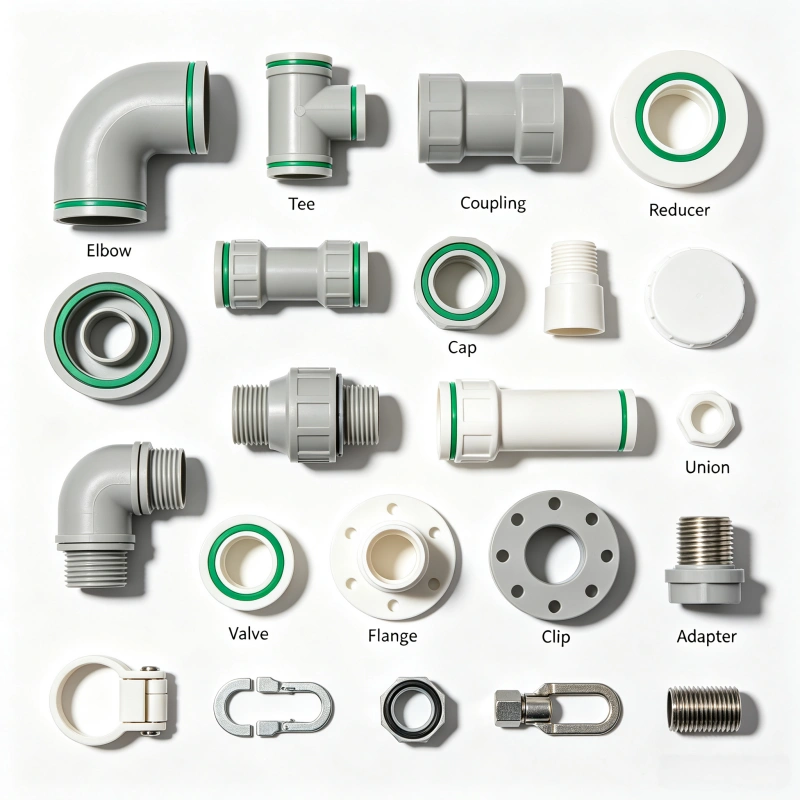
PPR pipe systems usually include:
PPR pipes
PPR fittings
Elbows
Tees
Couplings
Valves
Connection accessories
The pipes are normally joined through heat fusion welding, where the pipe and fitting are heated and connected into one continuous system. This creates a leak-resistant joint without using glue, chemicals, or metal connectors.
Common PPR Pipe Types
| Type | Structure | Main Features | Typical Applications |
|---|---|---|---|
| PPR Single Layer Pipe | Pure polypropylene structure | Economical and lightweight | Cold water supply |
| PPR Fiber Composite Pipe | Reinforced with fiberglass layer | Lower thermal expansion | Hot water systems |
| PPR Aluminum Composite Pipe | Includes aluminum layer | Higher strength and dimensional stability | Heating systems |
| PPR UV Resistant Pipe | Modified material | Better outdoor performance | Special outdoor applications |
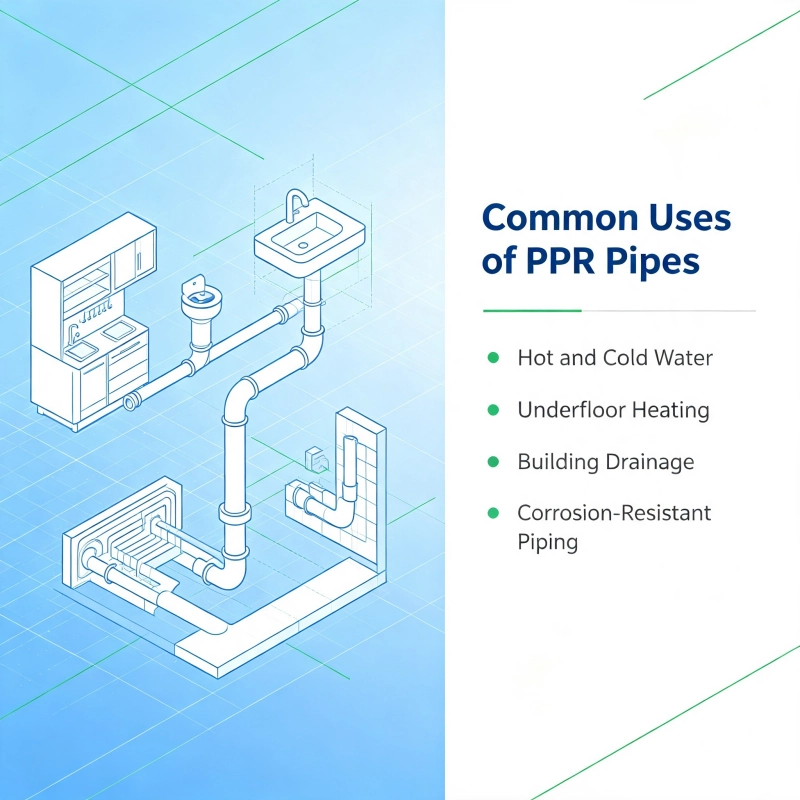
Main Uses of PPR Pipes
PPR pipes are used in many industries because of their durability, safety, and excellent performance. Below are the most common applications.
1. Residential Hot and Cold Water Supply Systems
One of the most common uses of PPR pipes is residential plumbing.
Modern homes require safe and reliable water distribution systems for:
Drinking water
Kitchen faucets
Bathroom plumbing
Washing machines
Water heaters
Shower systems
PPR pipes are especially suitable for residential applications because they do not corrode and do not release harmful substances into drinking water.
Compared with metal pipes, PPR pipes provide cleaner water transportation because there is no rust formation inside the pipe.
Advantages in residential plumbing:
Safe for potable water
Long service life
Low maintenance requirements
Quiet operation due to noise absorption properties
Easy installation
For homeowners and construction companies, PPR piping is becoming a preferred alternative to copper and galvanized steel pipes.
2. Hot Water and Heating Systems
Another important application of PPR pipes is hot water transportation.
Traditional plastic pipes often struggle with high temperatures, but PPR pipes are specifically designed for hot water environments.
They are commonly used in:
Central heating systems
Solar water heating systems
Boiler connections
Radiator supply lines
Floor heating systems
High-quality PPR pipes can typically handle continuous operating temperatures around 70°C, with some reinforced types designed for higher temperature applications.
Why PPR works well for heating systems:
| Feature | Benefit |
|---|---|
| Low thermal conductivity | Reduces heat loss |
| High temperature resistance | Suitable for hot water |
| Corrosion resistance | Prevents internal damage |
| Smooth inner wall | Maintains water flow efficiency |
3. Commercial Building Plumbing
Large buildings require piping systems that can operate reliably for decades. PPR pipes are widely used in:
Hotels
Hospitals
Schools
Office buildings
Shopping centers
Apartment complexes
Commercial projects often prefer PPR because installation is faster compared with metal piping.
The lightweight design reduces transportation costs and allows workers to complete projects more efficiently.
For contractors, another major advantage is fewer maintenance problems after installation.
4. Industrial Fluid Transportation
Although PPR pipes are commonly known for residential plumbing, they are also used in industrial applications.
Industries use PPR pipes for transporting:
Water
Mild chemicals
Process fluids
Cooling water
Industrial wastewater
The chemical resistance of polypropylene makes PPR suitable for environments where metal pipes may experience corrosion.
Typical industrial applications include:
Food processing facilities
Pharmaceutical factories
Chemical plants
Manufacturing facilities
However, engineers must always check chemical compatibility before selecting PPR pipes for aggressive industrial fluids.
5. Drinking Water Distribution Systems
Safe drinking water transportation is one of the most important applications of PPR pipes.
Because PPR material is non-toxic and corrosion-resistant, it is widely accepted for potable water systems.
Compared with old metal pipelines, PPR systems help reduce:
Rust contamination
Metallic taste
Internal pipe scaling
Bacterial growth caused by corrosion
Many modern residential and municipal projects choose PPR pipes as part of sustainable water infrastructure development.
6. Agricultural Irrigation Systems
Agriculture requires reliable water distribution systems that can withstand outdoor conditions.
PPR pipes can be used in:
Greenhouse irrigation
Small-scale farming irrigation
Water distribution networks
Agricultural water supply systems
Their lightweight structure makes transportation and installation easier compared with traditional steel pipes.
However, for large-scale underground irrigation projects, HDPE pipes are often preferred because of their flexibility and impact resistance.
PPR Pipes vs Other Pipe Materials: Competitor Analysis
Choosing the right pipe material depends on project requirements, budget, temperature conditions, and installation environment.
The following comparison shows how PPR pipes perform against other popular piping materials.
PPR vs PVC Pipes
PVC pipes are widely used because they are affordable and easy to install. However, PPR pipes offer better performance for hot water applications.
| Comparison | PPR Pipe | PVC Pipe |
|---|---|---|
| Hot water performance | Excellent | Limited |
| Temperature resistance | Higher | Lower |
| Drinking water safety | Excellent | Good |
| Joint method | Heat fusion | Glue connection |
| Durability | 50+ years | 25-50 years |
| Flexibility | Better | More rigid |
Winner for hot water systems: PPR
Winner for low-cost drainage applications: PVC
PPR vs HDPE Pipes
HDPE pipes are another popular plastic piping solution, especially for outdoor and underground applications.
| Comparison | PPR Pipe | HDPE Pipe |
|---|---|---|
| Flexibility | Moderate | Excellent |
| Underground applications | Good | Excellent |
| Hot water use | Excellent | Limited depending on grade |
| Impact resistance | Good | Excellent |
| Installation method | Heat fusion | Butt/electrofusion |
| Common use | Building plumbing | Water mains, gas, mining |
HDPE is often the preferred choice for large outdoor infrastructure projects, while PPR is commonly selected for indoor water supply and heating systems.
PPR vs PEX Pipes
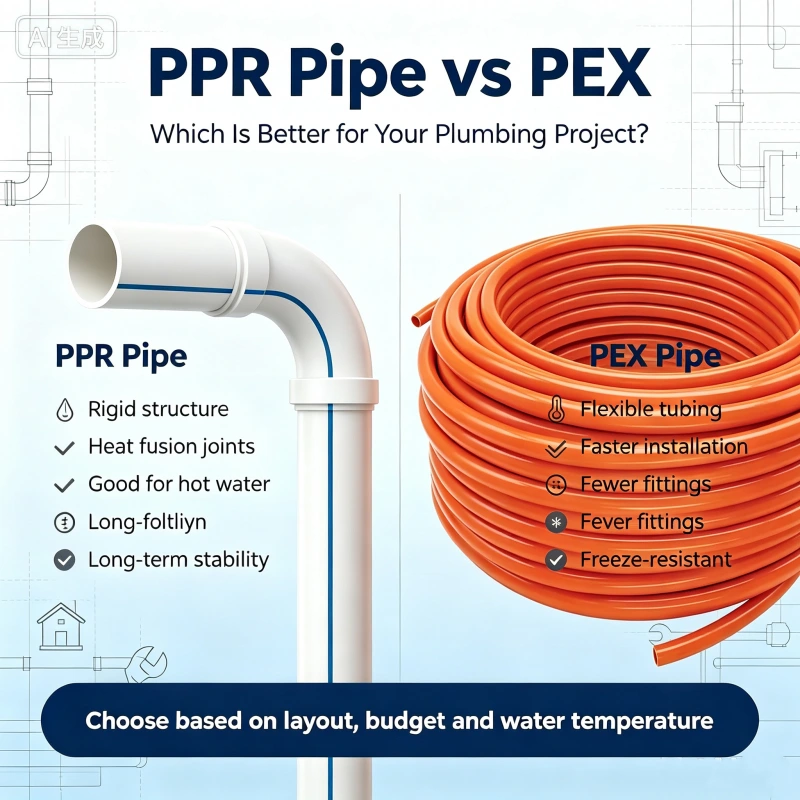
PEX (cross-linked polyethylene) pipes have become popular in some markets due to their flexibility and easy installation. However, PPR pipes still have strong advantages in many applications.
| Comparison | PPR Pipe | PEX Pipe |
|---|---|---|
| Material | Polypropylene random copolymer | Cross-linked polyethylene |
| Hot water performance | Excellent | Excellent |
| Chemical resistance | Excellent | Good |
| Rigidity | More rigid | More flexible |
| Installation | Heat fusion welding | Mechanical fittings |
| Joint reliability | Very high | Depends on fittings |
| Recycling capability | Better | More difficult |
PEX is often chosen for flexible residential plumbing, especially where pipes need to pass through narrow spaces. PPR is preferred where long-term durability, hygienic water transportation, and strong welded connections are priorities.
PPR vs CPVC Pipes
CPVC is another plastic pipe material commonly used for hot and cold water systems.
| Comparison | PPR Pipe | CPVC Pipe |
|---|---|---|
| Temperature resistance | High | High |
| Joint method | Heat fusion | Solvent cement |
| Chemical usage during installation | None | Requires adhesive |
| Corrosion resistance | Excellent | Excellent |
| Environmental performance | Better | Moderate |
| Service life | 50+ years | 40-50 years |
PPR offers a cleaner installation process because it does not require chemical adhesives. This makes it attractive for environmentally conscious construction projects.
Advantages of Using PPR Pipes
The popularity of PPR pipes is not accidental. Their combination of performance, safety, and cost efficiency makes them suitable for many applications.
1. Long Service Life
High-quality PPR pipes can provide more than 50 years of reliable operation under normal working conditions.
Their durability comes from:
Resistance to corrosion
Stable chemical structure
Strong pressure performance
Resistance to scaling
For building owners, this means fewer repairs and lower lifetime maintenance costs.
2. Excellent Corrosion Resistance
Metal pipes can gradually deteriorate due to:
Water chemistry
Oxygen exposure
Mineral deposits
Chemical reactions
PPR pipes do not rust because polypropylene is naturally resistant to corrosion.
This makes them especially valuable in areas with hard water or aggressive water conditions.
3. Safe and Hygienic Water Transportation
PPR pipes are widely used for drinking water because they are:
Non-toxic
Odor-free
Resistant to bacterial growth caused by corrosion
Free from heavy metal contamination
This makes them suitable for homes, hospitals, schools, and public buildings.
4. Easy Installation and Maintenance
PPR pipe installation is relatively simple compared with traditional metal systems.
The heat fusion process creates strong permanent joints without:
Welding equipment
Threading tools
Chemical adhesives
Benefits include:
Faster construction
Lower labor costs
Fewer leakage risks
Reduced maintenance requirements
5. Energy Efficiency
PPR has lower thermal conductivity than metal pipes.
This means:
Hot water stays warmer longer
Less energy is lost during transportation
Heating systems operate more efficiently
For modern green buildings, this energy-saving feature is an important advantage.
Limitations of PPR Pipes
Although PPR pipes offer many benefits, they are not suitable for every situation.
Understanding their limitations helps engineers choose the correct piping system.
| Limitation | Explanation |
|---|---|
| Thermal expansion | PPR expands more than metal pipes when heated |
| UV sensitivity | Standard PPR should not be exposed to direct sunlight for long periods |
| Installation quality | Incorrect fusion welding may affect performance |
| Extreme chemical environments | Some chemicals may require specialized materials |
For outdoor or underground infrastructure projects, materials such as HDPE pipes may sometimes provide better performance.
A professional supplier can help select the right pipe material according to project requirements.
How Are PPR Pipes Installed?
PPR pipes are usually installed through a process called socket fusion welding.
The basic installation steps include:
Step 1: Cutting the Pipe
The pipe is cut according to the required length using a professional pipe cutter.
The cutting surface should be clean and straight.
Step 2: Heating the Pipe and Fitting
The pipe end and fitting socket are heated using a fusion welding machine.
The heating temperature is usually controlled around 260°C.
Step 3: Connecting the Joint
After heating, the pipe and fitting are pushed together.
The melted materials combine and create a strong permanent connection.
Step 4: Cooling and Inspection
The joint is allowed to cool naturally before pressure testing.
A properly installed PPR system should have:
Smooth connections
No leakage
Correct alignment
Stable pressure performance
How to Choose the Right PPR Pipe?
Selecting the correct PPR pipe requires considering several factors.
1. Check the Application
Different applications require different pipe specifications.
| Application | Recommended Pipe Type |
|---|---|
| Cold water supply | Standard PPR pipe |
| Hot water supply | Reinforced PPR pipe |
| Heating system | Fiber or aluminum composite PPR |
| Commercial buildings | High-pressure PPR system |
| Industrial applications | Chemical-resistant PPR system |
2. Consider Pipe Pressure Rating
PPR pipes are usually classified according to pressure levels.
Common pressure ratings include:
PN10
PN16
PN20
PN25
Higher PN ratings generally mean better pressure resistance.
For example:
PN10: Mainly used for cold water
PN16: General water supply applications
PN20: Hot water systems
PN25: High-temperature and heating applications
3. Choose a Reliable Manufacturer
Pipe quality directly affects system safety and service life.
A professional PPR pipe manufacturer should provide:
Quality raw materials
Strict production standards
Factory testing
Technical support
Complete pipe fittings
Low-quality pipes may cause:
Leakage
Deformation
Reduced lifespan
Increased maintenance costs
Why Choose Shandong Haili Pipeline Technology for PPR Pipes?
Shandong Haili Pipeline Technology Co., Ltd is a professional pipeline manufacturer specializing in high-quality plastic pipe solutions.
Since its establishment in 2013, Haili has focused on developing reliable pipeline products for global infrastructure projects.
The company produces a wide range of products, including:
PPR pipes
HDPE water pipes
HDPE gas pipes
HDPE mining pipes
PE irrigation pipes
MPP electrical conduit pipes
PVC-U water supply pipes
PE reinforced drainage pipes
Pipe fittings
Plastic inspection chambers
Domestic septic tanks
Haili operates more than 24 advanced plastic pipe production lines and combines manufacturing capability with professional research and development.
Haili’s Competitive Advantages
| Advantage | Description |
|---|---|
| Professional manufacturing | More than 10 years of pipeline production experience |
| Advanced production capacity | Over 24 plastic pipe production lines |
| Strong R&D capability | National high-tech enterprise with more than 32 patents |
| Quality control | CNAS-certified national laboratory |
| Complete product range | Multiple plastic pipe solutions for different industries |
| Global service capability | Supporting international infrastructure projects |
Haili’s technical research team includes international experts, senior engineers, masters, and professional engineers who continuously improve pipeline technology.
The company’s focus on advanced raw materials, product innovation, and customer service has helped the Haili Pipe brand become a recognized name in the Chinese pipe industry.
Frequently Asked Questions About PPR Pipes
Are PPR pipes safe for drinking water?
Yes. High-quality PPR pipes are widely used for drinking water systems because polypropylene is non-toxic, corrosion-resistant, and does not affect water quality.
How long do PPR pipes last?
A properly installed PPR piping system can usually last more than 50 years under normal operating conditions.
Can PPR pipes be used for hot water?
Yes. PPR pipes are specifically designed for hot and cold water applications. Reinforced PPR pipes are commonly used for heating systems and hot water transportation.
Are PPR pipes better than PVC pipes?
It depends on the application. PPR is generally better for hot water and long-term plumbing systems, while PVC is often preferred for drainage and low-cost applications.
Can PPR pipes be used outdoors?
Standard PPR pipes should be protected from prolonged direct sunlight exposure. For outdoor applications, UV-resistant materials or alternative pipe systems may be more suitable.
What industries use PPR pipes?
PPR pipes are used in:
Residential construction
Commercial buildings
Hospitals
Hotels
Industrial facilities
Water treatment systems
Heating projects
Conclusion: PPR Pipes Provide a Reliable Solution for Modern Piping Systems
So, what are PPR pipes used for?
PPR pipes are mainly used for hot and cold water supply, heating systems, commercial plumbing, drinking water transportation, and industrial fluid applications. Their excellent corrosion resistance, long service life, hygienic properties, and easy installation make them one of the most reliable plastic piping solutions available today.
Compared with PVC, PEX, CPVC, and other pipe materials, PPR provides a balanced combination of durability, safety, energy efficiency, and cost-effectiveness.
For construction companies, engineers, and distributors looking for dependable pipeline products, choosing an experienced manufacturer is essential.
With advanced production facilities, strong R&D capabilities, strict quality control, and a complete range of pipeline products, Shandong Haili Pipeline Technology Co., Ltd continues to provide high-quality PPR pipes and professional pipeline solutions for global customers.
Whether for residential buildings, commercial projects, or industrial applications, PPR pipes remain a practical and sustainable choice for modern water transportation systems.
Looking for reliable PPR pipe solutions for your next project? Contact Shandong Haili Pipeline Technology today for high-quality pipes, professional support, and customized pipeline solutions.
916.webp)
204.webp)
659.webp)
185.webp)
312.webp)
849.webp)
587.webp)
767.webp)