160.webp)
This article explains the maximum operating temperature of HDPE pipe, how temperature impacts pressure capacity, and how to safely select HDPE pipe for elevated temperature conditions.
What Is the Maximum Temperature for HDPE Pipe?
HDPE (High Density Polyethylene) is a thermoplastic material. Like all thermoplastics, its mechanical strength decreases as temperature increases.
Standard Temperature Range for HDPE Pipe
Recommended continuous operating temperature:up to 40°C (104°F)
Typical allowable working range:-20°C to 60°C
Short-term maximum temperature:60°C–80°C (depending on pressure and duration)
In most international standards such as ISO 4427, pressure ratings (PN) for HDPE pipe are based on a reference temperature of 20°C. When the operating temperature exceeds 20°C, a temperature derating factormust be applied.
So if you are searching for:
> HDPE pipe maximum temperature for water
The correct technical answer is:
HDPE pipe is generally designed for continuous use up to 40°C, with higher temperatures requiring pressure reduction.
How Temperature Affects HDPE Pipe Pressure Rating
Temperature has a direct impact on:
Tensile strength
Long-term hydrostatic strength
Creep resistance
Pressure capacity
As temperature rises, the allowable internal pressure decreases.
For example:
A PE100 SDR11 piperated PN16 at 20°C will not maintain PN16 at 60°C. At higher temperatures, its safe operating pressure may reduce significantly.
This is why engineers refer to:
HDPE pipe temperature rating
HDPE pipe pressure derating at 40°C or 60°C
PE100 temperature pressure chart
Failure to account for temperature derating may result in premature deformation, excessive creep, or reduced service life.
Can HDPE Pipe Be Used for Hot Water?
This is another common question:
> Can HDPE pipe handle hot water?
HDPE pipe is primarily designed for cold water supply systems, potable water distribution, irrigation, drainage, and industrial fluid transport.
For long-term hot water systems above 60°C, materials such as:
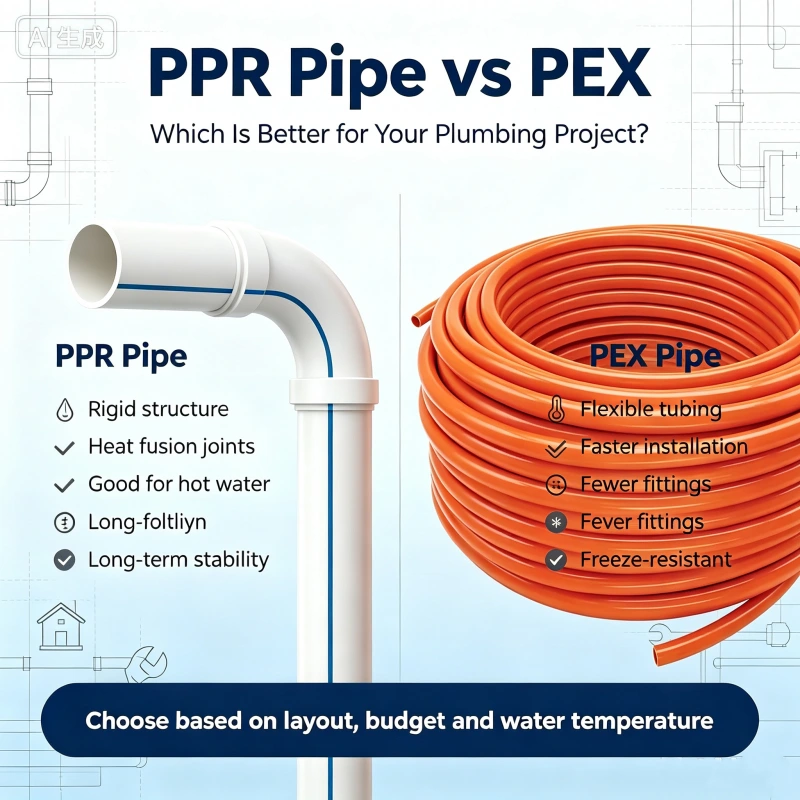
PEX pipe
CPVC pipe
are generally more suitable.
However, HDPE pipe can be used in moderate temperature applicationssuch as:
Warm industrial process water (below 50°C)
Cooling systems
Low-temperature recirculation systems
Provided that proper pressure derating is applied.
Maximum Temperature of PE80 vs PE100
Both PE80 and PE100 HDPE pipeshave similar temperature limits, but PE100 offers:
Higher long-term strength
Better stress crack resistance
Higher pressure rating at the same SDR
In elevated temperature environments, PE100 is typically preferred because it maintains better structural stability under pressure.
Still, the maximum service temperature remains generally within the 40–60°C range for continuous operation.
What Happens If HDPE Pipe Exceeds Its Maximum Temperature?
If HDPE pipe is exposed to temperatures above its design limit:
The pipe wall softens
Internal pressure resistance decreases
Long-term deformation (creep) increases
Service life shortens
At temperatures approaching 80°C, HDPE may lose significant structural rigidity if sustained under pressure.
Therefore, when evaluating HDPE pipe maximum operating temperature, it is important to consider:
1. Operating temperature
2. Internal pressure
3. Duration of exposure
4. Pipe grade (PE80 or PE100)
5. SDR value
Temperature alone does not define failure — pressure-temperature combination does.
HDPE Pipe Temperature Derating
To safely design systems above 20°C, engineers use a temperature derating factor.
For example (illustrative concept):
At 20°C → 100% pressure rating
At 40°C → reduced pressure rating
At 60°C → significantly reduced pressure rating
Manufacturers typically provide HDPE pipe temperature pressure chartsto assist in system design.
When operating in high ambient temperature regions (Middle East, Africa, South America), derating is especially important even for buried pipelines.
Summary: What Is the Real Maximum Temperature of HDPE Pipe?
To summarize clearly:
HDPE pipe maximum continuous temperature: ~40°C
Acceptable operating range: up to 60°C with pressure reduction
Short-term tolerance: up to 70–80°C (not recommended for continuous pressure service)
Pressure must always be derated above 20°C
HDPE pipe is ideal for cold water and moderate temperature systems but not designed for sustained high-temperature hot water applications.
Choosing the Right HDPE Pipe for Your Project
Understanding HDPE pipe maximum temperature is only part of proper system design. It is equally important to ensure:
Use of virgin PE100 material
Compliance with ISO 4427 or equivalent standards
Accurate SDR and PN selection
Full batch traceability and hydrostatic testing
A reliable manufacturer should be able to provide:
Pressure-temperature derating tables
Material certification
Batch test reports
Technical support for system design
If your project involves elevated temperatures or high-pressure applications, technical consultation before procurement can prevent long-term operational risks.
For engineered PE100 HDPE pipe solutions tailored to your temperature and pressure requirements, professional support and verified material quality make the difference between a 5-year pipeline and a 50-year pipeline.
If you need detailed HDPE pipe temperature rating charts or assistance selecting the correct SDR for your working conditions, technical guidance is always recommended before finalizing your order.
916.webp)
204.webp)
659.webp)
185.webp)
312.webp)
849.webp)
587.webp)
767.webp)