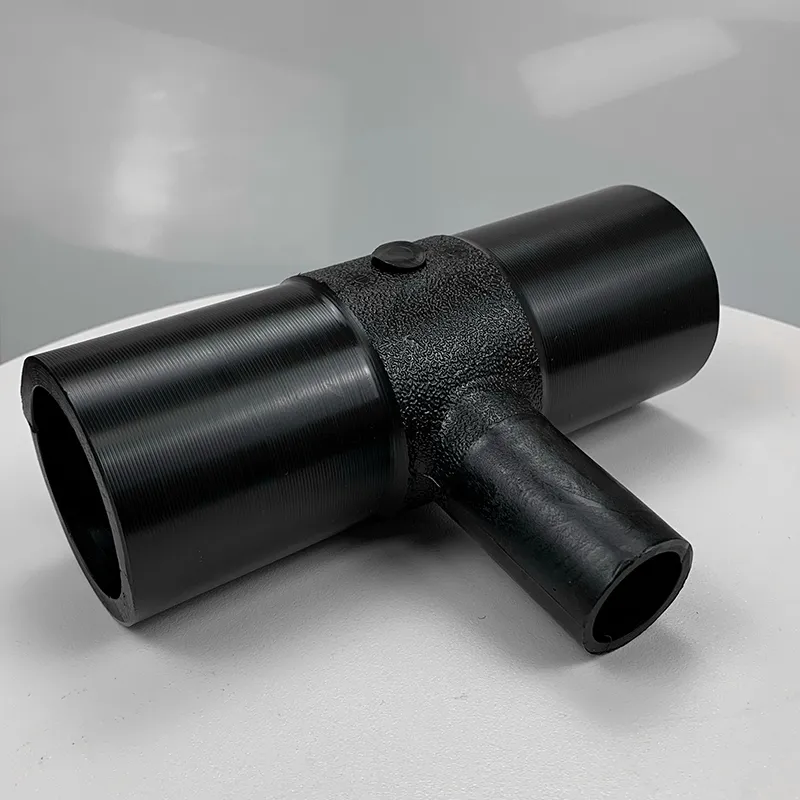
High-Density Polyethylene (HDPE) piping systems have become the preferred solution for water supply, gas distribution, irrigation, mining, industrial processing, and municipal infrastructure projects. Their outstanding corrosion resistance, flexibility, leak-free joints, and long service life make them superior to many traditional piping materials.
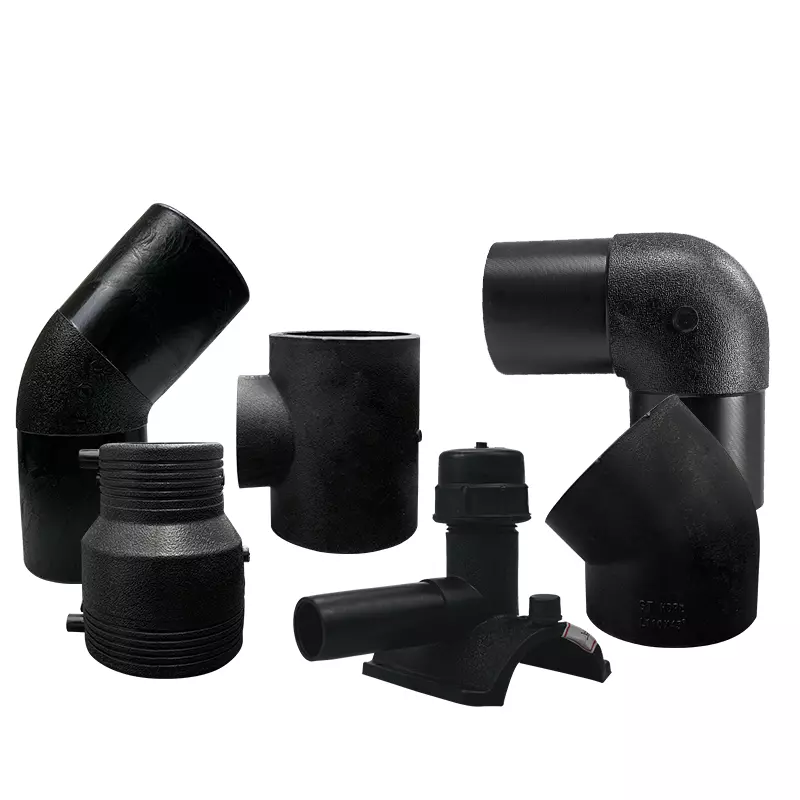
Among the essential fittings used in HDPE piping systems, the HDPE Reducing Tee Pipe Fitting (25-110mm) plays a critical role in creating branch connections where the branch pipe diameter is smaller than the main pipeline. Unlike a standard equal tee, a reducing tee allows engineers to distribute fluid efficiently while accommodating different flow requirements within the same network.
This guide explains everything you need to know about HDPE Reducing Tee Pipe Fittings from 25mm to 110mm, including specifications, manufacturing process, working principles, applications, installation methods, advantages, and comparisons with alternative pipe fitting materials.
What Is an HDPE Reducing Tee Pipe Fitting?
An HDPE Reducing Tee is a three-way pipe connector designed to connect one larger HDPE pipe with one smaller branch pipe while maintaining a secure, leak-free connection.
Unlike equal tees, where all three outlets have the same diameter, a reducing tee features:
One inlet
One straight outlet
One reduced branch outlet
This design enables smooth flow distribution between different pipe sizes.
Typical applications include:
Municipal water supply
Agricultural irrigation
Gas distribution
Industrial process piping
Mining slurry pipelines
Chemical transportation
Fire protection systems
Available Sizes (25–110mm)
HDPE reducing tees are commonly manufactured in the following combinations:
| Main Size (mm) | Branch Size (mm) |
|---|---|
| 32 × 25 × 32 | 25 |
| 40 × 25 × 40 | 25 |
| 40 × 32 × 40 | 32 |
| 50 × 25 × 50 | 25 |
| 50 × 32 × 50 | 32 |
| 50 × 40 × 50 | 40 |
| 63 × 32 × 63 | 32 |
| 63 × 40 × 63 | 40 |
| 63 × 50 × 63 | 50 |
| 75 × 50 × 75 | 50 |
| 75 × 63 × 75 | 63 |
| 90 × 63 × 90 | 63 |
| 90 × 75 × 90 | 75 |
| 110 × 63 × 110 | 63 |
| 110 × 75 × 110 | 75 |
| 110 × 90 × 110 | 90 |
Custom dimensions are also available for OEM and project-specific requirements.
Material Specifications
Most premium reducing tees are manufactured using:
PE100 virgin HDPE resin
PE80 HDPE resin (selected markets)
UV-resistant additives
Food-grade materials for potable water applications
These materials comply with international standards such as:
ISO 4427
ISO 4437
EN 12201
ASTM F714
Manufacturing Process
High-quality HDPE reducing tees are typically produced through precision injection molding.
The manufacturing process includes:
Step 1: Raw Material Preparation
Virgin HDPE pellets are dried and inspected before processing.
Step 2: Injection Molding
The molten HDPE is injected into precision molds under high pressure to form the reducing tee.
Step 3: Cooling
Controlled cooling minimizes internal stress and dimensional variation.
Step 4: Trimming and Inspection
Flash is removed, and each fitting is checked for:
Dimensions
Surface quality
Wall thickness
Socket accuracy
Step 5: Pressure Testing
Random samples undergo hydrostatic pressure testing to verify long-term performance.
Working Principle of an HDPE Reducing Tee
The reducing tee creates a branch connection while maintaining continuous fluid flow.
Flow Distribution
Fluid enters through the main pipeline and continues toward the outlet while a controlled portion is diverted into the smaller branch line.
Pressure Balance
The reduced outlet helps regulate flow rate and pressure according to system design.
Leak-Free Operation
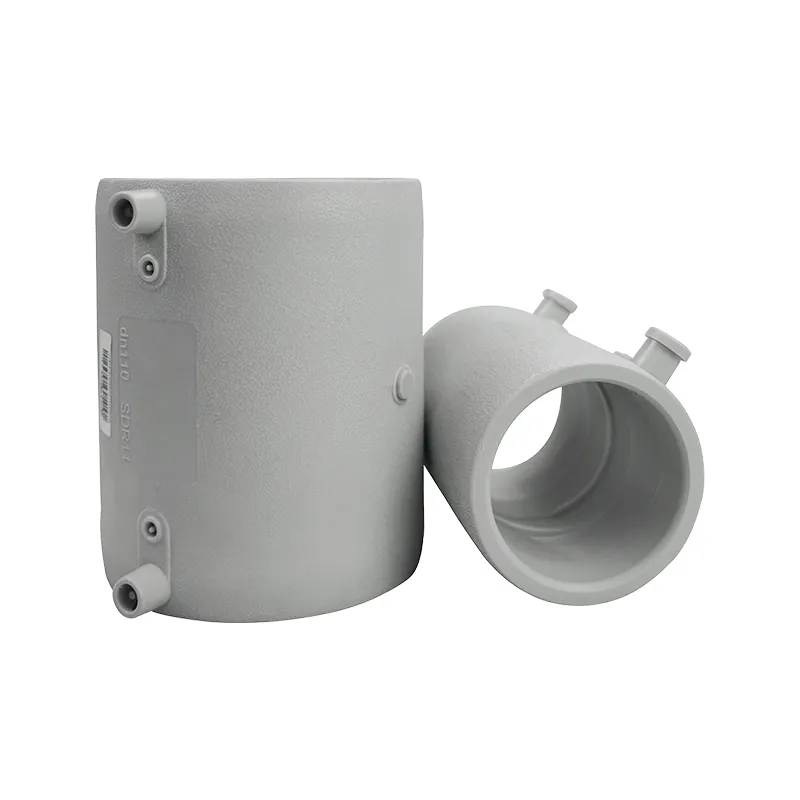
When joined by butt fusion or electrofusion, the fitting forms a homogeneous HDPE structure with the pipe, eliminating weak mechanical joints.
This integrated system provides exceptional long-term reliability.
Connection Methods
Butt Fusion
Suitable for medium and large diameter systems.
Advantages:
Permanent joints
High strength
Excellent pressure resistance
Electrofusion
Ideal for:
Repair work
Restricted installation areas
Gas pipelines
Advantages:
Easy installation
Precise welding
High reliability
Socket Fusion
Commonly used for smaller diameters (20–110 mm).
Benefits include:
Quick installation
Low equipment cost
Excellent sealing performance
Advantages of HDPE Reducing Tee Pipe Fittings
Excellent Corrosion Resistance
Unlike metal fittings, HDPE will not rust or corrode.
Leak-Free Connections
Fusion welding creates joints as strong as the pipe itself.
Lightweight Design
HDPE fittings are much lighter than metal alternatives, reducing transportation and installation costs.
High Impact Strength
The material withstands mechanical shock during installation and operation.
Chemical Resistance
Suitable for transporting:
Acids
Alkalis
Industrial chemicals
Fertilizers
Long Service Life
Properly installed HDPE fittings typically last more than 50 years.
Low Maintenance
Fusion joints eliminate gasket replacement and minimize leakage risks.
Typical Applications
Municipal Water Supply
Reducing tees distribute potable water to secondary pipelines.
Agricultural Irrigation
Ideal for branching irrigation networks while maintaining efficient water flow.
Gas Distribution
PE100 reducing tees are widely used in natural gas systems.
Mining Industry
Suitable for slurry transport and process water distribution.
Industrial Plants
Used in chemical processing and manufacturing facilities.
Fire Protection Systems
Branch connections supply hydrants and sprinkler systems.
Aquaculture
Distributes water efficiently within fish farms and aquaculture facilities.
Installation Guidelines
Proper installation ensures long-term system performance.
Surface Preparation
Pipe ends should be clean, dry, and free from contaminants.
Alignment
Ensure correct alignment before welding.
Heating
Use calibrated fusion equipment at the recommended temperature.
Cooling
Allow sufficient cooling time before applying pressure.
Pressure Testing
Test the completed pipeline before commissioning.
HDPE Reducing Tee vs PVC Reducing Tee
| Feature | HDPE | PVC |
| Flexibility | Excellent | Low |
| Impact Resistance | Excellent | Moderate |
| Corrosion Resistance | Excellent | Good |
| Fusion Welding | Yes | No |
| Service Life | 50+ Years | 20–30 Years |
| Cold Weather Performance | Excellent | Brittle |
Winner: HDPE is the preferred choice for demanding environments and buried infrastructure.
HDPE Reducing Tee vs PPR Tee
| Feature | HDPE | PPR |
| Outdoor Use | Excellent | Moderate |
| UV Resistance | High | Lower |
| Pipe Diameter Range | Very Wide | Medium |
| Industrial Applications | Excellent | Limited |
| Flexibility | Higher | Lower |
Winner: HDPE offers greater versatility for municipal and industrial projects.
HDPE Reducing Tee vs Ductile Iron Tee
| Feature | HDPE | Ductile Iron |
| Weight | Light | Heavy |
| Corrosion Resistance | Excellent | Requires Coating |
| Installation Cost | Lower | Higher |
| Leak Resistance | Excellent | Moderate |
| Maintenance | Minimal | Higher |
Winner: HDPE significantly reduces installation and maintenance costs.
HDPE Reducing Tee vs Stainless Steel Tee
| Feature | HDPE | Stainless Steel |
| Cost | Lower | Higher |
| Corrosion Resistance | Excellent | Excellent |
| Chemical Resistance | Excellent | Excellent |
| Weight | Light | Heavy |
| Installation | Easier | More Complex |
Winner: HDPE provides a better cost-to-performance ratio for most water and industrial systems.
How to Select the Right HDPE Reducing Tee
When choosing a reducing tee, consider the following factors:
Main pipeline diameter
Branch pipe diameter
Pressure rating (PN10, PN16, PN20)
SDR classification
Operating temperature
Fluid type
Installation method
Applicable standards
Selecting the correct fitting ensures optimal flow distribution, reduced pressure loss, and long-term reliability.
Future Trends in HDPE Pipe Fittings
Demand for HDPE reducing tees continues to grow due to:
Expansion of municipal water infrastructure
Smart irrigation systems
Industrial modernization
Renewable energy projects
Mining development
Sustainable piping solutions
Manufacturers are increasingly adopting automated injection molding, precision quality control, and recyclable PE100 materials to improve product consistency and environmental performance.
HDPE or PP Reducing Tee Pipe Fittings
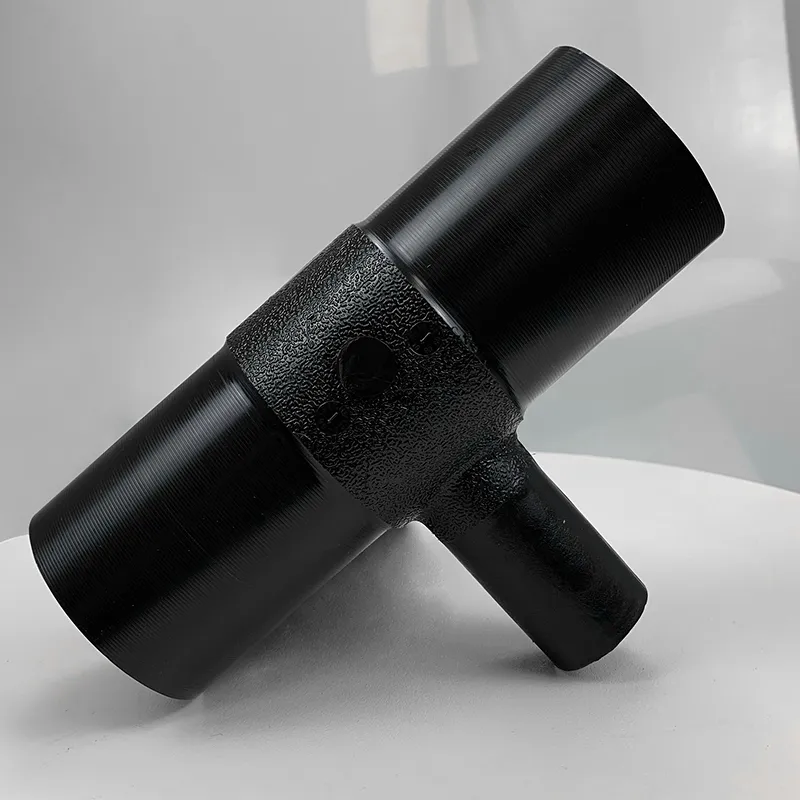
HDPE is a polyethylene (PE) polymer that is commonly used for manufacturing reducing tee fittings due to its excellent chemical resistance and high durability. The exterior of HDPE reducing tee pipe fittings is highly polished and can be made with a wide range of internal and external diameters. HDPE fittings are commonly used in residential and commercial water systems where they can be exposed to hard water and high temperatures. They are also commonly used in irrigation systems, hydroponics, greenhouse, and pool pumping applications. HDPE reducing tee fittings are available in sizes ranging from 25 to 63mm internal diameter. PP is a polypropylene polymer that is commonly used for manufacturing reducing tee fittings due to its excellent chemical resistance and high durability. PP fittings are commonly used in industrial systems where they are exposed to high temperatures and corrosive chemicals. PP reducing tee fittings are available in sizes ranging from 25 to 63mm internal diameter.
Benefits of HDPE Reducing Tee Fittings
- Excellent chemical resistance - HDPE reducing tee fittings offer excellent chemical resistance and resistance to heat, cold, oil and ozone. They are also UV resistant, making them suitable for outdoor applications. - Excellent tensile strength - HDPE reducing tee fittings exhibit excellent tensile strength, making them suitable for use in high-pressure applications. - Excellent impact strength - HDPE reducing tee fittings exhibit excellent impact strength, making them suitable for cold-weather applications. - Lightweight - HDPE reducing tee fittings are lightweight and can be easily installed without the need for extra supports or weights. - Durable finish - HDPE reducing tee fittings come with a durable finish that protects against wear and tear.
Specifications of HDPE Reducing Tee Fittings
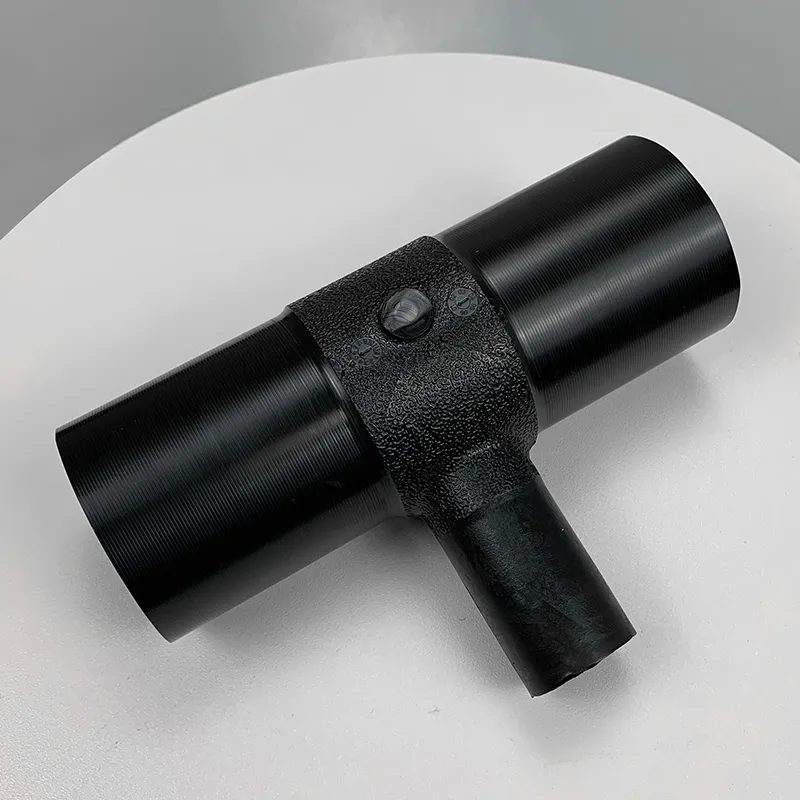
Product name: HDPE Reducing Tee Pipe Fitting Internal thread: 1/2" (12mm) External thread: BSP or NPT Material: HDPE Standard: ASME, API, DIN, EN, JIS Cv: 0.20-0.50
Benefits of PP Reducing Tee Fittings
- Excellent chemical resistance - PP reducing tee fittings offer excellent chemical resistance and resistance to heat, cold, oil and ozone. They are also UV resistant, making them suitable for outdoor applications. - Excellent tensile strength - PP reducing tee fittings exhibit excellent tensile strength, making them suitable for use in high-pressure applications. - Impact strength - PP reducing tee fittings exhibit excellent impact strength, making them suitable for cold-weather applications. - Lightweight - PP reducing tee fittings are lightweight and can be easily installed without the need for extra supports or weights. - Durable finish - PP reducing tee fittings come with a durable finish that protects against wear and tear.
Conclusion
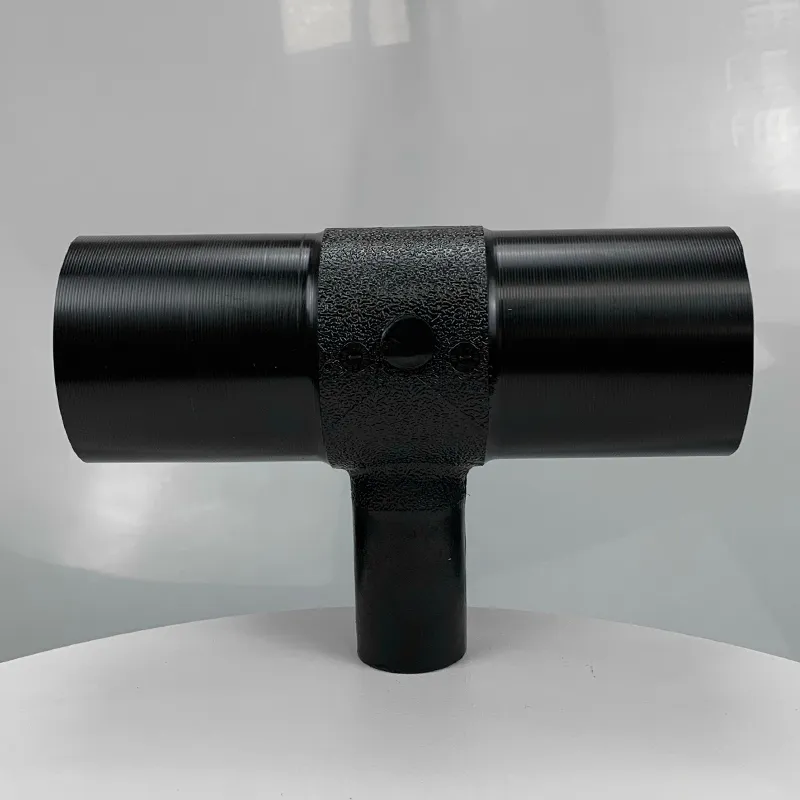
HDPE Reducing Tee Pipe Fittings in sizes 25–110mm are essential components for modern piping systems that require reliable branch connections between different pipe diameters. Manufactured from high-quality PE100 or PE80 materials, these fittings provide outstanding corrosion resistance, leak-free fusion joints, excellent impact strength, and a service life exceeding 50 years.
Compared with PVC, PPR, ductile iron, and stainless steel fittings, HDPE reducing tees offer superior flexibility, lower installation costs, minimal maintenance, and exceptional long-term performance. Whether used in municipal water supply, gas distribution, agricultural irrigation, mining, or industrial processing, HDPE reducing tees remain one of the most dependable and cost-effective solutions for efficient fluid distribution in today's infrastructure projects.
916.webp)
204.webp)
659.webp)
185.webp)