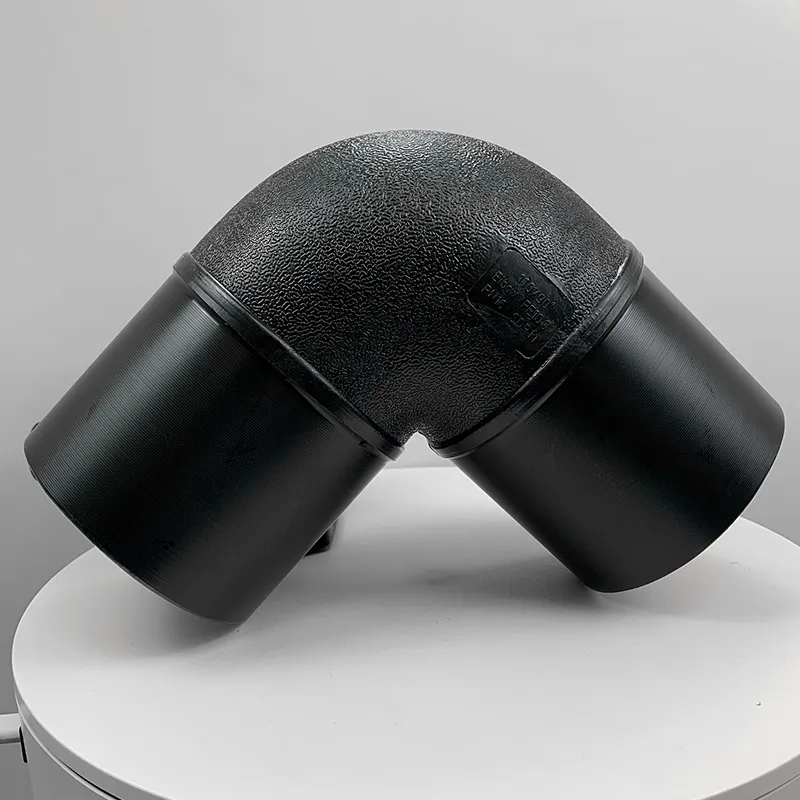
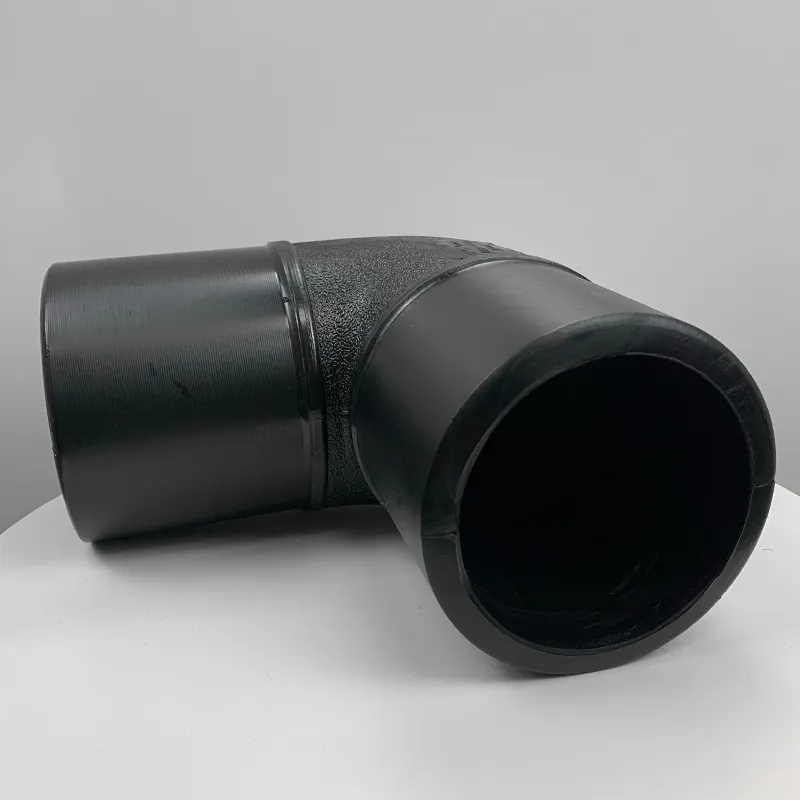
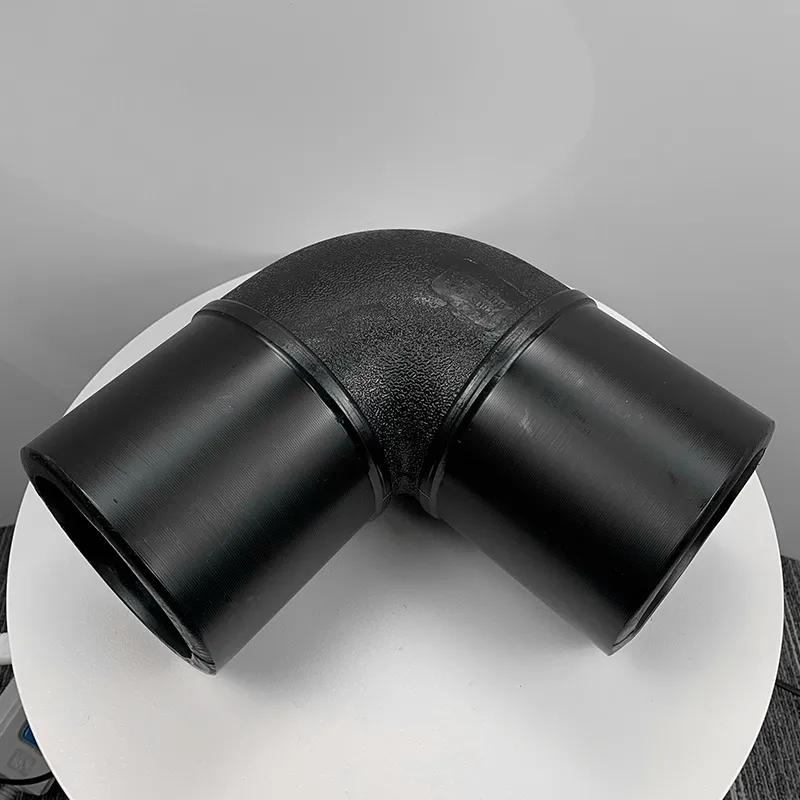
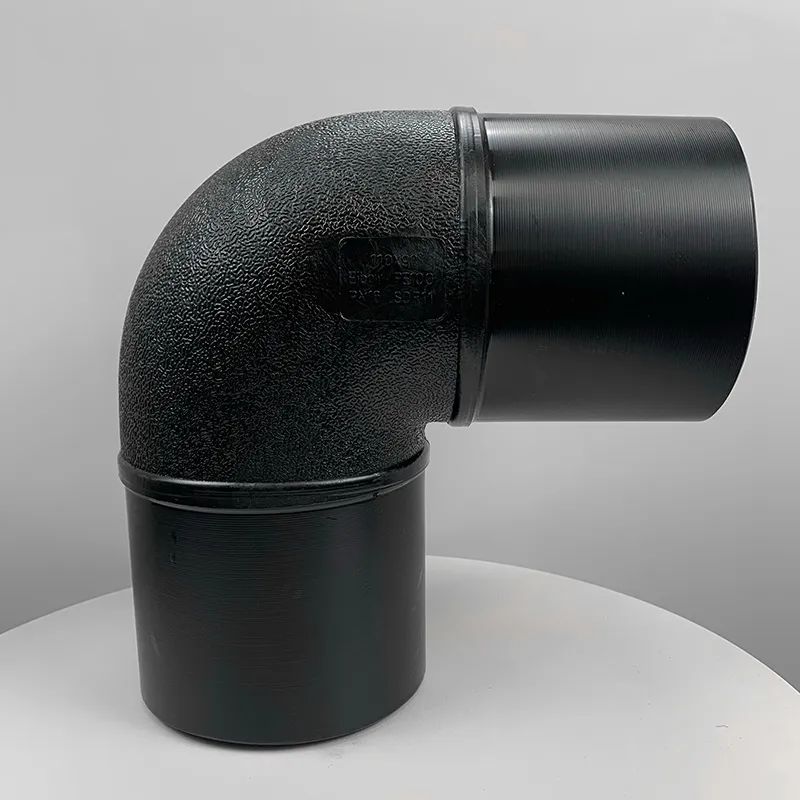
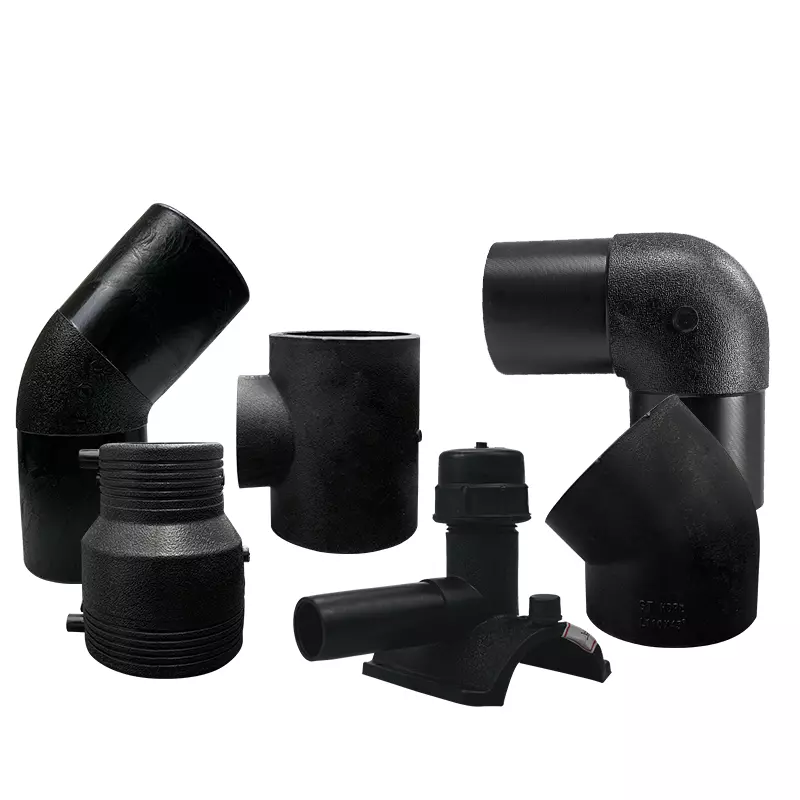
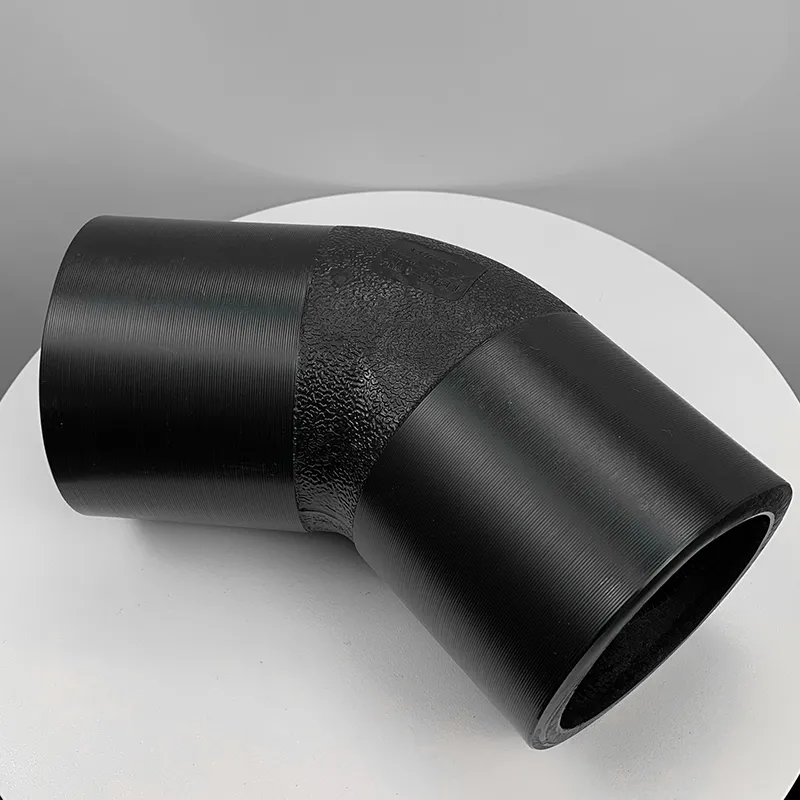
In modern water supply, gas distribution, mining, agricultural irrigation, and industrial piping systems, HDPE pipe fittings have become the preferred solution due to their durability, corrosion resistance, and long service life. Among the various fittings available, the 90° DN110 to 90mm SDR11 Reducing Elbow HDPE Pipe Fitting is widely used for changing pipeline direction while simultaneously reducing pipe diameter.
This specialized fitting combines two important functions into a single component: a 90-degree directional change and a reduction in pipe size. By reducing installation complexity and minimizing potential leakage points, it has become an essential fitting in many HDPE pipeline projects worldwide.
What Is a 90° DN110 to 90mm SDR11 Reducing Elbow HDPE Pipe Fitting?
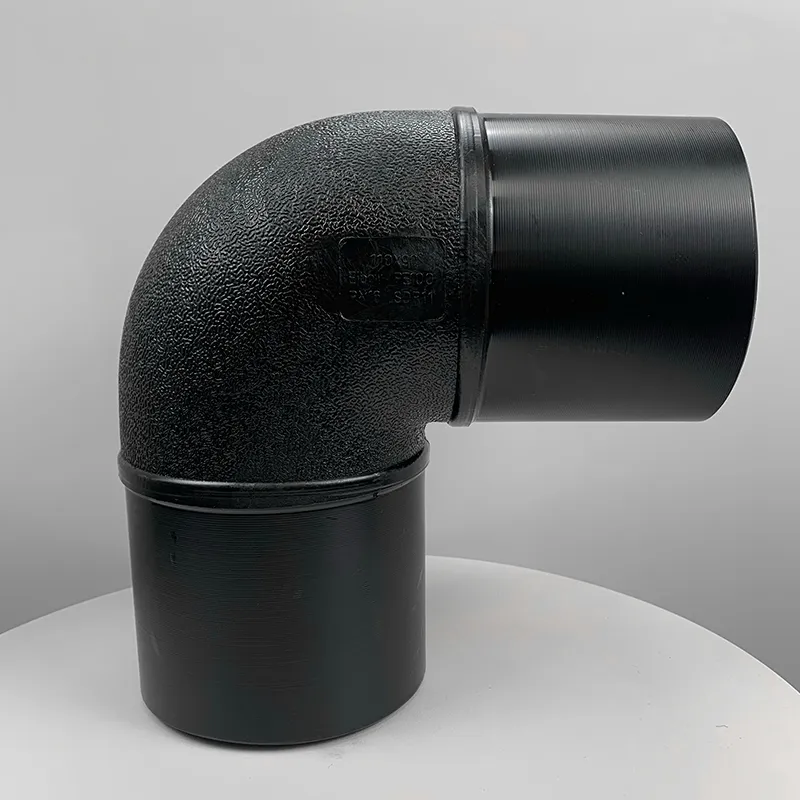
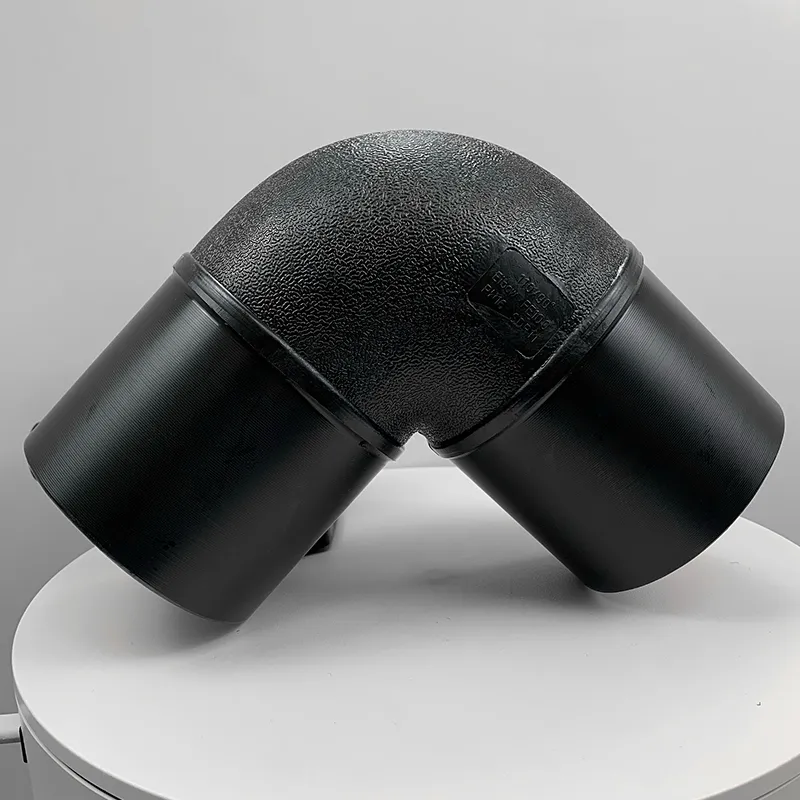
A 90° DN110 to 90mm SDR11 Reducing Elbow HDPE Pipe Fitting is a molded or fabricated polyethylene fitting designed to connect:
One HDPE pipe with a diameter of DN110 mm
Another HDPE pipe with a diameter of 90 mm
While changing the flow direction by 90 degrees
The fitting is manufactured from high-density polyethylene (HDPE), typically PE100 material, and is designed to withstand high pressure applications.
The SDR11 designation means:
Outside Diameter ÷ Wall Thickness = 11
This SDR rating provides excellent pressure resistance and mechanical strength, making the fitting suitable for demanding environments.
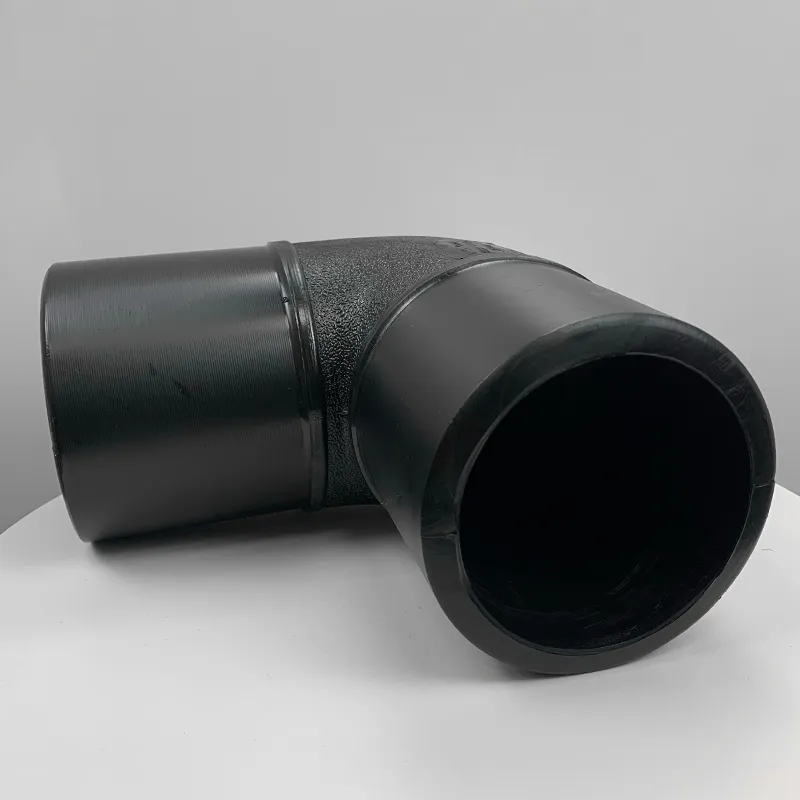
Product Specifications
Standard Specification Table
| Parameter | Specification |
|---|---|
| Product Name | 90° Reducing Elbow HDPE Pipe Fitting |
| Large End Diameter | DN110 mm |
| Small End Diameter | 90 mm |
| Angle | 90 Degrees |
| Material | PE100 HDPE |
| SDR Rating | SDR11 |
| Connection Type | Butt Fusion / Electrofusion |
| Pressure Rating | PN16 |
| Color | Black, Black with Blue Stripe |
| Operating Temperature | -40°C to +60°C |
| Service Life | More Than 50 Years |
| Standards | ISO 4427, EN 12201, ASTM Standards |
| Application | Water, Gas, Mining, Irrigation |
Key Features
1. Excellent Corrosion Resistance
Unlike metal elbows, HDPE reducing elbows are completely resistant to:
Rust
Chemical corrosion
Electrochemical attack
Soil corrosion
This makes them ideal for underground installations.
2. Lightweight Construction
HDPE fittings weigh significantly less than:
Steel elbows
Ductile iron elbows
Concrete fittings
The reduced weight lowers transportation and installation costs.
3. Leak-Free Fusion Connection
When connected through butt fusion or electrofusion, the fitting becomes part of the pipeline itself.
Benefits include:
Zero leakage
Strong joints
Improved system reliability
Reduced maintenance
4. High Impact Resistance
HDPE maintains flexibility even in cold environments.
Advantages include:
Better earthquake resistance
Reduced cracking
Improved impact absorption
5. Long Service Life
PE100 HDPE fittings can provide:
50+ years service life
Minimal maintenance
Low lifetime operating costs
Applications of DN110 to 90mm SDR11 Reducing Elbows
Municipal Water Supply Systems
Water utility companies use reducing elbows when:
Connecting main distribution lines
Changing pipeline direction
Transitioning between different pipe sizes
The corrosion-free material ensures clean drinking water transportation.
Agricultural Irrigation Networks
Modern irrigation systems often require diameter reduction to:
Improve pressure control
Connect branch lines
Optimize water distribution
The 90° reducing elbow provides both functions simultaneously.
Natural Gas Distribution
PE100 SDR11 fittings are widely approved for gas applications because they offer:
Excellent pressure resistance
Leak-free joints
Superior safety performance
Mining Operations
Mining environments expose pipelines to:
Abrasion
Corrosive chemicals
Heavy mechanical loads
HDPE reducing elbows perform exceptionally well under these harsh conditions.
Industrial Fluid Transportation
Industries transport:
Chemicals
Wastewater
Slurries
Process water
HDPE's chemical resistance makes it suitable for various industrial applications.
How Is a 90° DN110 to 90mm SDR11 Reducing Elbow Manufactured?
Manufacturing high-quality HDPE fittings requires advanced equipment and strict quality control procedures.
Step 1: Raw Material Selection
Manufacturers typically use:
Virgin PE100 resin
Certified HDPE compounds
UV-stabilized materials
High-quality raw materials ensure long-term performance.
Step 2: Material Drying
Before processing:
Moisture is removed
Resin quality is checked
Material consistency is verified
This prevents defects during molding.
Step 3: Injection Molding
For standard reducing elbows, manufacturers use high-pressure injection molding machines.
Process includes:
Melting HDPE pellets
Injecting material into precision molds
Cooling under controlled conditions
Automatic ejection
This creates accurate dimensions and smooth surfaces.
Step 4: Machining and Finishing
After molding:
Flash is removed
Connection surfaces are finished
Dimensions are inspected
Precision finishing ensures proper fusion performance.
Step 5: Pressure Testing
Each production batch undergoes:
Hydrostatic pressure testing
Impact testing
Dimensional verification
Testing guarantees compliance with international standards.
Step 6: Quality Inspection
Final inspections include:
Visual examination
Material verification
SDR measurement
Pressure rating confirmation
Only qualified fittings proceed to packaging.
Installation Methods
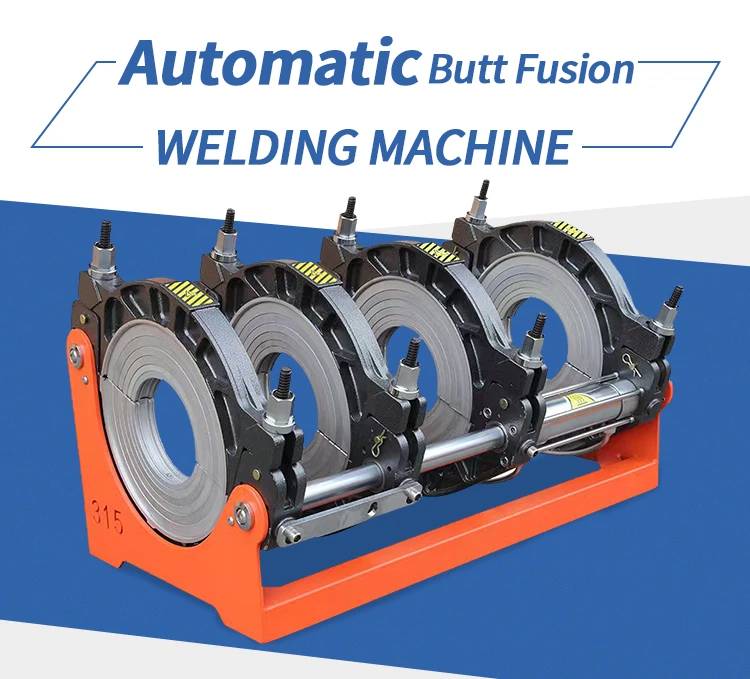
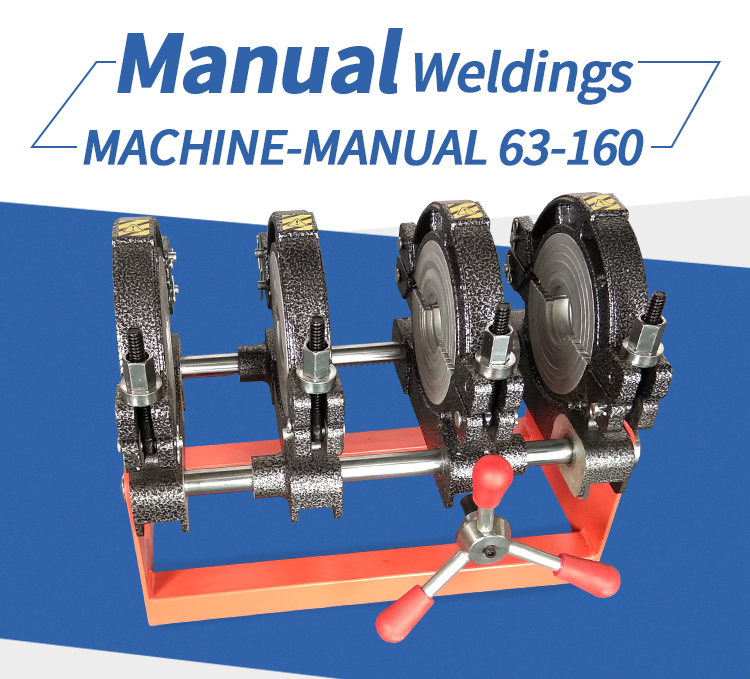
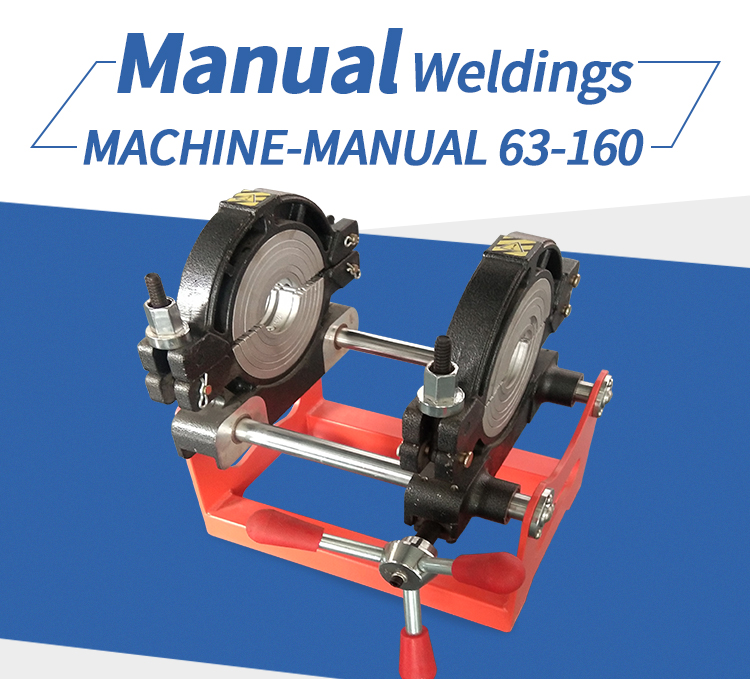
Butt Fusion Connection
Most commonly used for larger HDPE systems.
Process:
Align pipes and fitting.
Heat pipe ends using a fusion machine.
Apply controlled pressure.
Allow cooling.
Benefits:
Permanent connection
No leakage
High strength
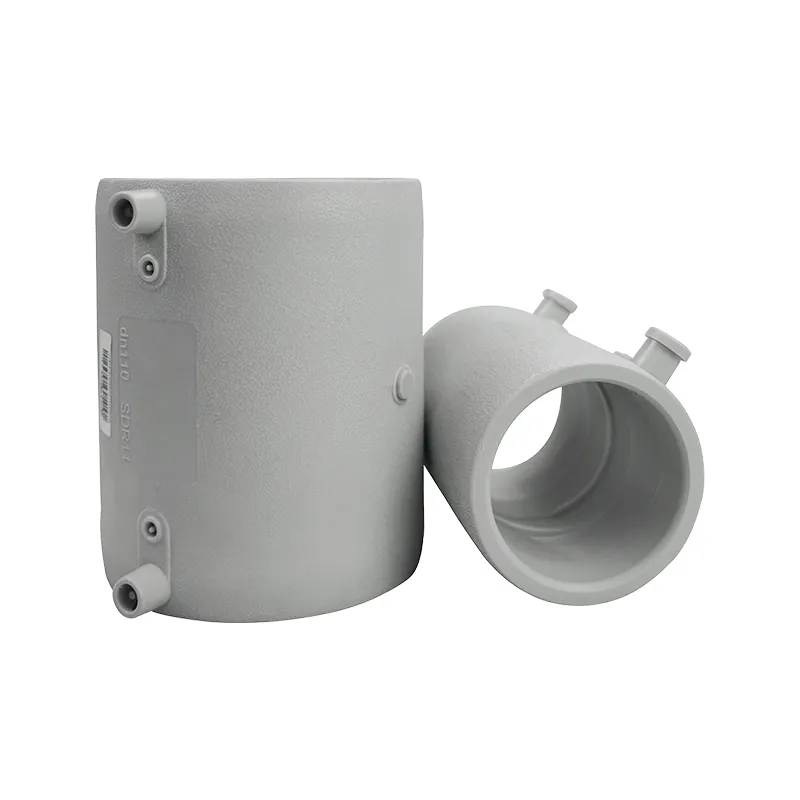
Electrofusion Connection
Suitable for maintenance and limited-space installations.
Advantages:
Faster installation
Consistent fusion quality
Minimal operator error
Mechanical Connection
Less common but used for temporary systems.
Advantages:
Easy installation
Removable connection
However, fusion methods remain preferred for permanent projects.
Competitive Comparison
HDPE Reducing Elbow vs PVC Reducing Elbow
| Feature | HDPE | PVC |
|---|---|---|
| Flexibility | Excellent | Low |
| Impact Resistance | Excellent | Moderate |
| Corrosion Resistance | Excellent | Excellent |
| Pressure Resistance | High | Medium |
| Lifespan | 50+ Years | 20-30 Years |
| Fusion Welding | Yes | No |
| Earthquake Resistance | Excellent | Poor |
Winner: HDPE
HDPE Reducing Elbow vs Steel Elbow
| Feature | HDPE | Steel |
|---|---|---|
| Weight | Lightweight | Heavy |
| Corrosion Resistance | Excellent | Requires Coating |
| Installation Cost | Lower | Higher |
| Transportation Cost | Lower | Higher |
| Service Life | 50+ Years | 20-40 Years |
| Chemical Resistance | Excellent | Moderate |
Winner: HDPE
HDPE Reducing Elbow vs Ductile Iron Elbow
| Feature | HDPE | Ductile Iron |
|---|---|---|
| Weight | Light | Heavy |
| Corrosion Resistance | Excellent | Moderate |
| Flexibility | High | Low |
| Installation Speed | Fast | Slower |
| Maintenance | Minimal | Moderate |
| Total Lifecycle Cost | Lower | Higher |
Winner: HDPE
Advantages for Engineering Projects
Using a DN110 to 90mm SDR11 reducing elbow offers several engineering benefits:
Reduced Installation Time
Combining diameter reduction and directional change into one fitting eliminates extra components.
Fewer Leakage Points
Traditional systems may require:
One reducer
One elbow
Additional joints
A reducing elbow reduces the number of connections.
Lower Overall Cost
Benefits include:
Fewer fittings
Reduced labor
Faster installation
Lower maintenance
Improved Hydraulic Performance
The smooth internal surface minimizes:
Friction loss
Pressure drop
Flow turbulence
This improves system efficiency.
Quality Standards
Premium manufacturers typically comply with:
ISO 4427
EN 12201
ASTM F714
ISO 9001 Quality Management
CE Certification Requirements
These standards ensure consistent quality and reliability.
How to Choose the Right HDPE Reducing Elbow
Before purchasing, buyers should verify:
Pipe Size Compatibility
Ensure compatibility with:
DN110 pipe
90 mm pipe
SDR Rating
The SDR of the fitting should match the pipeline system.
Common options include:
SDR17
SDR13.6
SDR11
Pressure Requirements
Check project pressure requirements:
PN10
PN12.5
PN16
SDR11 is commonly used for PN16 applications.
Material Grade
Choose PE100 instead of PE80 when possible for:
Better pressure resistance
Longer service life
Improved reliability
Certification
Request:
Material certificates
Pressure test reports
Quality inspection reports
Conclusion
The 90° DN110 to 90mm SDR11 Reducing Elbow HDPE Pipe Fitting is a highly efficient solution for modern piping systems that require both directional change and diameter reduction. Manufactured from PE100 high-density polyethylene, it provides exceptional corrosion resistance, impact strength, leak-free performance, and a service life exceeding 50 years.
Compared with PVC, steel, and ductile iron alternatives, HDPE reducing elbows offer superior lifecycle value, lower installation costs, and better long-term reliability. Whether used in municipal water supply, gas distribution, mining, industrial processing, or agricultural irrigation, this fitting remains one of the most practical and cost-effective components in modern HDPE pipeline networks.
916.webp)
204.webp)
659.webp)
185.webp)