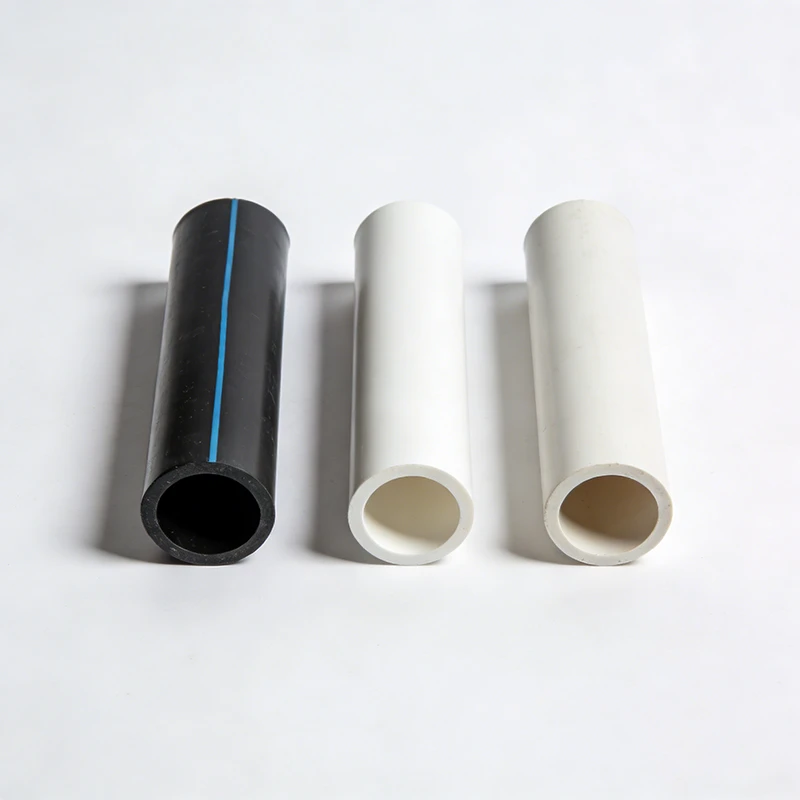
This guide provides a clear HDPE vs PVC vs PPR comparison to help engineers, contractors, and distributors choose the most suitable solution.
1. Overview of the Three Materials
HDPE (High-Density Polyethylene)
HDPE pipe is a flexible thermoplastic pipe known for impact resistance and excellent durability. It is widely used in municipal water supply, irrigation, drainage, and gas systems.
PVC (Polyvinyl Chloride)
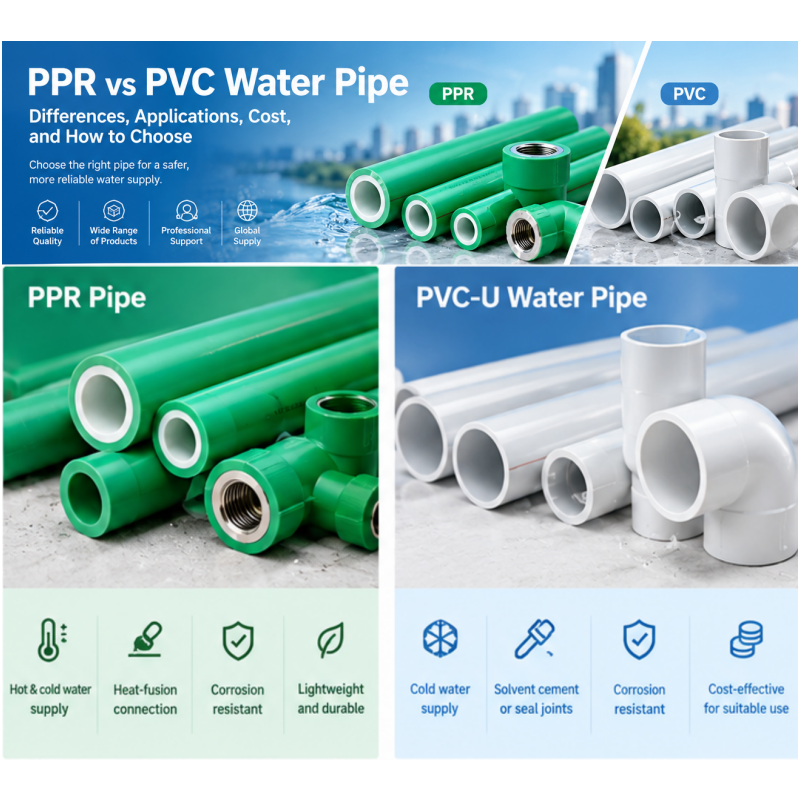
PVC pipe is a rigid plastic pipe commonly used for water supply and drainage systems. It is lightweight, corrosion-resistant, and cost-effective.
PPR (Polypropylene Random Copolymer)
PPR pipe is mainly used for indoor hot and cold water systems. It connects through heat fusion and provides excellent hygiene performance.
2. Performance Comparison
2.1 Pressure Resistance
| Material | Pressure Capacity | Notes |
| HDPE | High (SDR-based classification) | Excellent flexibility under pressure |
| PVC | Moderate to High | Strong but rigid |
| PPR | Moderate | Suitable for building water systems |
HDPE pipes are classified by SDR (Standard Dimension Ratio). Lower SDR means thicker wall and higher pressure rating. Because of its flexibility, HDPE can absorb pressure fluctuations and water hammer better than rigid materials.
PVC pipes offer strong compression resistance but are more brittle under impact.
PPR is suitable for internal plumbing systems but not ideal for large-diameter high-pressure transmission.
2.2 Service Life
Under normal installation conditions:
HDPE: 50+ years
PVC: 30–50 years
PPR: 50 years (mainly indoor use)
HDPE performs particularly well in underground environments due to its resistance to soil movement and corrosion.
PVC performs well in stable environments but may become brittle in extremely cold conditions.
PPR has excellent long-term thermal stability for hot water systems.
2.3 Cost Comparison
In general market conditions:
PVC → Lowest initial cost
HDPE → Medium cost
PPR → Higher cost per meter (small diameter indoor system)
However, cost should not be evaluated by price per meter alone. Installation method, lifespan, maintenance frequency, and leakage risk must be considered.
For example:
HDPE welding reduces leakage risk → lower maintenance cost
PVC solvent joints are easy but may loosen over decades
PPR heat fusion ensures hygienic sealing for drinking water
3. Installation and Jointing Methods
| Material | Joint Method | Leak Risk | Installation Complexity |
| HDPE | Butt fusion / electrofusion | Very low | Requires welding equipment |
| PVC | Solvent cement / rubber ring | Medium | Simple |
| PPR | Heat fusion | Very low | Requires fusion tool |
HDPE forms a monolithic pipeline after welding, meaning the joint becomes as strong as the pipe itself.
PVC installation is simple and fast, suitable for small contractors.
PPR requires heat fusion but is easy for building plumbing systems.
4. Application Scenario Comparison
4.1 Rural Water Supply Systems
For rural projects where pipes are buried underground over long distances:
Best Choice: HDPE
Reasons:
Excellent flexibility
Strong resistance to ground settlement
Long-distance coil supply available
Low leakage rate
PVC can also be used, but in areas with unstable soil, HDPE performs better.
4.2 Industrial Drainage Systems
For industrial drainage:
Best Choice: PVC
Reasons:
Rigid structure
Cost-effective
Smooth inner surface for drainage efficiency
HDPE is also widely used in industrial drainage, especially where chemical resistance is required.
4.3 Indoor Residential Plumbing (Hot & Cold Water)
Best Choice: PPR
Reasons:
Safe for drinking water
Withstands high temperatures
Heat fusion joint eliminates leakage
HDPE is rarely used indoors for small plumbing due to connection method and flexibility.
PVC is typically used for cold water or drainage, not hot water.
5. Technical Comparison Summary
| Feature | HDPE | PVC | PPR |
| Flexibility | Excellent | Rigid | Semi-rigid |
| Impact Resistance | Very high | Medium | Medium |
| Corrosion Resistance | Excellent | Excellent | Excellent |
| Temperature Resistance | Moderate | Low for hot water | High |
| Installation Cost | Medium | Low | Medium |
| Typical Use | Municipal water, irrigation | Drainage, cold water | Indoor plumbing |
6. Environmental & Safety Considerations
All three materials are corrosion-resistant and suitable for water systems. However:
HDPE is recyclable and environmentally friendly.
PVC production involves chlorine chemistry, which requires controlled manufacturing.
PPR is considered safe for potable water due to stable polymer structure.
7. Which Pipe Should You Choose?
The answer depends on your project:
Long-distance buried water supply → HDPE
Budget-focused drainage system → PVC
Indoor hot & cold water plumbing → PPR
There is no “best” material — only the most suitable one for your specific application.
Final Thoughts on Plastic Pipe Comparison
Understanding the differences between HDPE vs PVC vs PPR helps you avoid over-specification or under-performance. A proper plastic pipe comparison must consider pressure rating, lifespan, installation environment, and total lifecycle cost.
If you are planning a municipal project, agricultural irrigation system, or building water supply network, selecting the correct material at the design stage will significantly improve long-term performance and reduce maintenance risks.
If you need technical specifications, SDR tables, or project-based recommendations, feel free to request detailed guidance tailored to your application.
916.webp)
204.webp)
659.webp)
185.webp)
312.webp)
849.webp)
587.webp)
767.webp)