M-PVC water pipes are widely used in modern water supply infrastructure because of their improved impact resistance, ductility, and resistance to crack propagation. Compared with conventional PVC-U pipes, modified PVC pipes are designed to provide a more predictable mechanical response under impact and demanding installation conditions.
But how are M-PVC water pipes actually manufactured? What raw materials are required? Which machines are used in the production line? And how can manufacturers ensure consistent pipe quality?
The manufacturing of M-PVC water pipes involves several carefully controlled stages, including raw material formulation, high-speed mixing, twin-screw extrusion, vacuum sizing, cooling, hauling, cutting, socket forming, and quality inspection.
In this guide, we explain the complete M-PVC pipe manufacturing process, from material preparation to finished product inspection, helping pipe manufacturers, engineers, and industry buyers understand how high-quality modified PVC pipes are produced.
If you are exploring different plastic pipeline solutions, you can also learn more about PVC water supply pipes and their applications in modern water distribution systems.
1. What Are M-PVC Water Pipes?
M-PVC stands for Modified Polyvinyl Chloride, commonly written as PVC-M. It is a modified form of unplasticized PVC designed to improve the material's impact resistance and ductility.
Unlike conventional PVC-U, which is relatively rigid and may exhibit more brittle fracture behavior under certain conditions, PVC-M incorporates impact modifiers that change how cracks initiate and propagate.
The objective is to achieve a balance between mechanical strength, toughness, and long-term pressure performance.
Key Characteristics of M-PVC Pipes
M-PVC pipes offer several important characteristics:
Improved impact resistance: Impact modifiers help the pipe withstand mechanical impacts during transportation, handling, and installation.
Enhanced ductility: The modified material exhibits a more predictable and ductile fracture mechanism.
Better crack propagation resistance: Proper material formulation and processing help reduce the risk of crack growth.
Pressure-bearing capability: PVC-M pipes are engineered for pressure applications when manufactured to the appropriate standards.
Potential material savings: Their mechanical performance may allow optimized wall thickness while maintaining the required design strength.
Corrosion resistance: PVC-based materials do not suffer from conventional metal rusting.
PVC-M is not simply PVC-U with more additives. Its performance depends on the correct combination of material formulation, modifier dispersion, extrusion conditions, and finished-pipe quality.
According to ISO 12051:2026, PVC-M is specified for water supply and drainage and sewerage under pressure. The standard covers relevant pipe and joint requirements for these applications.
For manufacturers, understanding the relationship between material modification and processing technology is essential before establishing a production line.
2. Raw Materials Used in M-PVC Pipe Manufacturing
The quality of M-PVC water pipes begins with the raw material formulation.
A typical PVC-M compound consists of PVC resin and carefully selected additives. Each component has a specific function, and its dosage must be established through formulation development and performance testing.
The following table explains the main materials used in the manufacturing process.
| Raw material | Main function |
|---|---|
| PVC resin | Provides the basic polymer structure and mechanical strength |
| Impact modifier | Improves toughness, ductility, and impact resistance |
| Heat stabilizer | Protects PVC against thermal degradation during extrusion |
| Processing aid | Improves fusion, melt strength, and processing stability |
| Lubricant | Controls friction between the material and processing equipment |
| Filler | Adjusts formulation properties and production economics |
| Pigment | Provides the required pipe color |
| Other functional additives | Support specific processing or performance requirements |
2.1 PVC Resin
PVC resin is the primary raw material in M-PVC pipe production.
The resin grade influences melt processing behavior, fusion characteristics, mechanical strength, and the final physical properties of the pipe.
Manufacturers should select suitable suspension PVC resin with consistent quality and appropriate processing characteristics.
2.2 Impact Modifier
Impact modifier is one of the most important components distinguishing PVC-M from conventional PVC-U.
Its primary purpose is to improve the fracture behavior of the PVC material.
Depending on the formulation, manufacturers may evaluate acrylic-based modifiers, chlorinated polyethylene (CPE), and other suitable impact-modifying systems.
However, simply increasing the modifier content does not guarantee better pipe performance.
The modifier must be compatible with the PVC matrix, uniformly dispersed, and processed under appropriate conditions.
2.3 Heat Stabilizer
PVC is sensitive to heat during processing.
A suitable heat stabilizer helps prevent thermal degradation during the extrusion process and supports stable production.
The stabilizer system must also comply with the chemical safety requirements of the intended application, particularly when pipes are designed for drinking water transportation.
2.4 Lubricants and Processing Aids
Lubricants help regulate friction during material processing.
External lubricants reduce friction between the PVC compound and metal processing surfaces, while internal lubricants help control melt flow and processing behavior.
Processing aids improve material fusion and melt consistency, helping manufacturers achieve stable extrusion and a uniform pipe structure.
Important: PVC-M remains an unplasticized PVC material. Plasticizers used to produce flexible PVC should not be confused with impact modifiers used in PVC-M pressure pipes.
The final formulation should be developed according to the target product standard, raw material specifications, and actual production trials rather than copied from a generic recipe.
3. Equipment Required for M-PVC Pipe Production
A complete M-PVC pipe production line consists of several interconnected machines.
Each machine performs a specific function, and the coordination between them directly affects production efficiency and finished-pipe quality.
The main equipment generally includes:
High-speed and low-speed mixing units
Raw material feeding and dosing systems
Conical twin-screw extruder
Pipe extrusion die and sizing components
Vacuum calibration and cooling tank
Spray cooling system
Haul-off machine
Laser inkjet printer
Automatic pipe cutting machine
Pipe socketing or flaring machine
Pipe stacking and handling equipment
3.1 High-Speed and Low-Speed Mixer
The mixing system prepares the PVC compound before extrusion.
The high-speed mixer combines PVC resin with stabilizers, impact modifiers, lubricants, processing aids, pigments, and other formulation components.
Mixing must be sufficient to distribute additives evenly throughout the PVC resin.
After high-speed mixing, the material is transferred to a cooling mixer. The cooling stage helps reduce material temperature and prevents excessive heat accumulation before extrusion.
Some production systems also use screening and intermediate storage equipment to improve feeding consistency.
3.2 Conical Twin-Screw Extruder
The conical twin-screw extruder is the central processing machine in many PVC-M pipe production lines.
Its main functions include:
Feeding the PVC compound.
Conveying and compacting the material.
Promoting PVC fusion and plasticization.
Distributing the impact modifier and other additives.
Homogenizing the melt.
Delivering a stable material flow to the extrusion die.
The screw design, barrel temperature profile, screw speed, and feeding rate must work together.
If the material is insufficiently plasticized, the pipe may have poor mechanical properties or an uneven surface.
If excessive shear or heat causes material degradation, the finished pipe may lose its expected performance.
Therefore, extrusion parameters should be optimized for the specific formulation and equipment configuration.
3.3 Pipe Extrusion Die
The extrusion die determines the initial pipe shape and dimensions.
The homogenized PVC-M melt passes through the die, where it is distributed into a continuous tubular structure.
The die must provide uniform material flow around the entire circumference.
Poor flow distribution can cause uneven wall thickness, dimensional deviations, or surface defects.
Die design and temperature control are particularly important when manufacturing large-diameter pressure pipes.
3.4 Vacuum Calibration and Cooling Tank
After leaving the die, the hot pipe enters the vacuum calibration system.
The vacuum sizing tank helps maintain the required outside diameter and dimensional accuracy while the pipe is cooled.
A controlled vacuum environment and circulating water system support consistent pipe shaping.
The cooling process must be balanced. Excessively uneven cooling may cause internal stress, deformation, or dimensional instability.
3.5 Haul-Off Machine
The haul-off machine continuously pulls the pipe through the downstream production equipment.
Its speed must be synchronized with the extrusion output.
If the pulling speed is too high, the pipe may become thinner than the specified dimensions.
If the pulling speed is too low, the pipe may develop excessive wall thickness or dimensional irregularities.
Stable traction is therefore essential for consistent production.
3.6 Automatic Cutting and Socketing Equipment
After sufficient cooling, the pipe is cut to the specified length.
Depending on the pipe diameter and production requirements, manufacturers may use planetary or other suitable automatic cutting systems.
For pipes with socket connections, an additional socketing or flaring machine is required.
The socket must maintain accurate dimensions to ensure proper fitting compatibility and reliable joint sealing.
Manufacturers can also explore PVC fittings and cement solutions when evaluating the complete PVC piping system.
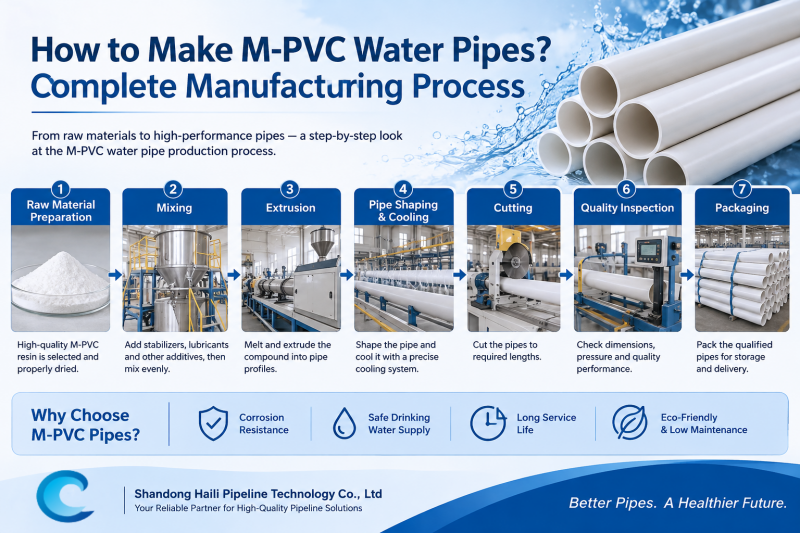
4. How to Make M-PVC Water Pipes Step by Step
The production of M-PVC water pipes is a continuous extrusion process combined with downstream sizing, cooling, finishing, and inspection operations.
The following steps explain the complete manufacturing workflow.
Step 1: Raw Material Selection and Preparation
First, manufacturers select PVC resin and additives according to the intended pipe specifications.
The main considerations include:
PVC resin quality and consistency.
Impact modifier compatibility.
Stabilizer performance.
Processing aid characteristics.
Lubricant balance.
Pigment requirements.
Compliance with applicable drinking water regulations.
All incoming raw materials should be checked before entering production.
The manufacturer should establish a documented formulation to ensure that every production batch maintains consistent material properties.
Step 2: Raw Material Weighing and Batching
After material selection, each component is accurately weighed according to the approved formulation.
Automatic weighing and dosing systems can help reduce human error and improve batch consistency.
The weighing process is important because an incorrect additive ratio may affect extrusion stability, impact resistance, and long-term pipe performance.
Manufacturers should record the batch number, material supplier, quantity, and production date for traceability.
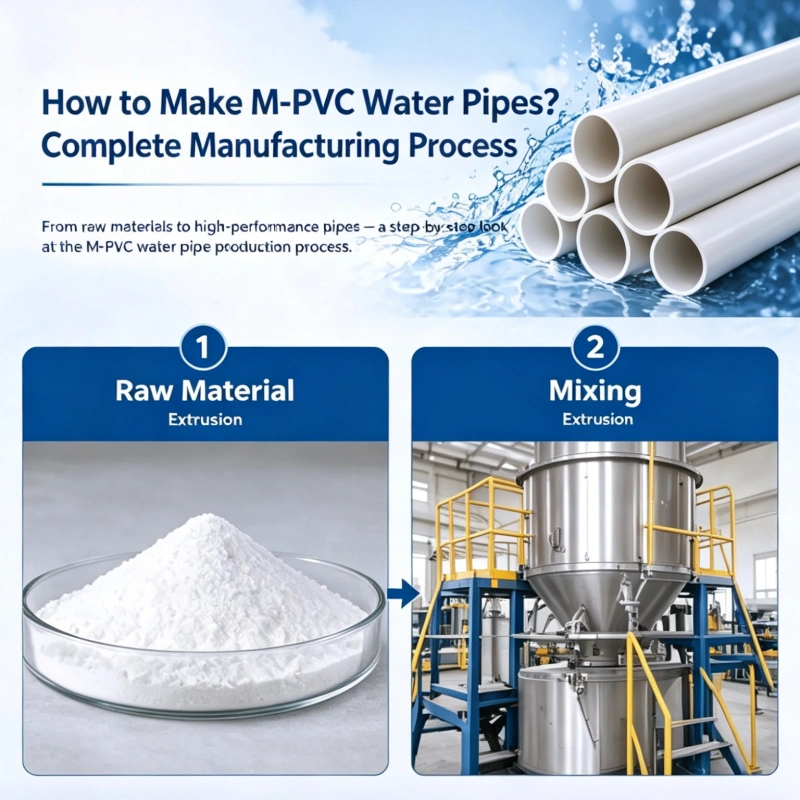
Step 3: High-Speed Mixing and Cooling
The weighed raw materials are added to the high-speed mixer in the specified sequence.
During mixing, mechanical energy helps distribute additives throughout the PVC resin.
The mixing temperature and duration must be controlled to achieve sufficient blending without causing premature degradation.
Once the required mixing conditions are reached, the hot compound is transferred to the cooling mixer.
The material is cooled to the temperature specified by the production process before being transferred to the extrusion feeding system.
This stage helps improve feeding stability and reduce material agglomeration.
Step 4: Twin-Screw Extrusion
The prepared PVC-M compound enters the conical twin-screw extruder through a controlled feeding system.
As the screws rotate, the material undergoes conveying, compression, heating, fusion, mixing, and homogenization.
The screw configuration and processing conditions should be designed to provide sufficient plasticization while avoiding excessive thermal and mechanical stress.
Several parameters require continuous monitoring:
Barrel temperature.
Die temperature.
Screw speed.
Main motor load.
Feeding rate.
Melt pressure.
Extrusion output.
The objective is to maintain a stable and uniform melt before it enters the extrusion die.
Step 5: Pipe Forming Through the Extrusion Die
The molten PVC-M compound is pushed through the extrusion die to form a continuous pipe.
At this stage, the die determines the pipe's basic geometry.
Manufacturers must pay attention to material distribution, die alignment, and melt stability.
An uneven melt flow may cause differences in wall thickness around the pipe circumference.
Proper die adjustment is essential for producing pipes that meet the specified dimensional tolerances.
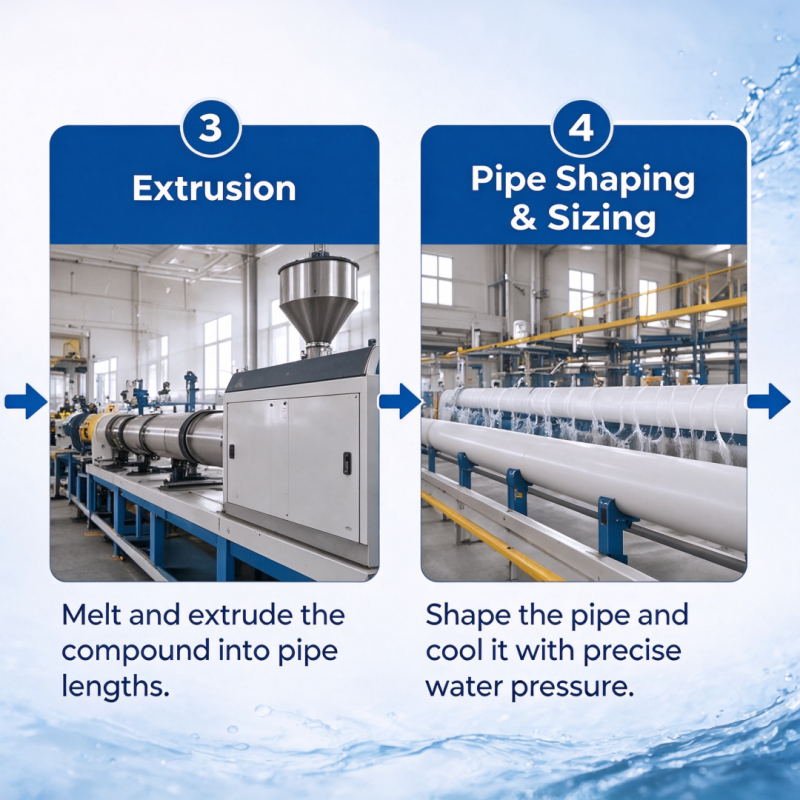
Step 6: Vacuum Sizing and Cooling
The newly extruded pipe enters the vacuum calibration tank.
Vacuum pressure helps the pipe maintain its required outside diameter while circulating water gradually reduces its temperature.
Additional cooling tanks may be installed depending on pipe diameter, wall thickness, production speed, and line configuration.
Cooling must be sufficiently uniform to prevent deformation and residual stress.
The cooling system should also maintain stable water circulation and temperature conditions during continuous production.
Step 7: Pipe Hauling and Printing
Once the pipe has achieved sufficient dimensional stability, the haul-off machine pulls it forward at a controlled speed.
The haul-off speed must match the extrusion output to maintain consistent wall thickness and pipe dimensions.
A laser or inkjet printer then marks the pipe with the required identification information.
Depending on the applicable standard and customer requirements, markings may include:
Manufacturer's name or brand.
Pipe material designation.
Nominal diameter.
Pressure class or relevant dimensional designation.
Applicable production standard.
Production batch or traceability code.
Manufacturing date.
Accurate identification makes it easier for customers and contractors to verify product specifications.
Step 8: Automatic Cutting
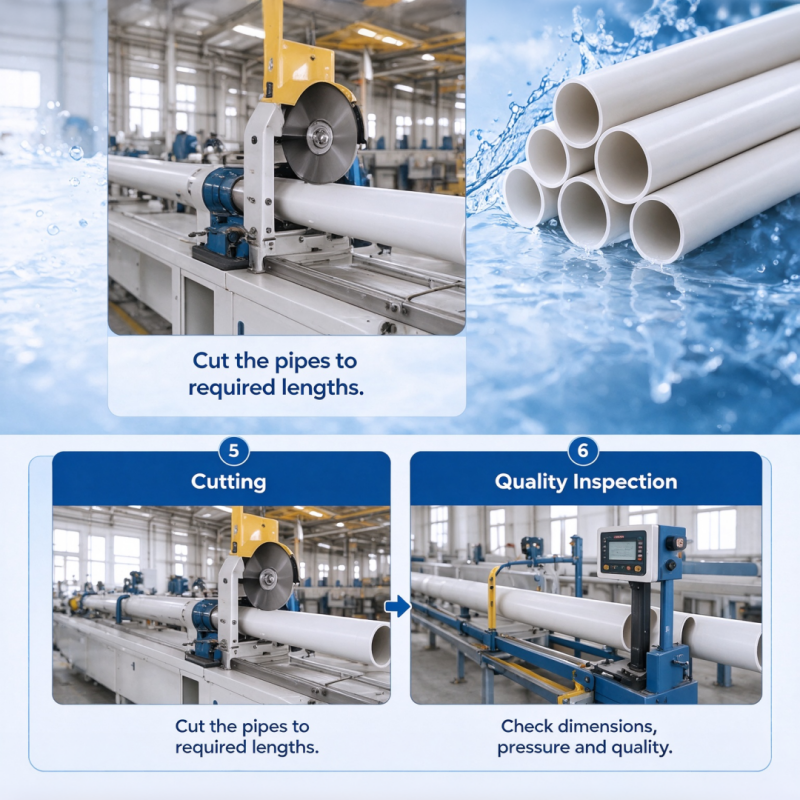
The continuous pipe is cut into predetermined lengths by an automatic cutting machine.
The cutting system should maintain accurate length control and produce clean, square pipe ends.
For larger-diameter pipes, suitable planetary cutting equipment may be used.
Cutting dust and chips should be collected appropriately to maintain a clean production environment.
Step 9: Pipe Socketing or Flaring
For pipes designed with socket connections, the pipe end undergoes an additional forming process.
The socketing machine heats the pipe end under controlled conditions and forms the socket using an appropriate mold.
The final socket dimensions must match the intended connection system.
For gasket-sealed joints, socket geometry and sealing-ring compatibility are especially important.
The finished joint should provide reliable sealing under the specified operating conditions.
Step 10: Finished Product Inspection and Packaging
After manufacturing, the pipes undergo final quality inspection.
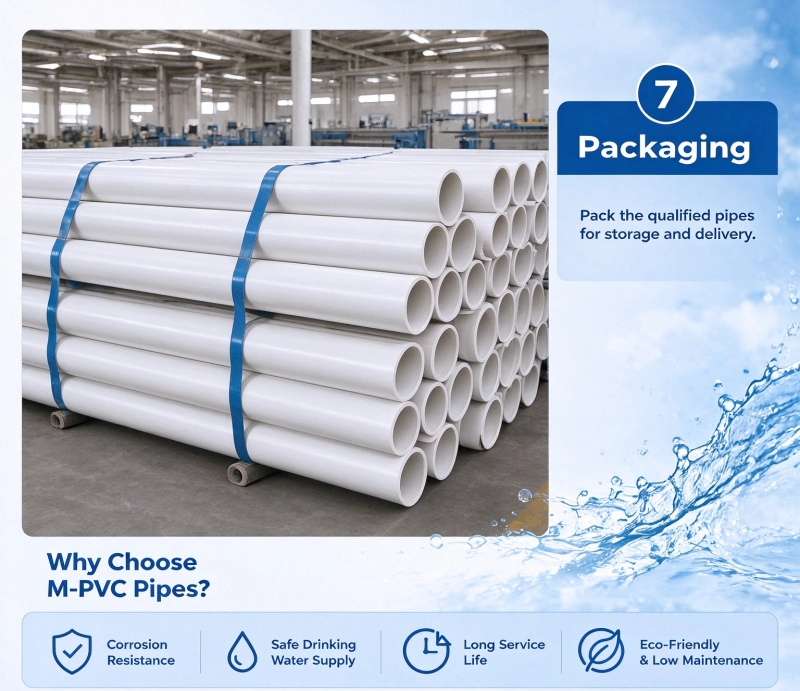
Products that meet the specified requirements are marked, packaged, and transferred to the finished-goods storage area.
Rejected products should be identified and handled according to the manufacturer's documented quality management procedures.
A complete production flow can be summarized as follows:
Raw Material Preparation → Weighing and Batching → High-Speed Mixing → Cooling → Twin-Screw Extrusion → Die Forming → Vacuum Sizing → Cooling → Hauling → Printing → Cutting → Socketing → Quality Inspection → Packaging
5. Quality Control and Testing of M-PVC Water Pipes
Manufacturing M-PVC water pipes is not simply about producing the correct diameter and wall thickness.
A pipe may look perfect externally but still fail to meet its mechanical or pressure-performance requirements.
Therefore, quality control should cover raw materials, production conditions, finished-pipe dimensions, mechanical properties, and joint performance.
5.1 Appearance Inspection
The internal and external surfaces should be smooth and clean.
Inspectors should check for:
Cracks and visible defects.
Surface cavities.
Scoring and scratches.
Discoloration.
Contamination.
Uneven pipe ends.
Other defects that could affect product conformity.
5.2 Dimensional Inspection
Dimensional accuracy directly affects pipe installation and hydraulic performance.
The main inspection items include:
| Inspection item | Quality objective |
|---|---|
| Outside diameter | Meets specified dimensional requirements |
| Wall thickness | Maintains the required minimum thickness |
| Pipe length | Meets customer and standard requirements |
| Ovality | Maintains acceptable roundness |
| Socket dimensions | Ensures proper joint compatibility |
| Pipe end condition | Provides clean and accurate cutting |
Wall thickness should be measured at multiple positions around the pipe circumference where required by the applicable standard.
5.3 Hydrostatic Pressure Testing
Hydrostatic pressure testing evaluates the pipe's ability to withstand internal water pressure.
The test is conducted using specified pressure, temperature, and duration conditions.
It helps identify potential weaknesses in the pipe structure and assess long-term pressure-bearing performance.
Testing conditions must follow the relevant product standard rather than relying on a universal pressure or testing duration.
5.4 Impact Resistance Testing
Impact resistance is particularly important for PVC-M pipes because improved toughness is one of the primary reasons for using modified PVC.
Impact testing evaluates how the pipe responds to controlled mechanical impact.
The test method, conditioning temperature, impact energy, and acceptance criteria should follow the applicable standard.
5.5 Joint and Socket Inspection
For socketed pipes, the connection system must also be evaluated.
Inspection should cover:
Socket diameter.
Socket depth.
Roundness.
Sealing-ring compatibility.
Joint assembly.
Leakage performance.
The strength of the entire pipeline system depends not only on the pipe body but also on the quality of its connections.
5.6 Material and Thermal Performance Testing
Additional tests may include:
Vicat softening temperature.
Material identification and formulation verification.
Tensile or mechanical property testing where applicable.
Long-term hydrostatic performance.
Dimensional stability.
The exact testing program depends on the target market and the relevant national or international standard.
For manufacturers exporting PVC-M pipes, ISO 12051:2026 is an important reference for understanding the current international requirements for PVC-M pressure piping systems.
Drinking water applications must also comply with the applicable national requirements for materials in contact with potable water.
6. Common M-PVC Pipe Manufacturing Problems and Solutions
Even with modern extrusion equipment, manufacturers may encounter production problems during PVC-M pipe processing.
Understanding the causes can help reduce material waste, improve production efficiency, and maintain consistent product quality.
| Common problem | Possible causes | Recommended solutions |
|---|---|---|
| Uneven wall thickness | Incorrect die alignment, unstable feeding, inconsistent haul-off speed | Adjust the die, stabilize feeding, synchronize extrusion and hauling |
| Rough pipe surface | Poor material fusion, unsuitable lubrication balance, incorrect processing conditions | Optimize formulation and extrusion conditions |
| Pipe diameter variation | Unstable vacuum pressure, poor calibration, inconsistent cooling | Check vacuum system and cooling circulation |
| Low impact resistance | Incorrect modifier selection, poor dispersion, unsuitable formulation | Review modifier compatibility and mixing quality |
| Yellowing or discoloration | Excessive heat exposure or thermal degradation | Optimize stabilizer system and temperature control |
| Pipe deformation | Uneven cooling or insufficient dimensional stabilization | Improve cooling uniformity and production synchronization |
| Socket dimensional deviation | Incorrect heating conditions or mold alignment | Adjust socketing temperature, forming time, and tooling |
Why Is Impact Resistance Sometimes Poor?
This is one of the most important questions in PVC-M pipe manufacturing.
Several factors can contribute to insufficient impact resistance.
First, the impact modifier may not be suitable for the PVC resin.
Different modifier systems have different compatibility and processing characteristics.
Second, poor mixing may result in uneven modifier distribution.
Even if the correct quantity is added, insufficient dispersion may reduce the effectiveness of the modification system.
Third, extrusion conditions may be unsuitable.
Excessive heat or shear can negatively affect material properties.
Finally, the formulation may not have been properly optimized.
Manufacturers should evaluate the complete formulation and finished-pipe performance rather than adjusting only one additive.
The most effective approach is to combine laboratory formulation development with controlled production trials and finished-pipe testing.
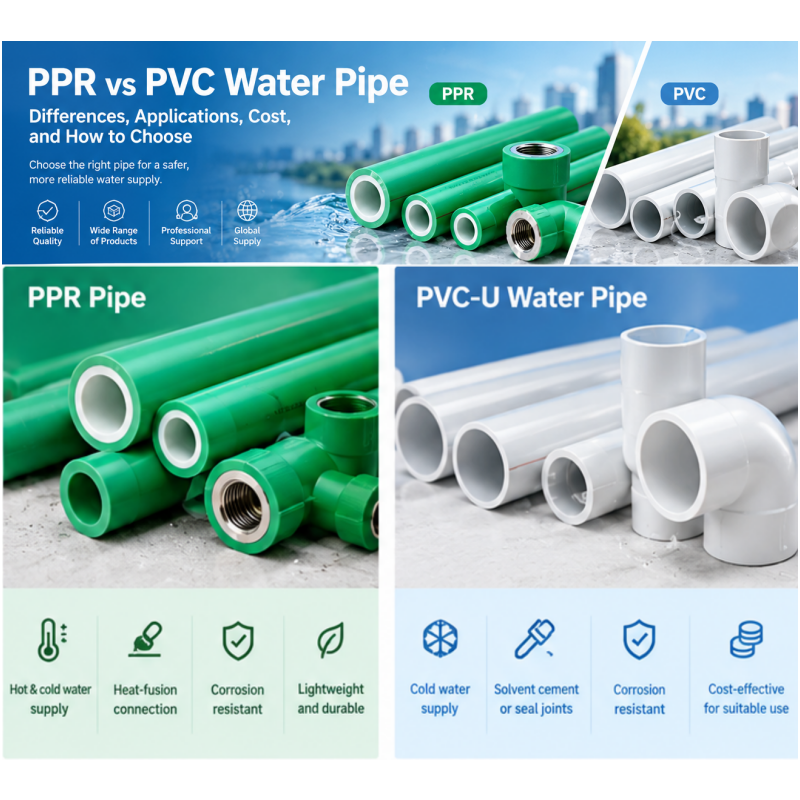
7. PVC-M vs PVC-U: What Is the Difference?
PVC-M and PVC-U are both rigid PVC-based pipe materials, but their mechanical behavior and formulation requirements are different.
The main distinction is the addition of an impact modifier in PVC-M.
| Comparison | PVC-M | PVC-U |
|---|---|---|
| Full name | Modified Polyvinyl Chloride | Unplasticized Polyvinyl Chloride |
| Material structure | PVC compound with impact modification | Rigid PVC compound without plasticizers |
| Impact resistance | Improved through modification | Depends on the original formulation |
| Ductility | Designed for more ductile fracture behavior | Generally more rigid |
| Crack propagation | Improved resistance through suitable modification | Depends on material and product design |
| Wall thickness optimization | May allow optimized wall thickness | Depends on the applicable design requirements |
| Typical applications | Pressure water supply and other specified pressure systems | Water supply, drainage, and other specified applications |
Which Is Better for Water Supply?
There is no universal answer.
PVC-M may be advantageous when improved impact resistance and more predictable fracture behavior are important.
PVC-U remains a widely used material for water distribution and drainage applications because of its rigidity, mechanical strength, and established manufacturing technology.
The final choice should depend on:
Working pressure.
Operating temperature.
Pipe diameter.
Installation environment.
Required mechanical performance.
Applicable standards.
Total project cost.
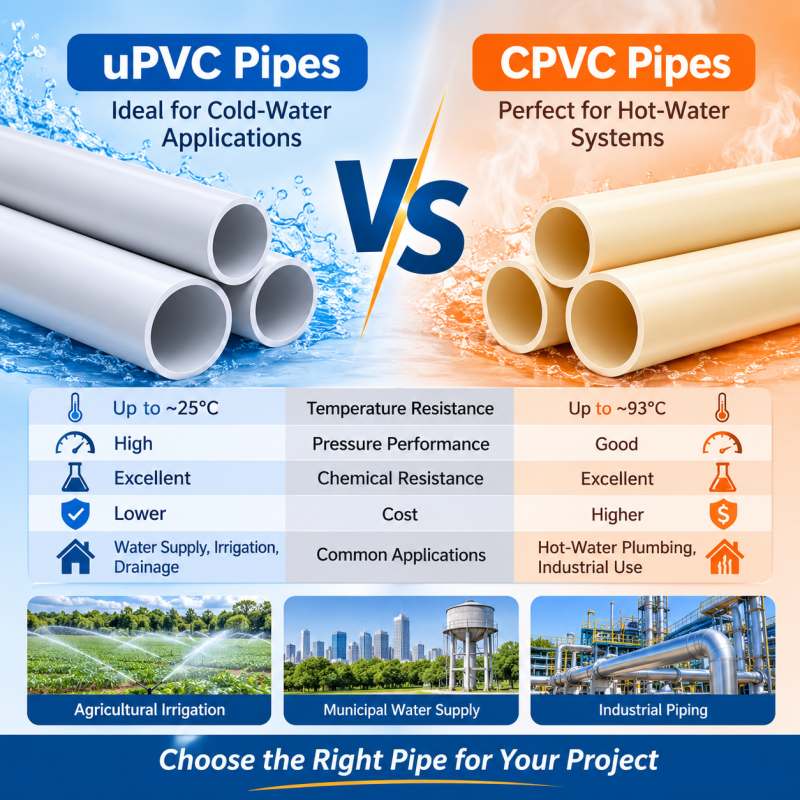
For a broader understanding of PVC material selection, read our guide to uPVC vs CPVC pipes: differences, uses, and costs.
8. Applications and Advantages of M-PVC Water Pipes
M-PVC pipes are designed for applications where pressure performance and improved impact resistance are required.
Depending on the product certification and applicable standard, common applications include:
8.1 Municipal Water Supply Networks
PVC-M pipes can be used in underground municipal water distribution networks.
Their corrosion resistance, impact performance, and pressure-bearing characteristics make them suitable for appropriately designed water infrastructure projects.
8.2 Residential and Commercial Water Distribution
In suitable applications, PVC-M piping systems can transport water through residential communities and commercial developments.
Correct pressure classification and connection design are essential for reliable operation.
8.3 Agricultural Water Supply
Agricultural irrigation networks require piping materials that can withstand outdoor installation conditions and mechanical handling.
PVC-M pipes may be considered where their specifications meet the project's pressure and installation requirements.
8.4 Industrial Water Transportation
Some industrial water transportation systems can also use modified PVC pressure pipes.
However, chemical compatibility, fluid temperature, pressure, and operating conditions must be evaluated before selecting the material.
For projects requiring alternative plastic pipeline materials, manufacturers and engineering buyers may also compare HDPE water supply pipes.
9. How to Choose a Reliable M-PVC Pipe Manufacturer
Choosing the right pipe manufacturer is as important as selecting the right material.
For distributors, engineering contractors, and infrastructure project buyers, several factors should be considered.
9.1 Manufacturing Experience
A reliable manufacturer should have established production experience in plastic piping systems.
Experience helps manufacturers understand raw material selection, extrusion technology, dimensional control, and application-specific requirements.
9.2 Research and Development Capability
PVC-M manufacturing requires more than standard PVC extrusion knowledge.
The manufacturer should understand the relationship between material formulation, processing conditions, and finished-product performance.
A strong R&D team can help improve production consistency and develop products according to different market requirements.
9.3 Laboratory Testing Capability
An effective quality management system should include appropriate laboratory equipment and inspection procedures.
This allows manufacturers to verify material properties, dimensional accuracy, and finished-product performance.
9.4 Production Capacity
Production capacity is another important consideration for large infrastructure projects.
Manufacturers with multiple production lines may offer greater flexibility in scheduling, product selection, and order fulfillment.
9.5 Product Range and Technical Support
Working with a manufacturer that provides multiple plastic piping solutions can simplify supplier management.
For example, projects may require different materials for water supply, drainage, gas transportation, irrigation, and electrical protection.
A supplier with broader product capabilities can help buyers evaluate suitable solutions for different applications.
10. Why Choose Haili for Plastic Pipe Solutions?
Shandong Haili Pipeline Technology Co., Ltd. was established in 2013 and covers an area of 10,000 square meters, with a total investment of USD 65 million.
With more than 24 sets of plastic pipe production lines, Haili has developed into a comprehensive manufacturer integrating research and development, manufacturing, sales, and technical services.
The company's product portfolio covers a wide range of plastic piping systems, including:
PE water supply pipes.
PE gas pipes.
PE mining pipes.
PE sprinkler and irrigation pipes.
MPP electrical conduit pipes.
PVC-U water supply pipes.
PE steel-reinforced drainage pipes.
PPR pipes.
PEX pipes.
Pipe fittings.
Glass fiber reinforced SMC inspection chambers.
Domestic septic tanks.
These products serve applications including municipal water supply, rainwater collection, sewage discharge, water reuse, natural gas transportation, agricultural irrigation, and industrial fluid transportation.
Strong R&D and Technical Capabilities
Haili places significant emphasis on technological development and product quality.
The company has a technical R&D team consisting of international experts, senior engineers, and university graduates.
Its R&D center has been named a national-level CNAS laboratory, and the company holds more than 32 patents.
Through continuous innovation and technology introduction, Haili aims to develop high-quality, energy-efficient, and environmentally responsible pipeline products.
Comprehensive Plastic Pipe Manufacturing Experience
Haili's manufacturing capabilities cover several major plastic pipe categories.
For example, customers can explore:
PVC water supply pipe solutions for water distribution applications.
PVC drainage pipe solutions for wastewater and drainage infrastructure.
HDPE water supply pipe systems for municipal and agricultural water transportation.
PVC fittings and connection solutions for compatible piping installations.
By focusing on infrastructure-related pipeline products, advanced raw materials, technical development, and customer service, Haili aims to provide reliable solutions for international distributors, contractors, and engineering projects.
To learn more about the company's facilities, technical capabilities, and development history, visit Haili's company profile.
11. Frequently Asked Questions About M-PVC Water Pipe Manufacturing
Q1: What does M-PVC stand for?
M-PVC stands for Modified Polyvinyl Chloride, also known as PVC-M. It is an impact-modified form of unplasticized PVC designed to improve toughness, ductility, and resistance to crack propagation.
Q2: What raw materials are used to make M-PVC pipes?
The main raw materials include PVC resin, impact modifiers, heat stabilizers, processing aids, lubricants, pigments, and other formulation additives. The exact formulation depends on the required pipe properties and applicable product standards.
Q3: What machine is used to manufacture M-PVC water pipes?
A conical twin-screw extruder is commonly used for PVC-M pipe production. A complete production line also includes mixing equipment, extrusion dies, vacuum calibration tanks, cooling systems, haul-off machines, printers, cutting machines, and socketing equipment.
Q4: What is the manufacturing process of M-PVC pipes?
The main process includes raw material batching, high-speed mixing, cooling, twin-screw extrusion, die forming, vacuum sizing, cooling, hauling, printing, cutting, socketing, and finished-product inspection.
Q5: What is the difference between M-PVC and PVC-U?
PVC-M contains an impact modifier that changes the fracture behavior of the material, improving ductility and impact resistance. PVC-U is conventional unplasticized PVC without this specific impact-modification system.
Q6: Are M-PVC pipes suitable for drinking water?
PVC-M pipes can be manufactured for potable water applications when the pipe material, formulation, finished product, and joining components meet the relevant drinking water regulations and product standards.
Compliance should always be verified for the intended market.
Q7: What is the purpose of impact modifiers in M-PVC pipes?
Impact modifiers help change the fracture mechanism of PVC, improving its toughness and making the material behave in a more predictable and ductile manner under mechanical stress.
Q8: What tests are required for M-PVC water pipes?
Typical quality evaluations include appearance inspection, dimensional measurement, wall thickness inspection, hydrostatic pressure testing, impact resistance testing, and joint performance evaluation. Additional tests depend on the applicable product standard.
Q9: What standard applies to PVC-M water pipes?
ISO 12051:2026 is the international standard specifically addressing PVC-M pipes for water supply and drainage and sewerage under pressure. Manufacturers must also consider the national standards and certification requirements of their target markets.
Q10: Can PVC-M pipes be used for underground water supply?
Yes. PVC-M pipes designed and certified for the relevant application can be used in buried water supply networks. Correct pipe selection, pressure rating, joint design, bedding, and installation practices are essential.
Conclusion
Manufacturing high-quality M-PVC water pipes requires more than PVC resin and extrusion equipment. It involves a carefully developed material formulation, appropriate impact modification, stable twin-screw extrusion, accurate vacuum sizing, controlled cooling, and comprehensive finished-product testing.
Every production stage contributes to the final pipe's mechanical properties, dimensional accuracy, and long-term performance.
For pipe manufacturers, investing in suitable production technology and systematic quality control is essential to producing reliable PVC-M piping systems.
For engineering contractors and distributors, understanding the manufacturing process makes it easier to evaluate product quality and select suitable suppliers.
With extensive experience in plastic pipe manufacturing, technical R&D capabilities, and a diverse infrastructure product portfolio, Shandong Haili Pipeline Technology Co., Ltd. is committed to supporting the development of reliable plastic piping solutions for global markets.
Looking for reliable plastic pipe products or professional pipeline solutions for your next project? Contact the Haili team to discuss your requirements and explore suitable products.
Visit Haili's official website or contact our team directly for more information.
916.webp)
204.webp)
659.webp)
185.webp)
312.webp)
849.webp)
587.webp)