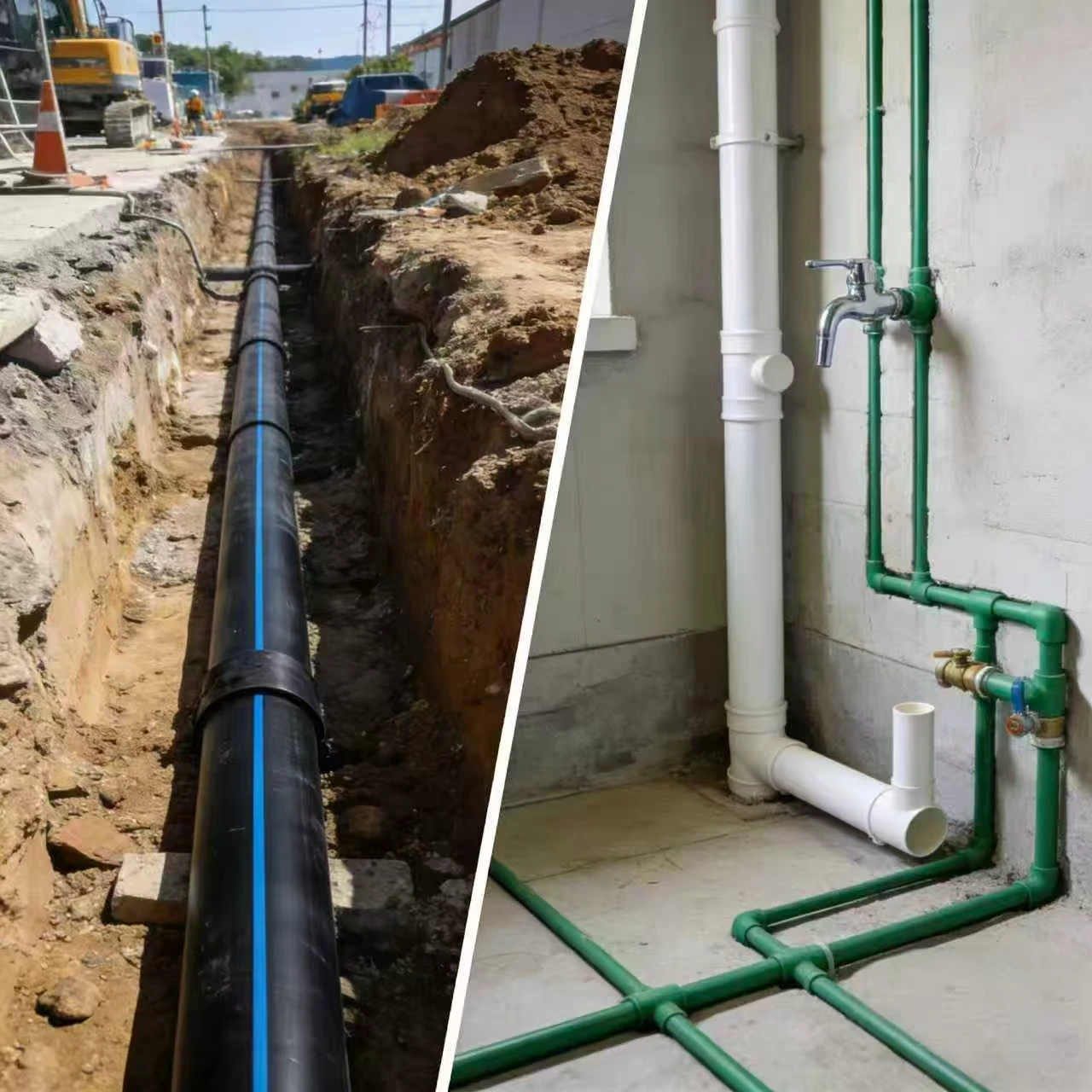
In modern piping systems, selecting the right material is one of the most important decisions in any plumbing or infrastructure project. Among the most widely used options today are PE (Polyethylene) pipes and PPR (Polypropylene Random Copolymer) pipes. Both are popular in residential, commercial, municipal, and industrial applications—but they serve very different engineering purposes.
PE pipes are known for flexibility, durability, and excellent performance in underground and outdoor environments. PPR pipes, on the other hand, are widely used in indoor plumbing systems due to their rigidity, heat resistance, and clean installation advantages.
This guide provides a complete, easy-to-understand comparison between PE and PPR pipes, covering material structure, performance, temperature resistance, installation methods, cost differences, and real-world applications—helping you choose the right system for your project with confidence.
What Is PE Pipe?
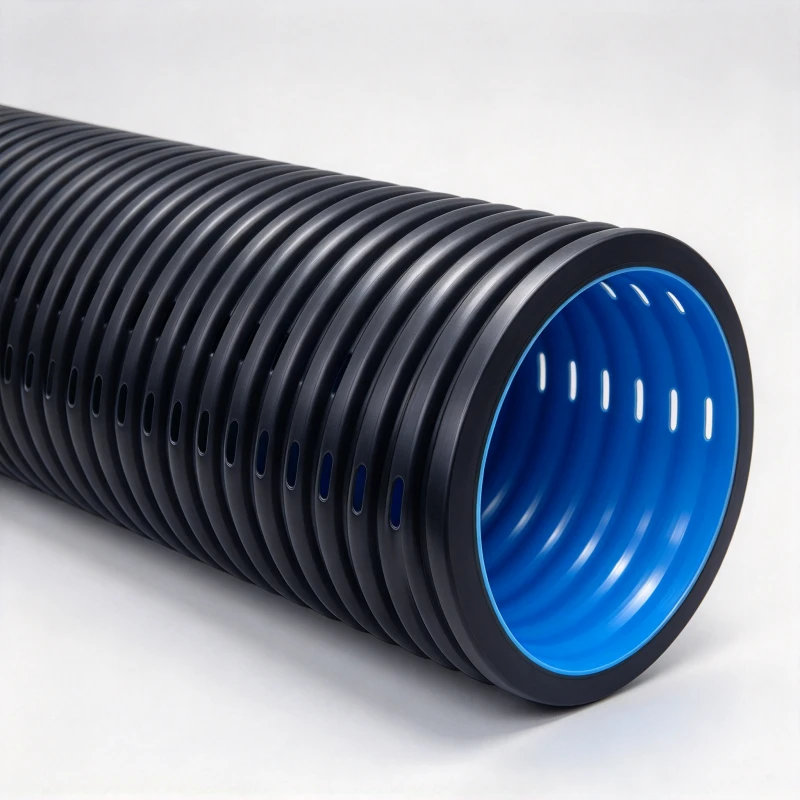
PE pipe (Polyethylene pipe) is a thermoplastic piping system made from polyethylene resin. It is available in different grades such as LDPE, MDPE, and HDPE, with HDPE (especially PE100) being the most widely used in modern pressure piping systems.
PE pipe is valued for its:
High flexibility
Strong impact resistance
Excellent corrosion resistance
Long service life (up to 100 years in some conditions)
Lightweight structure
Because of its flexibility, PE pipe can absorb ground movement, making it ideal for underground installations and unstable soil conditions. It is also widely used in municipal water supply and gas distribution networks.
What Is PPR Pipe?
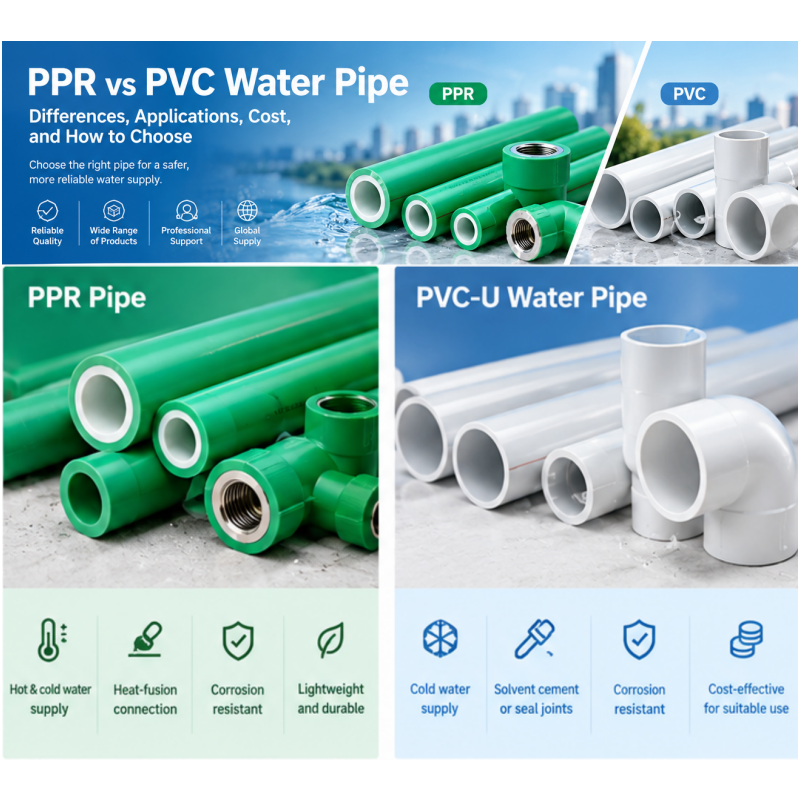
PPR pipe (Polypropylene Random Copolymer pipe) is made from a modified polypropylene material designed for high-temperature and pressure resistance.
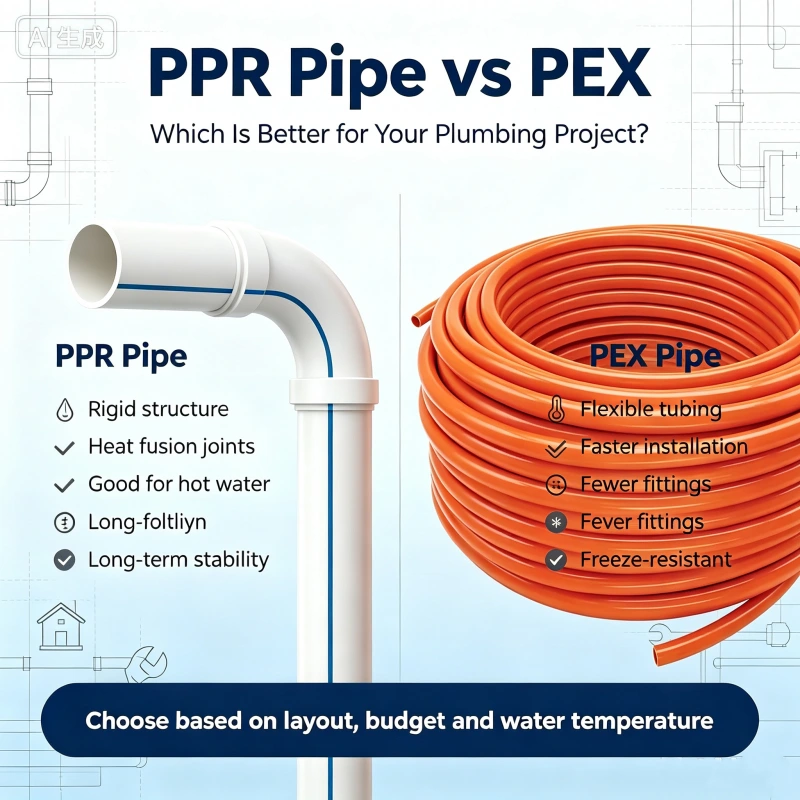
Unlike flexible PE pipe, PPR is rigid and dimensionally stable. It is widely used in indoor plumbing systems for hot and cold water distribution.
Key characteristics of PPR pipe include:
High temperature resistance
Smooth inner wall for low flow resistance
Strong rigidity and structural stability
Excellent chemical stability
Hygienic and safe for drinking water
PPR systems typically have a service life of 50 years under standard operating conditions.
Key Differences Between PE Pipe and PPR Pipe
Although both are plastic piping systems, their performance and applications differ significantly.
1. Material Structure and Mechanical Strength
PE is based on polyethylene chains, while PPR is a more rigid polypropylene copolymer structure.
| Feature | PE Pipe | PPR Pipe |
|---|---|---|
| Material | Polyethylene (HDPE/MDPE) | Polypropylene Random Copolymer |
| Flexibility | Very high | Low (rigid) |
| Elastic Modulus | ~550 MPa | ~850 MPa |
| Impact Resistance | Excellent | Good (but weaker in cold) |
PE is flexible and absorbs shocks, while PPR maintains shape and rigidity under pressure.
2. Temperature Performance
Temperature resistance is one of the most important differences.
PE Pipe
Continuous operation: up to 60°C
Short-term exposure: ~70°C
Low temperature resistance: down to -40°C
Best for cold water and outdoor systems.
PPR Pipe
Continuous operation: up to 70°C
Short-term exposure: up to 95–110°C
Becomes brittle below -10°C
Best for hot water and indoor plumbing systems.
Simple rule:
PE = cold water & outdoor use
PPR = hot water & indoor use
3. Thermal Conductivity
PPR has extremely low thermal conductivity (~0.24 W/m·K), making it ideal for hot water systems because it retains heat efficiently.
PE pipes lose heat faster, making them less suitable for energy-sensitive hot water applications but perfectly fine for cold water transport.
4. Installation and Welding Methods
Both pipes use heat fusion, but the process differs.
PPR Installation (Socket Fusion)
Heating temperature: 260°C
Simple and fast connection
Clean and uniform joints
Beginner-friendly
PE Installation (Butt/Electrofusion)
Heating temperature: 220–230°C
Requires surface scraping before welding
More technical skill required
Stronger joints for large systems
In practice:
PPR = easier and faster installation
PE = stronger for large-scale buried pipelines
5. Chemical Resistance
Both materials perform well, but with slight differences:
PE: Excellent resistance to most acids and alkalis, widely used in water and gas systems
PPR: Even stronger chemical stability in certain industrial environments
For standard drinking water and irrigation, both are highly reliable.
6. UV and Outdoor Performance
Neither PE nor PPR performs well under long-term UV exposure.
Both materials require:
Underground installation
UV protection coatings
Indoor or insulated protection
PE is still preferred outdoors due to better flexibility and impact resistance.
Application Scenarios: Where Each Pipe Is Used
PE Pipe Applications
PE pipe dominates large-scale infrastructure and outdoor systems:
Municipal water supply networks
Natural gas distribution systems
Agricultural irrigation systems
Underground drainage and sewage systems
Mining slurry transportation
Cable protection conduits
Cold climate water systems
Its flexibility and durability make it ideal for underground and long-distance pipelines.
PPR Pipe Applications
PPR pipe is widely used in building interiors:
Residential hot and cold water systems
Commercial building plumbing
Underfloor heating systems
Radiator and heating connections
Hot water circulation systems
Its heat resistance and clean installation make it ideal for indoor environments.
Cost Comparison: PE vs PPR
Cost depends on material, installation, and project scale.
PE Pipe
Lower raw material cost
Fewer fittings required
Very cost-effective for large-scale systems
Lower total project cost for long pipelines
PPR Pipe
Higher material cost
More fittings required
Faster installation for small systems
Better for indoor plumbing efficiency
Conclusion:
PE is more economical for large infrastructure
PPR is more practical for indoor systems
Service Life Comparison
PE pipe: up to 100 years (under proper installation conditions)
PPR pipe: around 50 years (rated operating conditions)
PE offers longer potential lifespan, especially in underground applications.
PE vs PPR Summary Table
| Feature | PE Pipe | PPR Pipe |
|---|---|---|
| Flexibility | Excellent | Low |
| Heat Resistance | Moderate | Excellent |
| Cold Resistance | Excellent | Weak below -10°C |
| Installation | Complex | Simple |
| Application | Outdoor & underground | Indoor plumbing |
| Lifespan | Up to 100 years | ~50 years |
| Cost (large scale) | Lower | Higher |
How to Choose the Right Pipe
Choose PE pipe if your project involves:
Underground pipelines
Large diameter water systems
Gas or irrigation systems
Cold environments
Long-distance water transport
Choose PPR pipe if your project involves:
Indoor plumbing systems
Hot water distribution
Underfloor heating
Residential or commercial buildings
Small-diameter piping systems
Industry Standard Practice: PE Outside, PPR Inside
Most modern plumbing systems use a hybrid design:
PE pipe: from water source to building entry
PPR pipe: inside building distribution
This approach ensures:
Maximum durability outdoors
Efficient hot water performance indoors
Optimized cost and lifespan balance
Conclusion
PE and PPR pipes are both essential materials in modern piping systems, but they are designed for completely different environments.
PE pipe excels in:
Outdoor durability
Underground installation
Large-scale infrastructure
Long service life
PPR pipe excels in:
Indoor plumbing systems
Hot water applications
Clean and fast installation
Instead of competing, these two materials complement each other. The most efficient piping systems often use both—leveraging the strengths of each where they perform best.
Choosing correctly not only improves performance but also reduces long-term maintenance costs and ensures a reliable water supply system for decades.
916.webp)
204.webp)
659.webp)
185.webp)
312.webp)
849.webp)
587.webp)
767.webp)