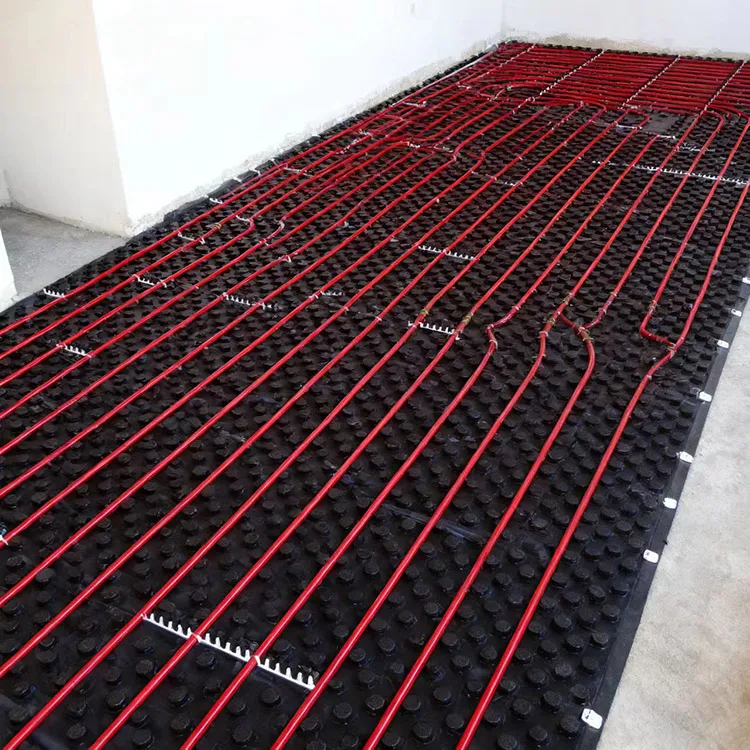
Overview of PE-RT Pipes
PE-RT pipe, short for Polyethylene of Raised Temperature Resistance, is a polymer material specifically developed for hot water distribution and floor heating. Its optimized molecular structure maintains the inherent flexibility and impact resistance of polyethylene while enhancing its heat resistance. Compared to traditional PEX pipes, PE-RT pipes do not require a cross-linking process and remain a thermoplastic, making them malleable and recyclable.
In floor heating applications, PE-RT pipes are becoming a mainstream choice in both residential and commercial projects due to their flexibility, ease of installation, and cost-effectiveness. PE-RT pipes are particularly well-suited for low-temperature hot water systems (with water temperatures between 40°C and 60°C).
Advantages of PE-RT in Floor Heating
PE-RT pipes have significant advantages in floor heating applications:
First, they are extremely flexible. PE-RT pipes bend easily and resist springback, which is crucial in complex floor heating installations. This flexibility not only improves installation efficiency but also reduces the need for joints and elbows, thereby reducing potential leaks.
Second, PE-RT pipes are easy to install. Because of their thermoplastic structure, they can be sealed and secured using heat-melt connections, making installation faster and more reliable while also reducing labor costs.
Third, PE-RT pipes offer a price advantage. Due to its relatively simple production process, manufacturing costs are lower than PEX pipes, resulting in a more competitive market price, making it suitable for floor heating projects with limited budgets but a focus on quality.
Finally, PE-RT pipes offer excellent environmental performance. Because they do not require a cross-linking process, they can be recycled and reused at the end of their lifespan, aligning with the trends of green building and sustainable development.
Comparison: PEX vs. PE-RT
PEX pipes, or cross-linked polyethylene (CLP), are manufactured by physically or chemically cross-linking the polyethylene molecular chains, thereby enhancing their heat and pressure resistance. PEX pipes offer superior high-temperature resistance and long-term stability compared to PE-RT, making them commonly used in high-temperature heating systems.
However, PEX and PE-RT each have distinct advantages:
PEX pipes offer the advantage of excellent heat and pressure resistance. They can withstand operating temperatures of up to 80°C or even higher for extended periods, often with a service life exceeding 50 years. They are suitable for heating systems with high temperatures, high flow rates, and long-term operation. The disadvantage of PEX pipe is that it is relatively rigid and prone to springing when bent during installation, requiring additional fixing. Furthermore, PEX pipe typically uses crimping or flaring connections, which requires a high level of labor and tools, and subsequent modification or repair is complex.
The advantages of PE-RT pipe include its flexibility, ease of installation, low cost, and environmentally friendly recyclability, making it ideal for residential floor heating or low-temperature hot water systems.
The disadvantage of PE-RT pipe is that its temperature resistance is slightly inferior to that of PEX. It is generally recommended to operate at temperatures below 70°C for extended periods. Prolonged use in high-temperature environments may shorten its service life.
Overall, if the project primarily focuses on low-temperature floor heating, PE-RT is sufficient; for high-temperature operation or large-scale heating projects, PEX offers greater stability.
Installation and Maintenance Requirements
In floor heating systems, the installation and maintenance of the pipe also determine the long-term performance of the system.
PE-RT pipe is relatively simple to install. Its flexibility makes it easy to bend and lay, and its small bend radius reduces the number of fittings used. PE-RT pipes can be hot-melt-connected, making installation safe and efficient, with joints that are less prone to leakage. Maintenance-wise, the system's fewer joints makes subsequent inspection and repair easier.
PEX pipe installation, on the other hand, is more complex. PEX's high stiffness requires significant force to maintain its shape during bending. Furthermore, its connections are typically crimped or flared, requiring skilled installers and specialized tools. While the connections are secure, later replacement of parts can be cumbersome.
Cost-Benefit Analysis
From an economic perspective, PE-RT and PEX differ in material and construction costs.
In terms of materials, PE-RT's production process is simpler and its raw material costs are lower, resulting in a market price generally 10%–20% lower than PEX. For projects with limited budgets, PE-RT is a more attractive option.
In terms of installation, PE-RT is easier to install and hot-melt tools are more widely available, resulting in significantly lower labor costs than PEX. However, PEX pipe installation requires specialized crimping tools and skilled labor, resulting in relatively higher construction costs.
In terms of long-term use, PEX pipes offer a longer lifespan and greater stability in high-temperature environments, making them potentially more cost-effective in some large-scale heating projects. However, for common low-temperature floor heating systems, PE-RT undoubtedly offers a higher cost-performance ratio.
Environmental and Sustainability Impacts
In the modern construction industry, environmental protection and sustainability have become crucial factors in determining the quality of materials.
Because PE-RT does not undergo a cross-linking process and is a thermoplastic material, it can be recycled and reused, avoiding resource waste and aligning with the concept of green development. However, due to the stable molecular structure of PEX pipes after cross-linking, they are almost impossible to reprocess and recycle, and can only be disposed of as construction waste, making them relatively environmentally unfriendly.
Thus, from an environmental perspective, PE-RT is more sustainable.
In summary, both PE-RT and PEX are proven and reliable floor heating pipe materials, but they each focus on different application scenarios.
For residential homes, general floor heating, or low-temperature hot water systems, PE-RT is more economical and practical, easy to install, and environmentally friendly, effectively meeting daily heating needs.
For high-temperature operation, large-scale heating projects, or projects with extremely high lifespan requirements, PEX pipes stand out with their excellent temperature and pressure resistance and longer lifespan.
The final choice should be made based on a comprehensive consideration of the project budget, operating temperature, construction conditions, and sustainability goals. Regardless of the material chosen, high-quality pipe products, a sound design, and standardized installation and construction are key to ensuring the stability, comfort, and long-term operation of a floor heating system.
916.webp)
204.webp)
659.webp)
185.webp)
312.webp)
849.webp)
587.webp)
767.webp)