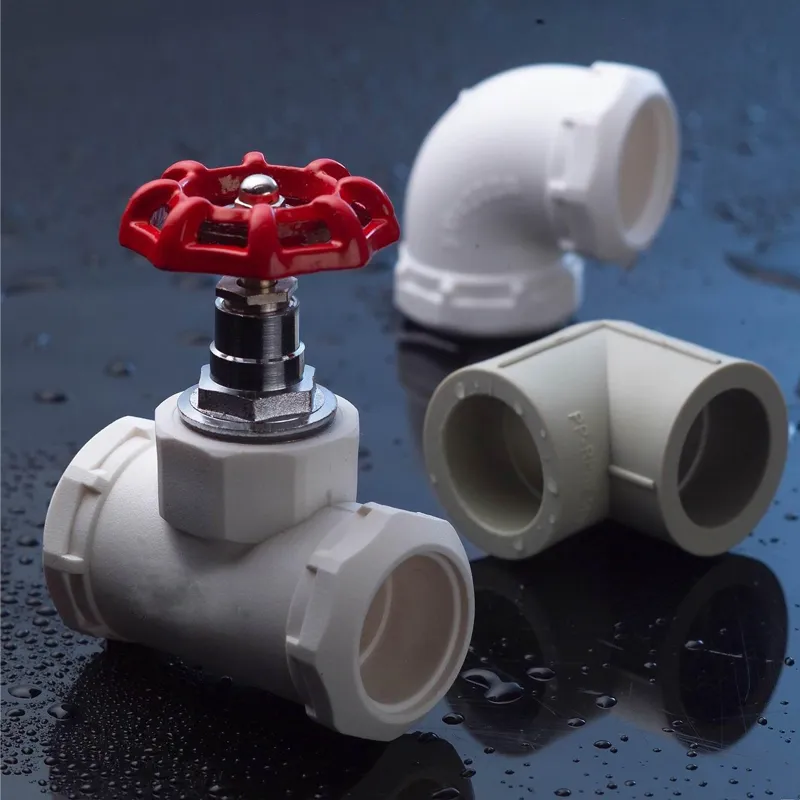
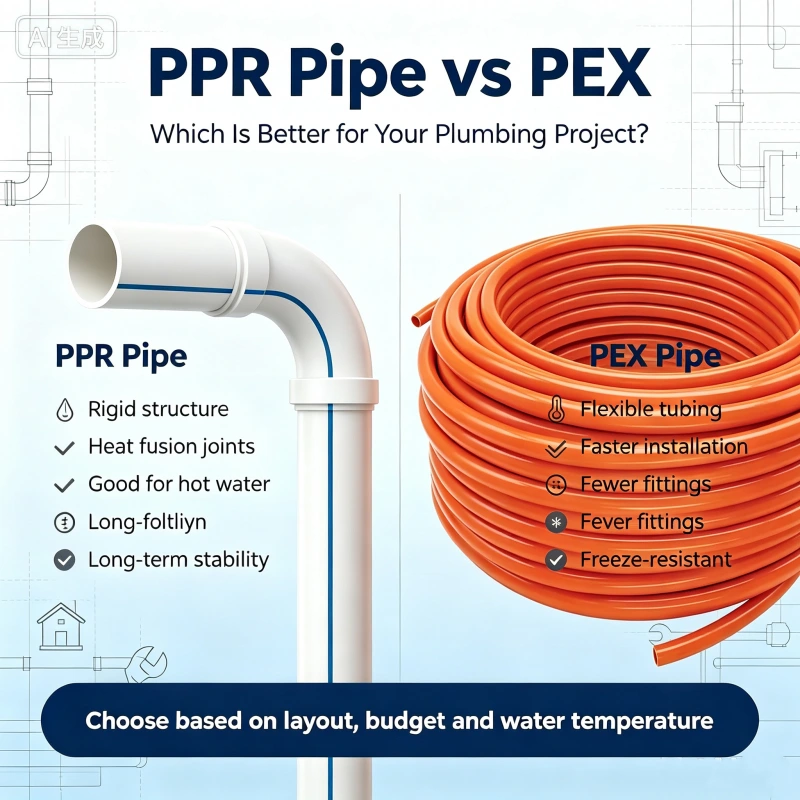
Polypropylene Random Copolymer (PPR) pipes and fittings have become a popular choice in residential, commercial, and industrial plumbing systems. Their durability, corrosion resistance, and ease of installation make them ideal for hot and cold water distribution, heating systems, and even certain chemical transport applications. Among the key components in a PPR piping system, ppr fittingsplay a crucial role in ensuring leak-free connections and flexible plumbing layouts.
What Are PPR Fittings?
PPR fittings are specially designed connectors used to join PPR pipes in various configurations. Made from high-quality polypropylene, these fittings are heat-resistant, pressure-resistant, and chemically stable. They can withstand temperatures up to 95°C and pressures up to 25 bar, depending on the specification, making them suitable for both domestic and industrial use.
Unlike traditional metal fittings, PPR fittings are lightweight, non-corrosive, and have a longer lifespan. They do not rust, scale, or corrode over time, which ensures that water quality remains clean and piping systems maintain efficiency.
Types of PPR Fittings
PPR fittings come in a wide range of shapes and sizes to accommodate diverse plumbing needs. Some of the most commonly used fittings include:
1. PPR Tee
A ppr teeis a T-shaped fitting that allows the branching of pipes. It is used when one pipe needs to split into two directions, such as distributing water from the main supply line to multiple outlets. PPR tees are available in equal tees, reducing tees, and various diameters to fit specific piping requirements.
2. Elbows and Bends
Elbows are used to change the direction of piping, typically at 45° or 90° angles. They ensure smooth flow of water while preventing unnecessary stress on the piping system.
3. Couplers and Adapters
Couplers connect two pipes of the same diameter, while female adaptor PPR allows the connection of PPR pipes to threaded metal pipes or valves. Female adaptors are particularly useful when integrating PPR systems with existing plumbing infrastructures.
4. End Caps and Plugs
These fittings seal the ends of pipes to prevent leaks and protect the system during maintenance or construction.
5. Reducers
Reducers connect pipes of different diameters, allowing smooth transition between larger and smaller pipes without compromising flow efficiency.
Advantages of Using PPR Fittings in Plumbing
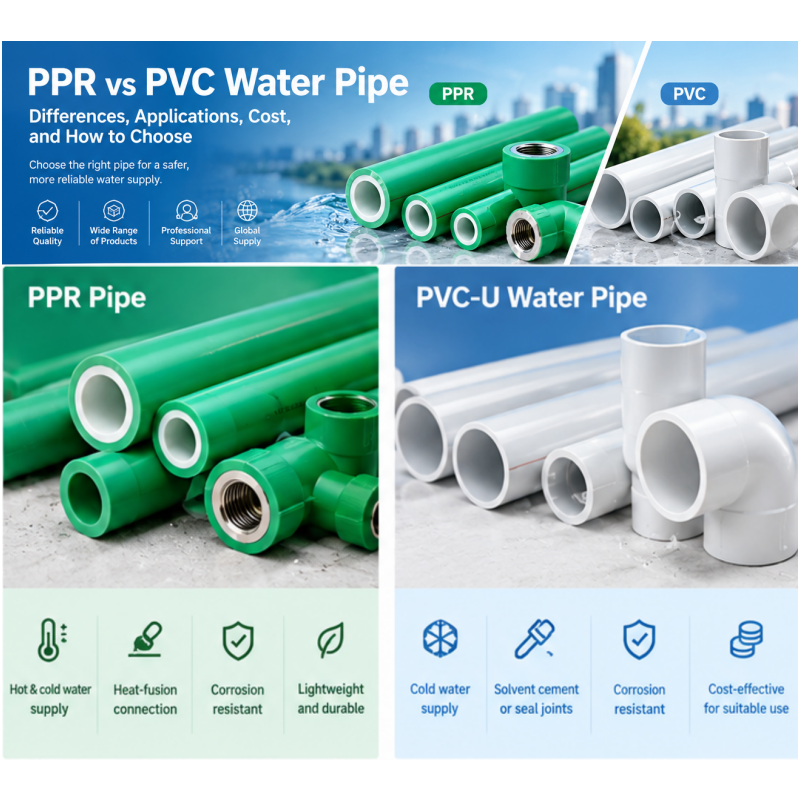
PPR fittings are increasingly preferred over traditional materials such as PVC, CPVC, or metal due to their multiple advantages:
1. Durability and Longevity
High-quality PPR fittings resist corrosion, scaling, and chemical reactions. Properly installed systems can last over 50 years, significantly longer than traditional plumbing materials.
2. Leak-Free Connections
PPR fittings are usually connected using hot water fusion welding. This method melts the pipe and fitting surfaces, creating a homogeneous joint that is as strong as the pipe itself. This ensures a completely leak-proof system, which is critical in both residential and industrial plumbing.
3. Thermal and Pressure Resistance
Whether it is hot water in residential plumbing or heating systems, ppr plumbingwith the right fittings can withstand high temperatures and pressures without deformation or cracking.
4. Eco-Friendly and Safe
PPR fittings are free from harmful chemicals, BPA, and heavy metals, making them safe for drinking water systems. They are also recyclable, contributing to environmental sustainability.
5. Ease of Installation
Compared to metal fittings that require threading, welding, or soldering, PPR fittings can be easily installed with fusion welding tools. The lightweight nature of PPR pipes and fittings reduces labor intensity and speeds up installation.
Applications of PPR Fittings
The versatility of ppr fittingsmakes them suitable for a wide range of applications:
Residential Water Supply Systems:PPR pipes and fittings are ideal for hot and cold water distribution in homes and apartments.
Commercial Plumbing Systems:Large buildings, hotels, and hospitals benefit from the long-term durability and reliability of PPR plumbing systems.
Heating Systems:PPR fittings withstand high temperatures, making them suitable for underfloor heating and hot water circulation systems.
Industrial Piping:Certain chemical transport systems can also utilize PPR pipes and fittings due to their resistance to corrosion and chemical attack.
Installation Tips for PPR Fittings
1. Proper Cutting and Cleaning
Always cut PPR pipes squarely using specialized pipe cutters. Remove any burrs or debris to ensure a smooth connection.
2. Correct Fusion Welding
Use a reliable fusion welding machine to heat both the pipe and the fitting to the recommended temperature. Join them together and hold in place for the specified cooling time to form a strong, permanent bond.
3. Avoid Excessive Stress
Do not bend or stress the fittings after installation. Proper support and spacing of pipes are crucial to prevent deformation over time.
4. Inspection and Testing
After installation, test the system for leaks and pressure stability before putting it into regular use.
Choosing High-Quality PPR Fittings
Not all PPR fittings are created equal. When selecting fittings, consider the following factors:
Material quality (100% virgin polypropylene recommended)
Compliance with international standards (ISO, GB/T, DIN)
Smooth inner surfaces to reduce friction and scaling
Comprehensive range of fittings including ppr teeand female adaptor PPR
High-quality fittings from reputable manufacturers ensure the safety, reliability, and longevity of the plumbing system.
PPR fittings are an essential component of modern ppr plumbingsystems. Their durability, leak-proof performance, ease of installation, and eco-friendly nature make them a preferred choice for residential, commercial, and industrial applications. From simple ppr teeconnections to complex piping networks requiring female adaptor PPR, investing in high-quality fittings guarantees a safe and long-lasting plumbing solution.
By understanding the types, advantages, applications, and installation best practices of ppr fittings, homeowners, contractors, and engineers can ensure the efficiency, reliability, and longevity of their water supply and heating systems.
916.webp)
204.webp)
659.webp)
185.webp)
312.webp)
849.webp)
587.webp)
767.webp)