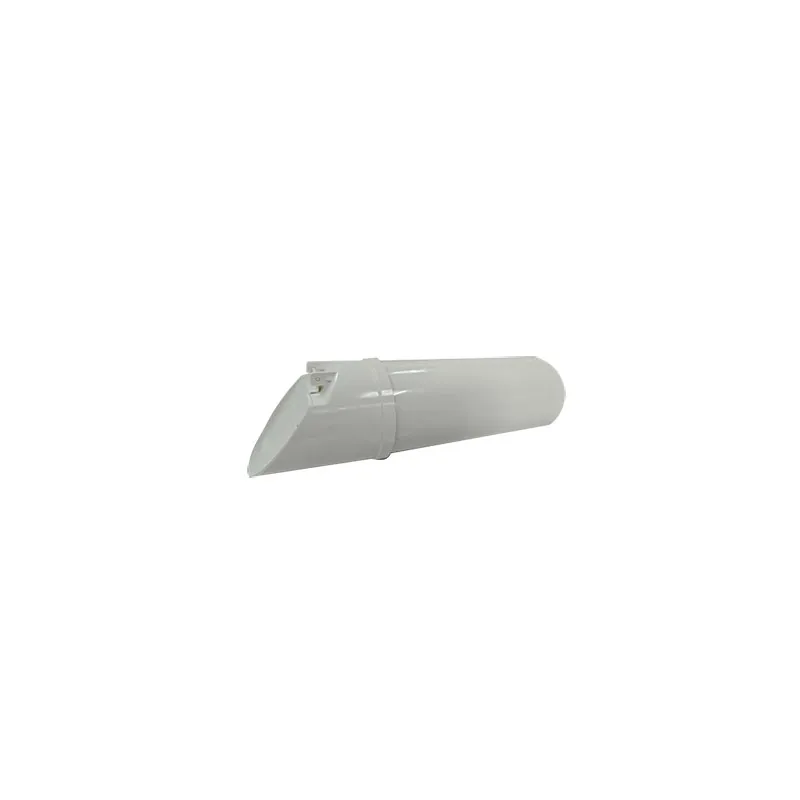
PVC Check Valve
1. Basic Product Information
1.1 Working Principle of PVC Check Valve
PVC check valve (one-way valve) controls the one-way flow of fluid by switching the internal valve disc. When the pressure in the pipeline reaches a certain value, the valve disc opens and the fluid passes through; when the pressure decreases or the flow reverses, the valve disc automatically closes to prevent backflow.
Features of PVC Check Valve
Anti-backflow: Only allow liquid or gas to flow in one direction to prevent backflow from damaging the equipment or system.
Corrosion resistance: PVC material has good chemical corrosion resistance and is suitable for acid and alkali environments.
Lightweight and durable: Compared with metal check valves, pvc check valves are light in weight, easy to install and maintain, and have a long service life.
Low flow resistance design: The inner wall is smooth and not easy to scale. The resistance when the fluid passes is small, which improves the efficiency of the pipeline system.
Multiple connection methods:
Glue (socket) connection: commonly used in pressure pipeline systems, such as water supply and chemical delivery pipelines.
Flange connection: suitable for large-diameter pipelines, easy to install and disassemble.
Threaded connection: suitable for small-caliber or detachable systems, such as water pump outlets.
1.2 Common types and differences
Spring check valve: built-in spring assists closing, can quickly prevent backflow, suitable for horizontal or vertical installation.
Swing check valve: relies on gravity or fluid pressure to rotate the valve disc to open or close, suitable for large flow and low-pressure systems.
Ball check valve: uses the rolling of the ball to control the flow direction, suitable for sewage and media with impurities.
Duckbill valve (rubber check valve): opened by squeezing the rubber material, suitable for sewage systems.
1.3 Comparison with other materials of check valves
PVC Advantages: light and corrosion-resistant, low cost, easy installation Disadvantages: poor high temperature resistance (generally ≤60℃) Scope of application: water supply and drainage, sewage treatment, agricultural irrigation
PP Advantages: strong acid and alkali resistance Disadvantages: low pressure resistance Scope of application: chemical fluid transportation
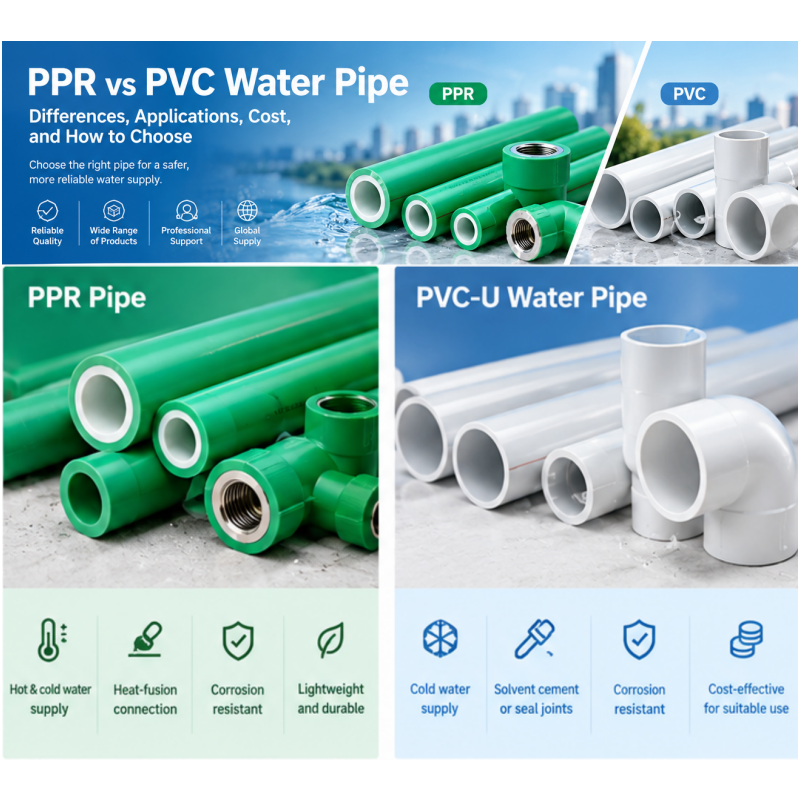
PPR Advantages: good heat resistance Disadvantages: high price Scope of application: hot water pipe system
Metal (stainless steel, brass) Advantages: high temperature and high pressure resistance, wear resistance Disadvantages: heavy weight, high price, easy to corrode Scope of application: high-pressure industrial pipeline, steam system
2. Structure and design
2.1 Internal structure
PVC check valve is mainly composed of valve body, valve disc (or ball), sealing ring, spring (some models), etc. The internal design of different structural types is slightly different, but the core function is to control unidirectional flow.
2.2 Sealing method
O-ring seal: provides good sealing, suitable for low-pressure system.
Rubber seal: suitable for sewage treatment to prevent impurities from blocking.
Hard seal (non-elastic material): used in higher pressure environments, but with lower sealing performance.
2.3 Valve flap opening method
Spring type: suitable for low flow and high sealing requirements.
Gravity type: relies on fluid to push the valve flap open, suitable for large flow pipelines.
3. Material and performance
3.1 Material grade
PVC check valves are generally made of UPVC (rigid polyvinyl chloride) or CPVC (chlorinated polyvinyl chloride), the latter of which has higher temperature resistance.
3.2 Corrosion resistance
PVC materials are resistant to most acid and alkali media (such as sulfuric acid, hydrochloric acid, sodium hydroxide, etc.), but not resistant to certain organic solvents (such as ketones, aromatic hydrocarbons).
3.3 Temperature and pressure range
Temperature: UPVC is generally used within 0~60℃, and CPVC can reach 95℃.
Pressure: The common nominal pressure is PN10 (1.0MPa), and some high-strength models can reach PN16.
4. Specifications and standards
4.1 Common sizes
| Diameter(mm) | Applicable pipe diameter (inch) |
| 20 | 1/2" |
| 25 | 3/4" |
| 32 | 1" |
| 50 | 1-1/2" |
| 63 | 2" |
| 90 | 3" |
| 110 | 4" |
4.2 Standard certification
ISO 1452: Standard for plastic pipes and fittings
ASTM D1784: Standard for PVC materials
GB/T 10002.2: Chinese national standard
4.3 Food grade certification
Some PVC check valves meet NSF (National Sanitation Foundation) standards and can be used in drinking water systems.
5. Connection method and installation
5.1 Connection method
Gluing (socket): commonly used in water supply pipes, with good sealing.
Flange: suitable for large diameters, easy to disassemble.
Thread: suitable for small diameter systems, simple installation.
5.2 Installation precautions
Correct installation direction: There is a flow direction mark on the valve body, and it must be installed correctly.
Avoid excessive stress: The pipe should be straight during installation to avoid twisting.
Check the seal regularly: prevent leakage caused by aging of the seal ring.
6. Applicable scenarios
Municipal drainage and sewage treatment
Agricultural irrigation and drip irrigation system
Industrial chemical fluid transportation
Water pump outlet backflow prevention
Rainwater collection system
7. Maintenance and troubleshooting
7.1 Maintenance method
Clean the valve body regularly to prevent dirt accumulation and seal failure.
Check the flexibility of the valve disc to avoid foreign objects stuck and causing failure to open or close tightly.
Replace aging seals to prevent leakage.
7.2 Common faults and solutions
Fault phenomenon: Water backflow
Possible cause: Valve disc is not tightly sealed, wrong installation direction
Solution: Check whether the sealing ring is aged and reinstall it
Fault phenomenon: Loud noise when water flows through
Possible cause: Unstable pipeline pressure, spring damage
Solution: Adjust the flow rate and check whether the spring is deformed
Fault phenomenon: Sewage check valve is blocked
Possible cause: Solid particles or dirt
Solution: Disassemble and clean, and replace the appropriate valve type
8. Price and procurement
8.1 Price range
The price of PVC check valve varies according to factors such as caliber, brand, and material. The general market price is as follows:
Small diameter (≤50mm): ¥1050/piece
Medium diameter (63110mm): ¥50200/piece
Large diameter (above 110mm): ¥200800/piece
8.2 Factors affecting price
Brand (such as GF, ERA, AD)
Material quality (ordinary PVC vs. CPVC)
Sealing performance (high-end products use more durable rubber seals)
916.webp)
204.webp)
659.webp)
185.webp)
312.webp)
849.webp)
587.webp)
767.webp)