In today's world of construction and plumbing, the selection of appropriate materials and fittings is critical to ensuring the reliability and long-term operation of your system. Among many materials, polyvinyl chloride (PVC) and its fittings have attracted much attention due to its excellent performance and multi-faceted applications. This article will deeply explore the advantages of PVC fittings compared to other material fittings, introduce different types of PVC, as well as common problems that may be encountered in practical applications and their quick repair solutions. By comprehensively understanding the characteristics and solutions of PVC fittings, we can better understand its value in the construction field and provide reliable guidance for the design and maintenance of projects.
PVC vs. Other Materials: Why Fittings Are Important in Pipe Selection
The rise of PVC in pipes
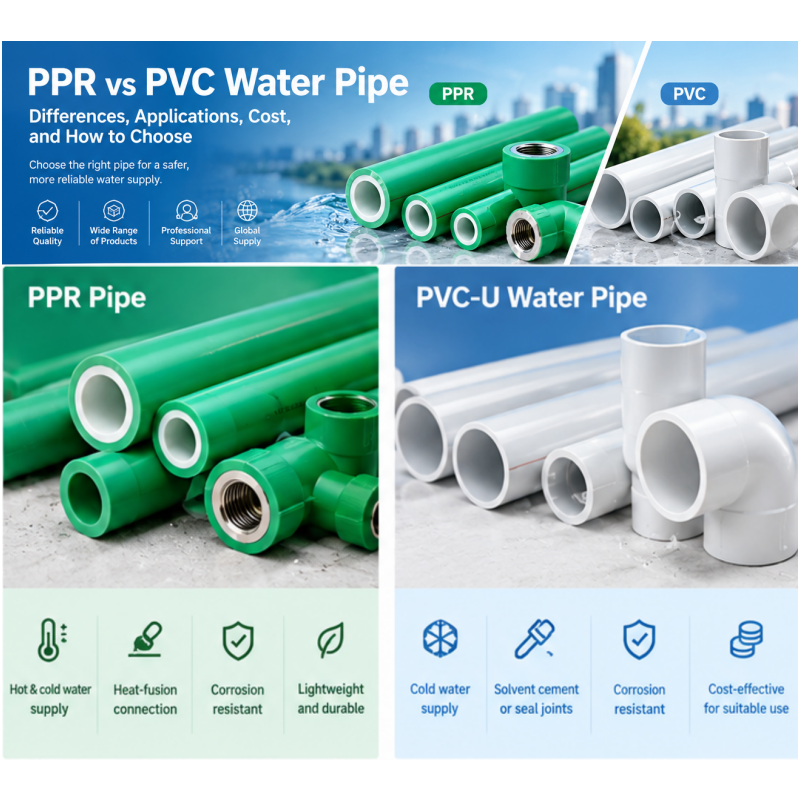
PVC has gained widespread acceptance in the plumbing industry for a variety of reasons. Its corrosion resistance, low cost and ease of installation make it the material of choice for residential and commercial applications. PVC pipes have become synonymous with modern plumbing systems, providing a viable alternative to traditional materials such as copper or galvanized steel.
Versatility and cost-effectiveness
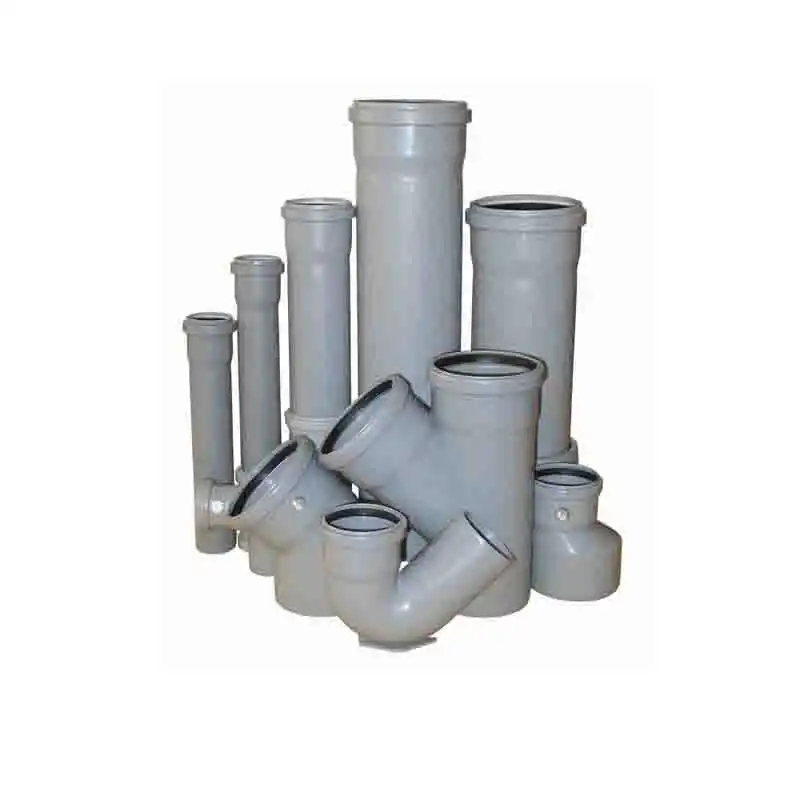
One of the main advantages of PVC is its versatility. PVC fittings are available in a variety of shapes and sizes, including elbows, tees, joints, and more. This versatility allows for creative and efficient duct design, adapting to a variety of layouts and configurations. Additionally, PVC fittings are generally less expensive than metal fittings, helping to provide a cost-effective plumbing solution without compromising on quality.
Corrosion resistance
Unlike metal pipes and fittings, PVC does not corrode easily. This property is particularly beneficial in environments where exposure to moisture and chemicals is common. The absence of corrosion ensures that PVC fittings maintain their structural integrity over time, reducing the potential for leaks and repairs.
Easy to install
The installation process further highlights the advantages of PVC fittings. PVC pipes and fittings are lightweight, making loading, unloading and transportation more manageable for installers. Using solvent glue to bond PVC fittings simplifies the assembly process, eliminating the need for the complex and time-consuming welding or brazing techniques associated with metal pipes.
Environmental considerations
The environmental impact of PVC is another factor that affects its popularity. PVC pipes and fittings are recyclable, and advances in manufacturing processes have led to the development of more sustainable and environmentally friendly options. Choosing PVC over traditional materials can align with a commitment to green building practices and environmental responsibility.
Notes on other materials
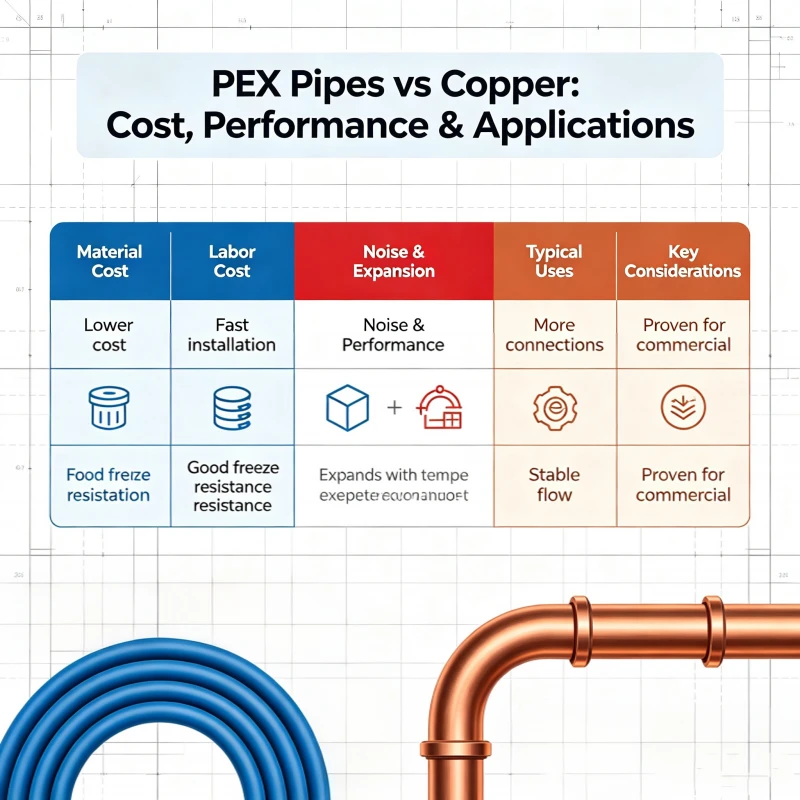
While PVC offers many advantages, specific circumstances must be considered where alternative materials may be more suitable. For example, copper pipes are known for their durability and resistance to high temperatures, making them suitable for hot water applications. However, copper tends to be more expensive and may be susceptible to corrosion under certain conditions.
Introduction to PVC pipe fitting types: interpreting the diversity of pipe systems
1. Elbows
Description: Elbows are one of the most basic PVC pipe fittings in piping systems. They are designed at 90 or 45 degree angles and are used to change the direction of the pipe.
Application: Elbows are widely used at corners in pipeline systems to ensure flexibility in pipeline layout and smooth transfer of fluids.
2. Equal diameter tees (Tees)
Description: The equal diameter tee is shaped like the letter "T" and is a pipe fitting that connects three pipes.
Application: Equal tees are used to create branches or join other pipes so that fluid can flow from one pipe in both directions.
3. Couplings
Description: Couplings are simple and practical PVC fittings that connect two pipes.
Application: Couplings are commonly used to repair, expand or modify piping systems and are simple in design and easy to install.
4. Flanges
Description: A flange is a fitting used to secure PVC pipe to a surface or connect to other materials.
Applications: Flanges are commonly used in industrial applications to provide stability and support and facilitate maintenance or repair.
5. Adapters
Description: Adapters are fittings used to connect pipes of different sizes or materials.
Application: Adapters are useful when you need to transition from PVC pipe to other materials or join pipes of different diameters.
6. Reducers
Description: Diameter reducers are used to smoothly transition from one diameter to another.
Application: Reducers ensure smooth fluid transfer and prevent turbulence and pressure drop.
7. Blind caps (Caps)
Description: A blind cap is a fitting used to seal the end of a pipe, preventing leaks and maintaining system pressure.
Application: Blind caps play a key role before system testing, temporary closure or future expansion.
8. Bends
Description: An elbow is a pipe fitting similar to an elbow, but its angle is different from that of an elbow.
Applications: Elbows are typically used in piping systems where larger angles are required, providing greater directional adjustment capabilities.
9. Plugs
Description: A stopcock is similar to a blind cap and is used to temporarily close an opening in a pipe.
Application: Faucets are often designed to be easily installed and removed, making them ideal for temporarily sealing pipes.
10. Pipe fittings connections (Couplers)
Description: A fitting is another type of fitting used to join two pipes, similar to a joint.
Applications: Fitting connections are useful where a simple connection is required without the use of complex tools or techniques.
PVC Fitting Troubleshooting: Frequently Asked Questions and Quick Fixes
Polyvinyl Chloride (PVC) fittings are widely used in piping systems, providing an affordable and durable solution. However, during use, some common problems sometimes arise. Here are some common PVC fitting failures, along with quick fixes to ensure your plumbing system continues to run efficiently.
1. Water leakage problem
Possible Causes
Connectors not connected correctly: The connection between the connectors is not sealed with appropriate glue or gaskets.
Pipe Damage: Cracks or scratches on the surface of the pipe.
Glue not drying: The glue is not completely dry after installation.
Quick Fix
CHECK CONNECTIONS: Make sure all joints are connected correctly, using appropriate glue or gaskets.
Inspect the Pipes: Check the pipe surface for damage such as cracks or scratches.
Wait for the glue to dry: If the issue is caused by the glue not drying completely, wait a while to make sure the glue is secure.
2. Loose joint
Possible Causes
Not installed correctly: The connector is not fully inserted or connected in place.
Insufficient Glue: The joints where glue is used are not sufficiently applied.
Quick Fix
Reinstall Connector: Make sure the connector is fully inserted into place, following the manufacturer's installation guidelines.
Reapply Glue: If the issue is insufficient glue, reapply the appropriate amount of glue to ensure adequate bonding.
3. Pipe warping or deformation
Possible Causes
Ambient temperature changes: PVC is sensitive to temperature changes and may deform in environments with large temperature fluctuations.
Excessive force during installation: During the installation process, the pipe was subjected to excessive external force.
Quick Fix
Proper Fixing Support: Use brackets or clamps to clamp the pipe to ensure it is not subject to external forces during installation.
Environmental Controls: In environments subject to extreme temperature changes, consider taking measures, such as maintaining a constant room temperature, to reduce the likelihood of PVC deformation.
4. Glue residue or excessive use
Possible Causes
Careless construction: Glue was abused or excessively used during construction.
Quick Fix
CLEAN GLUE: Use an appropriate cleaner to clean up excess glue and make sure the glue is only applied to the surfaces that need to be joined.
5. Connectors are not aligned
Possible Causes
Forces during installation: During the installation process, the joint may be deflected due to external forces.
Quick Fix
Reinstall: Reinstall the connectors, making sure they are aligned when connected.
It's not uncommon for problems to arise when working with PVC fittings, but with prompt troubleshooting and quick repairs, you can ensure the stable operation of your piping system. Before undertaking a repair, ensure safety and follow the manufacturer's recommendations. If the problem cannot be resolved, it is recommended to seek professional help to ensure the long-term reliability of your plumbing system.
In modern construction and piping systems, PVC fittings are favored for their excellent performance and diverse applications. Compared with fittings made of other materials, PVC fittings stand out for their superior corrosion resistance, lightweight, and easy installation. This article takes an in-depth look at the different types of PVC, including its wide range of applications in construction and plumbing.
It is undeniable that just like any other material, PVC fittings may also face some common problems. However, these problems are not insurmountable. Through timely discovery and quick repair, we can ensure the stable operation of the PVC system and extend its service life.
Overall, the use of PVC fittings in construction and plumbing projects provides us with a reliable, efficient and economical solution. When selecting and using PVC fittings, understanding their characteristics and possible problems will help ensure the reliability and durability of the system. Through continuous technological innovation and quality management, PVC fittings will undoubtedly continue to play an important role in the future, promoting the development of the construction industry in a more sustainable and advanced direction.
916.webp)
204.webp)
659.webp)
185.webp)
312.webp)
849.webp)
587.webp)
767.webp)