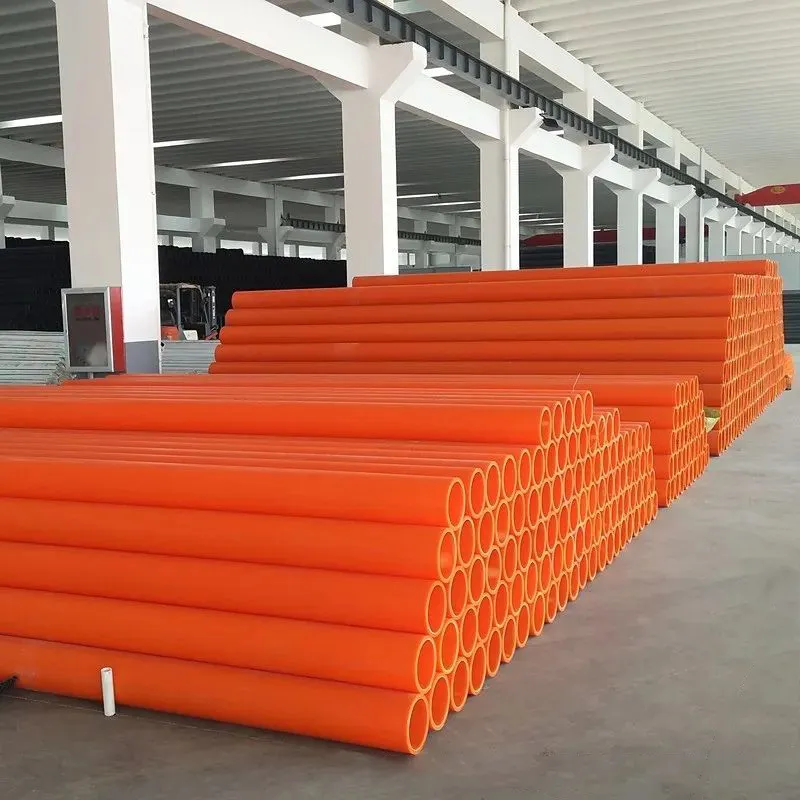
Performance advantages of MPP pipe
Excellent electrical insulation: MPP pipe is made of modified polypropylene material, its molecular structure is stable, and it has excellent electrical insulation performance. During the power transmission process, it can effectively block the current, avoid dangerous situations such as leakage and short circuit, lay a solid foundation for the safe and stable operation of the power system, and is an ideal pipe choice in high voltage and strong current environment.
Excellent high temperature resistance: It has a high heat deformation temperature and can work stably for a long time in an environment of 5℃ to 70℃. During power transmission, even if the cable generates heat due to the passage of current, the MPP pipe can withstand it and will not soften and deform due to the increase in temperature, ensuring the normal use of the pipe in different seasons and complex working conditions.
Strong mechanical properties
Stretch resistance: MPP pipe has high tensile strength. When it is pulled or subjected to external force during construction, it is not easy to break, ensuring the integrity of pipeline laying and reducing construction difficulty and risk.
Compression resistance: The unique structural design gives it good compression resistance, which can withstand the heavy pressure of soil and ground vehicle rolling, protect the cables in the pipe from damage, and maintain smooth power transmission.
Good corrosion resistance: It has strong tolerance to common acids, alkalis, salts and other chemical substances. Whether in industrial pollution areas or areas with complex soil acidity and alkalinity, it will not be easily corroded, which greatly extends the service life and reduces the cost of pipeline maintenance and replacement.
Convenient construction
Good flexibility: It has a certain flexibility and can be bent according to the construction terrain and needs. It has obvious advantages when laying in complex terrains such as mountainous areas and river crossings, and can adapt to diverse construction environments.
Easy connection: It adopts hot melt connection or electric melting connection, which is simple to operate, fast to connect, and has good interface sealing, which effectively prevents water and impurities from invading the pipe and affecting power transmission, improves construction efficiency, and shortens construction period.
Application field of MPP pipe
Urban power grid construction
Underground cable laying: The underground power grid in the city is dense, and MPP pipes are used to protect cables to avoid damage to cables caused by ground construction, vehicle rolling, etc., to ensure stable power supply in the city.
Overhead cable protection: In overhead power lines, protect cables from external factors such as wind, rain, and ultraviolet rays, and extend the service life of cables.
Industrial Park Power Supply
Enterprise internal power supply: Provide power to production equipment and office areas of enterprises in the industrial park to meet the power needs of enterprises and ensure the smooth development of production activities.
Park public power facilities: Connect the park substation, distribution room and various power consumption areas to ensure the stability of the park's public power supply.
New energy power field
Solar photovoltaic power generation: In solar power generation projects, cables connecting solar panels with inverters, distribution boxes and other equipment provide a stable power transmission channel for photovoltaic power generation systems.
Wind power generation: Used for power transmission from wind turbines to substations in wind farms, withstand the complex conditions of wind power generation environments, and ensure effective power transmission.
Transportation infrastructure construction
Railway power supply: Laying power cables along the railway to power the railway signal system, lighting system, and EMU to ensure safe operation of the railway.
Urban rail transit: In urban subway, light rail and other rail transit projects, provide reliable pipeline protection for traction power supply, signal control, lighting and other systems to ensure the normal operation of rail transit.
Although both MPP pipes and PE pipes are plastic pipes, they are obviously different in engineering applications due to their different materials, uses and characteristics. The following are their main differences:
1. Different materials
MPP pipe: modified polypropylene (MPP) is used as the main raw material.
PE pipe: high-density polyethylene (HDPE) is used as the main raw material.
2. Different main uses
MPP pipe: mainly used for power cable protection, suitable for power communications, cable threading projects, especially non-excavation (jacking) construction and open excavation projects.
PE pipe: has a wider range of applications, often used in water supply, sewage, gas transportation, irrigation and other fields, mainly used for fluid transportation.
3. High temperature resistance
MPP pipe: has good high temperature resistance and can be used for a long time in an environment below 70℃.
PE pipe: generally does not exceed 60℃, and may soften in a high temperature environment.
4. Different connection methods
MPP pipe: usually hot-melt butt joint is adopted. During the construction process, hot-melt welding or flared socket connection can be used to ensure the sealing of the pipe.
PE pipe: can be hot-melt butt joint or electric fusion connection, gas pipeline generally adopts electric fusion connection to ensure safety.
5. Different colors
MPP pipe: usually orange, easy to identify during construction, in line with the standards of the power industry.
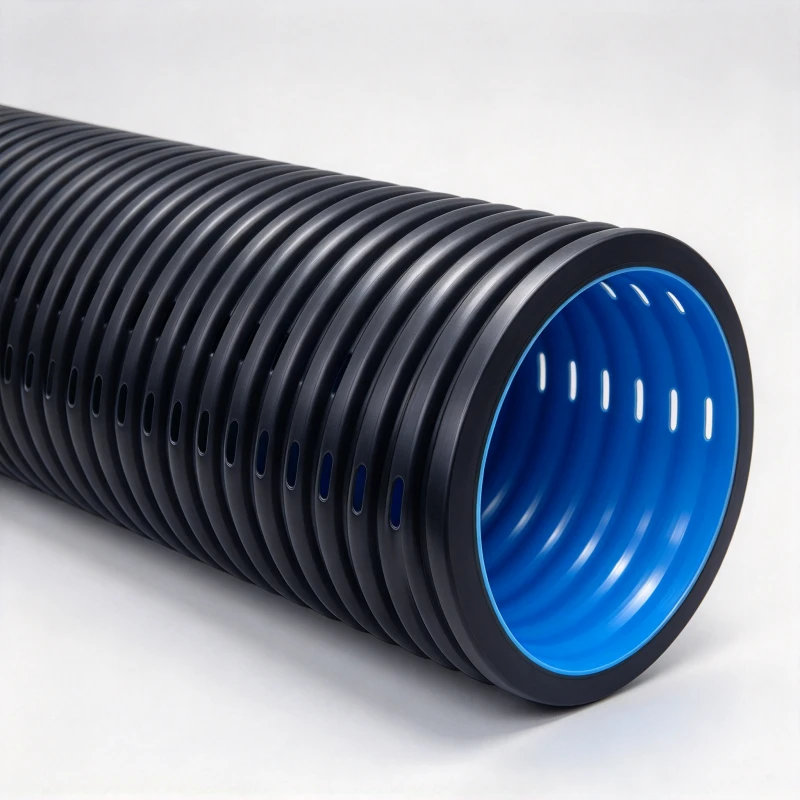
PE pipe: various colors, black is the most common, water supply pipe is generally blue, gas pipe is yellow, sewage pipe may be green or black with blue stripes.
6. Flexibility and construction method
MPP pipe: compared with PE pipe, it has stronger rigidity and lower toughness, suitable for non-excavation jacking construction, which can reduce damage to roads and environment.
PE pipe: better flexibility, suitable for underground construction, and has stronger adaptability in uneven settlement environment.
7. Corrosion resistance
MPP pipe: good corrosion resistance, can resist general acid and alkali environment, but the weather resistance is slightly inferior to PE pipe.
PE pipe: It has stronger corrosion resistance and can be used for long-term transportation of chemical fluids without additional anti-corrosion treatment.
8. Construction cost
MPP pipe: Due to the use of modified polypropylene material, the cost is relatively high and it is suitable for specific power projects.
PE pipe: Compared with MPP pipe, the material cost and construction cost are lower, and it is more economical and suitable for water supply, gas, sewage and other fields.
| Feature | MPP Power Pipe | PE Pipe |
| Material | Modified polypropylene (MPP) | High-density polyethylene (HDPE) |
| Main Applications | Power cable protection, power communication, cable threading projects, especially trenchless (jacking) and open-cut projects | Fluid transportation (water supply, sewage, gas, irrigation, etc.) |
| High-Temperature Resistance | Can be used for a long time in environments up to 70℃ | Generally does not exceed 60℃; may soften at high temperatures |
| Connection Method | Hot-melt butt joint, flared socket connection | Hot-melt butt joint or electric fusion connection (gas pipelines mostly use electric fusion) |
| Color | Usually orange for easy identification in construction | Various colors: black (most common), blue (water supply), yellow (gas), green/black with blue stripes (sewage) |
| Flexibility & Construction | More rigid, lower flexibility; suitable for trenchless jacking construction to minimize road/environmental damage | More flexible, suitable for underground construction and environments with uneven settlement |
| Corrosion Resistance | Resistant to general acid and alkali environments but slightly lower weather resistance than PE pipe | Strong corrosion resistance, suitable for long-term chemical fluid transportation without additional anti-corrosion treatment |
| Construction Cost | Higher cost due to modified polypropylene material, suitable for specific power projects | More economical in terms of material and construction cost, widely used in water supply, gas, sewage, and other fields |
If it is power cable pipe, especially non-excavation construction (such as jacking project), MPP pipe is a better choice.
If it is fluid transportation (water supply, gas, sewage), PE pipe is more suitable, especially in the environment that requires corrosion resistance and anti-sedimentation.
916.webp)
204.webp)
659.webp)
185.webp)
312.webp)
849.webp)
587.webp)
767.webp)