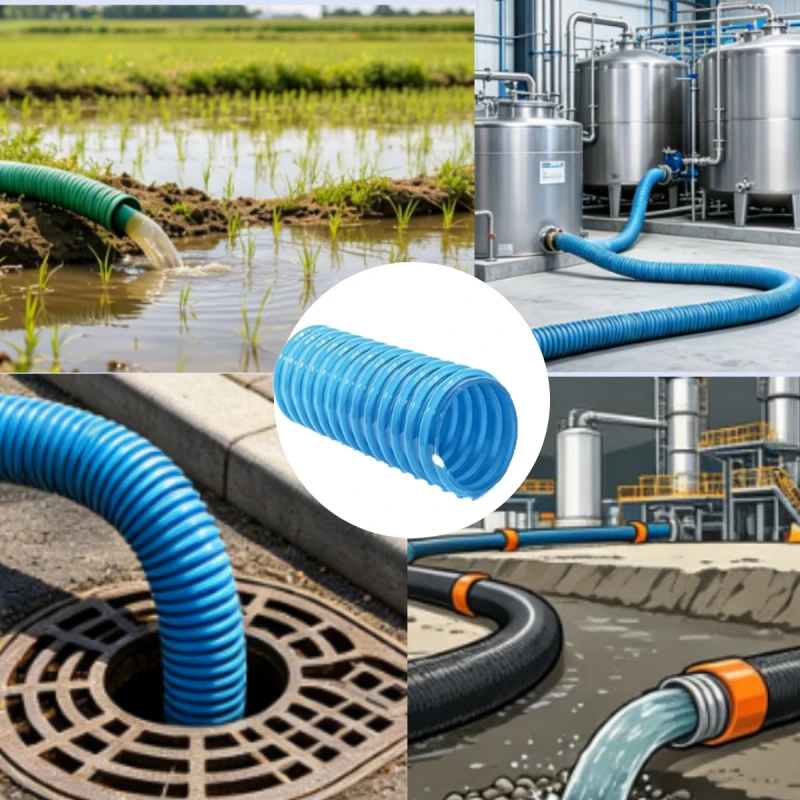
A suction hose might look like a simple flexible tube, but it plays a critical role across countless industries—from farming fields to deep mines and bustling construction sites. If you’ve ever wondered, “What is a suction hose used for?” you’re not alone. Many people assume it’s just another type of garden hose, but in reality, suction hoses are engineered specifically to handle negative pressure (vacuum), allowing them to draw liquids, slurries, or even semi-solids from one location to another without collapsing.
In this comprehensive guide, we’ll break down everything you need to know about suction hoses: how they work, where they’re used, how to choose the right material, and how leading manufacturers—including Haili—compare in today’s competitive global market.
How Does a Suction Hose Work?
Unlike standard delivery hoses that push fluids under positive pressure, a suction hose operates under vacuum conditions. This means it must resist collapsing when liquid is pulled through it by a pump.
Key design features include:
Reinforced structure: Most suction hoses contain a rigid spiral wire (usually steel or PVC) embedded in the wall to maintain shape under vacuum.
Smooth interior: Minimizes friction and prevents clogging during transfer.
Flexible yet robust: Balances ease of handling with resistance to kinking, abrasion, and chemical exposure.
Without proper reinforcement, a regular hose would flatten the moment suction begins—rendering it useless. That’s why material selection and structural integrity are non-negotiable.
Key Applications of Suction Hoses Across Industries
Suction hoses are indispensable wherever liquids or semi-fluids need to be moved efficiently and reliably. Below are the most common use cases:
1. Agriculture & Irrigation
Farmers rely on suction hoses to:
Draw water from ponds, rivers, or reservoirs for crop irrigation.
Transfer liquid fertilizers or pesticides from storage tanks to sprayers.
Drain flooded fields after heavy rainfall.
PVC suction hoses are especially popular here due to their lightweight nature, corrosion resistance, and cost-effectiveness.
2. Construction & Dewatering
On construction sites, managing groundwater is critical. Suction hoses are used to:
Remove water from excavation pits, tunnels, and basements.
Support concrete pumping operations by feeding water or slurry to mixers.
Clean sediment from drainage systems during infrastructure projects.
These applications often involve abrasive particles, so durability and abrasion resistance are key.
3. Mining & Slurry Transport
In mining operations, suction hoses handle some of the toughest conditions:
Transferring mineral slurries (a mix of ore and water) from extraction points to processing plants.
Dewatering open-pit mines or underground shafts.
Removing tailings and waste materials.
Here, hoses must withstand high abrasion, fluctuating pressures, and harsh chemicals—making reinforced rubber or specialized PVC formulations essential.
4. Industrial Fluid Handling
Factories and processing plants use suction hoses for:
Moving wastewater, chemicals, or cooling fluids between tanks.
Emptying drums or IBC containers safely.
Supporting food-grade or pharmaceutical transfer (with certified materials like FDA-compliant PVC).
In these settings, chemical compatibility and hygiene standards are paramount.
5. Municipal & Environmental Services
Cities depend on suction hoses for:
Sewage and stormwater management.
Cleaning catch basins and manholes.
Emergency flood response and drainage.
Reliability and long service life reduce maintenance costs and downtime.
PVC vs. Rubber vs. Reinforced Hoses: Which Material Is Right for You?
Not all suction hoses are created equal. The choice of material dramatically affects performance, lifespan, and cost. Below is a detailed comparison to help you decide:
| Property | PVC Suction Hose | Rubber Suction Hose | Reinforced Composite Hose |
|---|---|---|---|
| Weight | Lightweight (easy to handle) | Heavy (requires more labor) | Moderate to heavy |
| Flexibility | Good at room temperature; stiffens below -10°C | Excellent across wide temp range | Varies by design |
| Temperature Range | -10°C to +60°C (14°F to 140°F) | -40°C to +100°C (-40°F to 212°F) | Up to +120°C (248°F) |
| Max Working Pressure | Up to 10 bar (145 psi) | Up to 25 bar (360 psi) | Up to 30+ bar (435+ psi) |
| Chemical Resistance | Resists acids, alkalis, salts, and many solvents | Good, but degrades with oils and ozone | Excellent with specialized liners |
| Abrasion Resistance | Moderate | Excellent | Very high |
| Cost | Low to moderate | High | Highest |
| Typical Use Cases | Water transfer, irrigation, light industrial | Mining, heavy construction, oil/gas | High-pressure hydraulic, extreme environments |
Why Choose PVC?
At Haili, we focus on high-quality PVC suction hoses because they offer the best balance of performance and affordability for most urban infrastructure and agricultural applications. Our PVC formulations are enhanced with UV stabilizers, anti-kink technology, and embedded steel spirals for superior vacuum resistance—without the weight or cost of rubber alternatives.
If you are interested in Haili's high-quality PVC suction hoses, you can check out these two products:
PVC Suction Fiber Composite Hose
Common Mistakes When Using Suction Hoses (and How to Avoid Them)
Even high-quality suction hoses can fail if used incorrectly. Many users unknowingly make simple but costly errors that reduce efficiency, damage pumps, or cause premature hose failure. Here are the most frequent mistakes—and how to prevent them:
1. Using non-reinforced hoses for suction applications
Standard garden or delivery hoses lack internal spiral reinforcement. Under vacuum, they collapse instantly. Always choose a hose explicitly labeled as “suction-rated” with a rigid wire coil (steel or rigid PVC) embedded in the wall.
2. Exceeding the maximum suction lift
Water cannot be lifted more than approximately 8 meters (26 feet) at sea level due to atmospheric pressure limits—even with a perfect pump. Attempting longer vertical lifts results in cavitation, air ingestion, and pump damage. If you need greater lift, consider placing the pump closer to the source or using a submersible pump instead.
3. Kinking or sharp bending during operation
Forcing a hose into tight bends restricts flow and creates weak points where the spiral can deform. Always maintain a bend radius of at least 5–7 times the hose’s outer diameter. For example, a 2-inch hose should never be bent tighter than a 10–14 inch curve.
4. Ignoring air leaks at connections
Even a tiny leak in couplings or clamps introduces air into the system, breaking the vacuum seal. Always use compatible, high-quality fittings and secure them with proper hose clamps. Test the system by running it briefly and listening for hissing sounds.
5. Operating outside temperature limits
PVC becomes brittle below -10°C (14°F) and softens above 60°C (140°F). Using it in freezing conditions can cause cracks; in hot environments, it may deform under vacuum. Always verify your hose’s rated temperature range matches your operating environment.
By avoiding these pitfalls, you’ll maximize performance, extend service life, and protect your pumping equipment.
How to Choose the Right Diameter and Length for Your Suction Hose
Selecting the correct size isn’t just about compatibility—it directly impacts flow rate, energy consumption, and system efficiency. Here’s how to choose wisely:
Diameter: Match Flow Rate to Inner Bore
The larger the inner diameter (ID), the higher the volume of liquid you can move with less friction loss. As a general rule:
| Required Flow Rate | Recommended Minimum ID |
|---|---|
| Up to 100 L/min (26 GPM) | 1 inch (25 mm) |
| 100–250 L/min (26–66 GPM) | 1.5 inch (40 mm) |
| 250–500 L/min (66–132 GPM) | 2 inch (50 mm) |
| 500–1,000 L/min (132–264 GPM) | 3 inch (75 mm) |
| Over 1,000 L/min | 4 inch (100 mm) or larger |
Undersized hoses create excessive backpressure, forcing pumps to work harder and increasing energy costs.
Length: Shorter Is Usually Better
Every meter of hose adds friction loss. For suction lines, keep the length as short as possible—ideally under 10 meters (33 feet). If longer runs are unavoidable:
Increase the diameter by one size to compensate.
Ensure the hose lies flat with no unnecessary loops or elevation changes.
Custom vs. Standard Lengths
Shandong Haili offers both standard rolls (e.g., 20m, 50m) and custom-cut lengths. For permanent installations (like municipal drainage), custom lengths reduce waste and connection points. For temporary uses (e.g., farm irrigation), standard coils offer flexibility and lower upfront cost.
Pro tip: Always add 10–15% extra length to account for routing around obstacles or future repositioning.
Maintenance & Storage Tips to Extend Suction Hose Life
A well-maintained suction hose can last 5–10 years—even in demanding conditions. Follow these best practices to protect your investment:
After Each Use:
Drain completely: Residual water can freeze in cold weather or promote microbial growth. Hang vertically or coil loosely to allow full drainage.
Rinse thoroughly: Flush with clean water, especially after handling fertilizers, chemicals, or slurry. For stubborn residues, use mild detergent—never harsh solvents.
Inspect regularly: Check for cracks, abrasions, spiral deformation, or loose fittings. Replace damaged sections immediately.
During Storage:
Store indoors or under cover: UV radiation degrades PVC over time. If outdoor storage is unavoidable, use opaque tarps—not clear plastic, which intensifies sun exposure.
Coil properly: Use large-diameter loops (minimum 10x hose OD). Never fold sharply or hang by one end, as this stresses the spiral wire.
Keep away from ozone sources: Electric motors, welding equipment, and high-voltage devices emit ozone, which accelerates rubber and some polymer aging.
Winter Care:
In freezing climates, store hoses in a heated space or ensure they’re 100% dry before coiling. Even small amounts of trapped moisture can expand and crack the wall when frozen.
At Shandong Haili, our PVC suction hoses are formulated with enhanced UV stabilizers and anti-aging additives—but proper care remains essential for maximum longevity.
Environmental & Safety Considerations: Are PVC Suction Hoses Safe?
Concerns about PVC’s environmental impact are common—but modern formulations have evolved significantly. Here’s what you need to know:
Safety in Use
Today’s industrial-grade PVC suction hoses—like those from Haili—are free from phthalates, lead, and cadmium. We use calcium-zinc (Ca/Zn) or organotin stabilizers that comply with:
RoHS (Restriction of Hazardous Substances)
REACH (EU chemical safety regulations)
FDA 21 CFR (for potable water applications, where certified)
When used within temperature and chemical compatibility limits, PVC hoses pose no health risk to operators or the environment.
Environmental Impact
Compared to rubber or metal alternatives, PVC offers compelling sustainability advantages:
Lower production energy: Manufacturing PVC requires ~40% less energy than rubber.
Lighter weight: Reduces fuel consumption during transport.
Recyclability: Clean PVC scrap can be reground and reused in non-critical products. Haili supports closed-loop recycling initiatives with partners across Asia.
End-of-Life Management
While not biodegradable, PVC is mechanically recyclable. We encourage customers to return worn hoses through authorized collection points for responsible processing.
At Haili, sustainability isn’t an afterthought—it’s built into our R&D. Our goal is to deliver high-performance hoses that also align with global ESG (Environmental, Social, and Governance) standards.
Top Global Suction Hose Manufacturers in 2026: Competitive Landscape
The global suction hose market is projected to reach $4.2 billion by 2026, driven by infrastructure development in Asia, stricter environmental regulations, and demand for durable, eco-friendly materials.
Leading International Brands
Gates Corporation (USA): Known for high-pressure hydraulic and industrial hoses; premium pricing.
Continental AG (Germany): Offers advanced rubber compounds with exceptional temperature and abrasion resistance.
Trelleborg AB (Sweden): Specializes in marine, mining, and food-grade hoses with global certifications.
Semperit AG (Austria): Strong in European construction and agriculture markets.
These companies dominate the high-end segment but often come with longer lead times and higher costs—especially for custom orders.
The Rise of Chinese Innovators: Shandong Haili’s Position
While Western brands hold strong brand recognition, Chinese manufacturers like Shandong Haili Pipeline Technology are rapidly gaining ground by offering:
Competitive pricing (30–50% lower than European equivalents)
Faster lead times (2–4 weeks vs. 8–12 weeks)
Customization capabilities (diameter, length, fittings, color)
International compliance (ISO, CE, RoHS, and ASTM standards)
Haili’s R&D center—certified as a national-level CNAS laboratory—has developed over 32 patents, including innovations in PVC polymer blending that enhance flexibility at low temperatures and extend service life in UV-exposed environments.
Unlike generic suppliers, Haili integrates urban infrastructure expertise into every product. Our suction hoses are designed not just to move water, but to support sustainable city development—aligning with global trends toward energy-efficient, environmentally friendly solutions.
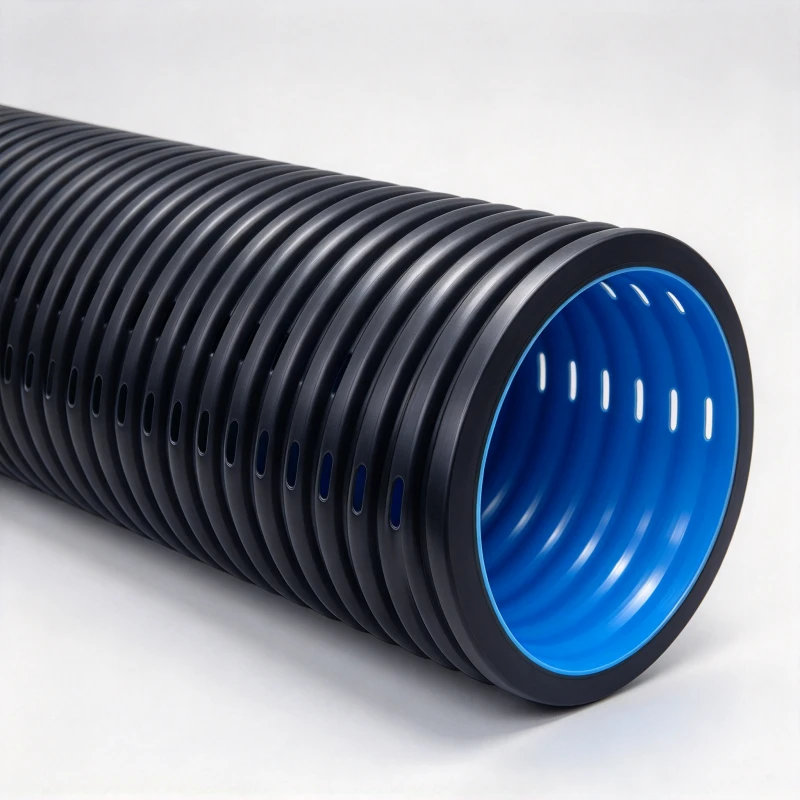
In addition to PVC suction hoses, we also offer HDPE pipes. If you are interested, please see the following products:
Steel wire reinforced thermoplastic (PE) pipe SRTP pipe
Why Choose Shandong Haili for Your Suction Hose Needs?
When you partner with Haili, you’re not just buying a hose—you’re gaining access to a full-service pipeline solutions provider. Here’s what sets us apart:
✅ End-to-End Capabilities: From raw material R&D to underground pipe network design, we control every step of the process—ensuring consistency and quality.
✅ Advanced Manufacturing: 24+ automated production lines with real-time quality monitoring guarantee uniform wall thickness, precise spiral embedding, and leak-free performance.
✅ Urban Infrastructure Focus: Unlike general-purpose hose makers, we specialize in products for rainwater harvesting, sewage discharge, water reuse, and gas distribution—core needs of modern cities.
✅ Global Compliance: Our PVC suction hoses meet international standards for potable water, chemical resistance, and mechanical strength, making them suitable for export to Europe, North America, and Southeast Asia.
✅ Responsive Service: With dedicated technical support and rapid prototyping, we can adapt to your project’s unique requirements—whether you need 100 meters or 100 kilometers.
Final Thoughts: Choosing the Right Suction Hose Matters
Understanding “what is a suction hose used for” is just the first step. The real value lies in selecting the right type, material, and manufacturer for your specific application. Whether you’re irrigating crops, dewatering a mine, or building a smart city’s drainage system, the performance of your suction hose directly impacts efficiency, safety, and total cost of ownership.
At Shandong Haili Pipeline Technology Co., Ltd, we believe that high-quality PVC suction hoses—backed by innovation, rigorous testing, and infrastructure-focused engineering—offer the optimal solution for most industrial and municipal applications in 2026 and beyond.
If you’re ready to upgrade your fluid transfer system with a reliable, cost-effective, and future-ready solution, contact Haili today. Let our team of international experts help you design the perfect hose for your project—because when it comes to moving liquids under vacuum, there’s no room for compromise.
916.webp)
204.webp)
659.webp)
185.webp)
312.webp)
849.webp)
587.webp)
767.webp)