260.webp)
683.webp)
421.webp)
818.webp)
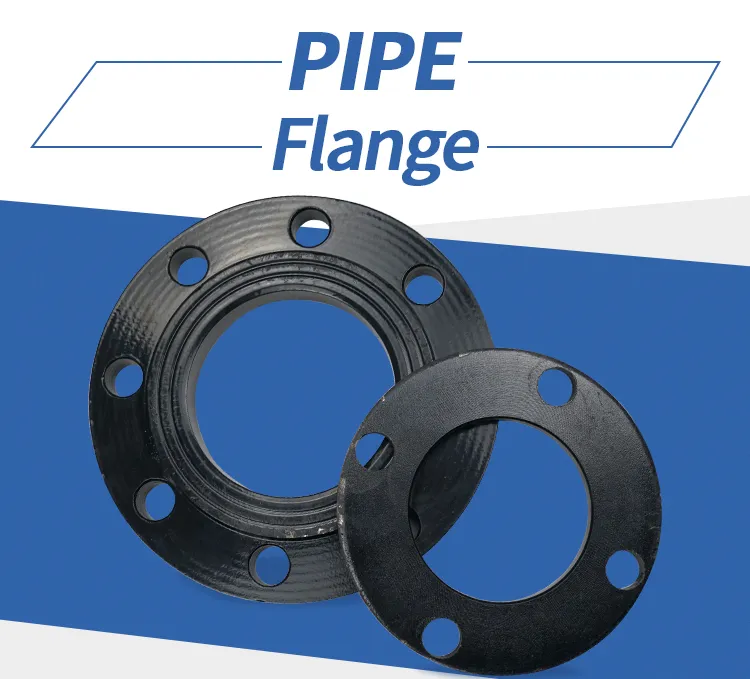
PVC loose flange pipe fittings—commonly referred to as Van Stone flanges—are a specialized class of flanged connections that combine the chemical resistance and economy of PVC with the serviceability benefits of a bolted joint. Unlike one-piece PVC flanges that require the entire pipe assembly to rotate for bolt hole alignment, the loose flange design decouples the pipe connection from the flange joint, enabling free rotation of the backing ring for simplified installation and maintenance.
The India PVC and CPVC pipe fittings market generated USD 898.8 million in revenue in 2024 and is projected to reach USD 1,559.6 million by 2033, growing at a CAGR of 6.4%. Within this expanding market, flanged PVC fittings serve critical roles in chemical processing, water treatment, irrigation, and industrial fluid handling—applications where corrosion resistance, serviceability, and cost efficiency are paramount.
What Are PVC Loose Flange Pipe Fittings?
A PVC loose flange fitting is a two-piece assembly consisting of a stub end and a separate, free-rotating backing ring. The stub end—a short hub with a solvent-weld slip socket—cements permanently to the PVC pipe. The backing ring slides over the stub end hub and floats freely against the flared stub end face. Because the ring is never bonded to the stub, it continues to rotate even after the solvent cement joint has fully cured.
This design is the PVC equivalent of a metallic lap joint flange and is commonly called a Van Stone flange in industry terminology. The stub end face constitutes the only wetted surface in contact with the process fluid, providing full PVC chemical resistance. The backing ring serves a purely mechanical function—transferring bolt load to the stub end face to compress the gasket—and can be replaced independently if damaged without cutting the cemented pipe joint.
Key Specifications
Material: Rigid PVC Type I, Grade I (Cell Classification 12454) per ASTM D2467
Schedule: Typically Schedule 80 for pressure service; Schedule 40 for lower-pressure applications
Size Range: 1/2" to 12" and larger; metric sizes from DN 15 to DN 400
Flange Drilling: ANSI/ASME B16.5 Class 150 bolt circle pattern
Pressure Rating: Governed by ANSI Class 150 rating (150 PSI at 73 °F), not the Schedule 80 pipe wall rating
Temperature Range: Up to 140 °F (60 °C) continuous service; pressure derated above 73 °F
Certifications: NSF/ANSI 61 for potable water contact where listed
Product Configurations
PVC loose flange assemblies are available in several end connection types:
Slip (socket): Female socket for solvent cementing directly to pipe OD. Most common configuration for field installations.
Spigot: Male end matching pipe OD, typically connected via a double-female coupling or hub.
Threaded: Female NPT or BSPT threads for direct connection to threaded pipe ends.
The complete assembly typically includes the stub end, backing ring, full-face gasket (EPDM, PTFE, or FKM), and bolt set.
How PVC Loose Flange Fittings Work: Design Principle and Assembly
The Rotational Advantage
The defining feature of the Van Stone design is its rotational freedom. In a one-piece PVC flange, the bolt holes are fixed relative to the pipe—meaning the entire pipe and fitting assembly must be rotated during solvent cementing to align bolt holes with the mating flange. The narrow working time of solvent cement (typically 30–60 seconds) makes this a significant installation challenge, particularly in confined spaces or on large-diameter pipe.
With a loose flange, the stub end is cemented to the pipe without regard to bolt hole orientation. The backing ring—which slides freely over the stub hub—can be rotated at any time to align its bolt holes with the mating flange. This decoupling of pipe positioning from bolt alignment eliminates a common source of installation error and rework.
Assembly Procedure
Correct assembly is critical to joint integrity. Manufacturer guidelines and industry best practices specify the following sequence:
1. Stub End Installation: Before cementing, slide the backing ring onto the pipe, oriented correctly (flat face toward the stub end). Apply primer and solvent cement to both the pipe end and the stub socket, then insert the pipe fully into the stub socket with a quarter-turn motion. Hold in place for 30 seconds. Ensure the stub end face is flat and perpendicular to the pipe axis.
2. Cure Period: Allow the solvent cement joint to fully cure before applying bolt load. Cure time depends on pipe diameter, ambient temperature, and humidity—typically 1 to 24 hours. The flange joint must not be bolted until curing is complete.
3. Gasket Placement: Insert a full-face gasket of compatible material between the stub end face and the mating flange. EPDM is standard for water and mild chemical service; PTFE is specified for aggressive chemical environments.
4. Bolt Tightening: Insert bolts through aligned holes. Tighten progressively in a diagonal cross-pattern sequence, typically in 2–3 passes to final torque. Single-side tightening is strictly prohibited as it distorts the plastic flange face and causes uneven gasket compression.
5. Torque Values: PVC flange torque specifications are substantially lower than those for steel flanges. Typical values range from 10–15 ft-lbs for 1" flanges to 25–35 ft-lbs for 4" flanges. Overtorquing is the most common cause of PVC flange failure—excessive bolt load cracks the backing ring or deforms the stub face. Manufacturers recommend using a calibrated torque wrench rather than impact tools.
Sealing Principle
The bolted flange joint achieves sealing through controlled compression of a gasket between two flat faces. Bolt preload compresses the gasket, which deforms elastically to fill surface irregularities, creating a continuous barrier against leakage. For PVC flanges, soft gaskets (non-metallic, elastomeric, or PTFE) are mandatory—the low modulus of PVC cannot generate sufficient bolt load to seat metallic or spiral-wound gaskets without risk of flange damage.
Serviceability Advantage
A distinct operational benefit of the loose flange design is field replaceability. If a backing ring cracks due to overtightening, impact, or UV degradation, it can be replaced by unbolting the joint, sliding the damaged ring off the stub hub, and installing a new ring—all without cutting the pipe or disturbing the cemented stub end connection. Split replacement rings are available for this purpose, eliminating the need to disconnect the pipe from the stub end. This feature translates directly into reduced maintenance downtime and lower lifecycle costs.
Application Scenarios
Chemical Processing and Industrial Fluid Handling
PVC loose flange fittings are extensively deployed in chemical processing plants for handling acids, alkalis, salt solutions, and corrosive process fluids. PVC is inherently resistant to a wide range of chemicals and is not attacked by most inorganic acids, alkalis, and salt solutions. The flanged configuration enables periodic disconnection for equipment maintenance, inspection, and replacement—a requirement common in chemical process environments where pumps, valves, and inline instrumentation must be serviceable.
Water and Wastewater Treatment
In municipal and industrial water treatment facilities, PVC flanged connections are standard at pump suction and discharge points, filter vessel connections, chemical metering skids, and treatment equipment tie-ins. NSF/ANSI 61 certification on qualifying products ensures suitability for potable water contact. The corrosion-free performance of PVC eliminates the rust, scaling, and metal contamination concerns associated with iron flanges in water quality-sensitive applications.
Agricultural Irrigation Systems
Large-scale agricultural water management infrastructure—including pump stations, filtration banks, and fertigation injection systems—utilizes PVC flanged fittings for equipment connections that require periodic service. The rotational alignment feature of loose flanges is particularly valuable in field installations where equipment pads may not provide ideal alignment conditions.
Swimming Pools, Spas, and Aquatics
Commercial aquatic facilities specify PVC flanged connections at pump pads, filter systems, and chemical feeders where service accessibility is a design priority. PVC‘s resistance to chlorine and other pool chemicals, combined with the easy-disconnect capability of flanged joints, makes it the material of choice for these applications.
OEM Equipment Fabrication
Original equipment manufacturers integrate PVC loose flange fittings into skid-mounted chemical dosing systems, water purification assemblies, and process equipment packages. The flanged pipe-end connections simplify field installation and future serviceability for end users.
Competitive Analysis
PVC Loose Flange vs. One-Piece PVC Flange
| Criterion | Loose Flange (Van Stone) | One-Piece PVC Flange |
|---|---|---|
| Bolt hole alignment | Free rotation of backing ring; align after cementing | Must pre-align during solvent cementing |
| Installation in tight spaces | Excellent; stub can be cemented without regard to bolt orientation | Difficult; entire assembly must rotate |
| Damaged flange replacement | Replace backing ring without cutting pipe | Cut out fitting and re-cement; extended downtime |
| Material cost | Slightly higher (two components) | Slightly lower (single component) |
| Component complexity | Two parts to manage during installation | Single part |
The loose flange design is generally preferred wherever flanged connections must be made in fixed-pipe configurations, where future equipment replacement is anticipated, or where installation access is constrained. The one-piece design remains adequate for shop-fabricated spools and applications where bolt alignment can be set during assembly without space limitations.
PVC Loose Flange vs. HDPE Flange Adaptor
This comparison is among the most relevant for engineers selecting thermoplastic flanged connection systems:
HDPE flange adaptors provide superior chemical resistance, flexibility, and impact resistance, making them the better choice for buried service, seismic zones, and aggressive chemical environments. PVC loose flanges offer lower initial material cost and simpler installation (no fusion equipment), making them economical for above-ground industrial piping, water treatment plants, and applications where rigidity is acceptable or desired. The choice between the two should be based on a lifecycle cost analysis considering the specific operating environment, chemical exposure, and mechanical loading conditions.
PVC vs. CPVC Loose Flange Fittings
CPVC (chlorinated polyvinyl chloride) loose flange fittings offer higher temperature resistance—up to 200 °F (93 °C) versus PVC's 140 °F (60 °C)—due to additional chlorination of the polymer. CPVC is more flexible and less brittle than PVC, providing better resistance to impact and mechanical shock. Chemical resistance is similar, though CPVC offers improved performance with certain aggressive chemicals.
In India, the CPVC segment is the fastest-growing product category within the PVC and CPVC pipe fittings market, driven by adoption in hot water plumbing, industrial hot chemical transport, and fire sprinkler systems.
PVC vs. PVDF Flange Fittings
PVDF (polyvinylidene fluoride) represents the high-performance end of thermoplastic flange materials. It offers superior chemical resistance to most solvents, acids, and alkalis, along with higher temperature capability and exceptional purity characteristics. However, PVDF fittings cost 5–10 times more than equivalent PVC fittings. PVDF is specified only for the most demanding chemical environments where PVC and CPVC are inadequate—typically strong acids at elevated temperatures, high-purity water systems, and semiconductor processing applications.
PVC vs. Metal Flanges (Cast Iron, Carbon Steel)
PVC loose flanges offer decisive advantages over metal flanges in corrosive environments:
Corrosion immunity: PVC does not rust, scale, or require protective coatings. Metal flanges in corrosive service demand continuous coating maintenance or cathodic protection.
Weight: PVC flanges weigh approximately 1/6 as much as equivalent cast iron flanges, reducing structural support requirements and installation labor.
Cost: PVC flanges cost 40–60% less than ductile iron flanges of equivalent size for low to moderate pressure applications.
Metal flanges retain advantages where PVC is unsuitable: high-temperature service above 60 °C, high-pressure applications above 10 bar, fire-rated systems requiring non-combustible materials, and applications subject to high mechanical loads or impact.
Indian Market Landscape
Key Manufacturers and Suppliers
The Indian PVC pipe fittings market includes established domestic manufacturers and international competitors:
Finolex Industries: A 45-year-old Indian manufacturer of PVC pipes and fittings for agriculture, plumbing, and sanitation.
Prince Pipes and Fittings: Operates under the Trubore and Prince Piping Systems brands with strong presence across India.
Ashirvad Pipes (Aliaxis Group) : A major Indian manufacturer backed by the global Aliaxis piping systems group.
Astral Limited: Recognized for advanced manufacturing capabilities in plastic piping systems.
Supreme Industries: A diversified Indian pipe and fittings manufacturer with nationwide distribution.
Kisan Mouldings: Specializes in PVC pipes and fittings for water management, irrigation, and sewage applications.
International suppliers such as Georg Fischer (GF Harvel), NIBCO, IPEX, and FIP also supply the Indian market, typically for projects specifying international standards or requiring specialized product certifications.
Market Growth Drivers
Several factors are driving demand for PVC flange fittings in India:
Water infrastructure investment: Government programs including the Jal Jeevan Mission and AMRUT are expanding water distribution networks, creating demand for corrosion-resistant piping components.
Industrial growth: Expansion of chemical processing, pharmaceutical manufacturing, and food processing industries requires chemical-resistant fluid handling systems.
Irrigation modernization: Agricultural sector investment in pressurized irrigation systems increases demand for flanged connections at pump stations and filtration equipment.
Standards and Quality Considerations
Procurement professionals should verify conformance to applicable standards:
Indian Standards: IS 4985 for unplasticized PVC pipes for potable water supplies
International Standards: ASTM D2467 for Schedule 80 PVC pipe fittings, ASTM D1785 for PVC pipes, ISO 4422 for PVC-U piping systems
Potable Water: NSF/ANSI 61 certification for products in drinking water service
Flange Standards: ANSI/ASME B16.5 for flange dimensions and drilling patterns
Procurement Considerations
Material Verification: Specify rigid PVC Type I, Grade I (12454 cell classification) to ASTM D2467. Verify that material test certificates are available.
Schedule Selection: Schedule 80 is standard for pressurized industrial service. Schedule 40 is acceptable for low-pressure drainage and vent applications.
Gasket Compatibility: Select gasket material based on chemical exposure and temperature. EPDM for general water and mild chemical service; PTFE for aggressive chemical environments; FKM for specific chemical resistance requirements.
Torque Control: The most common cause of PVC flange leakage is overtightening. Specify calibrated torque wrenches and manufacturer torque values. Never use impact tools on PVC flanges.
UV Exposure: For outdoor installations, specify PVC formulations with UV stabilizers or provide protective coating/painting to prevent UV degradation.
Bolt Material: Stainless steel bolts (304 or 316 grade) are recommended for corrosion resistance. Carbon steel bolts must be coated or galvanized for non-corrosive environments only.
Conclusion
PVC loose flange pipe fittings occupy a well-defined niche in industrial and municipal piping systems: they provide the chemical resistance and economy of PVC in a flanged configuration that permits easy disassembly, maintenance access, and bolt hole alignment without requiring pipe rotation. The Van Stone design's rotational freedom and field-replaceable backing ring deliver tangible installation and lifecycle advantages over one-piece PVC flanges.
While HDPE and PVDF alternatives offer superior performance in aggressive chemical or high-temperature environments, PVC loose flanges remain the most cost-effective choice for a broad range of water treatment, chemical handling, irrigation, and general industrial applications. Understanding the material limitations—particularly the 60 °C temperature ceiling and susceptibility to aromatic solvents—is essential for correct specification.
For engineers and procurement professionals in the Indian market, where the PVC fittings sector is on a sustained growth trajectory toward USD 1.56 billion by 2033, PVC loose flange fittings represent a mature, well-standardized, and economically attractive solution for serviceable thermoplastic piping connections.
272.webp)

916.webp)
204.webp)
659.webp)
185.webp)