368.webp)
265.webp)
838.webp)
336.webp)
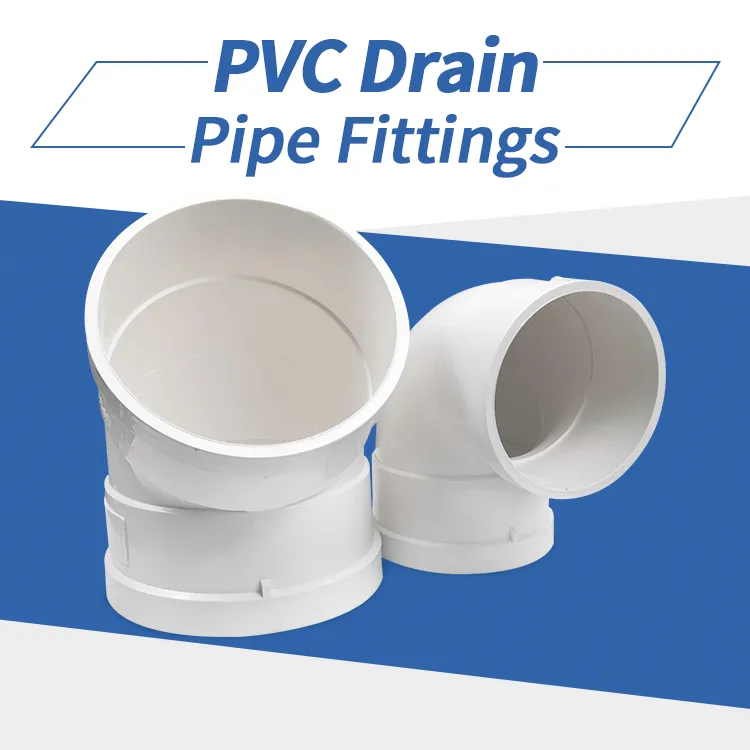
PVC pipe systems have become the preferred choice for water supply, drainage, irrigation, industrial fluid transfer, and plumbing projects worldwide. Among all PVC fittings, the 90° Elbow PVC Pipe Fittings Plumber Adapter is one of the most frequently used components because it allows pipelines to change direction efficiently while maintaining reliable flow performance.
Whether used in residential plumbing, agricultural irrigation, municipal water systems, or industrial piping networks, a high-quality 90-degree PVC elbow fitting plays a critical role in ensuring leak-free operation and long-term durability.
This guide provides a comprehensive overview of 90° elbow PVC pipe fittings, including their specifications, types, materials, applications, advantages, installation methods, and comparison with alternative pipe fittings.
What Is a 90° Elbow PVC Pipe Fittings Plumber Adapter?
A 90° elbow PVC pipe fitting is a connector designed to change the direction of fluid flow by 90 degrees within a piping system.
The fitting is manufactured from Polyvinyl Chloride (PVC), a thermoplastic material known for:
Corrosion resistance
Lightweight construction
Chemical resistance
Easy installation
Long service life
The fitting connects two PVC pipes positioned at a right angle, allowing water, air, chemicals, or other fluids to travel around corners without requiring pipe bending.
How Does a 90° PVC Elbow Work?
The elbow fitting redirects the flow path inside a piping system.
Instead of forcing installers to bend rigid PVC pipes, the fitting provides a smooth internal passage that changes the flow direction while minimizing turbulence and pressure loss.
Key functions include:
Directional change
System layout optimization
Space-saving installation
Improved pipeline flexibility
Simplified maintenance
Main Types of 90° PVC Elbow Fittings
Standard 90° PVC Elbow
The most common configuration.
Features:
Compact design
Sharp 90-degree turn
Suitable for residential plumbing
Applications:
Water supply systems
Drainage networks
Irrigation systems
Long Radius 90° PVC Elbow
Designed with a larger curvature radius.
Advantages:
Reduced pressure loss
Improved flow efficiency
Lower turbulence
Applications:
Industrial fluid transfer
High-flow systems
Pump discharge lines
Threaded 90° PVC Elbow
Features internal or external threads.
Benefits:
Easy assembly
Removable connection
Simplified maintenance
Applications:
Plumbing repairs
Equipment connections
Water filtration systems
Socket 90° PVC Elbow
Uses solvent cement welding.
Advantages:
Permanent connection
Excellent sealing performance
Low leakage risk
Applications:
Residential plumbing
Municipal pipelines
Irrigation systems
90° Elbow PVC Pipe Fittings Specifications
The specifications vary depending on pressure requirements and pipe standards.
Standard Size Chart
| Nominal Size | Metric Size | Outer Diameter |
|---|---|---|
| 1/2" | 20 mm | 20 mm |
| 3/4" | 25 mm | 25 mm |
| 1" | 32 mm | 32 mm |
| 1-1/4" | 40 mm | 40 mm |
| 1-1/2" | 50 mm | 50 mm |
| 2" | 63 mm | 63 mm |
| 3" | 90 mm | 90 mm |
| 4" | 110 mm | 110 mm |
| 6" | 160 mm | 160 mm |
| 8" | 225 mm | 225 mm |
Pressure Ratings
| Pressure Class | Working Pressure |
| SCH 40 | Up to 150 PSI |
| SCH 80 | Up to 280 PSI |
| PN10 | 10 Bar |
| PN16 | 16 Bar |
| PN20 | 20 Bar |
Temperature Range
Typical operating temperature:
0°C to 60°C
32°F to 140°F
Special CPVC versions can handle higher temperatures.
Material Composition
High-quality PVC elbow fittings are typically manufactured from:
| Material | Percentage |
| PVC Resin | 85-90% |
| Stabilizers | 2-5% |
| Impact Modifiers | 3-5% |
| Lubricants | 1-2% |
| Processing Additives | 1-2% |
Premium formulations improve:
Impact resistance
UV resistance
Chemical durability
Service life
Applications of 90° PVC Elbow Fittings
Residential Plumbing
Common uses include:
Kitchen water lines
Bathroom plumbing
Laundry systems
Water distribution networks
Agricultural Irrigation
Widely used in:
Drip irrigation systems
Sprinkler systems
Greenhouse watering systems
Agricultural water transfer
Industrial Fluid Handling
Suitable for:
Chemical transfer
Process water systems
Cooling water pipelines
Manufacturing facilities
Municipal Water Projects
Used in:
Drinking water distribution
Sewage treatment plants
Stormwater drainage systems
Swimming Pools and Water Parks
Advantages include:
Corrosion resistance
Chlorine resistance
Easy maintenance
Aquaculture Systems
Applications include:
Fish farms
Aquariums
Recirculating water systems
Advantages of PVC 90° Elbow Fittings
Excellent Corrosion Resistance
Unlike metal fittings, PVC does not rust or corrode.
Benefits:
Longer lifespan
Lower maintenance costs
Improved reliability
Lightweight Design
PVC fittings weigh significantly less than:
Steel fittings
Brass fittings
Cast iron fittings
Advantages:
Easier transportation
Faster installation
Reduced labor costs
Chemical Resistance
PVC performs well against:
Acids
Alkalis
Fertilizers
Industrial chemicals
Affordable Cost
PVC elbows typically cost:
30%-70% less than comparable metal fittings.
Long Service Life
Under normal conditions, quality PVC fittings can last:
25-50 years
depending on operating environment.
Installation Guide
Step 1: Measure Pipe Length
Accurately measure the required pipe sections.
Step 2: Cut Pipe
Use a PVC pipe cutter or saw.
Ensure:
Clean edges
Square cuts
Step 3: Clean Surfaces
Remove:
Dust
Dirt
Grease
Step 4: Apply Primer
Use PVC primer according to local plumbing standards.
Step 5: Apply Solvent Cement
Evenly coat:
Pipe end
Fitting socket
Step 6: Assemble Quickly
Insert the pipe fully into the fitting.
Hold for:
20-30 seconds
Step 7: Allow Proper Curing
Typical curing time:
2-24 hours
depending on temperature and pressure requirements.
Common Problems and Solutions
Leakage
Possible causes:
Improper cement application
Incomplete insertion
Damaged fitting
Solution:
Reinstall using proper procedures
Cracking
Possible causes:
Excessive pressure
Mechanical impact
UV degradation
Solution:
Replace damaged fitting
Verify pressure ratings
Reduced Flow
Possible causes:
Debris accumulation
Undersized fitting
Solution:
Clean system
Upgrade pipe size if necessary
Competitive Comparison
PVC Elbow vs Metal Elbow
| Feature | PVC Elbow | Metal Elbow |
| Weight | Very Light | Heavy |
| Corrosion Resistance | Excellent | Moderate |
| Cost | Low | High |
| Installation | Easy | Complex |
| Maintenance | Low | Moderate |
| Service Life | Long | Long |
PVC elbows are generally preferred for water and chemical systems due to their lower cost and corrosion resistance.
PVC Elbow vs CPVC Elbow
| Feature | PVC | CPVC |
| Temperature Resistance | Moderate | High |
| Cost | Lower | Higher |
| Cold Water Systems | Excellent | Excellent |
| Hot Water Systems | Limited | Excellent |
CPVC is better for hot water applications, while PVC remains the most economical solution for standard plumbing.
PVC Elbow vs PPR Elbow
| Feature | PVC | PPR |
| Cost | Lower | Higher |
| Installation | Solvent Cement | Heat Fusion |
| Corrosion Resistance | Excellent | Excellent |
| Hot Water Capability | Limited | Excellent |
PVC is generally preferred for cold water, drainage, and irrigation applications.
PVC Elbow vs HDPE Elbow
| Feature | PVC | HDPE |
| Rigidity | High | Flexible |
| Cost | Lower | Higher |
| Installation | Easy | Specialized Equipment |
| Pressure Resistance | Good | Excellent |
HDPE is commonly selected for large infrastructure projects, while PVC dominates residential and commercial plumbing systems.
How to Choose the Right 90° PVC Elbow Fitting
When selecting a fitting, consider:
Pipe Size
Ensure matching diameter.
Pressure Rating
Choose SCH40, SCH80, PN10, PN16, or PN20 based on system pressure.
Connection Type
Options include:
Socket
Threaded
Flanged
Application Environment
Consider:
Chemical exposure
UV exposure
Temperature requirements
Certification Requirements
Look for:
ISO certification
NSF certification
ASTM compliance
DIN standards
Conclusion
The 90° Elbow PVC Pipe Fittings Plumber Adapter is one of the most essential components in modern plumbing and fluid handling systems. Its ability to efficiently redirect flow, combined with excellent corrosion resistance, lightweight construction, affordability, and long service life, makes it the preferred choice for residential, agricultural, municipal, and industrial applications.
Compared with metal, CPVC, PPR, and HDPE alternatives, PVC elbow fittings provide an outstanding balance of cost-effectiveness, durability, and installation convenience. By selecting the appropriate size, pressure rating, and connection type, users can build reliable piping systems that deliver decades of dependable performance with minimal maintenance.
916.webp)
204.webp)
659.webp)
185.webp)