607.webp)
449.webp)
791.webp)
379.webp)
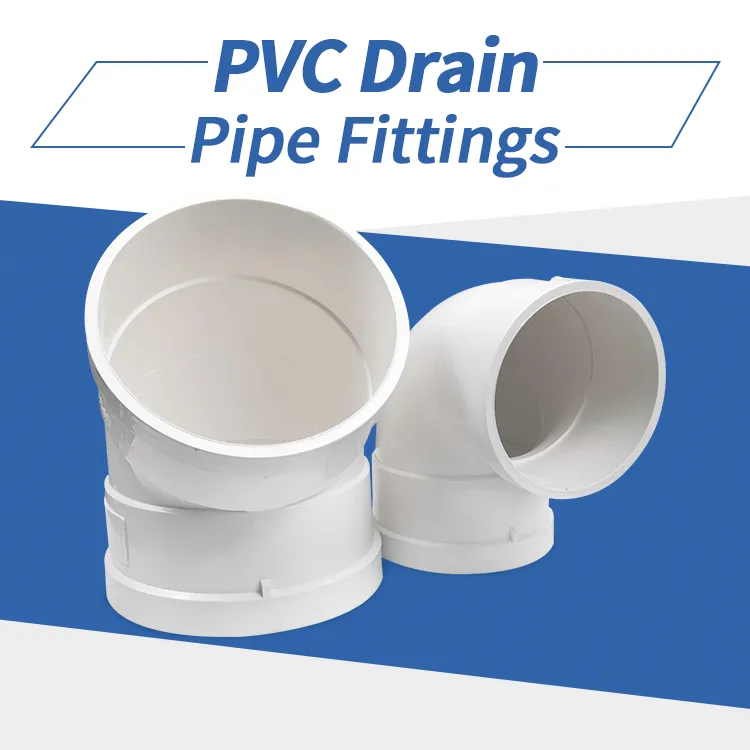
Modern drainage systems depend on high-quality PVC pipe fittings to ensure smooth wastewater flow, efficient installation, and long-term reliability. Among the most commonly used drainage fittings, the PVC Drain 45° Elbow Pipe Fitting plays a crucial role in changing the direction of drainage pipelines while maintaining optimal flow performance.
Unlike a 90-degree elbow, which creates a sharp directional change, a 45-degree elbow provides a smoother transition, reducing turbulence and minimizing the risk of blockages. This makes it an essential component in residential, commercial, industrial, and municipal drainage systems.
In this comprehensive guide, we will explore what PVC Drain 45° Elbow Pipe Fittings are, their specifications, applications, manufacturing process, advantages, and how they compare with competing fitting materials.
What Is a PVC Drain 45° Elbow Pipe Fitting?
A PVC Drain 45° Elbow Pipe Fitting is a plumbing connector designed to change the direction of a drainage pipeline by 45 degrees. Manufactured from Polyvinyl Chloride (PVC), the fitting allows wastewater, rainwater, or drainage fluids to flow efficiently through a piping system while avoiding abrupt directional changes.
The fitting is commonly used in:
Residential drainage systems
Toilet waste pipelines
Bathroom drainage networks
Roof rainwater drainage
Commercial plumbing systems
Industrial wastewater systems
Because the angle is gentler than a 90° elbow, the fitting helps reduce pressure loss and improves flow efficiency.
449250952.webp "pvc-pipe-fittings (1)449250952.webp")
Understanding PVC Material
PVC (Polyvinyl Chloride) is one of the world's most widely used thermoplastic materials.
For drainage systems, PVC offers several important advantages:
Lightweight construction
Excellent corrosion resistance
Smooth internal surfaces
Long service life
Low manufacturing cost
Easy installation
PVC drain fittings are widely accepted in modern construction because they provide reliable performance at an affordable price.
Product Specifications
Standard Specification Table
| Parameter | Specification |
|---|---|
| Product Name | PVC Drain 45° Elbow Pipe Fitting |
| Material | PVC / U-PVC |
| Angle | 45 Degrees |
| Connection Type | Socket Joint |
| Color | White, Gray, Orange |
| Diameter Range | 32mm–315mm |
| Standard Sizes | 50mm, 75mm, 90mm, 110mm, 160mm, 200mm |
| Pressure Rating | Non-pressure Drainage |
| Operating Temperature | 0°C to 60°C |
| Service Life | 30–50 Years |
| Standards | ASTM, ISO, DIN, BS, JIS |
| Application | Drainage and Wastewater Systems |
Common Drainage Sizes
| Size | Typical Application |
|---|---|
| 50mm | Sink Drainage |
| 75mm | Floor Drain Systems |
| 90mm | Toilet Branch Connections |
| 110mm | Main Toilet Drainage |
| 160mm | Building Sewer Lines |
| 200mm | Municipal Drainage |
607615221.webp "pvc-pipe-fittings (2)607615221.webp")
Main Features of PVC 45° Elbow Fittings
Smooth Directional Change
The most important benefit of a 45-degree elbow is smoother fluid movement.
Compared with a 90° elbow, a 45° elbow:
Produces less turbulence
Reduces flow resistance
Improves drainage efficiency
Decreases blockage risk
This is especially important in gravity drainage systems.
Excellent Corrosion Resistance
PVC is naturally resistant to:
Rust
Soil corrosion
Household chemicals
Wastewater contaminants
Mild acids and alkalis
Unlike metal fittings, PVC does not require protective coatings.
Lightweight Design
PVC fittings weigh substantially less than:
Cast iron fittings
Steel fittings
Concrete drainage fittings
Benefits include:
Easier transportation
Faster installation
Lower labor costs
Reduced structural loading
Leak-Free Connections
When properly installed using solvent cement, PVC fittings create reliable joints that minimize leakage risks.
Long Service Life
Quality PVC drain fittings can last:
More than 30 years in standard installations
Up to 50 years under ideal operating conditions
This significantly reduces maintenance expenses over the system's lifetime.
791934790.webp "pvc-pipe-fittings (3)791934790.webp")
Applications of PVC Drain 45° Elbow Pipe Fittings
Residential Plumbing Systems
In homes and apartment buildings, PVC 45° elbows are commonly used for:
Toilet drainage
Bathroom wastewater systems
Kitchen sink drainage
Laundry room drainage
The fitting helps create efficient pipe layouts in confined spaces.
Commercial Buildings
Commercial projects utilize PVC elbows in:
Office buildings
Hotels
Shopping centers
Restaurants
Educational facilities
Their low cost and reliability make them ideal for large-scale installations.
Roof Rainwater Drainage
Rainwater drainage systems frequently use 45° elbows because they allow smoother water movement and reduce debris accumulation.
Applications include:
Downspouts
Roof drainage networks
Stormwater collection systems
Industrial Drainage
Industrial facilities often use PVC drainage fittings for:
Wastewater transport
Chemical-resistant drainage systems
Process water disposal
PVC's chemical resistance is a major advantage in industrial environments.
Municipal Infrastructure
Municipal drainage projects use large-diameter PVC elbows in:
Stormwater systems
Sewer networks
Underground drainage pipelines
The fittings provide reliable performance with minimal maintenance.
Advantages of Using 45° Elbows Instead of 90° Elbows
Many engineers prefer 45° elbows because they improve system hydraulics.
Reduced Flow Resistance
A gentler directional change results in:
Lower friction loss
Better flow velocity
Reduced energy loss
Lower Blockage Risk
Sharp turns can trap:
Paper waste
Sediment
Debris
A 45° elbow reduces accumulation points.
Improved Drainage Performance
Gravity drainage systems perform more efficiently with gradual directional transitions.
Better Maintenance Characteristics
Smoother flow paths reduce the frequency of:
Pipe cleaning
Drain blockage removal
Maintenance interventions
379104992.webp "pvc-pipe-fittings (4)379104992.webp")
How PVC Drain 45° Elbow Pipe Fittings Are Manufactured
The quality of a PVC elbow fitting depends heavily on its manufacturing process.
Step 1: Raw Material Preparation
Production begins with premium PVC resin.
Additional ingredients include:
Stabilizers
Lubricants
Impact modifiers
Color pigments
These additives improve durability and processing performance.
Step 2: Material Mixing
The PVC compound is blended using high-speed mixers.
This ensures:
Uniform consistency
Stable mechanical properties
Reliable product quality
Step 3: Injection Molding
Most PVC 45° elbows are produced using injection molding technology.
The process involves:
Heating PVC material
Melting the compound
Injecting molten material into precision molds
Controlled cooling
Product ejection
Modern injection molding machines ensure accurate dimensions and smooth surfaces.
Step 4: Cooling and Shaping
Proper cooling is essential to prevent:
Deformation
Shrinkage
Dimensional variation
Manufacturers carefully control cooling temperatures.
Step 5: Finishing Process
After molding:
Excess flash is removed
Socket ends are inspected
Surface quality is checked
This improves both appearance and installation performance.
Step 6: Quality Testing
Each production batch undergoes:
Dimensional inspection
Impact resistance testing
Appearance verification
Socket fit testing
Material quality analysis
Only qualified products proceed to packaging and shipment.
Installation Process
Surface Cleaning
Before installation:
Clean pipe ends
Remove dirt and grease
Ensure dry surfaces
Apply Solvent Cement
PVC solvent cement is applied to:
Pipe exterior
Fitting socket interior
This creates a strong chemical bond.
Assembly
Insert the pipe fully into the socket while twisting slightly for even cement distribution.
Curing
Allow sufficient curing time before placing the drainage system into service.
Competitive Comparison
PVC 45° Elbow vs Cast Iron Elbow
| Feature | PVC | Cast Iron |
|---|---|---|
| Weight | Light | Heavy |
| Corrosion Resistance | Excellent | Moderate |
| Installation Cost | Low | High |
| Noise Reduction | Moderate | Excellent |
| Transportation Cost | Low | High |
| Maintenance | Low | Moderate |
Winner: PVC for most drainage projects.
PVC 45° Elbow vs HDPE Elbow
| Feature | PVC | HDPE |
|---|---|---|
| Material Cost | Lower | Higher |
| Rigidity | Higher | Lower |
| Flexibility | Lower | Excellent |
| Installation Method | Solvent Cement | Fusion Welding |
| Drainage Applications | Excellent | Excellent |
| Maintenance Cost | Low | Low |
Winner: PVC for economical indoor drainage systems.
PVC 45° Elbow vs ABS Elbow
| Feature | PVC | ABS |
|---|---|---|
| Cost | Lower | |
| Chemical Resistance | Excellent | Good |
| Availability | Widely Available | Moderate |
| UV Resistance | Better | |
| Service Life | Long | Long |
Winner: PVC in most global construction markets.
Why Contractors Prefer PVC Drain 45° Elbows
Professional contractors choose PVC drain elbows because they offer:
Lower Installation Costs
PVC systems require:
Less labor
Fewer tools
Faster assembly
Excellent Availability
PVC fittings are widely available worldwide in multiple standards and sizes.
Reliable Performance
The fittings provide:
Smooth flow
Corrosion resistance
Long-term durability
Cost Efficiency
PVC remains one of the most affordable drainage materials on the market.
How to Choose a High-Quality PVC Drain 45° Elbow
When selecting PVC drainage fittings, consider the following:
Material Quality
Choose products made from virgin PVC resin rather than recycled material.
Accurate Dimensions
Precision manufacturing ensures:
Better fit
Easier installation
Reduced leakage risk
Smooth Interior Surface
A smooth bore improves drainage performance and minimizes blockage potential.
Standard Compliance
Verify compliance with:
ASTM standards
ISO standards
DIN standards
BS standards
Manufacturer Experience
Experienced manufacturers generally provide:
Consistent quality
Better technical support
Reliable delivery schedules
Conclusion
The PVC Drain 45° Elbow Pipe Fitting is a critical component in modern drainage systems, providing a smooth and efficient method for changing pipeline direction while maintaining optimal wastewater flow. Its lightweight construction, corrosion resistance, easy installation, and affordable price make it one of the most widely used drainage fittings in residential, commercial, industrial, and municipal applications.
Compared with cast iron, HDPE, and ABS alternatives, PVC 45° elbows offer an outstanding balance of performance, durability, and cost-effectiveness. Whether used in indoor plumbing, roof drainage, sewer networks, or industrial wastewater systems, these fittings continue to be a trusted solution for engineers, contractors, distributors, and building owners seeking reliable long-term drainage performance.
916.webp)
204.webp)
659.webp)
185.webp)